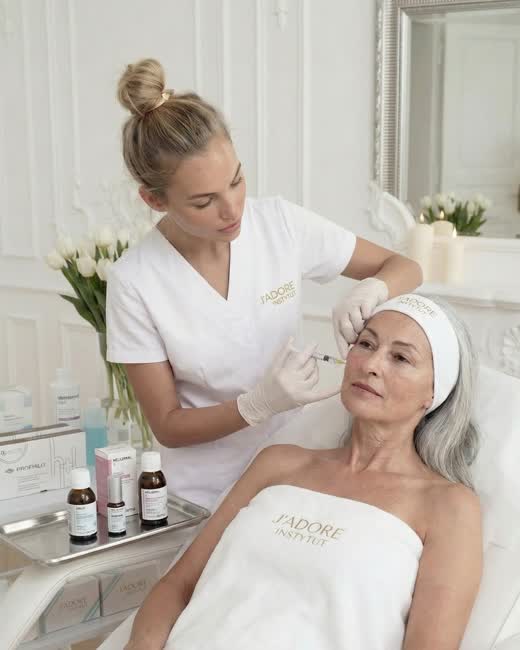
What dermapen does — and what happens from the skin's perspective
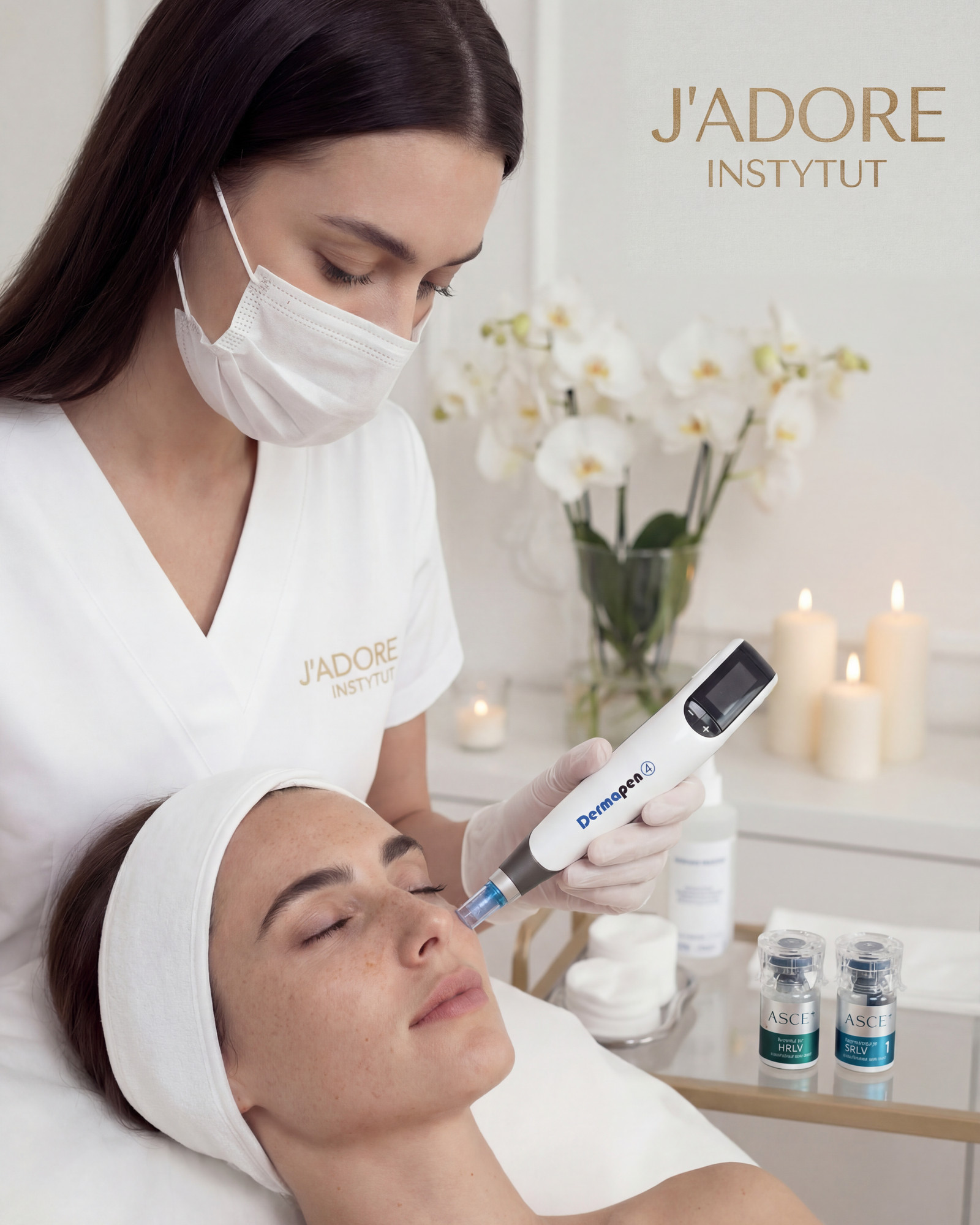
Dermapen is a device with a set of very fine needles that create thousands of micro-punctures in the skin — tiny, controlled areas of damage. It sounds unpleasant, but that's the point: skin doesn't tolerate damage well and immediately triggers repair mechanisms. These mechanisms are nothing other than collagen, elastin and moisturising substance production.
The repair process begins with an inflammatory cascade — platelets and growth factors gather at the puncture site and send a specific signal to fibroblasts (the cells that produce collagen): "repair needed here". Fibroblasts respond with increased synthesis. The skin "thinks" it's dealing with a wound — and activates the full healing protocol. The punctures are small enough, though, that no scars form — only new, younger collagen.
But dermapen has a second, equally important effect: the punctures create temporary micro-channels in the epidermis and upper layers of the dermis. These channels are short-lived — a few to several minutes — but during that window they become an open pathway for active substances that normally couldn't penetrate this deep. And this is where estgen comes in.
What estgen does — and why it's not "just a serum" on its own
Estgen is a preparation based on phytoestrogens — plant compounds whose molecular structure resembles the estrogen naturally produced by the human body. This distinction matters: it isn't a hormone, and it isn't a medicinal substance in the pharmacological sense — it's a bioequivalent that can bind to oestrogen receptors in the skin and mimic part of oestrogen's action.
Oestrogen receptors in the skin are distributed throughout its full thickness — from the epidermis to the deeper layers of the dermis. When oestrogen (or its bioequivalent) binds to these receptors, it activates mechanisms responsible for hydration, density, elasticity and the rate of cell renewal. This is why skin after the age of 40 — when oestrogen levels naturally decline — becomes thinner, drier and loses firmness. It isn't just oestrogen itself that drops; the activity of the pathways it regulates drops too.
There's one problem with applying estgen to the skin's surface on its own: the epidermal barrier doesn't readily let it through. Phytoestrogen molecules are larger than many active substances and have limited ability to penetrate an intact (healthy, undamaged) stratum corneum. Estgen applied "on top" does work — but before it reaches the receptors in the deeper layers of the dermis, a large portion of the active substance is lost along the way.
Why the combination delivers more than the sum of its parts
This is where the real logic of the protocol begins. Dermapen creates micro-channels — estgen travels through them. This isn't a metaphor; it's a physical phenomenon that changes the bioavailability of the entire preparation. The active substance applied during or immediately after the treatment makes use of these open penetration pathways before the channels close — reaching layers that intact skin would never let it reach, or would only let through in a fraction of the amount.
Dermapen without estgen
mechanical stimulation
- Stimulates fibroblasts to produce collagen and elastin
- Triggers a cascade of growth factors
- Improves skin firmness and density
- Opens micro-channels — but the substance that penetrates is limited to whatever is on the skin at the time
Estgen without dermapen
phytoestrogen delivery
- Sends a signal to oestrogen receptors in the skin
- Supports hydration, density and cell renewal
- Acts on the skin's protective barriers
- Effective, but limited by how deeply it can penetrate intact skin
In the combined protocol, something happens that goes beyond simple addition: dermapen doesn't just create pathways for estgen — it also activates the same fibroblasts that estgen now has direct access to. A fibroblast already stimulated by the mechanical signal from the puncture receives a hormonal signal from the phytoestrogens at the same time — and responds to both signals at once. Research into co-induction (simultaneous stimulation of cells by different triggers) shows that the synergistic effect can be considerably stronger than the sum of separate responses.
Skin that has lost its oestrogens — and why it shows
The estgen-with-dermapen protocol matters particularly for skin affected by hormonal changes — in women around menopause, after pregnancy or after long-term use of hormonal contraception, and also in men, whose skin produces fewer androgens convertible to oestrogens as they age. In all these cases, oestrogen receptors in the skin are under-activated — they're present and functional, but waiting for a signal that isn't arriving.
The effects of oestrogen deficiency in the skin are specific and visible: skin becomes thinner and loses density, its ability to retain moisture declines (because hyaluronic acid production weakens), the epidermis renews itself more slowly, which means hyperpigmentation and unevenness linger longer. Changes in microcirculation also appear — skin can look grey and tired, lacking the "glow" that partly comes from good blood flow in the surface vessels.
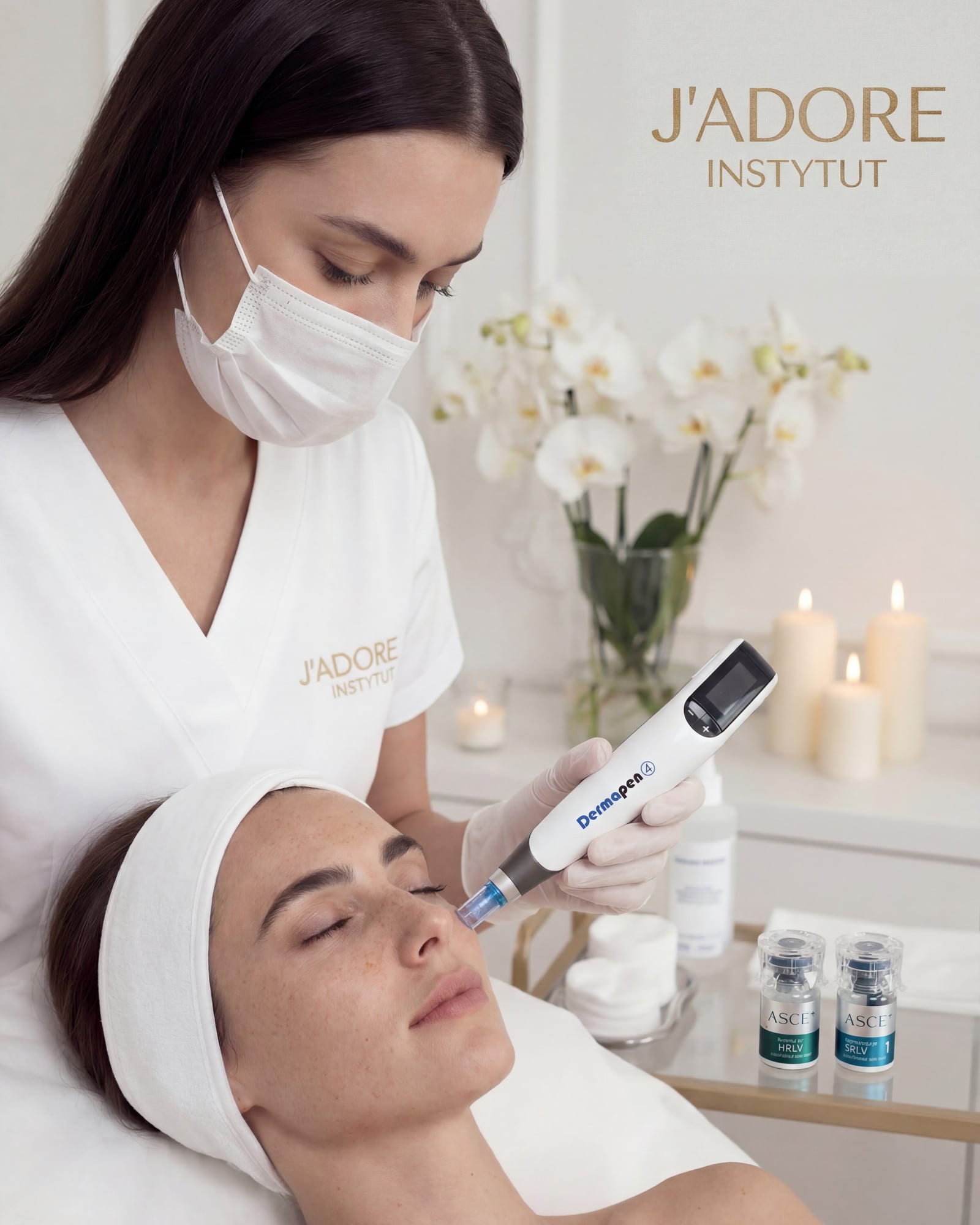
What the protocol looks like in practice
Combining estgen and dermapen is not two separate treatments performed on the same day — it's a single, carefully designed protocol, where the sequence, timing and concentration of the preparation are built around a specific therapeutic window. It's essential that estgen reaches the skin at the exact moment the channels are open — which means strict synchronisation.
- 01
Skin preparation
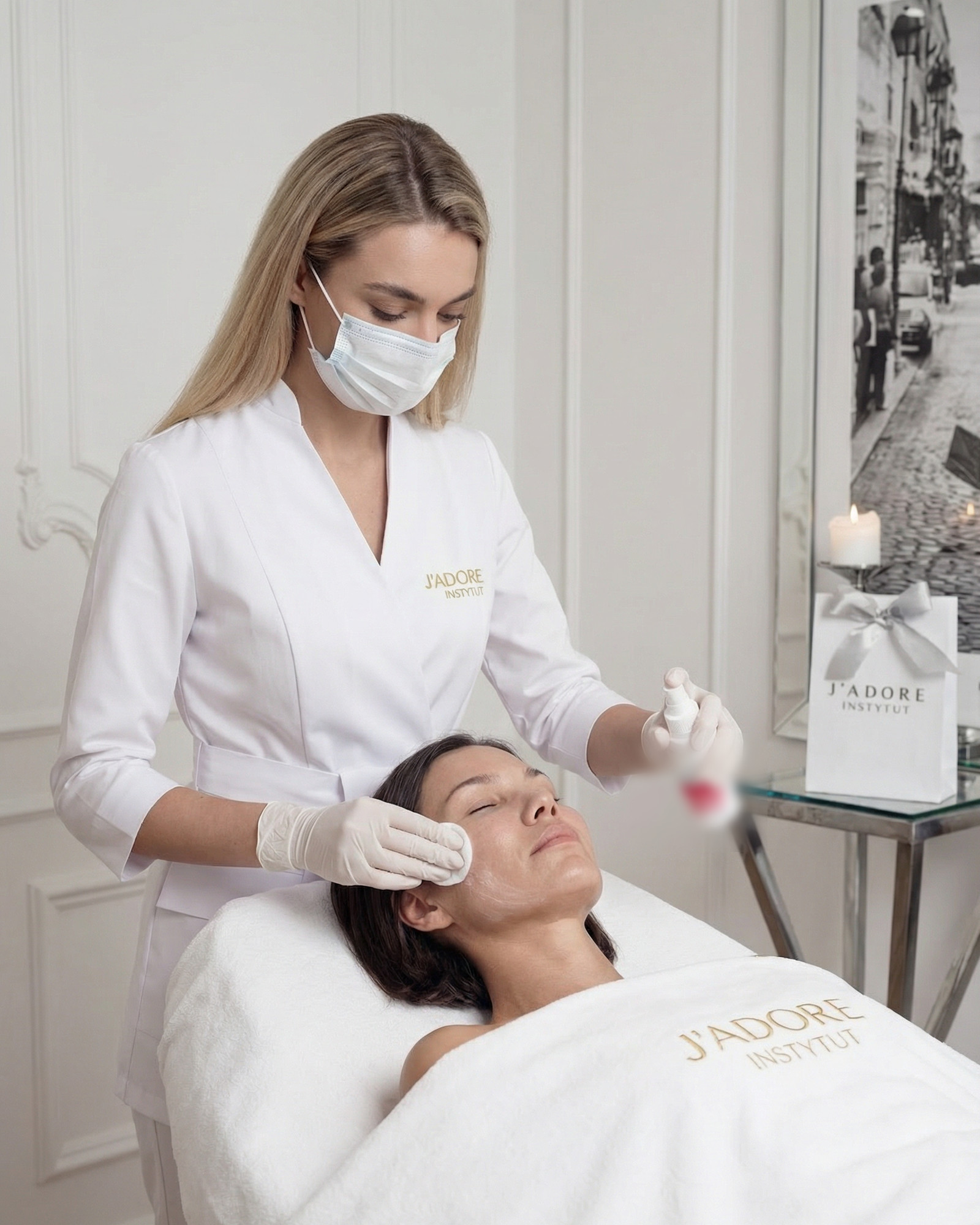
Thorough cleansing and disinfection. Skin must be free of cosmetics and sebum, so the punctures stay clean and nothing blocks estgen from entering.
- 02
Dermapen treatment
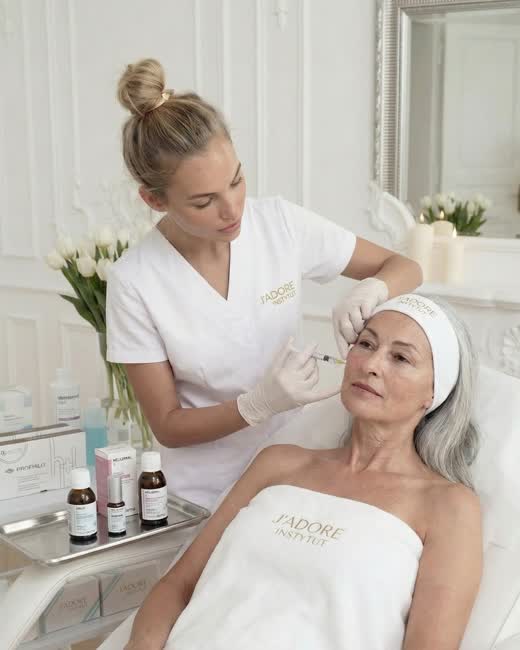
Mechanical punctures follow a planned depth and density protocol — customised to your skin's needs and sensitivity. During the treatment, estgen may be applied to the skin as a glide medium and simultaneous active carrier.
- 03
Applying estgen after the treatment
Immediately after the punctures — within the window while the micro-channels are still open — estgen is applied to the skin. This is the moment of greatest bioavailability; the preparation penetrates far deeper than it would under normal conditions.
- 04
Healing phase and later results
The repair cascade continues after the treatment — for several days, skin produces collagen and responds to the phytoestrogen signal. Visible results appear over time: some within a few days (hydration, glow), others after a few weeks (density, firmness).
When this combination makes the most sense
Not every skin needs this specific protocol — and not every good protocol suits every skin. Estgen with dermapen makes the most sense when the problem sits at the intersection of hormonal deficiency and the need for structural regeneration — that is, when skin has lost both density and hydration, and home skincare can't keep up.
- Skin around menopause — oestrogen deficiency is most pronounced here; skin receptors are, quite literally, "unfed".
- Skin after pregnancy and breastfeeding — sudden hormonal changes often leave skin thinner, less springy, with hyperpigmentation and unevenness.
- Skin aged 35+ that has "lost its glow" — not necessarily wrinkles, but that characteristic greyness, lack of firmness and slower healing of hyperpigmentation.
- Structurally dry skin — when moisturisers work only briefly or weakly, because the problem lies in the cells' ability to retain water, not just on the surface.
- Skin with accelerated ageing — for example after long-term smoking, chronic stress or heavy sun exposure in the past.
There are also cases where the protocol needs modifying, or isn't suitable at all — including active infections, skin inflammation, certain autoimmune conditions or individual intolerances. This is why it's worth discussing your full skin picture with a specialist before starting a series — not just what you'd like to improve, but also what might be behind your skin's current condition.
Microneedling (dermapen) + estgen
The base protocol — combines mechanical fibroblast stimulation with targeted phytoestrogen delivery through micro-channels.
Injectable hyaluronic acid + estgen + dermapen
For when skin needs both replenished HA reserves at depth and improved structural condition. Three different mechanisms complement each other without overlapping.
Biostimulators + dermapen
For when the priority is regeneration and stimulating the skin's own collagen production — without the phytoestrogen component, but with a similar synergy logic between mechanism and preparation.
Platelet-rich plasma (PRP) + dermapen
The same logic applies: dermapen opens channels, your own growth factors penetrate deeper and act on activated fibroblasts. A different active substance, the same protocol principle.