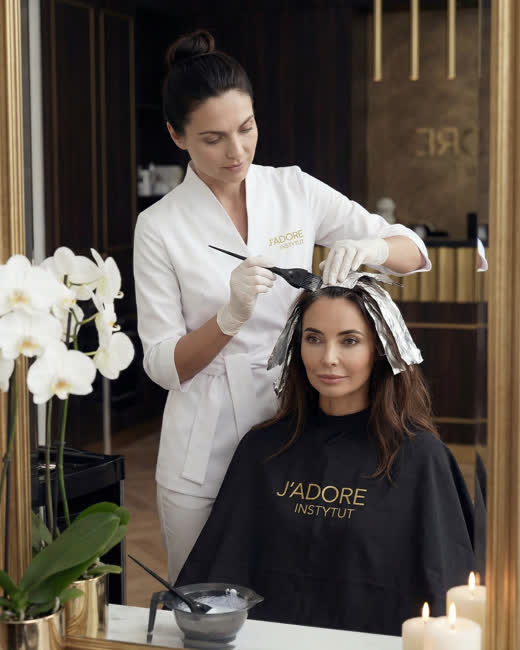
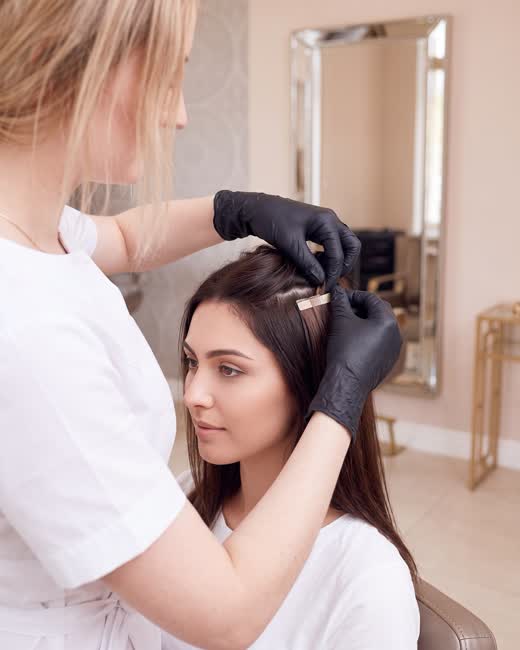
A treatment room at J'adore
HAIR EXTENSIONS & THICKENING
Thin hair that thins further towards the ends and never seems to grow, or simply wanting instant length and volume without the wait — this is the most common reason clients ask about extensions. The micro-ring (micro-link) method is a "cold fusion" variant: strands are attached with tiny rings clamped onto your own hair — no glue, no melted keratin, no heat.
The biggest advantage: a ring can be unclipped at any time, moved up as your hair grows, and reclipped. This makes it a reversible method that's gentle on hair structure. At J'adore Instytut, extensions are fitted by a hair extensions stylist. Below you'll find everything worth knowing before your first visit.
initial fitting + touch-ups every few weeks
How it works
Micro-links (micro-rings) are a "cold fusion" method. A strand of extension hair is attached to a thin section of your own hair using a tiny metal ring, clamped shut by the stylist with a special tool. The ring holds the strand by pressure alone — no glue, no resin, no melted keratin, and no heat of any kind.
This is exactly what sets micro-links apart from "hot fusion" methods: no chemicals, no heat, and the attachment is reversible. The same ring we clipped can later be unclipped, moved closer to the root as the hair grows, and reclipped — without redoing the whole set from scratch. For many clients, this is the number one argument: a method that's gentle on hair structure and easy to remove.
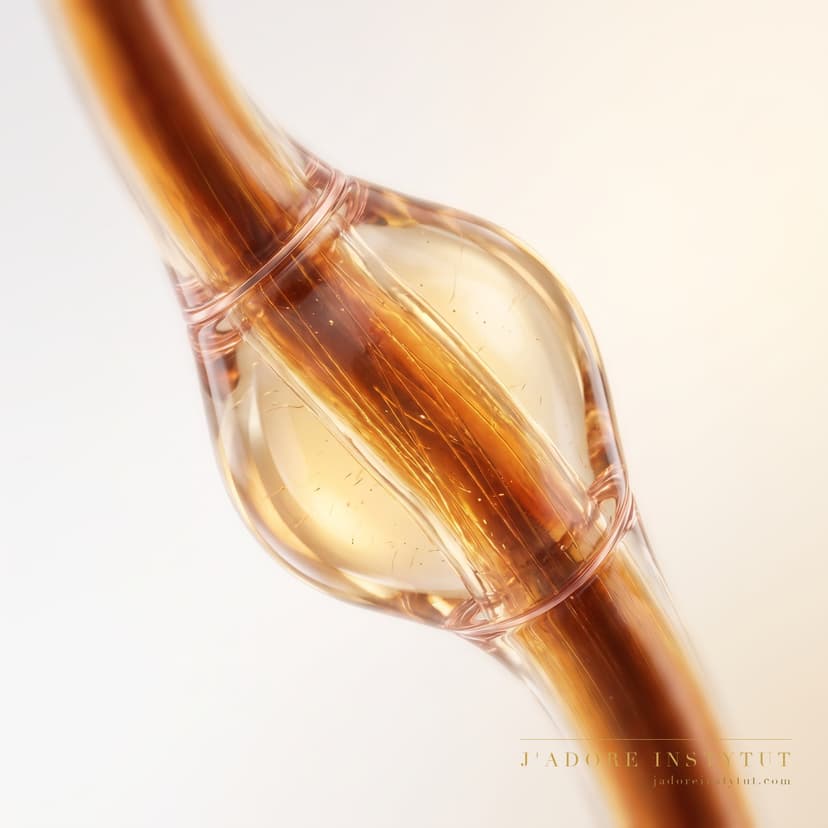
Good to know: with micro-links, it's not glue holding the style — it's geometry. A ring clamped with the right amount of pressure works like a miniature clasp — strong enough to hold the strand for weeks, yet still able to be opened with the same tool. No solvent, no unsticking involved.
Ideal for
An honest point: extensions are extensions — they won't make your own hair grow. They add length and density instantly, but this is styling, not a treatment. If the underlying issue is hair loss or noticeable thinning, extensions alone won't solve it — in that case, the first step is a trichology consultation, with styling added later.
For women and for men
This is primarily a service for women. Hair extensions and thickening for women using micro-links deliver length, volume and fuller ends — from a thin bob to long, thick strands. This "cold fusion" method is popular with clients who value gentleness and the option of easy removal.
What we work with
For men, the focus is usually thickening thin, sparse hair, not dramatic length. Here, the distinction matters: if hair loss is the underlying cause of thinning, extensions won't stop it. Thickening for men makes sense with stable, even sparseness — with genuine hair loss, we direct clients first to trichology.
What we work with
Good to know: the same ring holding a strand halfway up your head today will "migrate" closer to the scalp in a few weeks — because your own hair is growing and lifting the whole attachment with it. That's why a touch-up isn't fixing a mistake, it's simply keeping pace with natural hair growth.
Safety
With micro-links, how long results last and the health of your hair depend above all on the strength and placement of the ring and on home care. This is worth asking about at any salon:
Micro-links are a precise styling technique — at J'adore they're fitted by a hair extensions stylist, who assesses your hair's condition, chooses the right strand thickness, and positions the attachments so nothing pulls.
A strand that's too thick on fine hair puts strain on the root. The stylist divides your hair into resilient sections and doesn't overload a single ring.
Micro-links require a special brush, gentle washing and — crucially — no oils or rich conditioners applied near the ring itself.
Warning signs: too tight, too loose, or oil near the ring · A ring clamped too tightly puts tension on the root and can irritate the skin and weaken the hair — signs include a pulling sensation, stinging or pain when combing. A ring that's too loose lets the strand slip and fall out. A separate trap: oils, serums and rich conditioners applied near the ring itself — they make the metal slippery and the attachment starts to slide. If you feel pulling, notice strands slipping or rings sliding, it's a sign to come back for a touch-up — not to try fixing it yourself at home.
The visit
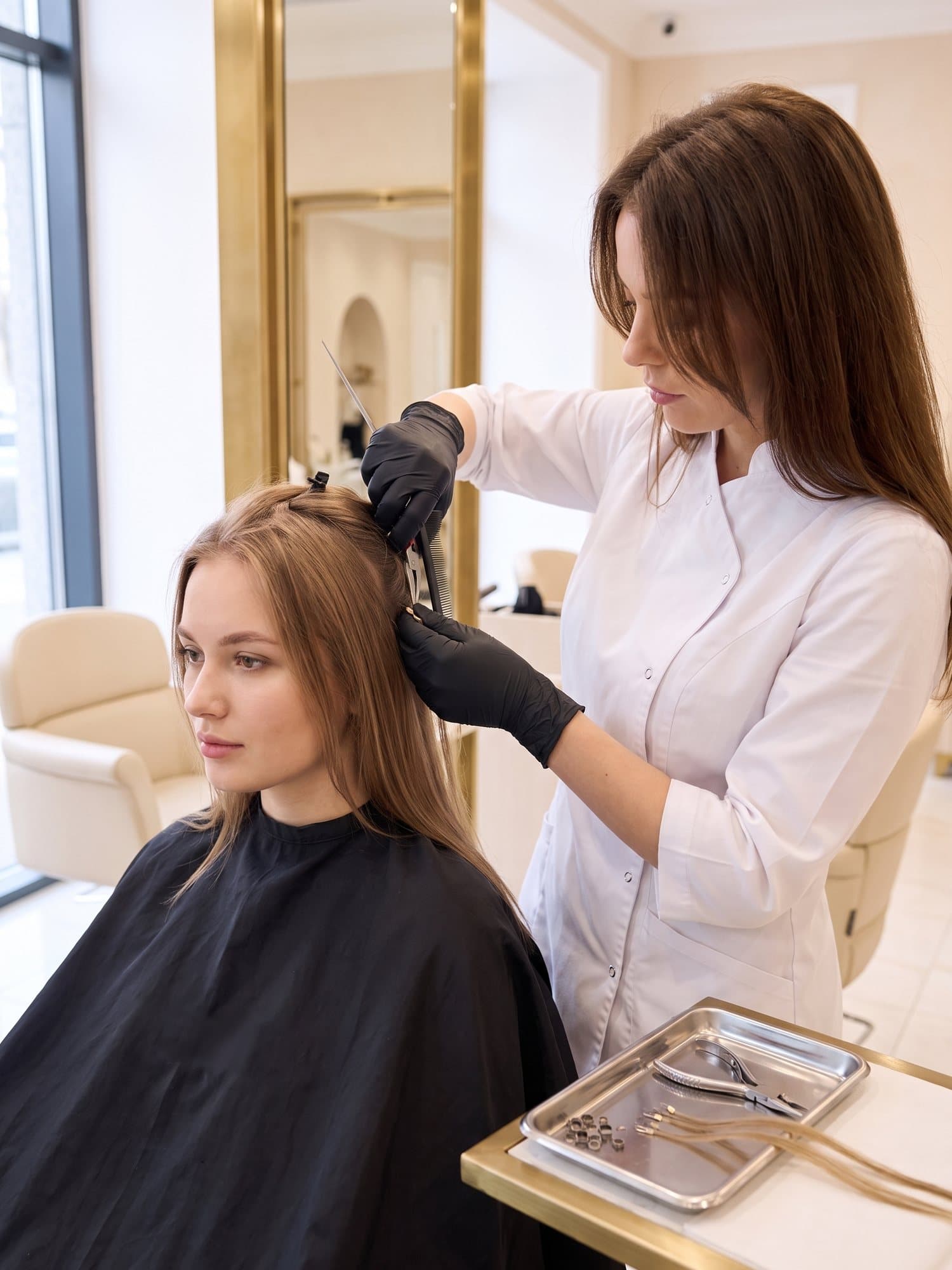
Consultation and selection
the stylist assesses the condition and thickness of your hair, determines the length, density and shade of the strands, and rules out any situation where a trichologist should be consulted first.
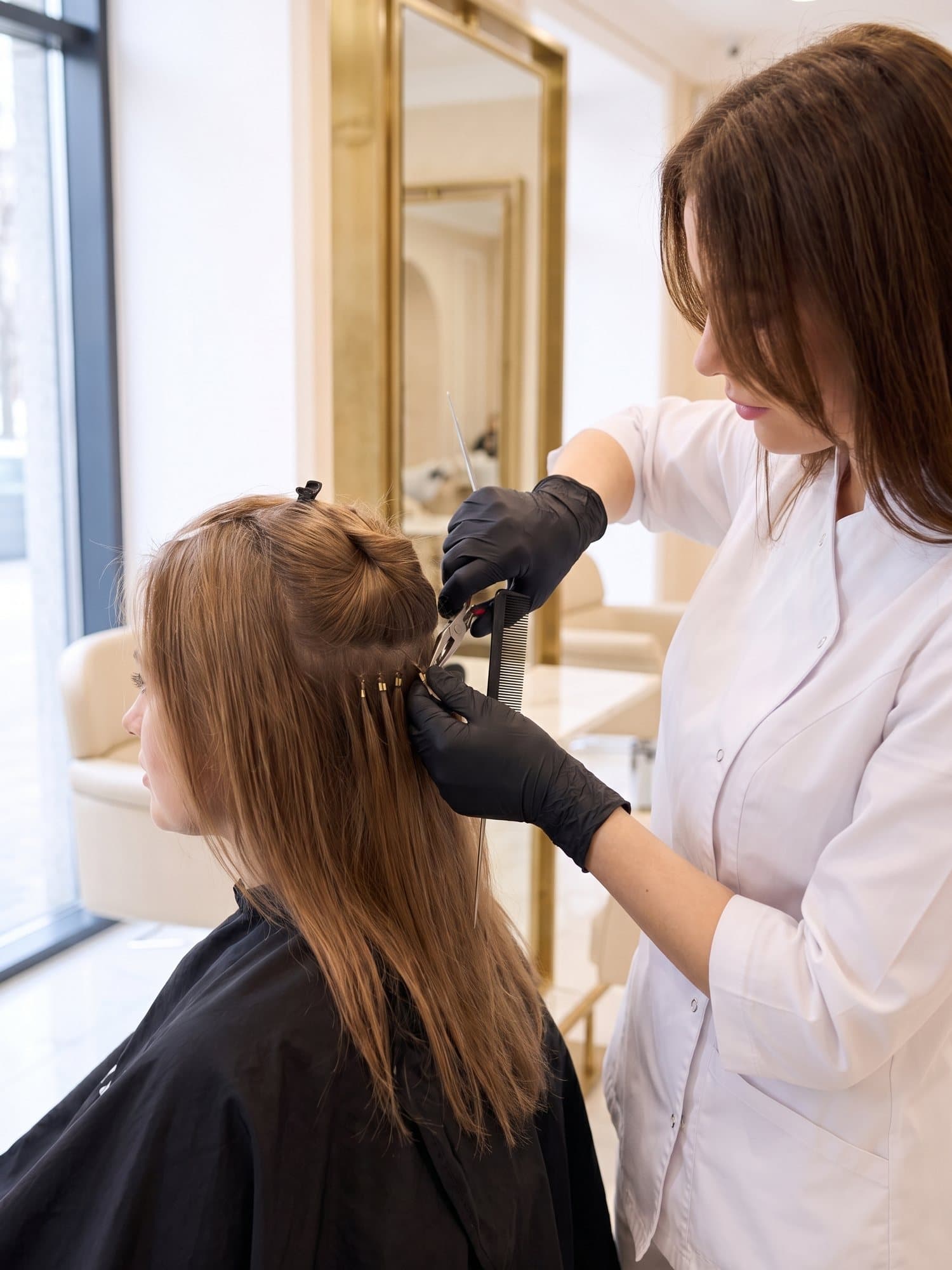
Preparing the hair
washing and thorough combing; strands are matched to your colour, with highlights if wanted.
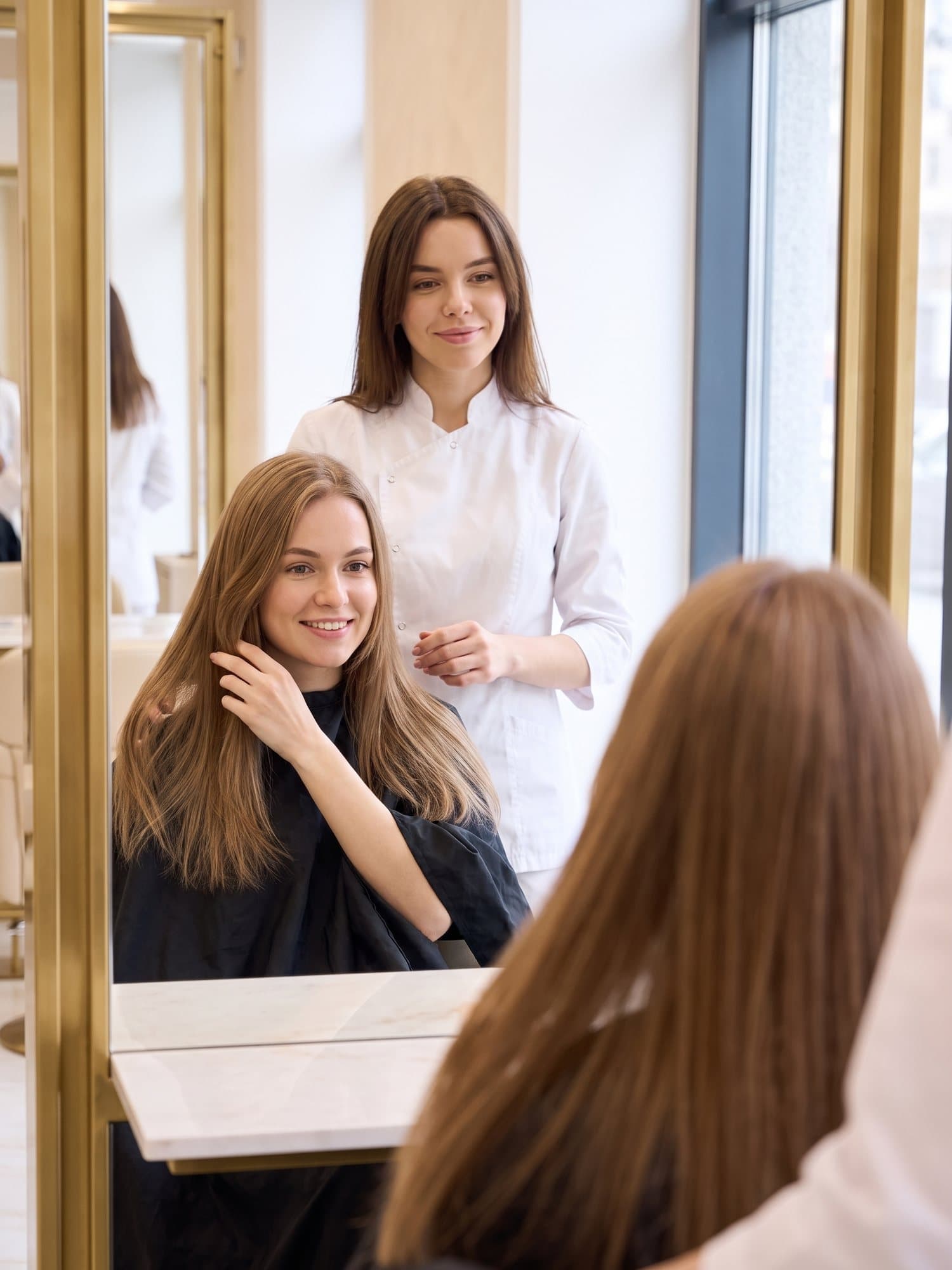
Sectioning
the stylist divides your hair into thin, even sections where the rings will sit — this is what makes the attachments invisible and prevents pulling.
Clipping the rings "cold"
the extension strand is joined to your own hair section with a tiny ring, clamped shut with a special tool. No glue, no heat, step by step across the whole head.
Blending the cut
finally, the stylist plans and blends the lengths so the transition is seamless (more here: women's haircut).
Care instructions
brushing with the special brush, washing, sleeping, and what to avoid near the rings.
There's one thing I say most often: the first two or three nights take some getting used to. Hair is longer and heavier than usual, so sleeping and morning combing need a bit of practice. After a few days it's automatic — and at each touch-up, I check that no ring is sitting too close to the scalp.
Portfolio
A record of the work in our salons — the place where we publish treatment frames and, after photo sessions, results.
A record of results — in preparation. We publish photographs of our clients only with their consent.
Home care
Micro-links live with you every day, so home care determines how long — and how well — they hold. The rule is simple: don't tug at the root, don't apply oil to the rings, and comb from the bottom.
Use a special extension brush (soft bristles, without the little balls that catch on the rings). Comb from the ends upwards, holding the sections at the base so as not to pull on the bonds.
Wash your hair calmly, massaging the scalp with your fingertips rather than rubbing the rings together. After washing, don't go to sleep with wet hair — damp, tangled strands are the most likely to felt around the attachments.
This is crucial: apply oils, serums and conditioners only to the lengths and ends, never near the rings themselves. Oil makes the metal slippery, and strands start to slide.
Sleep with your hair tied loosely (a soft braid or ponytail) — ideally on a silk pillowcase. This reduces friction, tangling and morning tugging at the root.
You can style as usual, but keep heated tools away from the attachments. Heat right next to the ring isn't good for the hair or for how long the strand lasts.
As your hair grows, the rings rise and can loosen. Come in for your scheduled touch-up — we unclip, move the strands closer to the root and reclip. This is the normal rhythm of the method, not a fault.
HAIR EXTENSIONS & THICKENING
Micro-links are styling, not a treatment — there are situations where hair and scalp need attention first, with extensions added later (or not at all).
From the stylist
Sometimes the best thing I can say is "not yet". If I see hair loss or hair that's too weak, I won't fit micro-links regardless — because extensions won't fix the underlying problem, and could make it worse. In that case, I refer clients to a trichologist first, and we return to styling once the hair has strengthened.
Micro rings
The three most popular extension methods work differently, and each has its own character. There's no single "best" option — only the best one for your hair and your lifestyle. The stylist will help choose the right method at consultation:
rings clamped without glue or heat
requires a special brush and care to keep oil away from the rings; attachments need touch-ups every few weeks
strands fused with melted keratin
a hot-fusion method that isn't reversible in the same way — removal requires dissolving the bonds; details here: keratin extensions
flat strands on adhesive tape
a different attachment and care method than rings; details here: tape-in extensions
Combine with
Micro-links look best when hair — both your own and the extensions — is in good condition and neatly finished with a cut. The stylist decides the order at consultation, but the general logic stays the same:
Put simply: if you want a method that's easy to remove and reposition — choose micro-links. If you want maximum "strand-to-strand" durability — choose keratin. If you prefer a flat, quick-to-reposition attachment — choose tape-in. Either way, the final choice depends on your hair: its thickness, condition, and how you wear it day to day.
Service options
"Micro-links" isn't a single treatment — it's a cycle: the initial fitting, followed by living with the style and keeping it maintained. Pricing usually depends on the number of strands (which determines the final length and density) — so we confirm the exact scope at your consultation.
Clipping strands onto rings across the whole head + blending the cut. Price increases with the number of strands and the target length/density.
Dla kogoFirst-time extensions, or returning after a break.
Unclipping the rings, moving the strands closer to the root (as hair has grown), and reclipping — without redoing the whole set.
Dla kogoEvery few weeks, as the attachments rise.
Safely unclipping all the rings with the same tool — no solvents, no heat.
Dla kogoWhen you want to return to your own hair, or switch methods.
Determining the length, density and colour of the strands (including highlights) to suit your hair and lifestyle.
Dla kogoBefore your first fitting.
Fact: This isn't a full price list — the final scope and price depend on the number of strands, the quality of the extension hair, and the condition of your own hair. Everything is confirmed with the stylist at consultation.
Price list
Checking free hours…
From the magazine
Editorial pieces on how this treatment works in practice — what happens during the session, how to prepare, where the limits are and what the first days after look like.
See also
The result lastsuntil the next touch-up (a few weeks, alongside regrowth)J’adore Instytut
Information. Micro-ring hair extensions are a hairdressing and styling service; how long results last and the overall effect depend on the method, the quality of the hair extensions, the condition of your own hair and home care, and require touch-ups alongside regrowth. If you're experiencing hair loss or thinning, a trichology consultation is recommended first. This text is for information purposes. The details and choice of method are determined by the stylist during your visit.
Home care
Cosmetics matched to what your skin needs after a treatment — so the clinic effect lasts longer.
 hair regenerationOlaplexBROAD SPECTRUM CHELATING TREATMENT 370mlView in the shop(opens in a new tab)
 hair regenerationKevin MurphyYoung.Again Dry Conditioner Oil 100mlView in the shop(opens in a new tab)
 hair regenerationDSD de LuxeTravel PackView in the shop(opens in a new tab)
 hair regenerationSesdermaSESKAVEL Keratin Shampoo 200 mlView in the shop(opens in a new tab)