Vitamin C: remarkable and maddeningly unstable
L-ascorbic acid is one of the most thoroughly researched active ingredients in the history of cosmetology. Its role in the skin is multi-layered: it stimulates collagen production (the enzymes responsible for collagen fibre maturation don't work properly without it), it neutralises free radicals, it brightens hyperpigmentation by inhibiting the tyrosinase enzyme, and — crucially — it protects the skin against oxidative damage. Dermatologists and biochemists have been discussing this ingredient with growing respect for decades.
The problem is that vitamin C is an antioxidant, and antioxidants, by definition, "sacrifice" themselves — they donate electrons to neutralise aggressive free radicals. When a molecule of L-ascorbic acid meets oxygen, UV light or a metal (often present in water), it gives up an electron and oxidises into dehydroascorbic acid — a compound that no longer has antioxidant properties and behaves quite differently. That serum that's turned yellow-brown? Dehydroascorbic acid is what gives it that colour. It's a clear sign: the active vitamin C is essentially gone.
This is exactly why the cosmetics industry has spent years looking for ways to extend the active lifespan of vitamin C — both in the product and in the skin. One of the most effective solutions turned out to be an antioxidant most people had never heard of before reading ingredient labels closely. Plant-derived, unassuming — and surprisingly good at the job.
What ferulic acid is, and where it comes from
Ferulic acid is a natural plant-derived antioxidant — part of the hydroxycinnamic acid family, found mainly in the cell walls of cereal grains (wheat, rice, corn), in oil-bearing plants and in fruit. Plants produce it as part of their own defence against oxidative stress, UV exposure and pests. It has existed in nature for billions of years — and that evolutionary track record is part of what drew dermatology's attention to it.
In cosmetology, ferulic acid works mainly as an antioxidant and stabiliser. On its own, it neutralises free radicals — particularly those generated by UV radiation. But its real strength shows up when paired with other antioxidants. It acts something like a signal booster — it doesn't replace other ingredients, but makes them work better, longer and deeper.
The mechanism of synergy: why together they achieve far more
A key finding on ferulic acid and vitamin C comes from research into anti-ageing formulations: at the right pH, ferulic acid stabilises both vitamin C and vitamin E at once, creating an antioxidant trio with combined oxidative protection far higher than any single ingredient provides alone.
How does this work chemically? Vitamin C (the water-soluble side of protection) and vitamin E (lipophilic, active in cell membranes) protect different environments — aqueous and lipid. Ferulic acid slots in between them as a bridge: it lowers the formulation's pH to the level where L-ascorbic acid is least reactive to oxidation, while actively scavenging free radicals itself. The result? A more stable formulation that protects on more fronts at once.
Vitamin C alone
antioxidant + collagen stimulant
- Neutralises free radicals (aqueous environment)
- Stimulates collagen synthesis
- Inhibits melanogenesis (brightening)
- Oxidises quickly without protection
Vitamin C + E + ferulic acid
stabilised antioxidant triad
- C and E protect both the aqueous and lipid environments
- Ferulic acid stabilises both molecules
- Confirmed increase in protection against UV-driven oxidative stress
- More stable formulation — more active ingredient reaches the skin
In other words: when you use a serum with vitamin C alone, part of that ingredient oxidises before it even reaches the deeper layers of the skin. Add ferulic acid, and more active ingredient reaches where it needs to work. And it works for longer. This isn't a placebo effect or marketing spin — it's a mechanism confirmed at the biochemical level.
Layering: from solo to full trio
Understanding the chemistry behind this synergy also helps you think sensibly about how to use this duo — or trio. It's not about buying three separate serums and layering them in any order. It's about formulations that combine the ingredients from the start, because that's the only way they work synergistically at a molecular level.
- 01
Stage 1 — C alone
A serum with L-ascorbic acid alone delivers antioxidant and pro-collagen effects. But it's unstable — it loses activity quickly and needs airtight storage. A good starting point, but with limitations.
- 02
Stage 2 — C + E
Adding vitamin E to the formula boosts lipophilic protection and slows down vitamin C's oxidation. Two complementary protection pathways — aqueous and lipid. A more stable formulation than C alone.
- 03
Stage 3 — C + E + ferulic acid
The full triad. Ferulic acid stabilises both molecules, lowers the pH to the optimal range and actively scavenges radicals itself. The formulation's protective potential can be many times higher than at stage 1.
In practice, this means it's worth reading ingredient lists, not just product names. A serum labelled "vitamin C" may not contain ferulic acid — and, the other way round, a product built around a blend of antioxidants might not mention vitamin C on the label at all, yet still contain the full trio. When choosing a home-care product, or discussing a treatment plan in the salon, this is exactly the kind of thing worth asking about.
Peels with ferulic acid — what happens at the treatment level
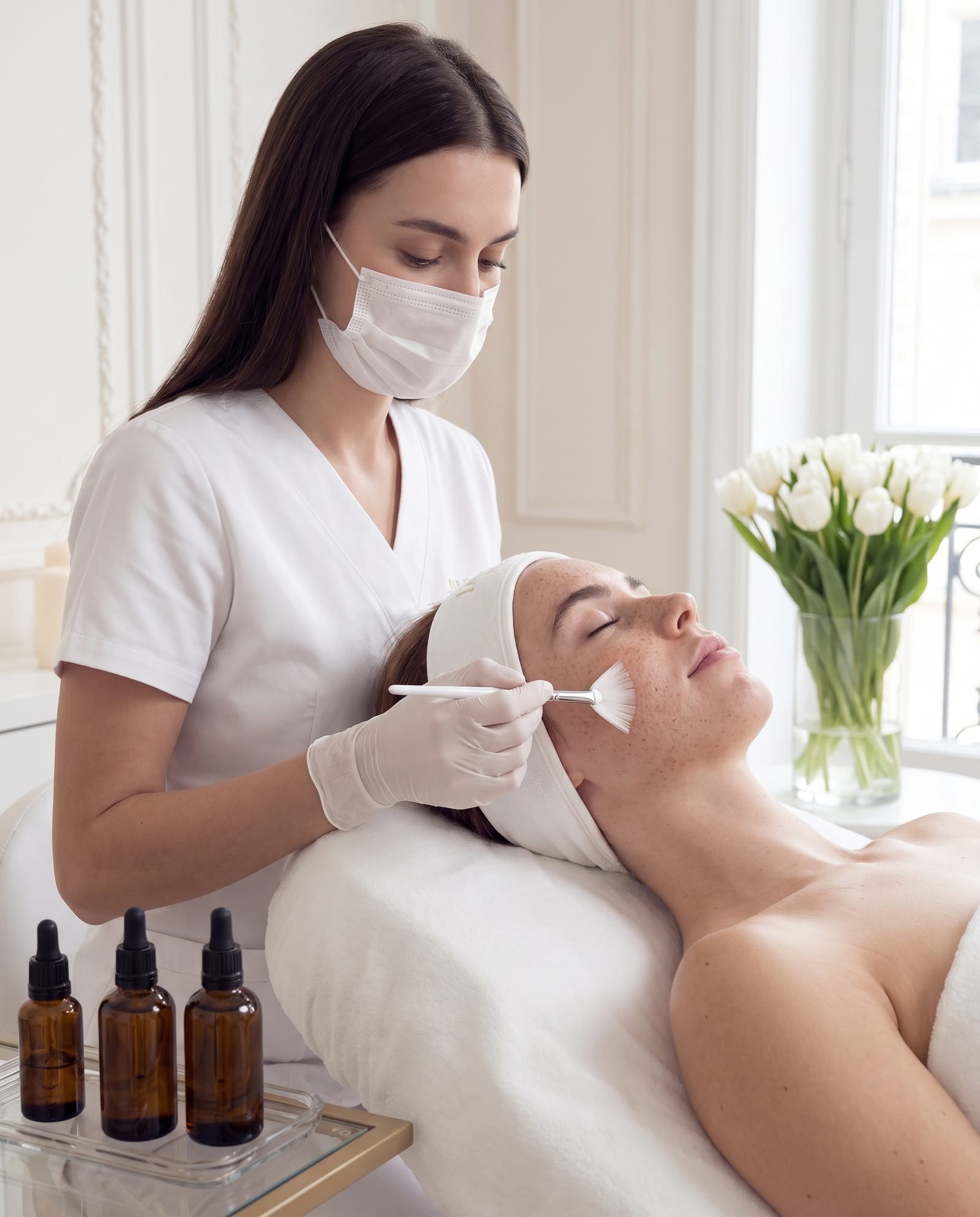
In a salon setting, ferulic acid appears mainly in combination chemical peels — not as the main exfoliating acid, but as an antioxidant and strengthening ingredient. Peels such as Ferulac, or formulas containing vitamin C, combine exfoliation (improved texture, reduced hyperpigmentation, renewal stimulation) with oxidative protection — which matters particularly while the skin is temporarily more vulnerable to free radicals.
Combination peels with vitamin C and ferulic acid have another characteristic: their brightening and tone-evening effects can be more visible and longer-lasting than with exfoliation alone. This comes down to the same synergy — exfoliation reveals new skin, while the antioxidants actively inhibit melanogenesis and protect that newly revealed layer from further oxidative-stress-driven pigmentation.
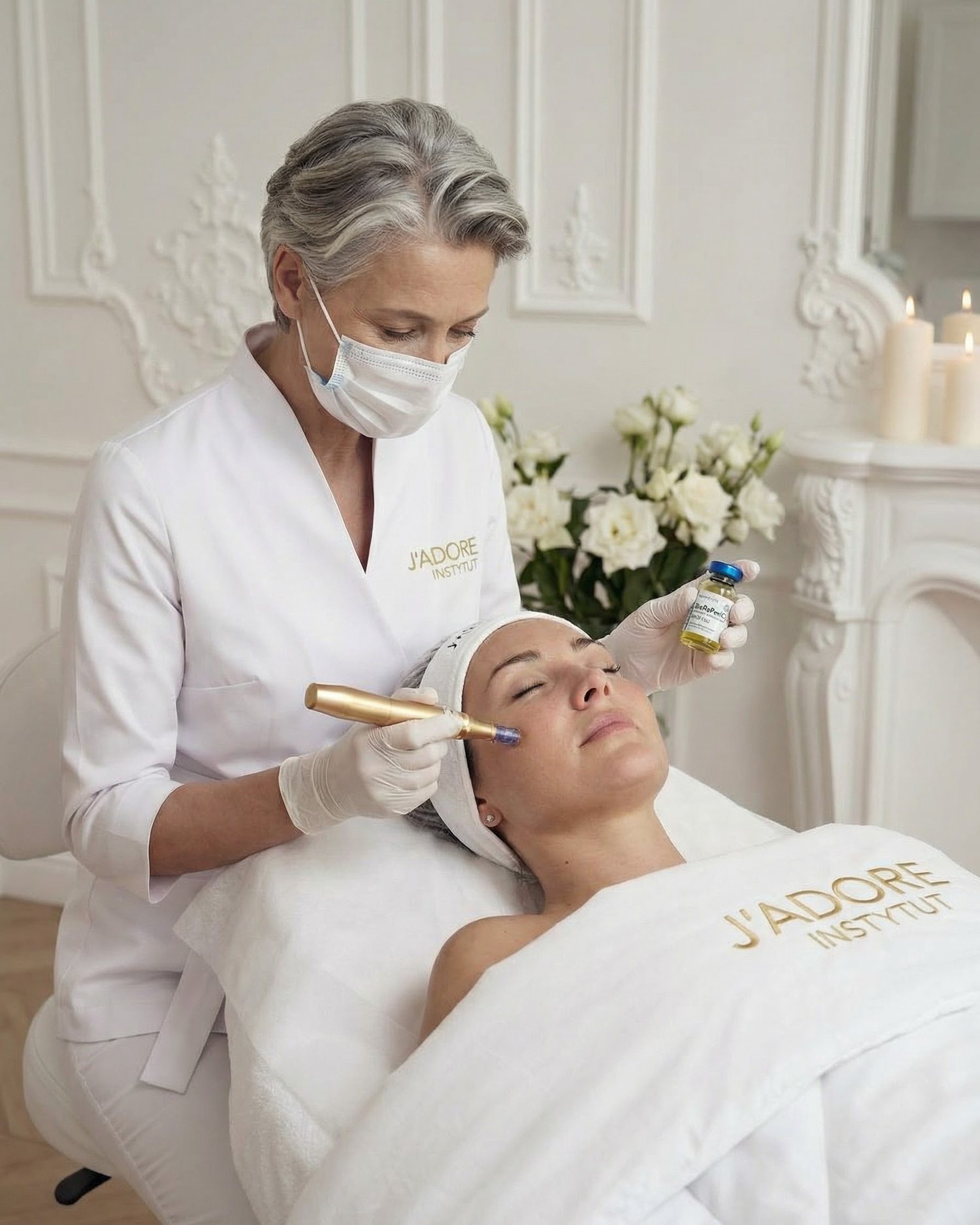
+ needle mesotherapy
antioxidants complement the stimulating effect; skin undergoing mechanical micro-injury benefits from protection against oxidative stress
+ brightening treatment
ferulic acid supports and extends the effect of depigmenting ingredients, blocking melanogenesis on two fronts at once
+ hydrating treatment
after a series of peels, the skin may need barrier repair; combining antioxidants with hydration speeds up recovery
+ SPF protection
routine: antioxidants (C+E+ferulic) in the morning, SPF applied last; both work in a complementary way at different levels of protection
What this means in practice
All of this comes down to one practical question: how does it affect what you expect from your skincare and treatments? If your goal is brightening sun-induced or post-pregnancy hyperpigmentation, formulations combining vitamin C with ferulic acid give the skin both a tool that inhibits melanogenesis and the stability that lets the active ingredient actually work before it breaks down.
If your priority is slowing down UV-driven skin ageing, this antioxidant combination works on multiple levels: molecular (radical scavenging), structural (collagen stimulation via vitamin C) and functional (formulation stability through stabilisation). That's not one effect — it's several at once.
And finally: if you use peeling or stimulating treatments, antioxidants as part of the protocol (before, during or after the treatment, depending on the plan) genuinely support results for most people and shorten the time the skin needs to "recover" after more intensive stimulation. This isn't a formulation trend — it's biochemical logic.