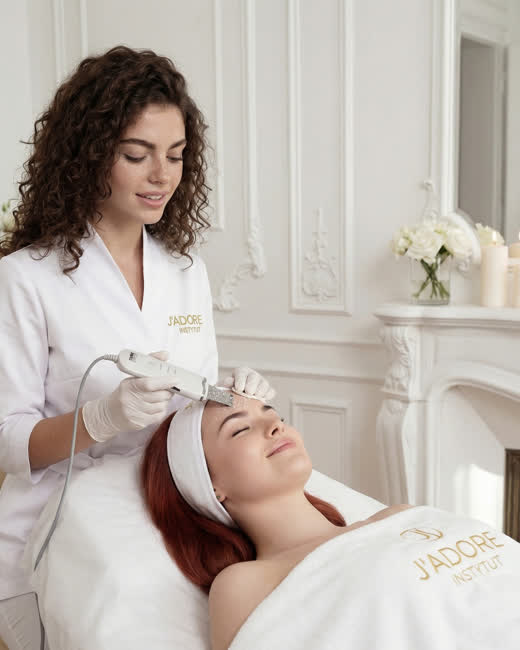
What pyruvic acid is and where it comes from
Pyruvic acid has been part of our metabolism for billions of years — it's a key intermediate product in the process of breaking down glucose in every living cell. In other words: your skin already knows it, because it produces it itself. This matters, because it explains why skin tolerates it differently from very strong synthetic acids.
Chemically, pyruvic acid belongs to the alpha-keto acids (AKA) family. This sets it apart from the better-known groups: AHAs (glycolic, lactic, mandelic acid) and BHAs (salicylic acid). Alpha-keto acids have a distinctive ability: they penetrate the skin faster than AHAs — thanks to a smaller molecule size — while also working not just on the surface, but at the level of cell signalling. Exfoliation is only one part of the mechanism, not the whole story.
How exfoliation works — and why it matters
Exfoliation isn't about scraping the skin — it's a gentler, more precise process. Like other acids, pyruvic acid lowers the pH on the skin's surface. This loosens the bonds between dead epidermal cells (corneocytes). These bonds — built from a cementing substance called desmosolin — are what keeps dead cells stuck to the surface too long, giving skin a greyish, dull appearance.
Once the bonds loosen, dead cells shed evenly and naturally, revealing fresher layers underneath. Skin often looks brighter afterwards, with a more even tone, and absorbs subsequent active ingredients better — creams, serums, masks. This is the priming effect: skin cleared of clogged pores and dead cells acts like a blank canvas.
- Skin tone. Exfoliation removes surface-level hyperpigmentation — old cells often carry melanin, which can make skin look greyish or uneven in tone. The effect can be visible, but it depends on how deep and how established the discolouration is.
- Texture. Skin can feel rough when dead cells don't shed evenly. After a peel, the surface often feels smoother to the touch.
- Absorption. Removing the stratum corneum allows other skincare products to penetrate more effectively. This is why peels are often combined with masks or serums — not as a trend, but for a straightforward biological reason.
- Pores. Pyruvic acid also has keratolytic properties — it can help clear the openings of sebaceous glands, which matters for skin prone to comedones.
The dual mechanism: where the collagen comes from
This is where pyruvic acid goes beyond what a typical AHA does. Exfoliation is its "first job" — but at the same time, it triggers something deeper: fibroblast stimulation. Fibroblasts are the cells responsible for producing collagen and elastin.
The mechanism works in several directions. First, the controlled disruption of the stratum corneum (exfoliation) signals to the skin that repair is needed — the same instinct that makes skin thicken after a minor scratch. Second, the pyruvic acid molecule passes through the epidermis into the dermis, where it directly activates fibroblast metabolic pathways. The result is increased synthesis of new collagen and better organisation of existing fibres.
What does this mean in practice? That the results of a pyruvic acid peel don't stop at the exfoliation you see the next day. Skin can gradually become denser and firmer in the weeks after the treatment — provided the fibroblasts have time to work, and the skin receives proper aftercare. This makes pyruvic acid particularly relevant for skin showing early signs of losing elasticity, not only for skin with texture concerns.
- 01
Acid meets the skin
The acid lowers the pH on the surface. Bonds between corneocytes begin to loosen. Mild tingling or warmth may occur — this is a normal sign of the acid at work.
- 02
Penetration to deeper layers
The small alpha-keto acid molecule passes through the epidermis and reaches the boundary with the dermis. It begins acting on fibroblasts.
- 03
Exfoliation (first 24–72 hours)
Dead cells shed. Skin may flake lightly, or not at all — this depends on concentration and individual response. Don't peel off flaking skin by hand.
- 04
Regeneration phase (days 3–14)
Fibroblasts are active. Skin produces new collagen. Skin tone often improves gradually rather than suddenly — many people notice a change after a few days.
- 05
Long-term effect (weeks to months)
With regular treatments, skin density can increase. The effect depends on frequency, concentration and overall skincare — there's no single formula for everyone.
Pyruvic acid vs other acids — what's the comparison
The market for cosmetology acids is crowded, and it's easy to get lost in it. Pyruvic acid doesn't work "instead of" other acids — it simply occupies a different place in the picture compared with the most common AHAs and BHAs. Understanding the differences helps you choose treatments more sensibly.
Pyruvic acid (AKA)
Exfoliation + collagen stimulation
- Small molecule — deeper penetration than typical AHAs
- Works on both the epidermis and the dermis at the same time
- Stimulates fibroblasts and collagen synthesis
- Keratolytic and antibacterial properties
- Often used as a medium-depth in-salon peel
AHAs (glycolic, lactic, mandelic acid)
Surface exfoliation, hydration
- Varying molecule sizes — from very small (glycolic) to large (mandelic)
- Mainly works on the epidermis
- Good tolerance, widely available in home skincare
- Lactic acid also hydrates (humectant)
- Mandelic acid — gentle, well suited to sensitive skin
This doesn't mean pyruvic acid "beats" AHAs. Every acid has its own indications and the skin type it suits best. AHAs in home skincare maintain results consistently over time. Pyruvic acid as an in-salon treatment delivers a more intensive stimulus, one that's hard to replicate in a jar. In practice, they often complement each other, rather than compete.
Who it may suit
Pyruvic acid appears most often in protocols for a few skin types. This isn't a definitive list, though — more a map of indications, which is where a consultation with a cosmetologist starts.
- Skin showing signs of losing firmness and elasticity — when skin feels thinner, less elastic, and home skincare no longer gives satisfying results.
- Skin with uneven tone and hyperpigmentation — especially sun-related and post-acne discolouration in the epidermal layer.
- Oily and combination skin with comedones — the acid's keratolytic and antibacterial properties can help clear the openings of sebaceous glands.
- Post-acne skin with lasting marks — as part of a longer-term protocol for evening out texture.
- People looking for a more intensive exfoliating treatment than a typical enzyme peel, but without time for a longer downtime.
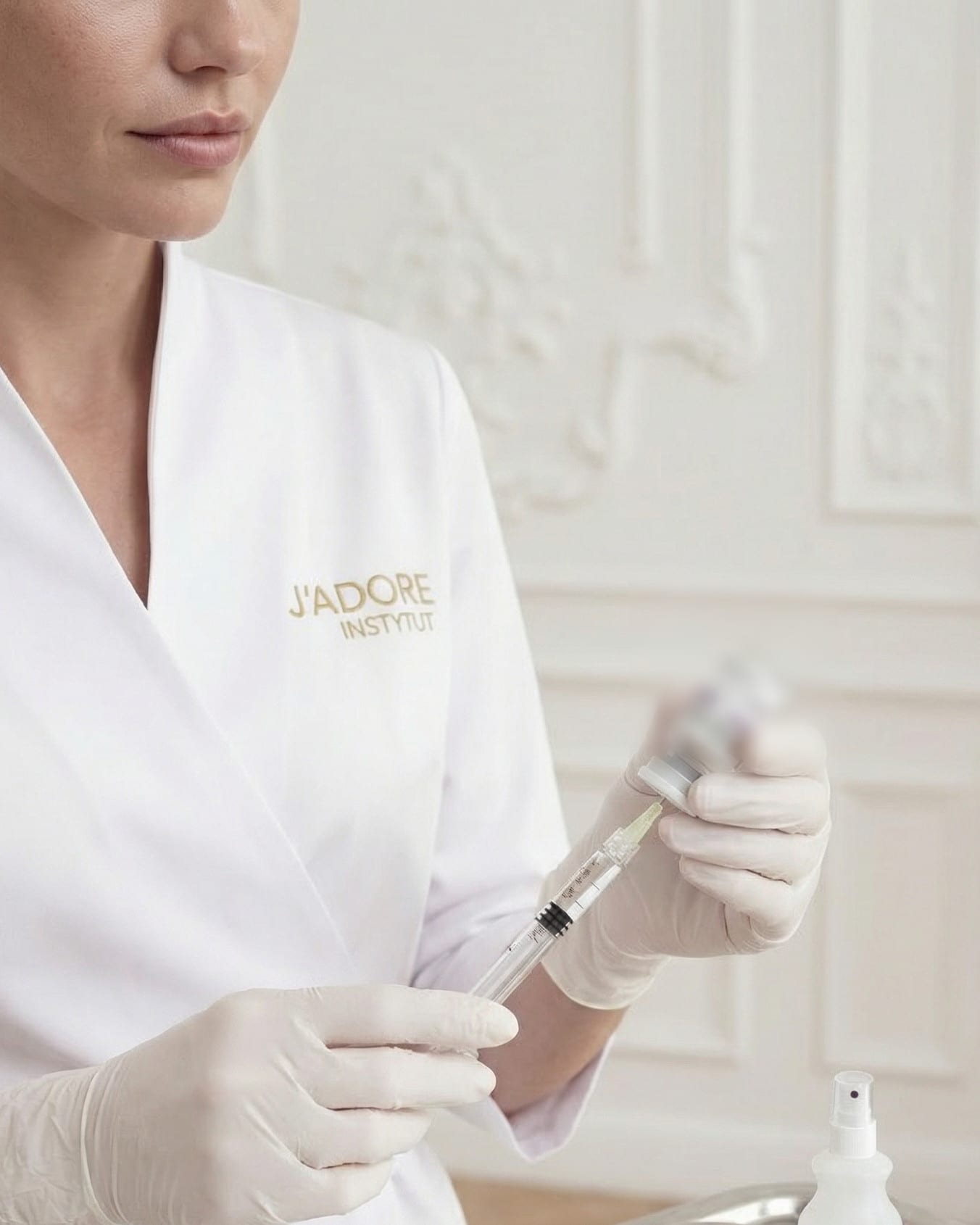
What the treatment involves — and what happens afterwards
A pyruvic acid peel is performed in a salon — not because it's dangerous, but because it requires control: the right concentration, exposure time, and attention to how a particular skin responds. The protocol looks similar across salons, though details vary depending on the brand and the cosmetologist's approach.
- 01
Make-up removal and cleansing
Skin needs to be free of make-up, cream and sebum — the acid needs even contact across the whole surface.
- 02
Acid application
The cosmetologist applies the product with a brush or gauze pad, keeping the coverage even. At this point you may feel warmth, tingling, or mild stinging — this is a typical reaction.
- 03
Exposure
The acid works for a set time, adjusted to concentration and skin type. The cosmetologist monitors the skin's response — some redness is normal; intense pain or swelling is not.
- 04
Neutralisation or rinsing
The acid is removed either by neutralising it or rinsing thoroughly. This step matters — leaving the acid on too long turns a skincare treatment into an injury.
- 05
Finishing care
Skin receives hydration and calming care — a barrier cream, a mask or a soothing serum. This is when regeneration begins.
Where an acid peel fits into your wider plan
A single treatment does its job, but skin responds best to regular stimulation spread over time. Cosmetologists often treat an acid peel not as a one-off reset, but as part of a cycle — especially when the goal is collagen and firmness, not exfoliation alone.
Pyruvic acid fits well into combined protocols — particularly alongside treatments that work at other levels of the skin. Exfoliation opens the way for deeper penetration of subsequent active ingredients. Collagen stimulation after a peel can be reinforced by treatments that independently build density and firmness in the dermis.
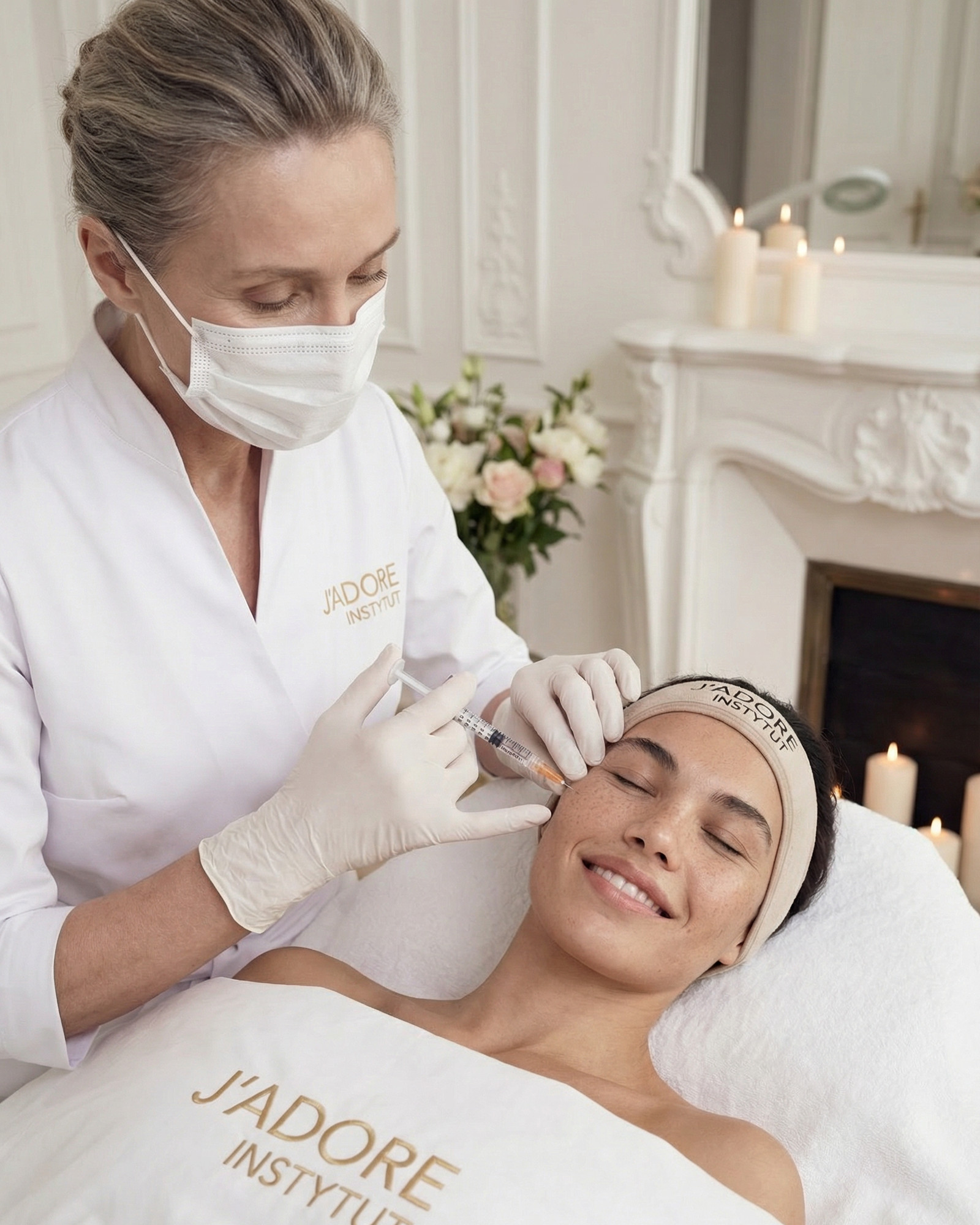
Needle mesotherapy
An acid peel cleanses and provides an initial stimulus; mesotherapy delivers active ingredients (amino acids, vitamins, hyaluronic acid) deep into the skin — and exfoliated skin absorbs them more effectively.
Biostimulators (Sculptra, Radiesse)
These work at a deeper level — stimulating collagen in the dermis. An acid peel, used as surface preparation, can improve the overall condition of the tissue the biostimulator is injected into.
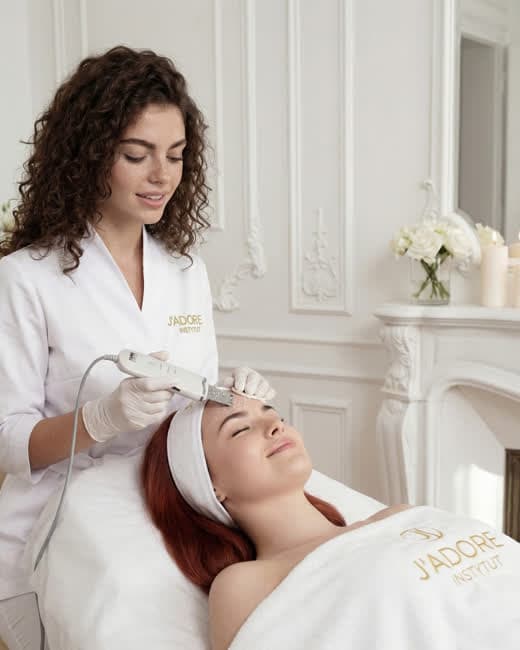
Microdermabrasion
When the goal is more intensive work on texture and acne scars, both treatments can be used in alternating cycles — not on the same day.
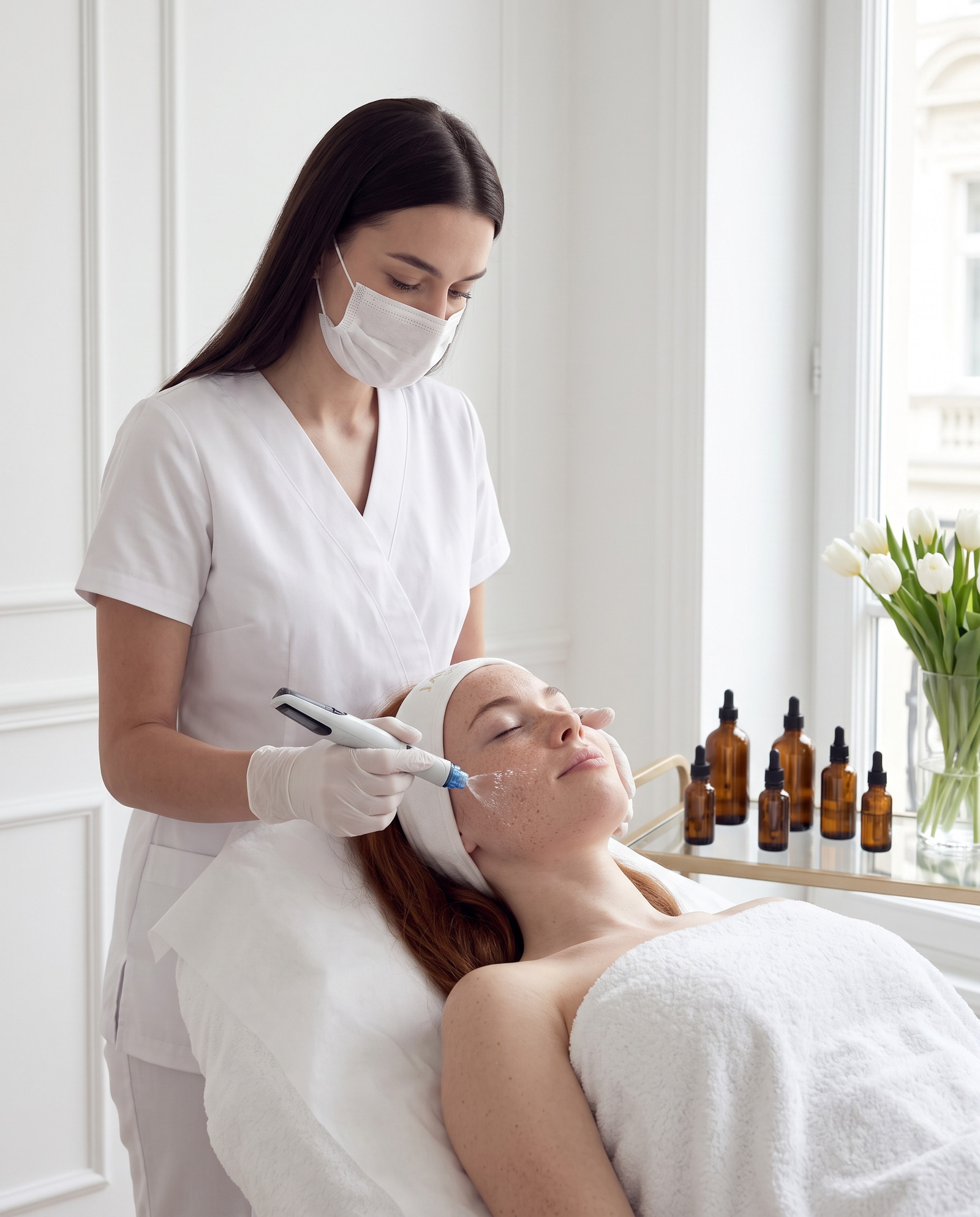
Hydrafacial (hydrogen-based cleansing)
A combination of exfoliation and deep hydration — a good complement when skin needs its barrier reinforced after an acid peel. Together, the two treatments give a more complete result than either alone.