Before we compare them — what does “peel” mean in skin biology?
The word “peel” comes from the English to peel — to remove or shed a layer. But in cosmetology and dermatology, the term covers more than exfoliation alone. A peel is any procedure that accelerates or supports skin cell renewal — and it can do this in very different ways.
Natural skin renewal follows a regular cycle. New cells form in the deeper layers of the epidermis. They gradually move towards the surface, mature, keratinise and eventually shed. In healthy, young skin, this cycle works efficiently and takes several weeks. With age, stress, sun exposure or unsuitable skincare, it slows down. Dead cells remain on the surface for longer. Skin looks dull, pores become blocked and unevenness becomes more established.
Against this background, an acid peel and a peptide peel are two different ways of intervening in this cycle. Acid peels work through chemical breakdown. Peptide peels work through biochemical communication. To understand the difference, we need to look at how each one works.
How an acid peel works — chemistry as a tool
Acid peels — whether based on AHA acids (glycolic, lactic or mandelic), BHA (salicylic) or TCA — follow one principle: they lower the pH immediately at the skin’s surface. This breaks down the connections between mature epidermal cells, known as desmosomes. In other words, the acid chemically “loosens” a layer of cells that would have shed anyway — but does so more quickly and in a controlled way.
- AHA (alpha hydroxy acids) — water-soluble and mainly active on the surface. Most commonly used to improve texture, tone and moisturisation. Lactic acid is hygroscopic. Glycolic acid has the smallest molecules, so it penetrates deeper than other AHAs.
- BHA (salicylic acid) — fat-soluble, meaning it penetrates through sebum into the pore. This is why it is particularly effective for acne-prone skin and blackheads — it reaches areas that AHAs simply cannot.
- TCA (trichloroacetic acid) — used in stronger treatments and active in deeper skin layers. The strength of exfoliation is proportional to the concentration and pH. This is why the depth of the peel can be precisely controlled.
The effect of acids is controlled stimulation of renewal. Removing the surface layer signals the skin to speed up the production of new cells. Stronger peels cause micro-injury, which triggers a repair response — similarly to other collagen-stimulating treatments. This is why acid peels often improve more than texture. Many people also notice improved skin firmness and density.
How a peptide peel works — the biology of signals
Here, the mechanism is fundamentally different. Peptides are short chains of amino acids — the building blocks of skin proteins such as collagen, elastin and filaggrin. But peptides used in cosmetology and treatments are not “building materials” in the literal sense. They work differently: as signalling molecules.
Skin cells — especially fibroblasts — have receptors that respond to specific peptides. When the skin recognises a particular peptide, it interprets it as a signal: “damage”, “ageing” or “collagen deficiency”. It then triggers a response. Depending on the peptide type, this may involve stimulating the production of collagen, elastin or hyaluronic acid, signalling regeneration, reducing inflammation or slowing the activity of enzymes that break down the extracellular matrix.
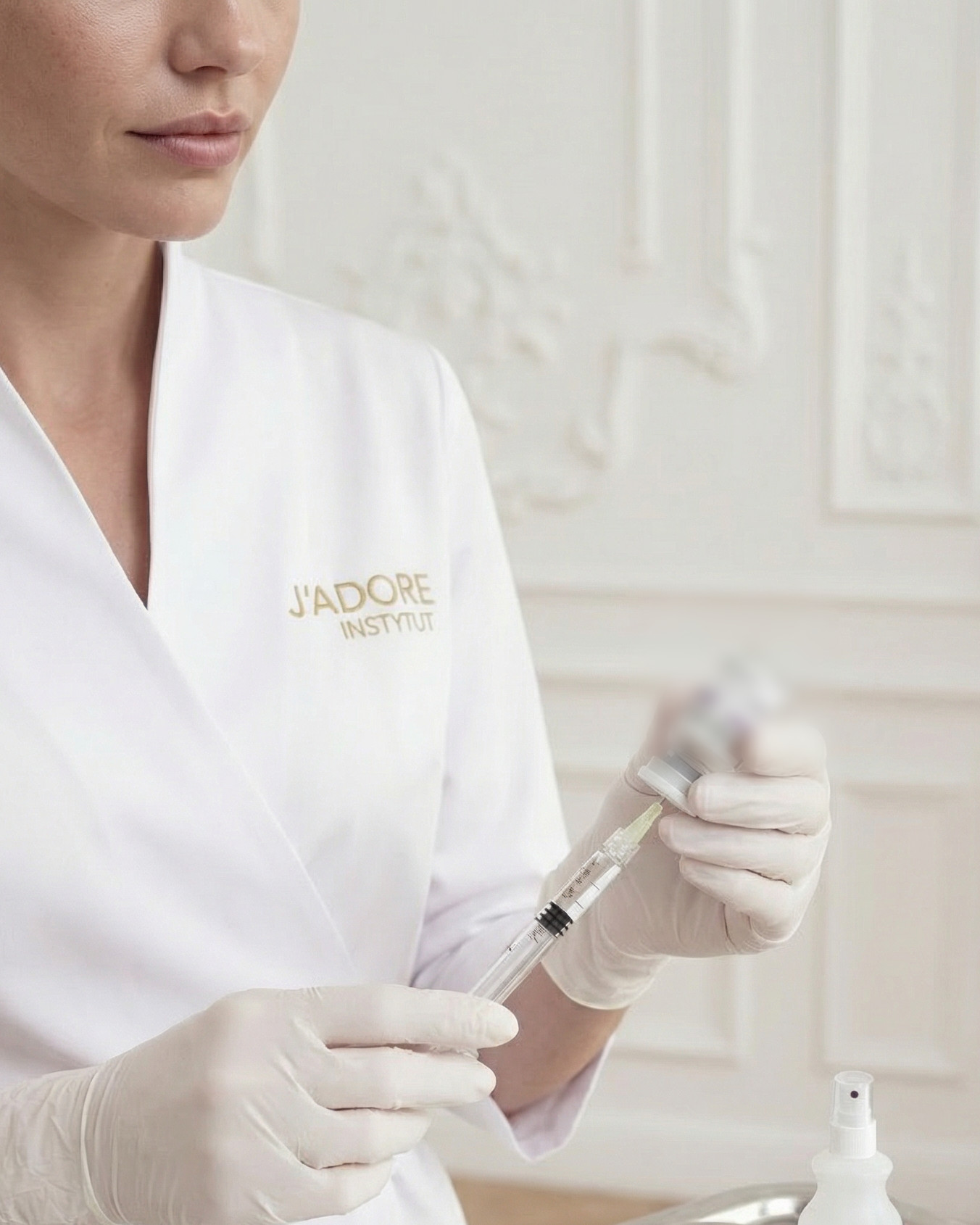
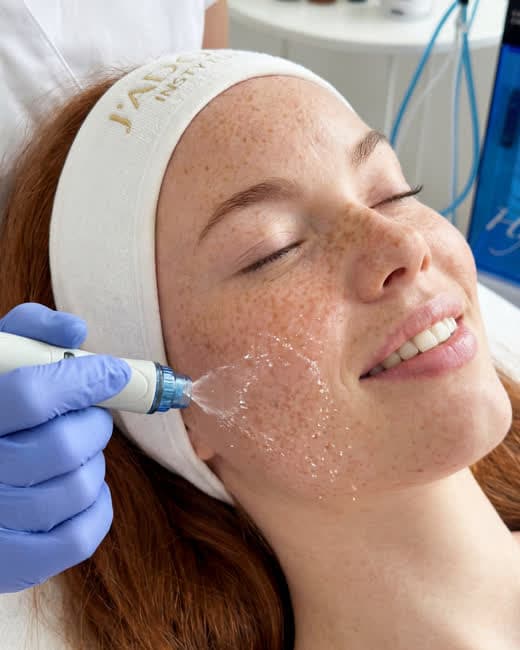
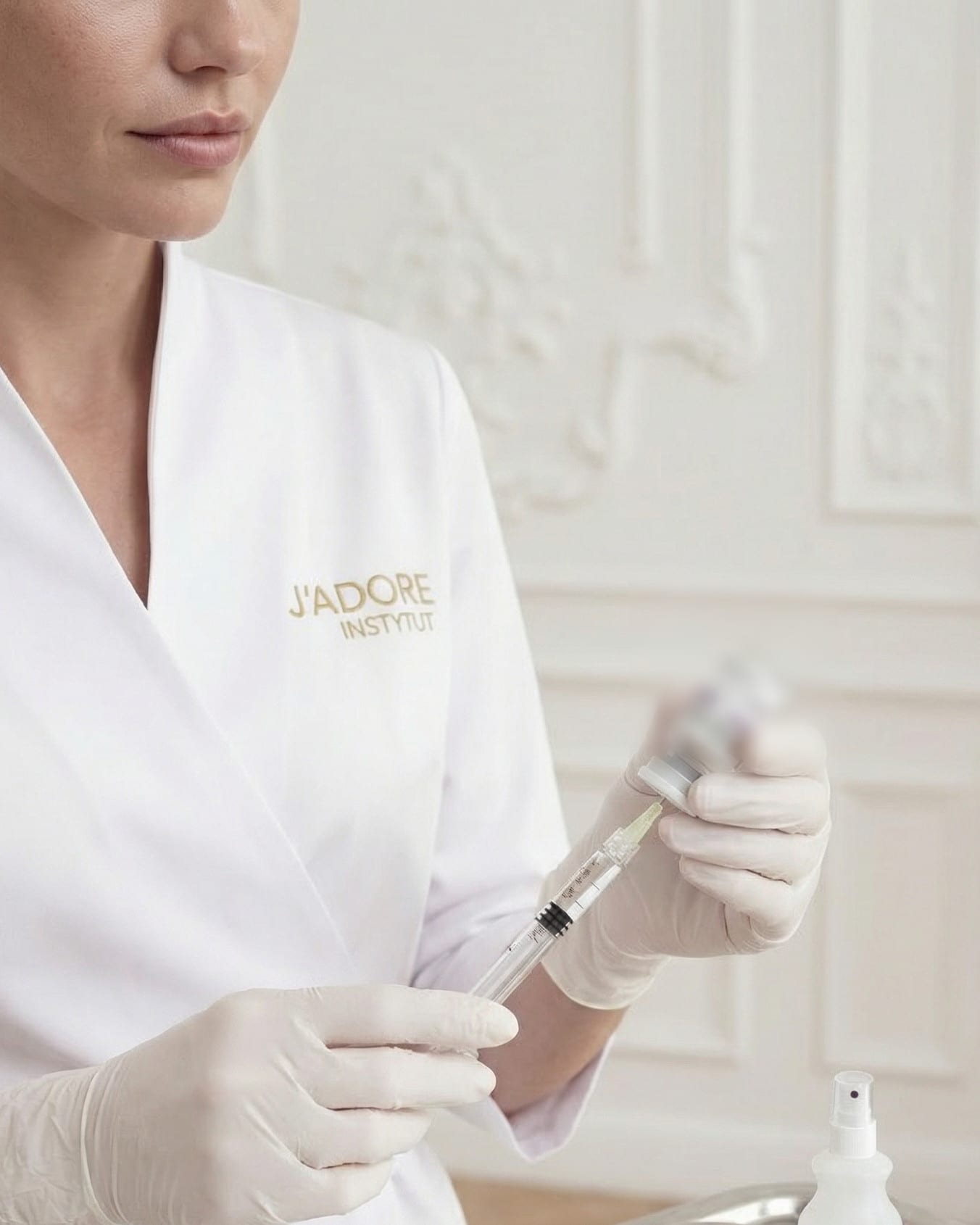
In the context of a “peptide peel”, the word peel means something different from its acid-based version. It does not refer to intensive exfoliation through chemical breakdown. Instead, it is a salon treatment using peptide concentrates, often combined with gentle mechanical or enzymatic skin preparation. The main aim is not to “remove” a layer. It is to deliver active ingredients to living cells and stimulate their natural activity.
- 01
Preparation
Gentle cleansing and, if needed, mild enzymatic exfoliation — not to “injure” the skin, but to help subsequent ingredients penetrate.
- 02
Application of peptide concentrates
Specialist formulas with bioactive peptides, often combined with hyaluronate, amino acids and coenzymes — reach living cells.
- 03
Strengthening the signal
Physical methods, such as electroporation or sonophoresis, may be used to deliver active ingredients deeper — without disrupting the barrier.
- 04
Sealing and protection
The protective barrier is strengthened so new signals can work in a calm, moisturised environment. The skin begins to respond — not immediately, but over days and weeks.
Acid vs peptide — two philosophies, not better and worse
The most common mistake when thinking about these two treatment types is placing them in a hierarchy: “which is stronger, more effective or better?” This is the wrong question. A better question is: what does your skin need right now — and what is it ready to receive?
Acid peel
exfoliates and accelerates renewal through chemistry
- Removes accumulated dead epidermal cells
- Evens out texture and reduces hyperpigmentation
- Unblocks pores, especially with BHA
- At stronger concentrations, stimulates collagen through micro-injury
- The result is often visible sooner — within a few days
Peptide peel
sends signals and stimulates natural activity
- Stimulates the synthesis of collagen, elastin and hyaluronic acid
- Regenerates and strengthens the protective barrier
- Gentle for sensitive and reactive skin
- Does not require a recovery period — can be used all year round
- Results build gradually and are often longer-lasting
Looking at this table, it is easy to see that this is not a “better or worse” choice. It is a choice of timing and skin condition. Neglected skin with a thick layer of dead cells, blackheads and hyperpigmentation may benefit more from a well-selected acid peel. Skin that has been over-exfoliated, is reactive, in a recovery phase or has a collagen deficiency will respond better to peptide support. Often, both work best as part of a sequence rather than in opposition.
Types of peptides — because not all work in the same way
The world of cosmetic peptides is more diverse than the word “peptides” in a treatment name suggests. Each peptide class has a different function. Professional formulations usually combine several classes to address different skin needs at the same time.
- Signal peptides — mimic collagen fragments and signal fibroblasts to produce new fibres. This is the best-studied class, used in cosmetology for several decades. They work slowly, but for many people they bring a gradual, lasting improvement in skin density.
- Neurotransmitter peptides — affect signal transmission between nerve and muscle cells. This may reduce the intensity of facial muscle contractions. Their effect is subtle and non-cumulative — unlike botulinum toxin, they do not permanently block the nerve but modulate its activity.
- Carrier peptides — transport metal ions into the skin, including copper, manganese and zinc. These are cofactors for repair enzymes. Copper combined with a tripeptide was one of the first “active” peptides used in cosmetology — and remains present in many professional formulations.
- Enzyme-inhibiting peptides — block the activity of enzymes, primarily metalloproteinases, which normally break down collagen and elastin. Rather than stimulating production, they slow degradation — a different, complementary pathway.
- Anti-inflammatory peptides — modulate the inflammatory response in the skin. This can be particularly valuable for acne-prone, reactive skin or after exposure to irritants.
Who benefits most — and when to combine them
In the clinic, the question of “acid or peptide” is rarely a simple either-or choice. Specialists more often consider stages and sequence. They assess what your skin needs now and how to plan subsequent treatments so they complement rather than counteract each other.
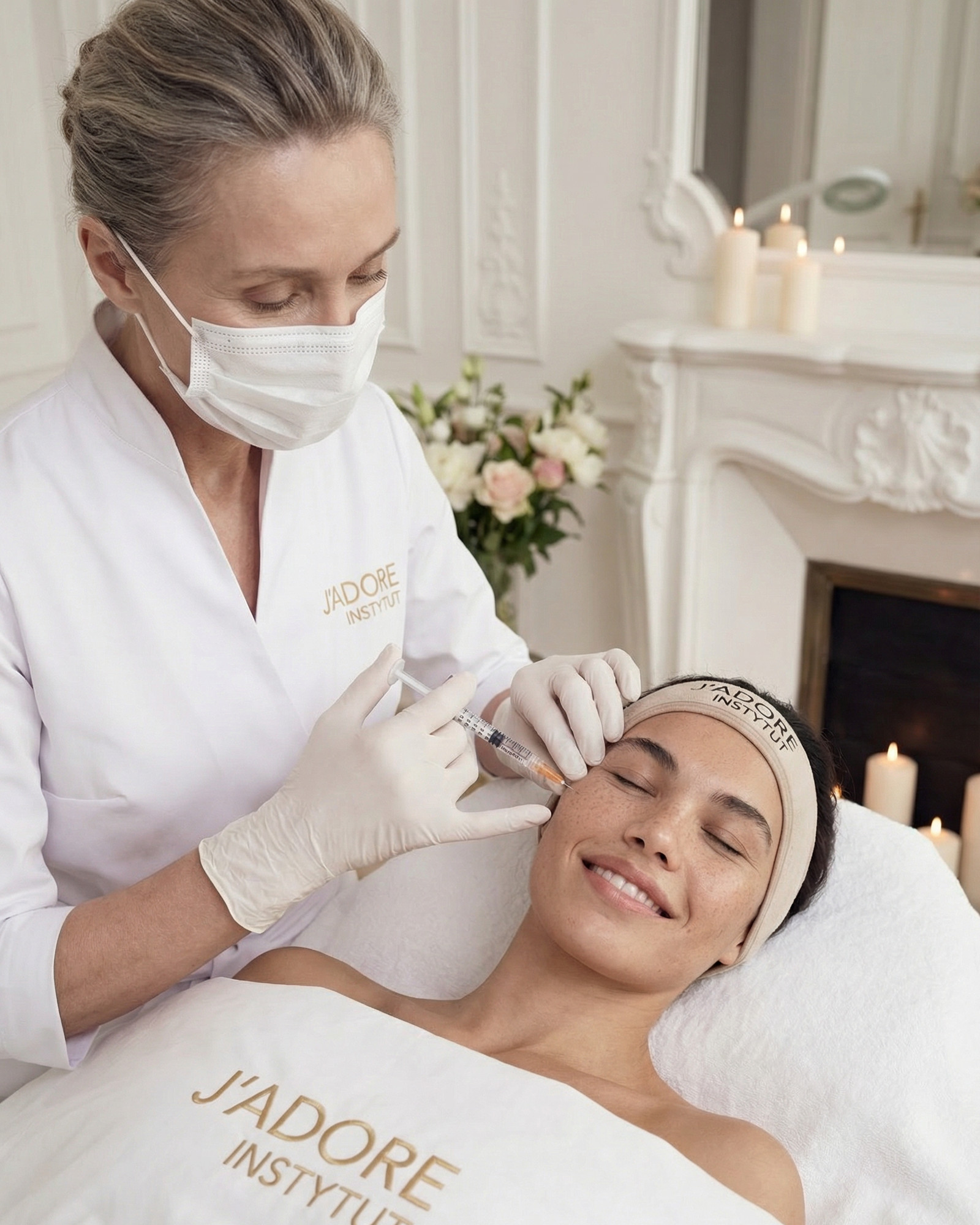
An acid peel works particularly well when the priority is smoothing texture, removing comedones, brightening hyperpigmentation or supporting a renewal cycle that slows with age. A peptide peel is suitable when your skin needs regeneration, barrier strengthening or gradual collagen rebuilding without the risk of irritation. When do both make sense? A common approach is a sequence: first, several acid sessions to “clear” and prepare the skin, followed by a peptide programme to build and strengthen the result.
Mesotherapy
A natural combination with a peptide peel — both work by delivering active ingredients to living cells. Mesotherapy enhances the effect of peptides through direct delivery into the dermis.
Biostimulators
When the main goal is to rebuild skin density and structure, a peptide peel used as a preparatory or complementary treatment can strengthen the skin’s response to a biostimulator.
Fractional CO2 laser / fractional treatments
After ablative treatments, the skin needs regeneration. This is when peptides have a strong rationale as a post-laser treatment: they reduce inflammation and support barrier repair.
Acid peel (sequentially)
Not at the same time, but in a planned sequence: acids smooth and exfoliate, while peptides rebuild and stimulate — together, they provide an effect that neither achieves as quickly alone.
What really determines the choice
After reading all this, you may feel tempted to decide for yourself: “My skin is reactive, so peptides only.” Or: “I have hyperpigmentation, so an acid peel.” This reasoning makes sense — but one layer is missing: the current state of the epidermal barrier, your treatment history and your skin’s readiness for a specific stimulus.
This is why consultation in the clinic is not a formality before a planned treatment — it is part of the treatment itself. An experienced specialist sees your skin differently from a mirror. They assess the thickness of the horny layer, reactivity, vascular condition, signs of photoageing and treatment history. Based on this, they recommend a pathway that is not “the most fashionable” or “the strongest”, but right for your skin now.