Why a man's scalp works harder
Androgens — hormones that are statistically higher in men — directly stimulate the scalp's sebaceous glands. The result: more intense sebum production and follicle openings that clog faster. Add daily sweat from training, stress or heat, plus cotton caps or cycling helmets, and you get the perfect environment for Malassezia yeast to multiply — the organism behind oily dandruff and scalp itching.
This isn't about cleanliness or how often you wash your hair. You can wash your hair every day and still have this problem — because shampoo reaches the hair shaft and the skin's surface, but it doesn't penetrate deep into the follicle opening. That's where dead skin cells, hardened sebum and styling product residue build up. This is exactly what blocks normal hair growth and weakens the hair's anchoring in the follicle.
What oxybrasion does — the mechanism, no sugar-coating
Scalp oxybrasion combines two actions at once: mechanical exfoliation of dead skin (similar to an enzyme peel or microdermabrasion) and tissue oxygenation through an oxygen-enriched stream. The scalp doesn't just get cleaner — it also receives a signal to regenerate.
- Deep cleansing of follicle openings — removes hardened sebum, shed skin cells and styling residue trapped deeper than shampoo can reach.
- Sebum regulation — for many people, normalising scalp conditions leads to slower oil build-up after the treatment.
- Reduced itching and inflammation — cleansing the environment limits the growth of yeast and bacteria responsible for discomfort.
- Tissue oxygenation — often improves microcirculation, which may support nourishment of the hair follicles.
- Stronger hair anchoring — a follicle with a clean, clear opening holds the hair shaft better.
Oxybrasion vs scalp scrub — what's the difference
Many men start with a scrub — it's available in any shop and you can do it yourself. It's worth understanding how it actually differs from a salon treatment, so you can decide what your scalp really needs:
Scalp scrub (at home)
regular maintenance
- mechanical exfoliation of the scalp's surface
- removes flakes and dead skin from the surface
- available without a salon visit
- results last 1–2 weeks
Scalp oxybrasion (salon)
reset and deep therapy
- deep cleansing of follicle openings
- combined tissue oxygenation and microcirculation stimulation
- intensity personalised to your scalp condition by a specialist
- for many people, sebum regulation lasts several weeks
The best results come from combining both — oxybrasion as a reset every few weeks, home scrubbing in between to maintain scalp hygiene. If you've never done anything for this before, start with the salon treatment — to clear the clogged scalp first, then maintain what you've achieved.
What to expect — step by step
- 01
Scalp assessment
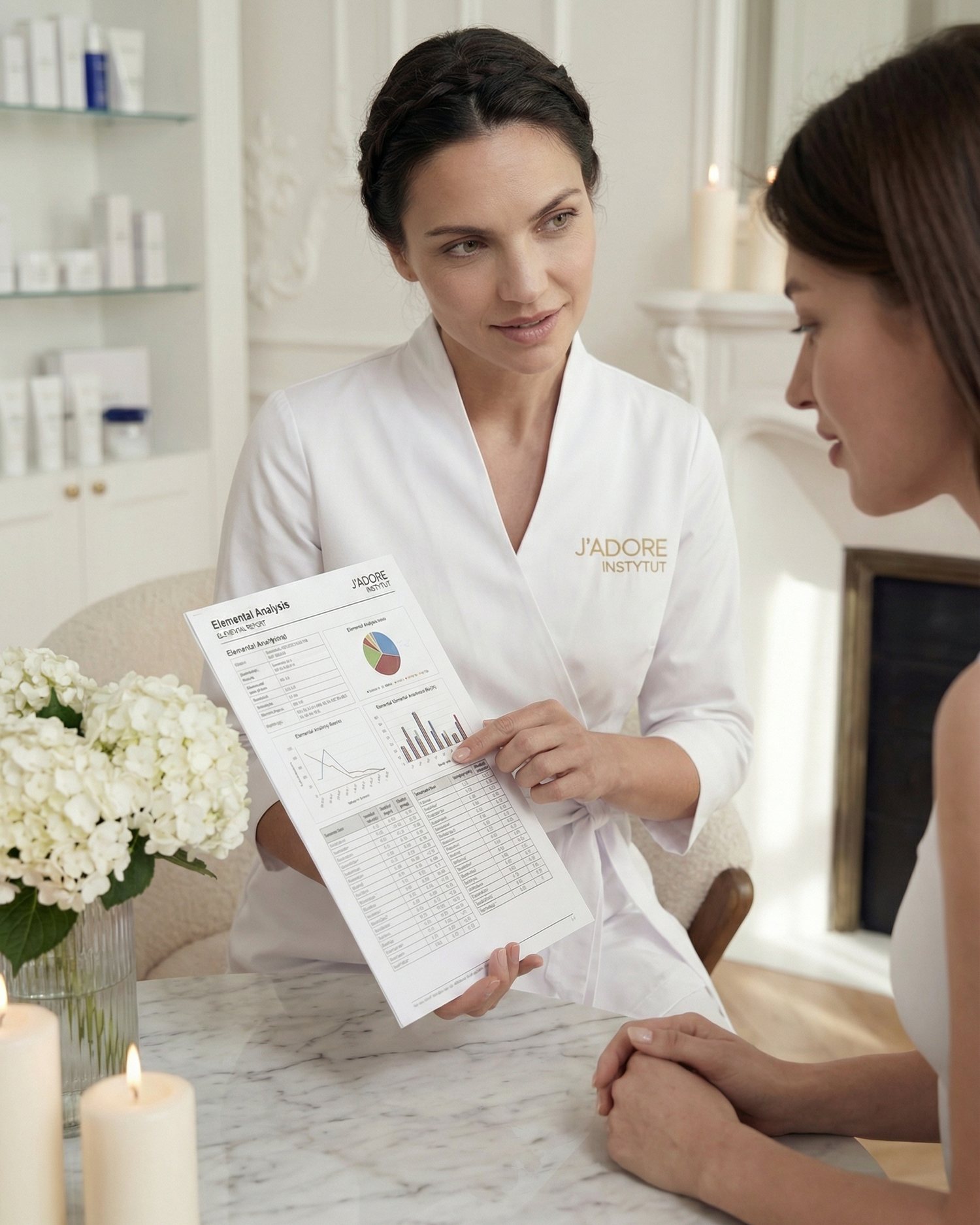
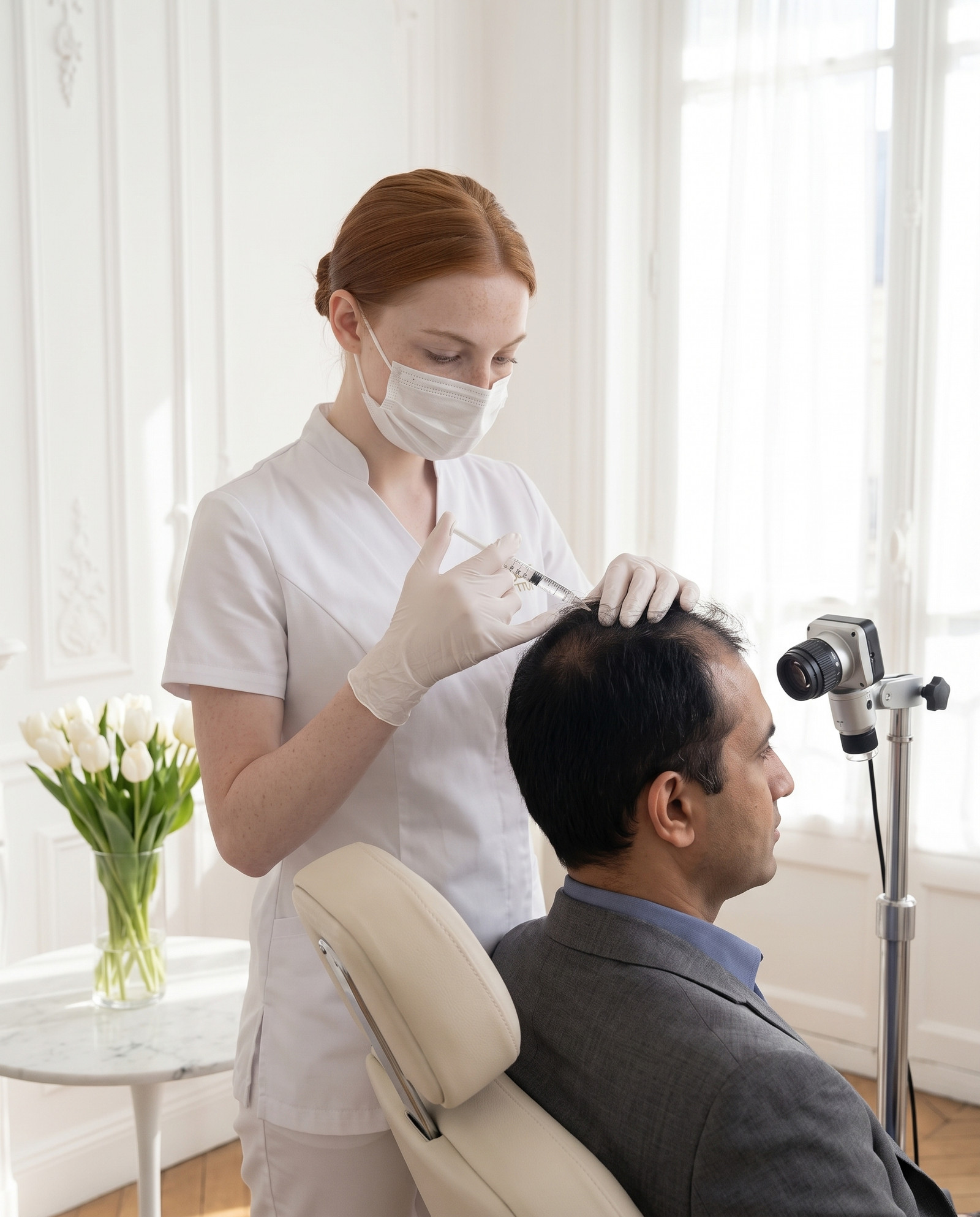
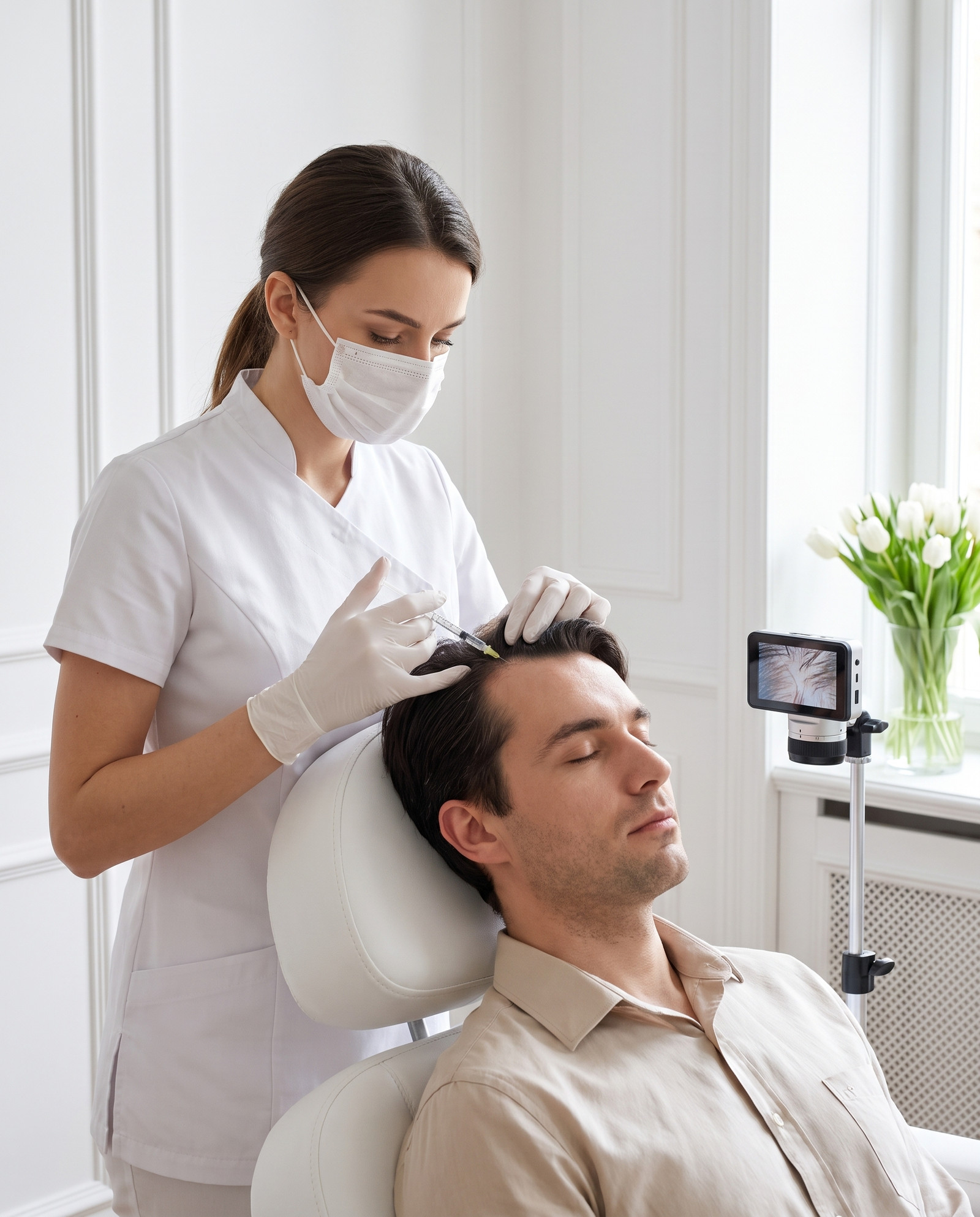
Our specialist examines your scalp under a lamp or trichoscope — assessing how clogged the follicle openings are, the level of excess sebum and any inflammation. This determines the choice of products and treatment intensity.
- 02
Exfoliating product application
An enzyme or acid-based product is applied to dry or slightly dampened scalp — it starts loosening the build-up in the follicle openings. A few minutes are allowed for it to work.
- 03
Oxybrasion — the main treatment
The device mechanically removes shed skin and dead cells from the scalp while delivering an oxygen-enriched stream. As the head moves across the scalp, you'll feel a massaging, gently suctioning sensation.
- 04
Washing and nourishing the scalp
After oxybrasion, the scalp is particularly absorbent. This is the moment to apply an ampoule or serum suited to your scalp condition — it absorbs deeper than under normal conditions.
- 05
Aftercare and repeat schedule
Our specialist will tell you what to avoid for the first 24 hours (harsh shampoos, saunas, intense training) and how often to come back. For excess sebum — usually a series of several sessions every 2–3 weeks.
When it makes sense — and when it doesn't
Scalp oxybrasion isn't for everyone, and it's worth saying that plainly rather than treating it as a cure-all for every hair problem.
- ✅ It makes sense for: oily scalp type (hair that turns oily the day after washing), oily dandruff, itching with no dermatological cause, hair loss from weakened follicles (not androgenic), the feeling of a "clogged" scalp after long-term use of styling products.
- ⚠️ Consult first if: you have active inflammation, open wounds or weeping lesions on the scalp, or you've recently had aggressive chemical hair treatments (colouring, keratin straightening).
- ❌ It won't replace a diagnosis if: you have alopecia areata, scalp psoriasis, pityriasis amiantacea or other diagnosed conditions — these need a dermatologist or trichologist. The treatment can be part of a treatment plan, but not its basis.
Hair loss — does oxybrasion help
This is the most common question — and it needs a precise answer, because hair loss has many causes, and oxybrasion helps with only one of them.
If hair is falling out because the follicles are weakened by a clogged, poorly oxygenated scalp environment — cleansing and oxygenation can improve growth conditions. Many people notice reduced hair loss and thicker new regrowth after a series of treatments. That's real and it makes sense.
If, however, the hair loss has a hormonal cause (male pattern baldness — receding hairline, thinning at the crown) — scalp oxybrasion won't reverse this process. It can complement trichological therapy, but it doesn't replace a dermatology consultation and hormone testing. This is an important distinction, and an honest specialist will tell you plainly.
How many sessions and how often — a realistic plan
One session shows results — but they're not permanent. The scalp returns to its own rhythm of sebum production and shedding. For this reset to work long term, you need a series.
For excess sebum and oily dandruff: usually a series of several sessions 2–3 weeks apart, followed by a maintenance session every 4–6 weeks. For less advanced cases, the maintenance cycle alone may be enough. The exact frequency depends on your scalp's condition — your specialist will assess this after your first visit.