What non-needle scalp mesotherapy actually is
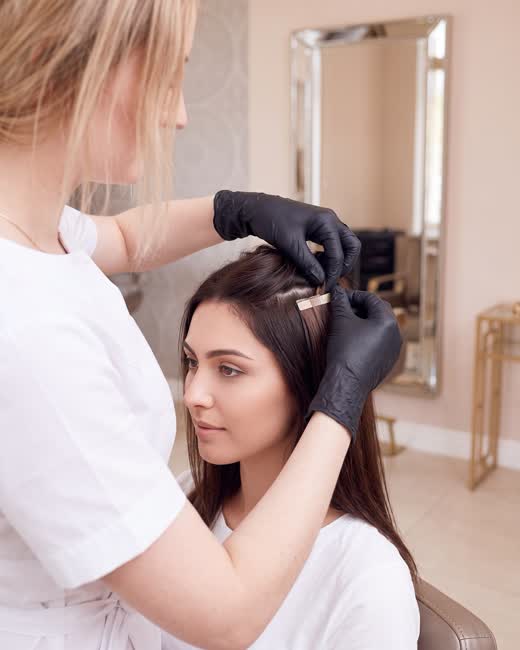
To debunk myths properly, it helps to know what's being debunked. Non-needle mesotherapy is a method of delivering active ingredients — usually cocktails of peptides, B vitamins, amino acids, zinc or biotin — directly into the scalp without any needles. Instead of a needle, it uses electric current or ultrasound waves, which temporarily increase the permeability of the skin barrier and "push" the substances into the epidermis. This sets it apart from needle mesotherapy, which is performed by a doctor and reaches deeper — right down to the hair follicles.
The scalp is one of the most richly vascularised surfaces of the body — which gives active ingredients a reasonably good chance of reaching the hair follicles. That's a solid starting point. But — and this is where most of the confusion begins — "a solid starting point" isn't the same as "a solution to every hair problem".
Six myths — one by one
Myth 1: "Non-needle mesotherapy rebuilds hair — always, for everyone." This is the most common myth, and the most costly one — costly in terms of time and expectations. The treatment can support scalp condition and the environment hair grows in, but results depend heavily on the cause of the hair loss. If the hair loss is driven by iron deficiency, an underactive thyroid, PCOS or severe systemic stress, no cocktail applied to the scalp will fix a problem that sits in your blood count or hormone levels. Non-needle mesotherapy works locally: it nourishes and stimulates the scalp. It doesn't treat systemic causes.
Myth 2: "Non-needle is the same as needle mesotherapy, just without the pain." Removing the needle isn't just about comfort — it changes how the treatment works. Needle mesotherapy, performed by a doctor, delivers ingredients directly into the hair follicles and can reach deeper layers of the dermis. The non-needle version penetrates less deeply — which is why it's recommended as regular support for scalp condition, rather than a substitute for medical treatment in serious cases of male pattern baldness or alopecia. These are different tools, useful at different moments.
Myth 3: "The more cocktail, the better." The concentration and composition of the cocktail do matter — but "more" doesn't mean "more effective". The skin has a limited capacity to absorb substances, and an excess of active ingredients can, paradoxically, irritate the scalp rather than support it. A good mesotherapy cocktail is matched to the specific problem: different ingredients help a dry, irritated scalp, others help excess oiliness, and others help telogen hair loss. One "universal cure-all" is a warning sign, not a promise.
Myth 4: "Non-needle scalp mesotherapy is only for women." In the salon, this is very clear: hair loss affects men at least as intensely — and often earlier. Male pattern baldness frequently begins as early as the third decade of life, and non-needle mesotherapy, as part of prevention and follicle support, can be introduced well before any changes become irreversible. Men use this treatment just as often — only the protocols differ, because men's scalp skin is thicker and produces more sebum.
Myth 5: "Results show up after one session." Hair grows slowly — around a centimetre a month — and the follicle's growth cycle lasts from a few months to over a year. Non-needle mesotherapy works on the growth environment, not on the length of existing hair. The first results — usually less hair loss when combing, better hydration and less breakage — can appear after a few sessions, often around four to six weeks of regular visits. People who give up after the first session because "nothing's changed" stop too soon.
Myth 6: "One series and the problem disappears forever." The scalp, like the rest of the skin, ages, and reacts to stress, diet, hormonal changes and environmental conditions. The results of a series of treatments — better scalp condition, less hair loss, stronger hair roots — need maintaining. That doesn't mean weekly visits for life. It means that two or three series a year produce a different result than one series every three years. Maintenance isn't an obligation — it's simply how hair biology works.
Who benefits most — and who should start elsewhere
Who non-needle mesotherapy makes sense for
A good candidate for the treatment
- Seasonal or stress-related (telogen) hair loss with no underlying condition
- Weak, brittle hair with a healthy blood count
- Dry, irritated scalp prone to dandruff
- Prevention for those with a family history of male pattern baldness
- Support after completing dermatological treatment
- Men and women over 25 as part of regular scalp care
When it's better to start elsewhere
Diagnostics first
- Sudden, intense hair loss (over 150 hairs a day) — start with blood tests
- Suspected male pattern baldness or scarring alopecia — see a dermatologist
- Iron, ferritin or vitamin D deficiency, thyroid disorders — treat the underlying cause
- Active inflammation or fungal changes on the scalp
- Pregnancy (consult a doctor before any treatment)
What a series looks like in practice
- 01
Consultation & scalp assessment
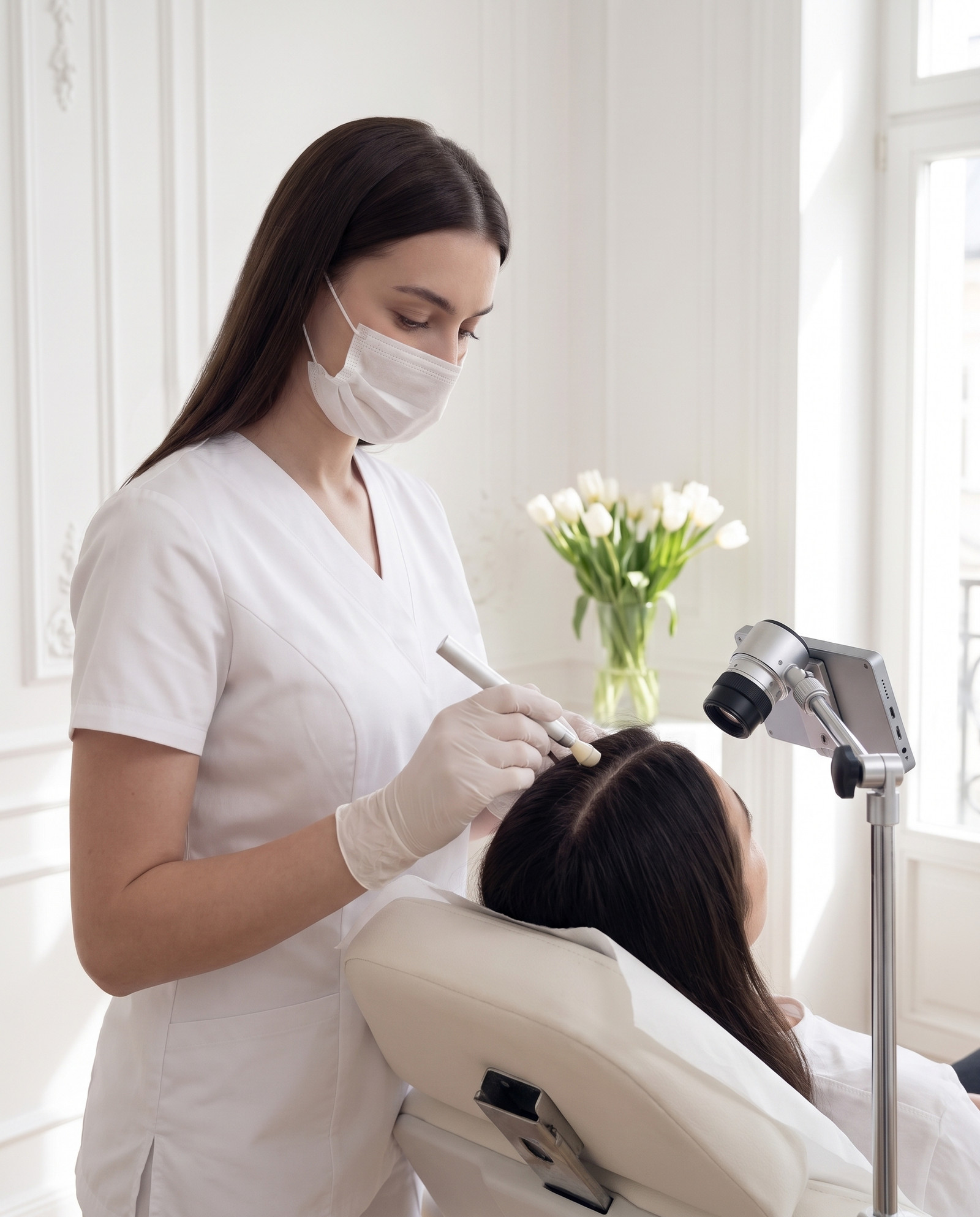
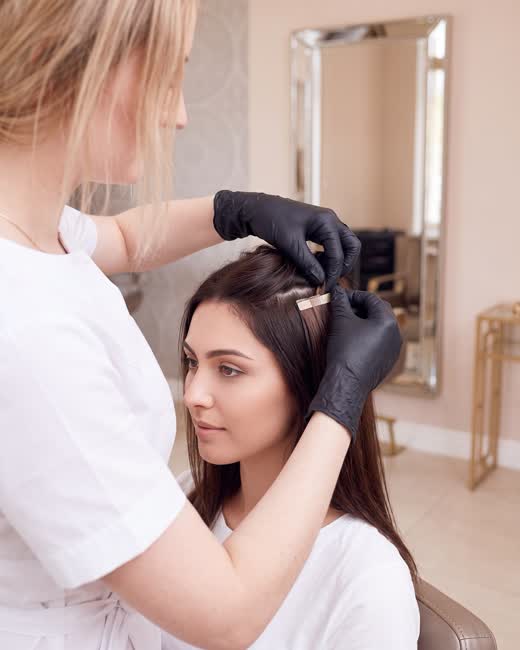
A conversation about your history of hair loss, diet, medication and lifestyle. A visual or trichoscopic assessment of the scalp — this is the starting point that determines the cocktail and protocol we choose.
- 02
Cleansing and preparation
We cleanse the scalp — any excess sebum or styling residue can limit how well active ingredients absorb.
- 03
Applying the cocktail and treatment
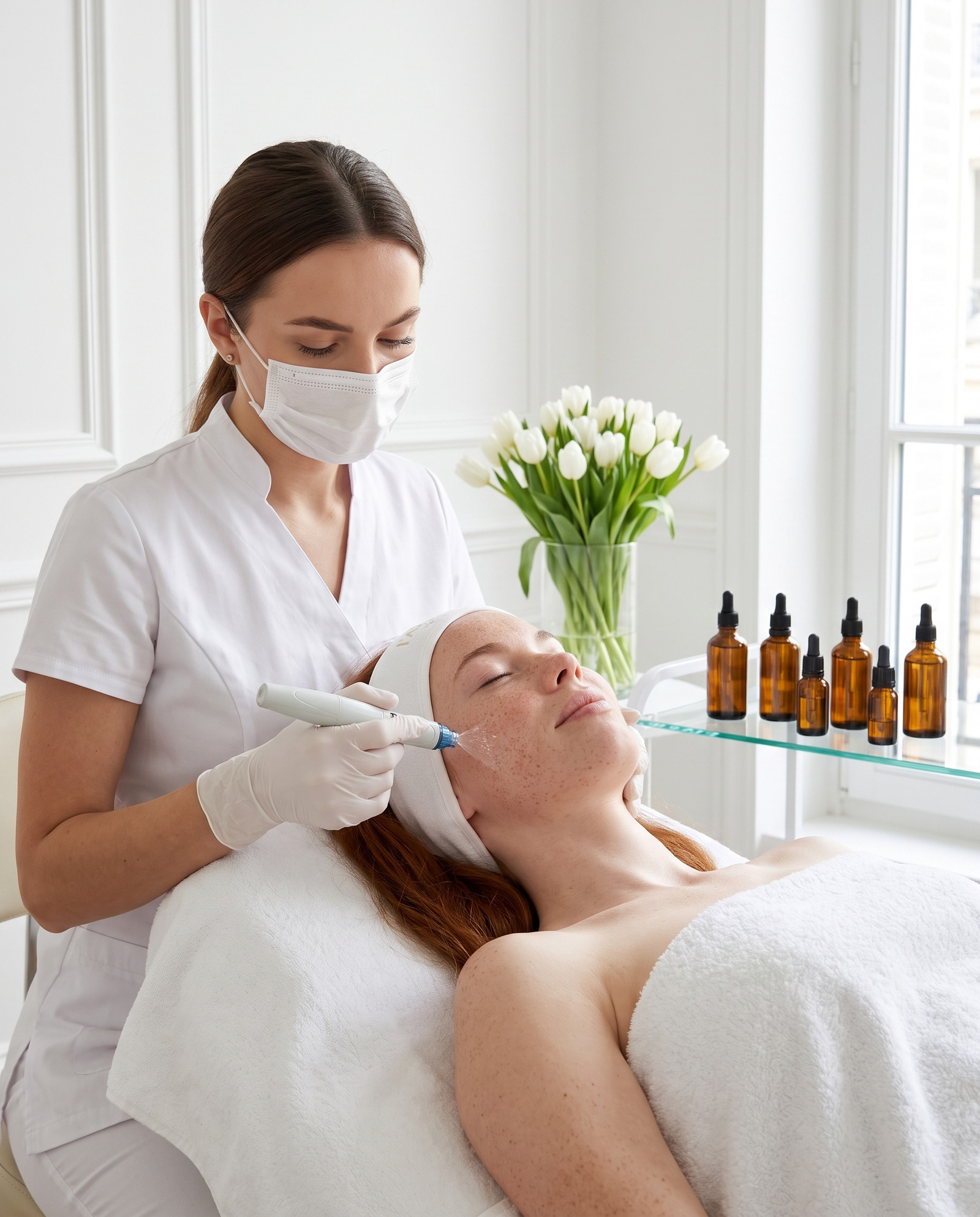
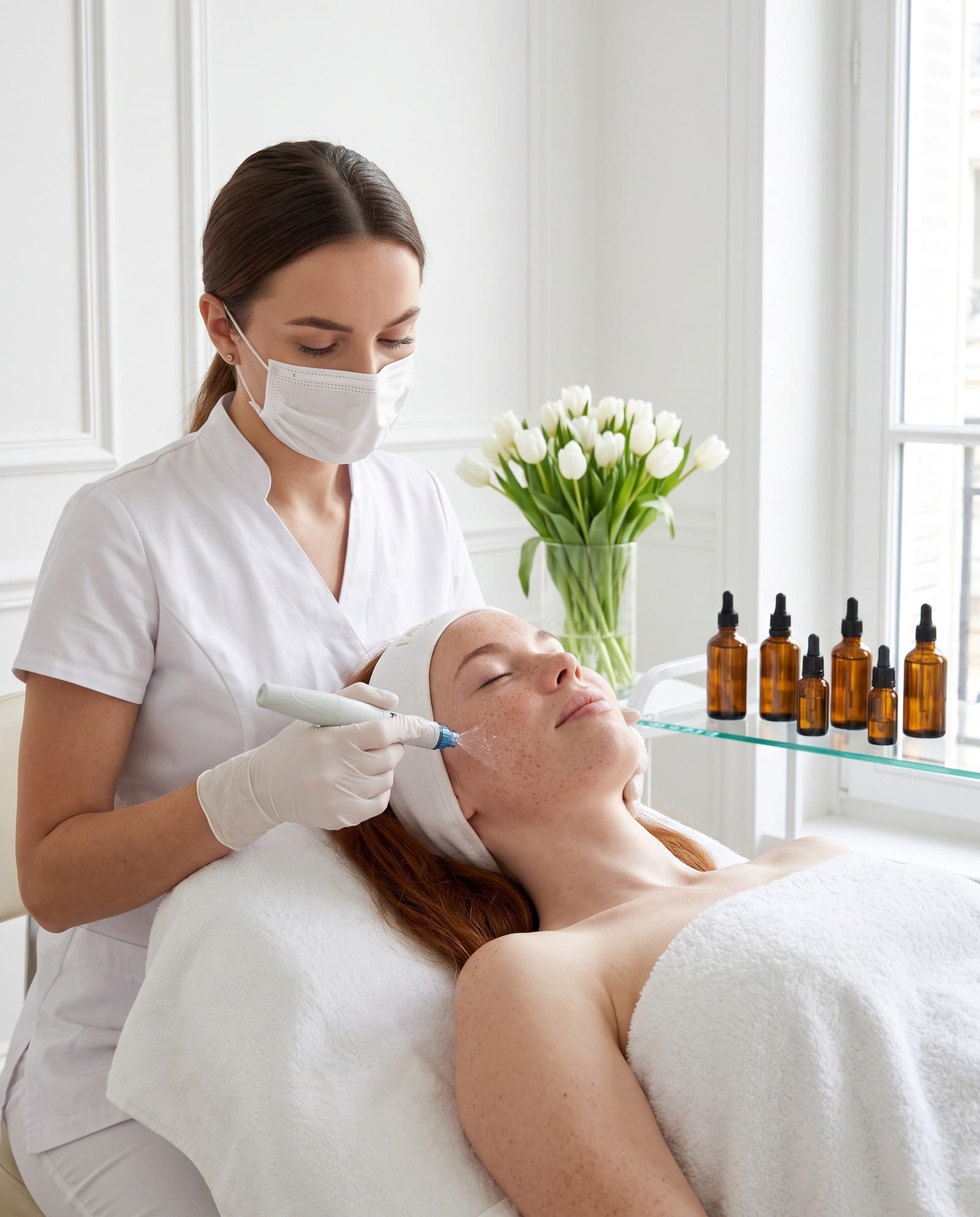
We apply active substances to the scalp, then drive them deeper using a device (electroporation, ultrasound, or a combination of both). The treatment is pain-free and generally comfortable.
- 04
Massage and finish
A gentle massage to stimulate circulation in the skin — this strengthens the treatment's effect by naturally increasing blood flow.
- 05
Aftercare
For several hours afterwards, avoid washing your hair, heavy sweating and styling products — this gives the active ingredients time to absorb.
A standard series usually involves four to six sessions, spaced weekly or fortnightly, followed by an assessment of results. There's no single answer to "how many sessions" — it depends on your starting point and how your scalp responds. A good specialist assesses your progress after the series and suggests a maintenance schedule tailored to you, rather than repeating the same plan regardless of results.
Questions worth asking before your first session
Non-needle mesotherapy and other ways to support hair — what to combine it with
Non-needle mesotherapy rarely works in isolation — especially when the problem has more than one cause. It gives the best results as part of a broader approach: combining external care with looking after your body's nourishment, possible supplementation, and — in more serious cases — dermatological treatment. This doesn't mean everyone needs ten treatments at once. It means a series of mesotherapy sessions without also paying attention to a diet rich in protein, iron and B vitamins may give weaker results than it could.
Needle scalp mesotherapy
For those with advanced male pattern baldness, or after a consultation with a trichologist — deeper penetration of active ingredients, directly into the follicle. Non-needle sessions can maintain results between needle sessions.
Enzyme or acid scalp peel
Removes dead skin cells and excess sebum, which improves absorption of active ingredients during mesotherapy. Particularly recommended for oiliness or oily dandruff.
Scalp massage
A natural circulation stimulator — it increases blood flow to the hair follicles without any active substances. Regular self-massage (5–10 minutes a day) can strengthen the effect of a series of treatments.
What you can realistically achieve — and what not to expect
- Less hair loss when combing and washing — for many people, after a full series
- Better scalp condition and hydration (less itching, less sensitivity)
- Thicker, better-rooted hair in people with mild telogen hair loss
- Slower progression of hair weakening in male pattern baldness (as part of prevention)
- Improved shine and elasticity from better-nourished scalp
- Reversing advanced male pattern baldness — this is a job for a dermatologist or trichologist
- Growing new hair where follicles are already permanently inactive
- Replacing treatment for an underlying cause (anaemia, thyroid disorders, PCOS)
- Results after a single session — a follicle's biological response time is measured in weeks