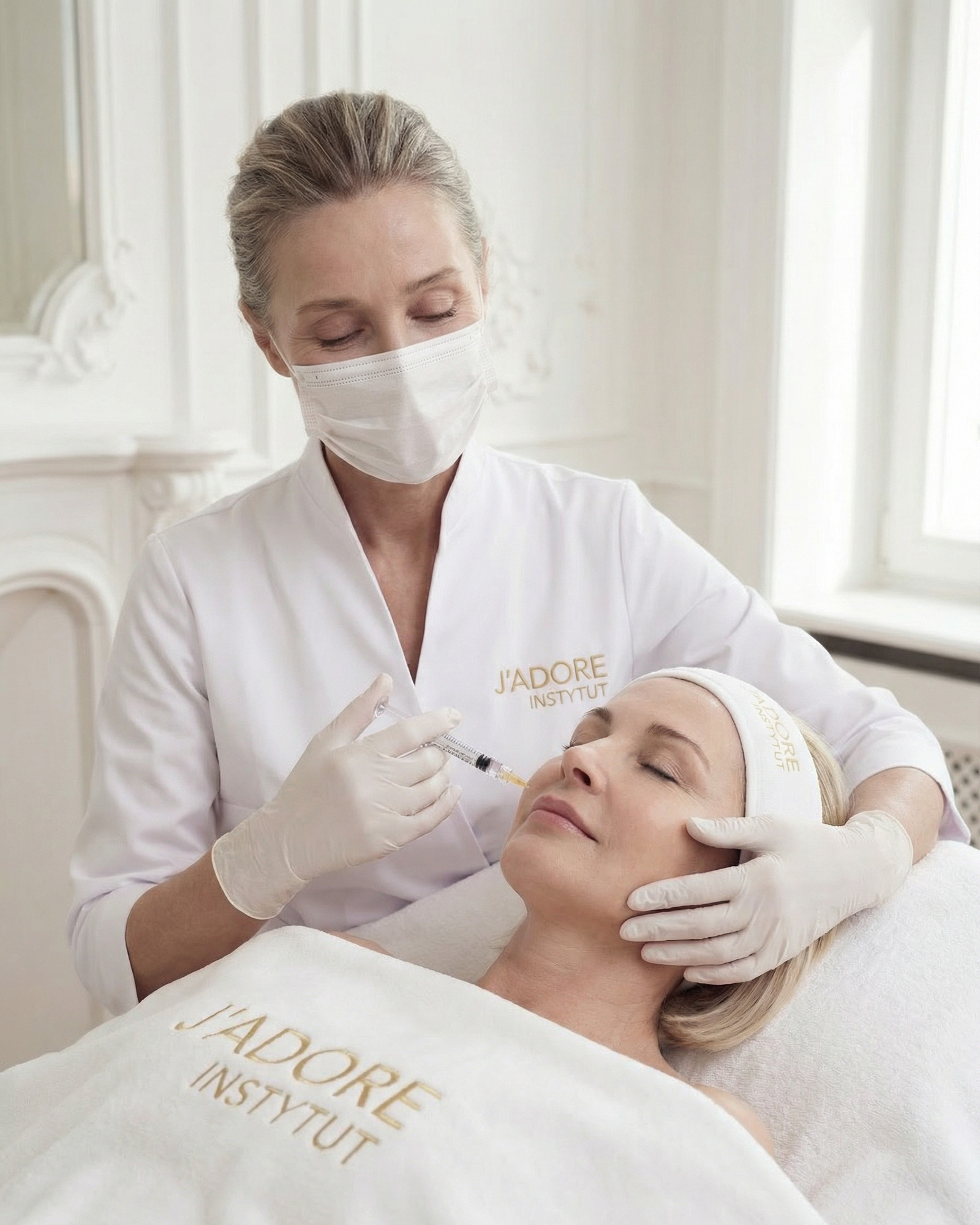
The mechanism determines more than the shared word "revitalisation"
Mesotherapy describes an injection technique, skin biostimulator is a preparation category, and Nucleofill is the name of a polynucleotide product. In this comparison, skin biostimulator refers to a hyaluronic acid preparation. The term alone does not specify its concentration or treatment schedule.
Mesotherapy
delivers nutrients directly into the skin
- vitamin cocktails, amino acids, hyaluronic acid, peptides
- hydration, radiance, improvement of skin tone
- the composition is selected for a specific problem (acne, fatigue, hyperpigmentation)
- gradual effect, requires a series
Skin biostimulator
biodiffuses and stimulates all types of collagen fibres
- ultra-pure, non-cross-linked hyaluronic acid with double molecular weight
- spreads under the skin, reaching large areas
- stimulates collagen I, III, IV and elastin simultaneously
- tension, density, "skin like 10 years ago" effect
Nucleofill
regenerates the skin at the cellular DNA level
- polynucleotides (PDRN) — DNA fragments isolated from salmon or trout
- activates skin cell receptors, triggers its own repair processes
- rebuilds the matrix, increases density and deep hydration
- works particularly well for skin that is very damaged, thin, or affected by sun or chemicals
The symptom in the mirror must be translated into the right goal
Before a doctor or specialist assesses your skin, you can perform an initial diagnosis at home. It will take three minutes and help you come to the consultation with a specific question — not a general "I want to improve something".
- Your skin looks grey, is dry and dull, but there are no clear wrinkles. It lacks radiance and tone, and you may have the first signs of fatigue. → Direction: mesotherapy (cocktail for a specific problem).
- Your skin has clearly lost tension. Cheeks have slightly sagged, the face contour has blurred, and the skin is "softer" than a few years ago. → Direction: skin biostimulator (restoration of tension and density over a large area).
- Your skin is very thin, "papery", vessels are visible, and it reacts poorly to other treatments. It may also be after excessive sun exposure or aggressive treatments. → Direction: Nucleofill (regeneration at the cellular level, matrix rebuilding).
- You have more than one problem — fatigue + loss of tension + thinner skin. → This is the most common scenario for women over 35. The doctor will select a plan combining two or three tools, often in different sessions.
Combining methods only makes sense if each has a separate task
The question "which treatment to choose" often has the answer: none individually. Skin after the age of 35 rarely has one isolated problem — it usually needs nourishment, regeneration and tension restoration simultaneously. A good treatment plan is most often a sequence, not a choice.
Mesotherapy + skin biostimulator
a series of mesotherapy builds a "base" (hydration, colour), skin biostimulator adds structure and tension. A popular combination for the first signs of ageing.
Nucleofill + skin biostimulator
deep regeneration + tension restoration. Particularly effective for thin skin lacking elasticity. Often spread over time.
Mesotherapy + Nucleofill
a nourishing cocktail plus a repair one. A good sequence for tired skin and skin after exposure to external factors (sun, stress, diet).
All three in a seasonal plan
spring/summer: mesotherapy (hydration, antioxidants), autumn/winter: skin biostimulator or Nucleofill (rebuilding, deep regeneration). This approach treats the skin as a long-term project, not a single treatment.
The order is always determined by the doctor — and always depends on the current state of the skin, not on "what is popular now". A plan that worked for a friend may not be right for you, because your skin is on a different "floor" of the problem.
Table for consultation: problem, method and effect limit
For those who learn by comparison — a summary in three lines. Show it to your doctor, say which description best fits your skin, and start the conversation from there, not from searching for a treatment name on Google.
Skin biostimulator and Nucleofill improve skin quality through different paths
In this comparison, skin biostimulator means a hyaluronic acid preparation, while Nucleofill is a polynucleotide preparation. Some HA formulas are used for bioremodelling. Their consistency, distribution in tissue and effects depend on the product; the category name alone does not define them. Selection requires skin assessment.
Skin biostimulator
biorevitalisation — hydration and lifting
- lax skin that has lost its tension and elasticity
- "glow" effect and smoothing of texture
- rapidly visible improvement — the skin looks more rested
- ideal for the face, neck, décolletage and hands
Nucleofill
matrix regeneration — rebuilding the cellular environment
- dehydrated, thinned or "exhausted" skin (e.g. after sun exposure, stress)
- clear improvement in elasticity and hydration in deeper layers
- the effect builds up gradually but tends to last longer
- particularly valued for skin with signs of photoageing
A home test will not replace an examination, but it helps structure the conversation
Before you come for a consultation, you can ask yourself a few questions in front of the mirror. This is not a diagnosis, but a good starting point for a conversation with a specialist:
- Does your skin look "dropped" and lack elasticity? Thin, lax skin that is losing its oval contour — this may indicate it needs biorevitalisation. Direction: skin biostimulator.
- Is your skin very dry, rough to the touch, with a fine network of lines when palpated? And does it not improve despite good skincare? This is a sign that the cellular matrix may require deeper support. Direction: Nucleofill.
- Are you looking for a quick effect before an important event? The skin biostimulator works faster — the first changes in the skin are visible just a few days after the first session.
- Has the problem been growing for years and are you looking for a "longer-lasting" solution? Nucleofill builds the effect more slowly, but matrix regeneration is a structural change — not just a surface improvement.
When a sequence is more sensible than a single preparation
A skin biostimulator and Nucleofill not only do not exclude each other — they can work together perfectly. If your skin needs both biorevitalisation and deeper regeneration, combining both methods (at appropriate intervals and in an order determined by a doctor) can give a better effect than either treatment alone.
Nucleofill first, skin biostimulator as the next stage
when the skin is significantly weakened, it is worth starting with rebuilding the cellular environment, and then working on tension and density.
Skin biostimulator as regular support, Nucleofill as an intensive treatment
The skin biostimulator works well as constant "maintenance" of skin condition, Nucleofill as a deeper intervention from time to time.
Both + vitamin mesotherapy
supplementation with vitamin cocktails strengthens the regenerative effects of both preparations.
In combination with home care
without proper hydration, sunscreens and antioxidants, the effects of any treatment last for a shorter time.
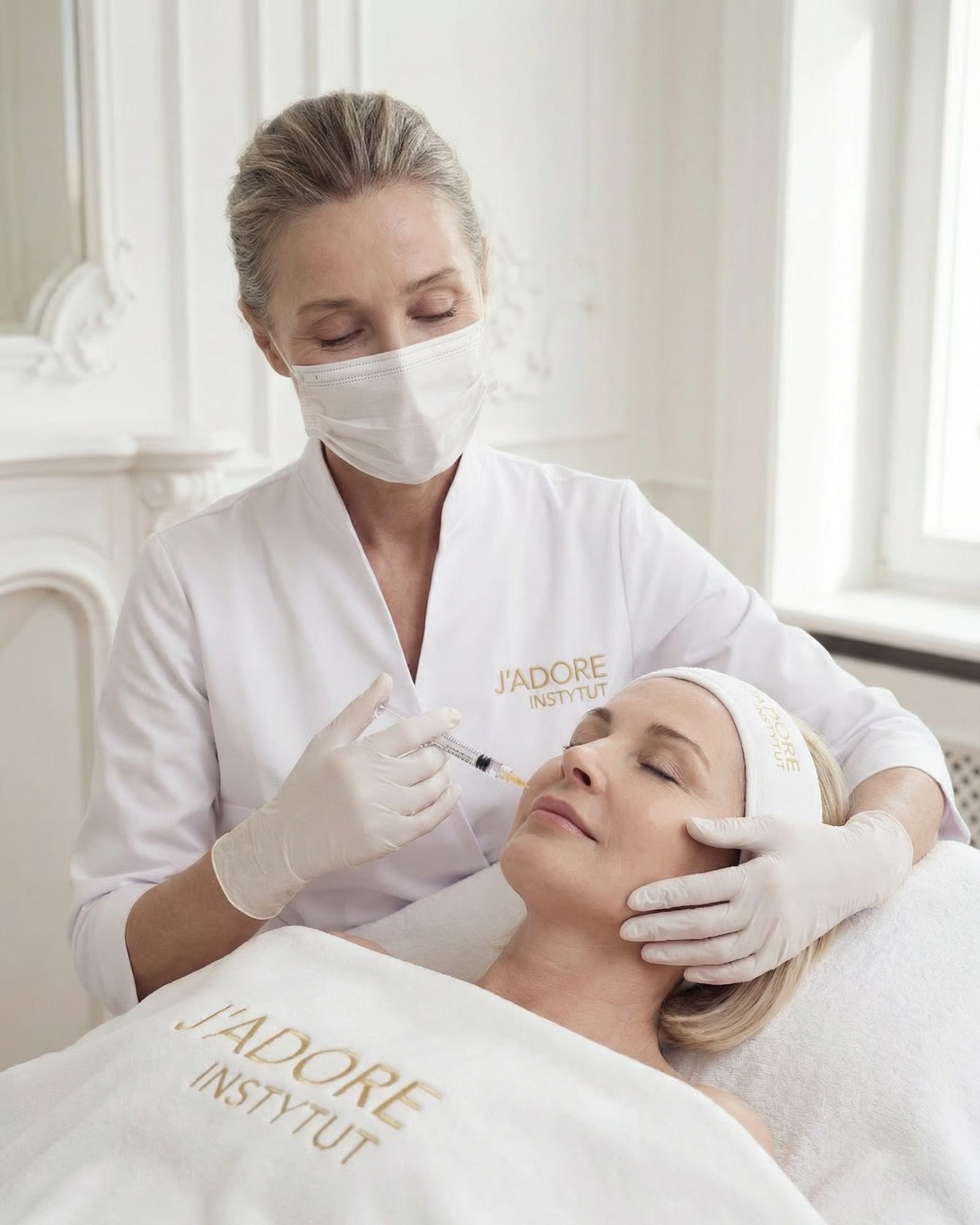
No injection stops ageing or improves everything
Both skin biostimulator and Nucleofill improve skin quality — its hydration, elasticity, texture and regeneration. But if the problem is a lack of volume (drooping cheeks, deepened nasolabial fold) or wrinkles from muscle movement — neither of these treatments will solve the problem on its own. They are part of a larger system, not a complete answer to every sign of ageing.
Therefore, instead of looking for the "best skin treatment", it is worth starting from the question: what exactly do I want to improve? Tension, hydration, loss of volume, muscle movement — these are four different problems and four different answers. A good consultation starts with exactly this conversation, not with the name of the preparation.
The Nucleofill variant is selected according to the area and tissue quality
Below is a summary of the four Nucleofill variants with their indication profiles. This is not a "better/worse" ranking — it is a map of tools from which the doctor selects those appropriate for your skin.
Nucleofill Soft
gentle prevention and hydration
- sensitive or reactive skin
- first signs of dehydration
- prevention from ~25 years of age
- skin during or after intensive treatments
Nucleofill Medium
regeneration and density rebuilding
- skin losing elasticity, grey, "tired"
- first wrinkles, lack of radiance
- skin after thirty, requiring systematic stimulation
- the most frequently chosen variant for the face and neck
Nucleofill Strong
intensive rebuilding for advanced changes
- clearly lax skin, with deeper wrinkles
- loss of facial oval, intensified signs of ageing
- skin after fifty or earlier with a faster pace of ageing
- higher concentration = stronger regenerative impulse
Nucleofill Eyes
Regeneration of the eye area
- Thin, fragile skin under the eyes and around the eyes
- Fine lines, dark circles, and swelling related to skin quality
- Dedicated to the most delicate zone of the face
- Formula adapted to the thickness of the skin in the orbital area
Questions that protect you from choosing by brand name
Before you attend a consultation, it is worth taking a moment to observe your skin carefully. The following questions do not replace a medical assessment. They help you enter the conversation with specifics, rather than a general "I would like to do something about this".
- How does your skin look in the morning, before your skincare routine? Is it grey, dull, lacking radiance, or does it feel "tight"? This is a sign of moisture deficiency and reduced density. The direction: Medium or Soft.
- Do you see a clear loss of facial contour, sagging cheeks, or deepened wrinkles? Skin that has "drifted" downwards. The direction: Strong.
- Are dark circles under the eyes, fine lines around the eyes, or a generally "tired" orbital area your problem? This zone requires precision. The direction: Eyes.
- Is your skin sensitive, prone to redness, or reactive to new ingredients? Start with a gentler approach. The direction: Soft as a first stage.
- How old are you and how do you rate the general ageing pace of your skin? Before thirty: prevention (Soft/Medium). After forty with clear changes: Medium or Strong, depending on the specialist's assessment.
It is worth remembering that Nucleofill variants are not mutually exclusive. It is not uncommon for a doctor to combine, for example, Eyes for the eye area with Medium for the rest of the face in a single session. This is not a matter of extravagance, but of precision. Different facial zones have different needs, and it is beneficial when the treatment accounts for this.
Verify your decision by checking if the plan has a goal, boundaries, and a control point
After the consultation, write down in your own words what problem the Nucleofill is intended to solve, how the change will be assessed, and what the procedure intentionally does not cover. If you cannot recall these three elements, ask for a further explanation before giving your consent. The product name, the length of the visit, and photos of other people do not replace a goal tailored to your starting point.
A good plan also includes a variant where the treatment is postponed, changed, or proves unnecessary. This is not a lack of confidence on the part of the specialist, but proof that the decision responds to your medical history and skin condition. Establish when the follow-up takes place, what sensations are expected, and who answers your questions if the progress deviates from the discussed scenario.
The final criterion is simple: after the conversation, you should understand both the potential benefit and the biological cost in terms of irritation, healing, or skincare restrictions. An informed decision is not about choosing the most intensive option. It is about choosing the smallest reasonable intervention that addresses a correctly identified problem.
Do not compare the result solely with a photo taken immediately after the procedure. Light, swelling, surface tension, and cosmetics can temporarily alter your appearance. A reliable control point should correspond to the treatment mechanism and take place under similar conditions. Record the date, the products used, any unusual sensations, and changes in your skincare routine so that the next assessment is not based on memory. Only then can you decide whether to continue, change the rhythm, or stop the plan.