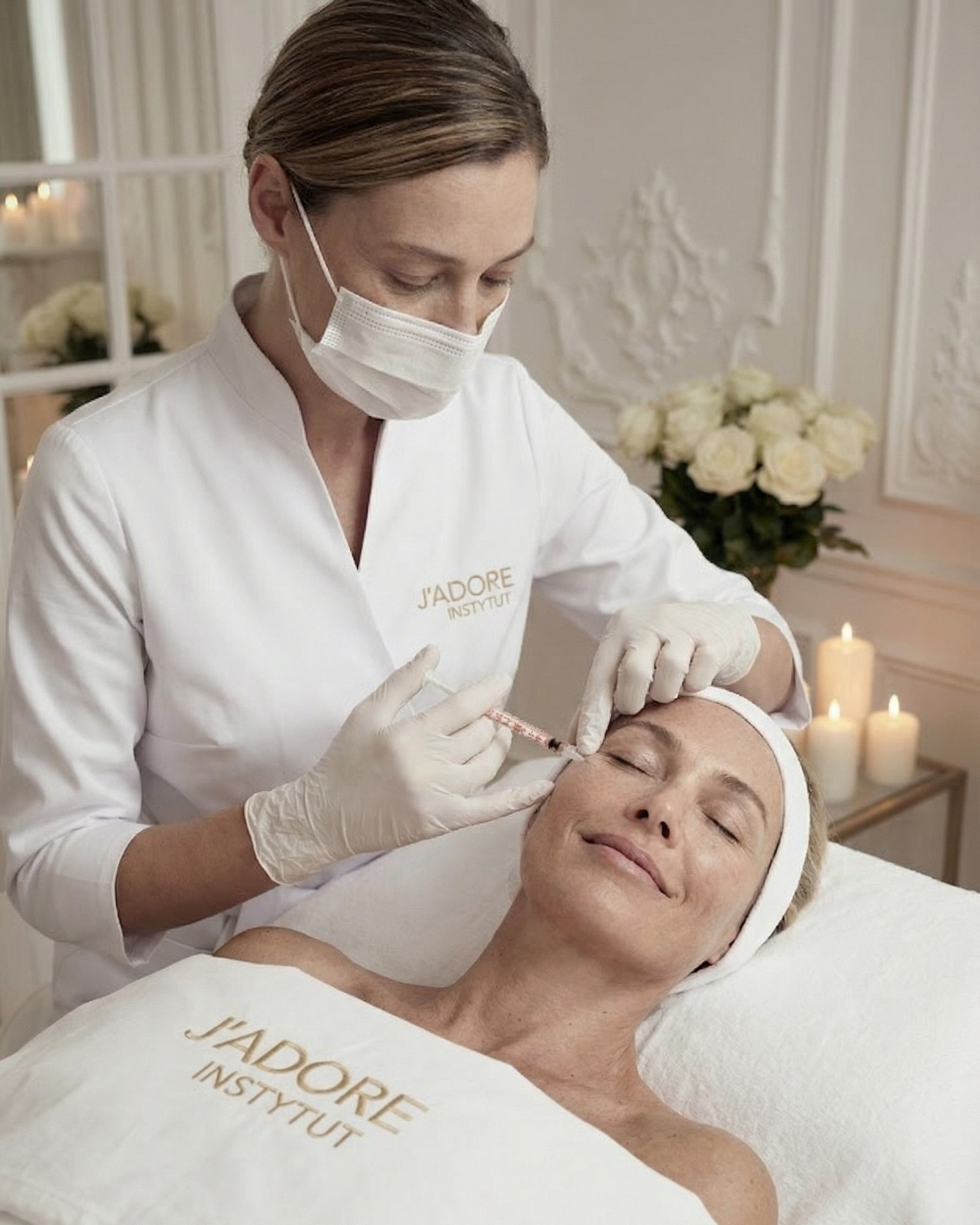

First, stay calm: am I ready for my first treatment?
Before you start looking for a clinic, ask yourself one honest question: why? This is not about justifying yourself — you have every right to take care of yourself. It is about the fact that good motivation leads to good decisions, while bad motivation leads to a clinic carousel that is difficult to get off.
And when is it worth waiting? When the decision is born from a strong, fresh emotion — after a breakup, during a difficult period, or under the pressure of online comparisons. A good specialist will sense this and sometimes say: "you don't actually need a treatment for that." This is not losing a client — it is a sign that you are in the right hands. Wise aesthetic medicine does not promise a different face. It promises your face in better form.
How to recognise a good specialist
This is the question where everything starts — and at the same time, the place where it is easiest to make a mistake. Because in aesthetic medicine, it is not just about a pretty clinic and a convincing Instagram account. What counts is competence, honesty, and whether someone listens to you. See what distinguishes a professional from a "syringe operator".
Green light
This is what a professional looks like
- They start with a conversation and an interview, not a price list
- They ask about your health, medications, and expectations — and they listen
- They explain the risks and limitations, not just the benefits
- They work in a licensed clinic with sterile facilities
- Sometimes they advise against a treatment — because they put your well-being above sales
Yellow light
Check more carefully
- "Today only" promotions, time pressure
- Lack of clear information about who is performing the treatment and with what
- Consultation reduced to "how much are we doing?"
- Products without a name, "sourced opportunistically"
Red light
Better to turn back here
- Treatment "on the spot", without an interview or consent
- Pressure to buy a package of things you did not come for
- Dismissing questions about safety and complications
- Results shown only in heavily edited photos
It is also worth knowing who performs a given treatment. Injections — Botox, hyaluronic acid, biostimulators — are medical procedures and should be performed by a doctor. Some nutritional and skincare treatments are performed by qualified cosmetologists. A good clinic does not blur these lines — they tell you directly who will be taking care of you and what their experience is.
How to prepare — step by step
This is the heart of the entire text. Good preparation is not about becoming an expert in aesthetic medicine in one evening. It is about arriving with a clear head, reliable information, and a list of questions — then the consultation turns from a casual chat into a real plan. Follow these steps one by one.
- 01
Step 1 — Name what bothers you
Instead of "I want to look better", try to be specific: "I want to soften my frown line", "my tired look bothers me", "my skin has lost its elasticity". The more precisely you name the problem, the more accurately the specialist will choose a solution — and the lower the risk that you will get carried away with something you do not need.
- 02
Step 2 — Gather your health and medication history
This can be more important than a wish list. Write down the medications and supplements you take (especially blood thinners, e.g., some heart medications or even aspirin), past illnesses, allergies, pregnancy or breastfeeding, past cold sores, and previous aesthetic treatments. The doctor must know this to ensure your safety.
- 03
Step 3 — Prepare a history of previous treatments
If you have ever had Botox, a filler, threads, or another treatment — note down what, roughly when, and whether you know which product was used. This is not a formality: previous material in the tissue affects what can be planned next and how.
- 04
Step 4 — Take reference photos (wisely)
Instead of someone else's face from an app, take a few photos of yourself in natural light — from the front, in profile, smiling, and at rest. This allows you to assess together what is really worth improving and provides a point of reference for the future. Inspiration from the result "I want to look refreshed" is OK; "I want to have lips like her" — that is a straight path to disappointment.
- 05
Step 5 — Write down your questions and arrive rested
Write down everything you want to know (the list of questions is below) — it is easy to forget in the clinic. Arrive without heavy makeup, well-hydrated, and preferably not at the last minute between meetings. Calmness and time are part of good preparation.
Pay attention to the order. First, information about your health, then a conversation about results. The most beautiful treatment plan is worth nothing if you build it on an incomplete interview — that is why we organise it from the foundations: who you are and what you take, and only then what we want to achieve.
What NOT to do just before your visit
A few small missteps at the last minute can undo the benefits of solid preparation. Before you head to a consultation (and especially before a potential treatment), read this short list — it will save you from unpleasant surprises.
And the most important thing, which is most often ignored: do not treat the consultation as an obstacle to "getting the treatment straight away." If you feel the pressure of "the sooner, the better, let's do it today" — this is a good moment to slow down. Haste is a poor advisor when your face is involved.
What to ask during a consultation
A consultation is a conversation between two parties — and you have every right to ask questions. What is more, good questions are your best diagnostic tool for the clinic: by the answers (and whether they are given patiently), you will know if you have found the right place. Here is a list worth having with you.
- Is this treatment for me? What exactly will it improve, what will it not change — and does it make sense in my case at all?
- Who will perform it and with what product? Does a doctor perform the injections, what is the product's name, and where does it come from?
- What are the results and how long will they last? Realistically — without "forever," with honest information that results can be individual.
- What are the contraindications, risks, and possible complications? What could go wrong and what do we do then?
- What is the recovery like? Will there be bruising, swelling, or redness, how long will it last, and will it affect my plans?
- What is the aftercare? What to avoid, how to care for the skin, and when is the follow-up.
- What if I do not like the result? Can it be corrected, and how — this question says a lot about a clinic's integrity.
If you hear impatience, generalisations, or "please don't worry, everything will be fine" in response to any of these questions — treat that as information. A professional likes these questions because they show you have a good head on your shoulders. You are a much more comfortable patient than someone who wants "everything and right now."