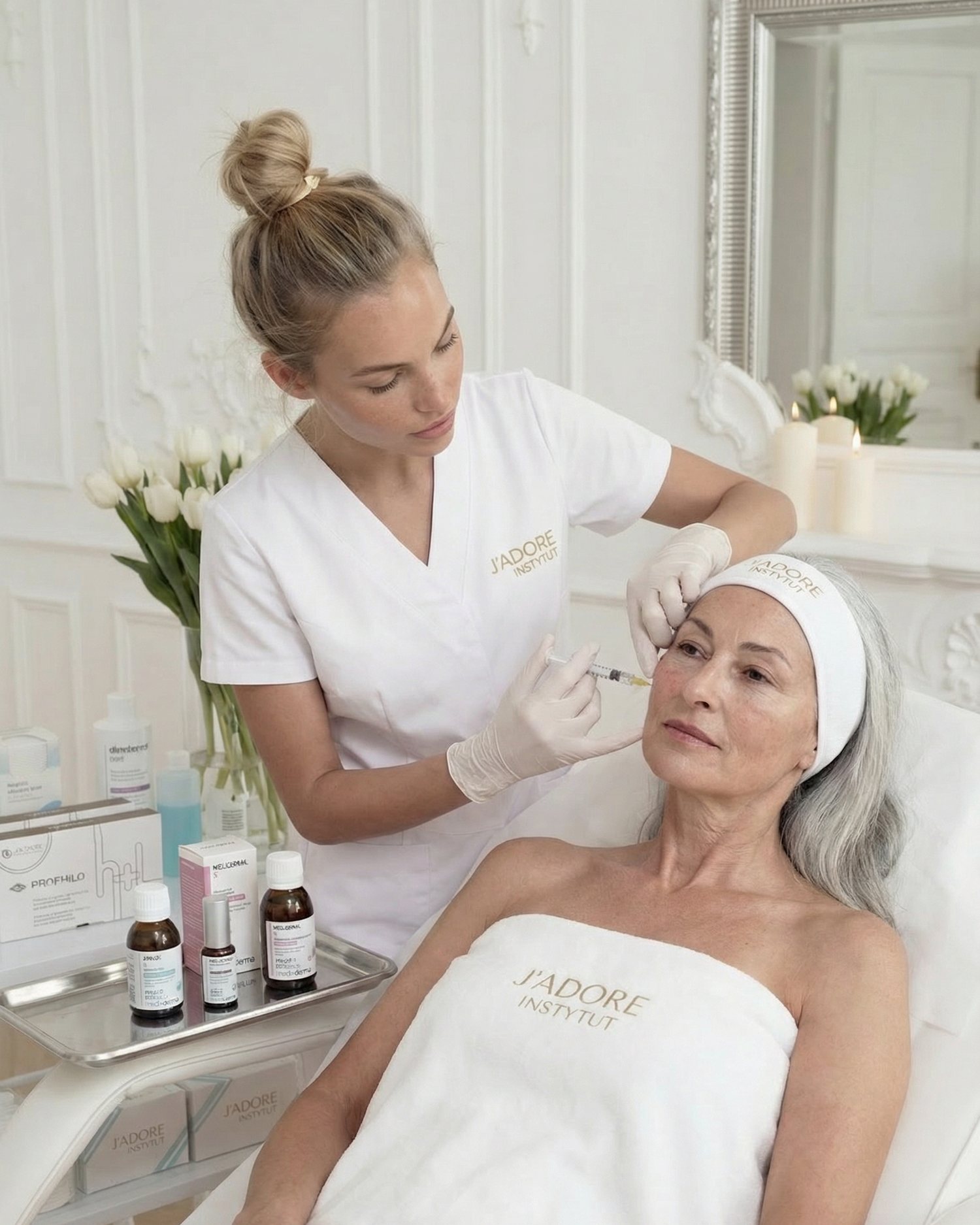

Where myths in professional cosmetology come from
Professional cosmetology occupies an unusual space. It is too science-based for the average consumer and too lightly regulated for every salon to work to the same standards. The result? A huge gap between what the industry knows and what you hear — filled by unreliable influencer marketing, salons that buy at the lowest price and sell as quickly as possible, and sincere but mistaken beliefs repeated from generation to generation. There is also one unexpected issue: the more expensive the brand, the more willing someone is to sell a counterfeit or the cheapest “alternative” — because the original’s high price makes the bargain look appealing.
Six myths — one by one
MYTH 1: “Professional cosmetics contain the same ingredients, just in more expensive packaging”.
Fact: the difference begins in the laboratory, not in marketing. A professional product undergoes clinical validation. It is manufactured under controlled conditions and sealed in a formula that prevents the oxidation and degradation of active ingredients before use. Cosmetics such as the Skeyndor lines contain the right concentrations of active substances. In cheaper alternatives, these are reduced to a minimum — because it is not only the ingredient that is expensive, but also the knowledge of how to make it truly work.
MYTH 2: “One treatment is enough — the result will be visible immediately and last forever”.
Fact: skin is a biological organ that changes in cycles. Most professional cosmetology treatments work cumulatively — each session builds on the previous one. A single treatment may give a “wow” result for a few days, but lasting improvement requires a course and maintenance. Anti-ageing treatment, pigmentation treatment or skin-barrier regeneration are processes that take weeks, not hours. A salon that promises “forever after one session” either misleads you about how it works or sells expectations it cannot meet.
MYTH 3: “The more active ingredients, the better the result”.
Fact: professional formulation is about precision, not quantity. Combining a large number of active substances without a carefully designed formula can cancel out their effects or irritate the skin instead of regenerating it. Professional therapeutic lines — such as Skeyndor, with protocols for specific concerns — rely on the synergy of several well-selected ingredients, not an impressive list on the packaging. Less, but targeted — this principle works in cosmetics just as it does in medicine.
MYTH 4: “An expensive brand means you are only paying for the logo”.
Fact: in professional cosmetics, a brand is shorthand for a history of research and clinically confirmed results. Skeyndor has existed for more than half a century. During this time, it has built a portfolio of dermatology-based protocols — not seasonal collections, but therapeutic lines with clearly defined indications. The premium price reflects the cost of research, certification, quality control and — crucially — the manufacturer’s responsibility for what is inside. “Cheaper alternatives” do not carry that responsibility. They have no research history, have not undergone the same tests, and nobody is accountable for whether they work as claimed.
MYTH 5: “Cosmetology treatments are for women — men’s skin regenerates on its own”.
Fact: skin regeneration works in the same way in both sexes. Hormonal differences affect thickness, oiliness and the rate of ageing, but not the need for care and prevention. Men have thicker skin and more sebaceous glands, which means different — not lesser — skincare needs. Pigmentation, enlarged pores, a tired appearance after too little sleep and expression lines are concerns that professional cosmetology can address effectively regardless of sex. The psychological barrier is real, but skin does not recognise it.
MYTH 6: “If the price is low, the salon simply has lower margins — the result will be the same”.
Fact: this is a costly myth. In professional cosmetology, a lower price almost always means savings on one of three elements: product authenticity (a counterfeit or cheaper alternative instead of a certified line), freshness and storage (active cosmetics have a short shelf life and require specific storage conditions), or the competence of the person performing the treatment (the treatment protocol matters — the same ampoule applied by an experienced cosmetologist and by someone after a weekend course will give different results). When the price is 50–70% lower than the market rate, one of these elements is almost certainly missing.
Red flags: when a “bargain” becomes a trap
What really makes the difference — three questions worth asking
Myths are easiest to debunk with questions — and that before you even get into the chair. First question: which line do you use and where do the products come from? That one sentence eliminates most of the risk. A clinic that buys from Polish distribution will show the invoice and batch number, and the aesthetician will say what training she has completed in that line. Clinics buying from random sources order whatever they can find — and they do not always know how to use it properly.
Second question: is the treatment preceded by a consultation, and what result is realistic in my case? The answer should be specific and honest — not “everything will improve”, but “with this skin type and concern, we can expect this and this after this many sessions”. If the cosmetologist does not ask questions before proposing a protocol, it is a bad sign regardless of how expensive the product is.
Third question: what happens between visits? A professional course is the result of work both in the salon and at home. A good cosmetologist will select home care that complements the treatment — because without it, part of the work is lost. If the salon is not interested in your home skincare, it treats you as a one-off visit, not as a course.
What a well-performed protocol looks like — and why time matters
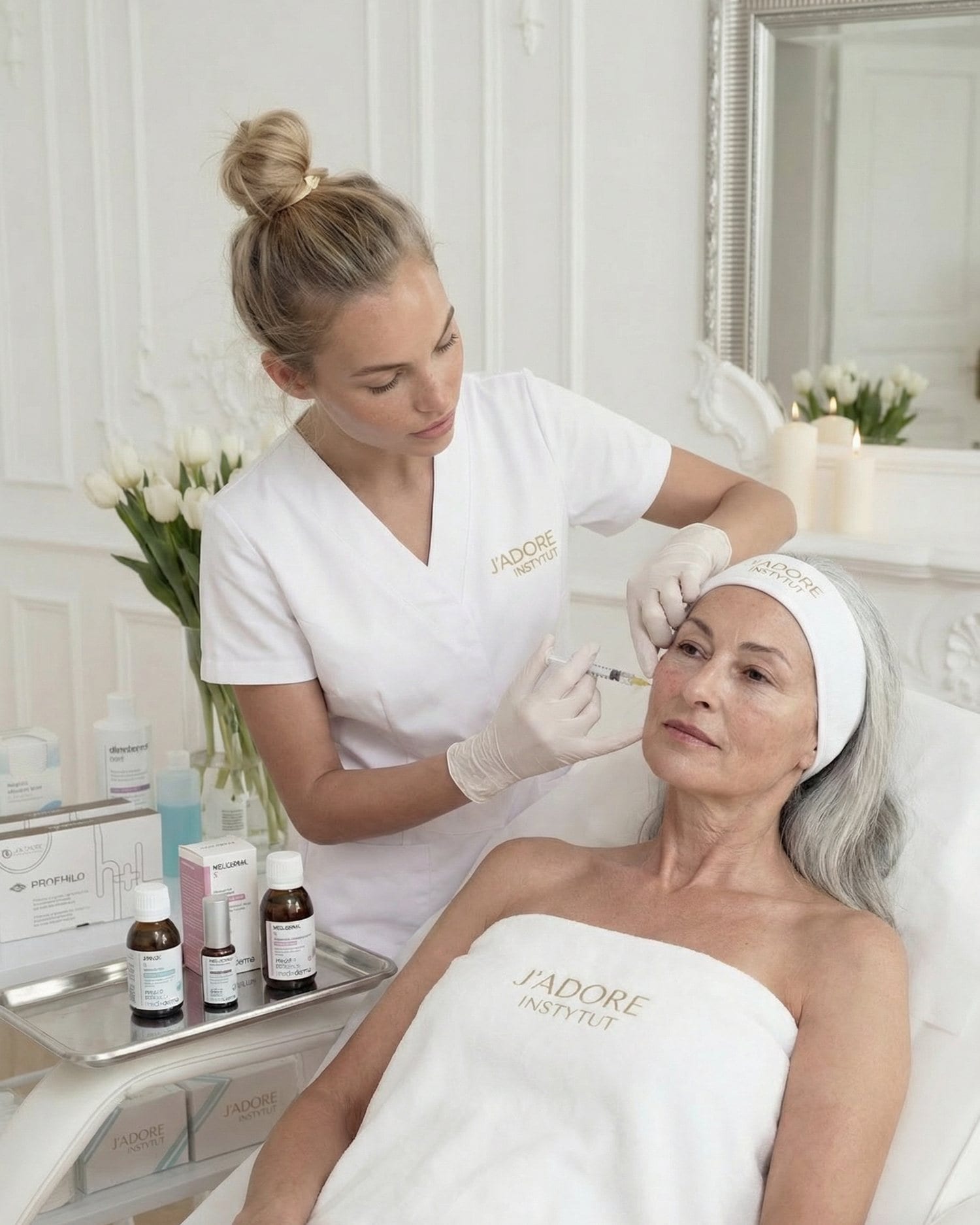
Professional cosmetology is not about applying layer after layer of cosmetic product — it is a protocol: a sequence of steps, each with a specific purpose. Cleansing, exfoliation, activation, the main treatment, massage and finishing — each stage prepares the skin for the next or enhances the effect of the previous one. Skipping a step or reducing a product’s exposure time changes the whole result. This is why the same product will give different results in the hands of an experienced cosmetologist following the full protocol and someone “who completed a quick course” — even when using the same ampoule.
At J'adore, we work with Skeyndor lines according to certified protocols — meaning every session has a planned duration, sequence and purpose. The cosmetologist knows not only how to apply the product, but why in this order and what each step is for. This is the difference between skincare and skin therapy. It is what makes a price that is not suspiciously low worth paying.
Before you decide — what is worth remembering
Professional cosmetology is an investment in your skin that — with good decisions — pays off for years. Good decisions begin with one question: is the price too good to be true? If so, it probably is. An original product costs what it costs — because research, certification and quality have their price. A salon that understands this will not try to persuade you with a promotion. It will explain why it is worthwhile — and let you ask as many questions as you need.
If you are considering regular professional skincare — and want to understand which treatments would make sense for your specific skin type — the best place to start is a no-obligation consultation. Not a “decide now” approach. Not a “promotional package today”. Simply a conversation about what your skin truly needs.