Why the tattoo artist says "laser first"
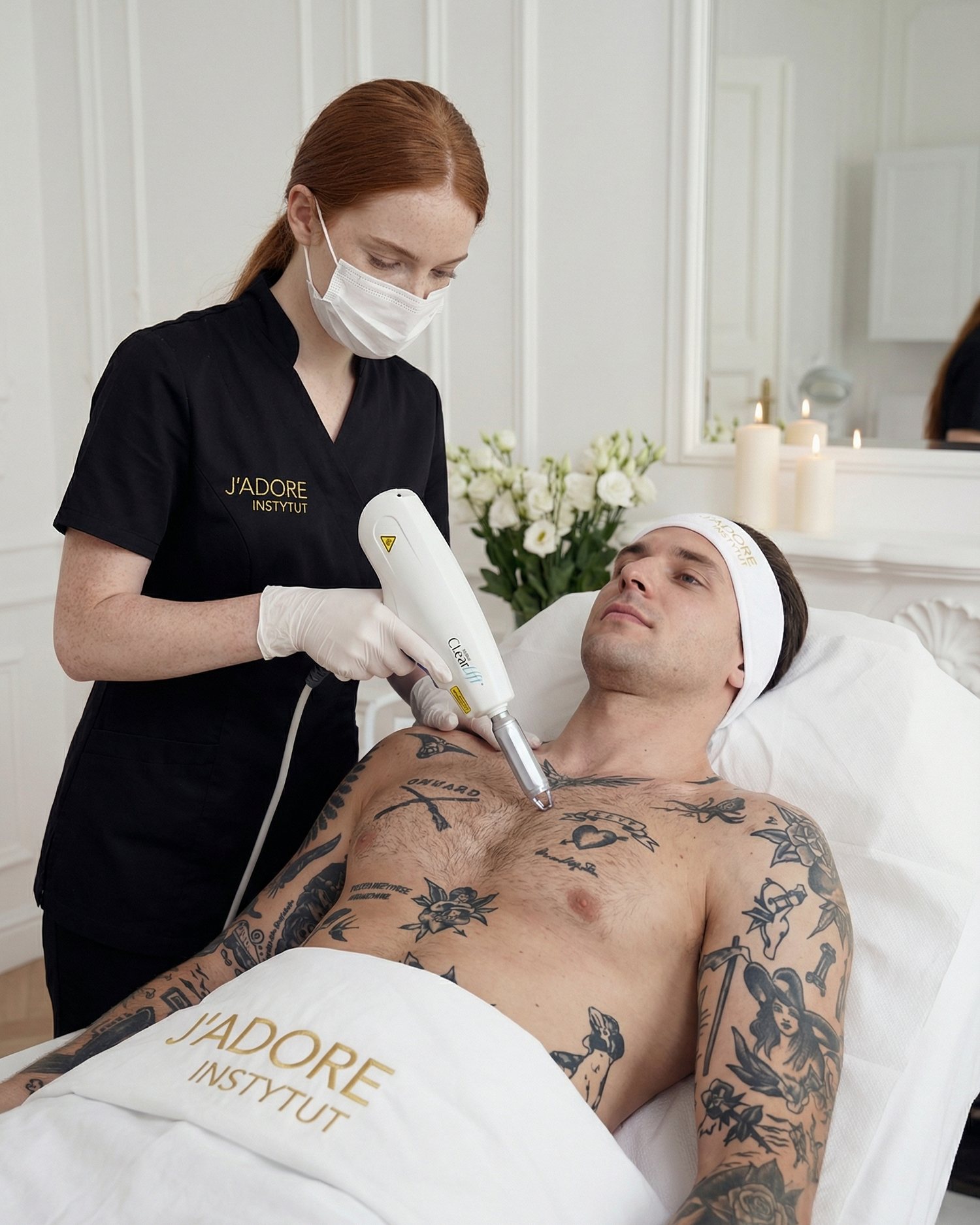
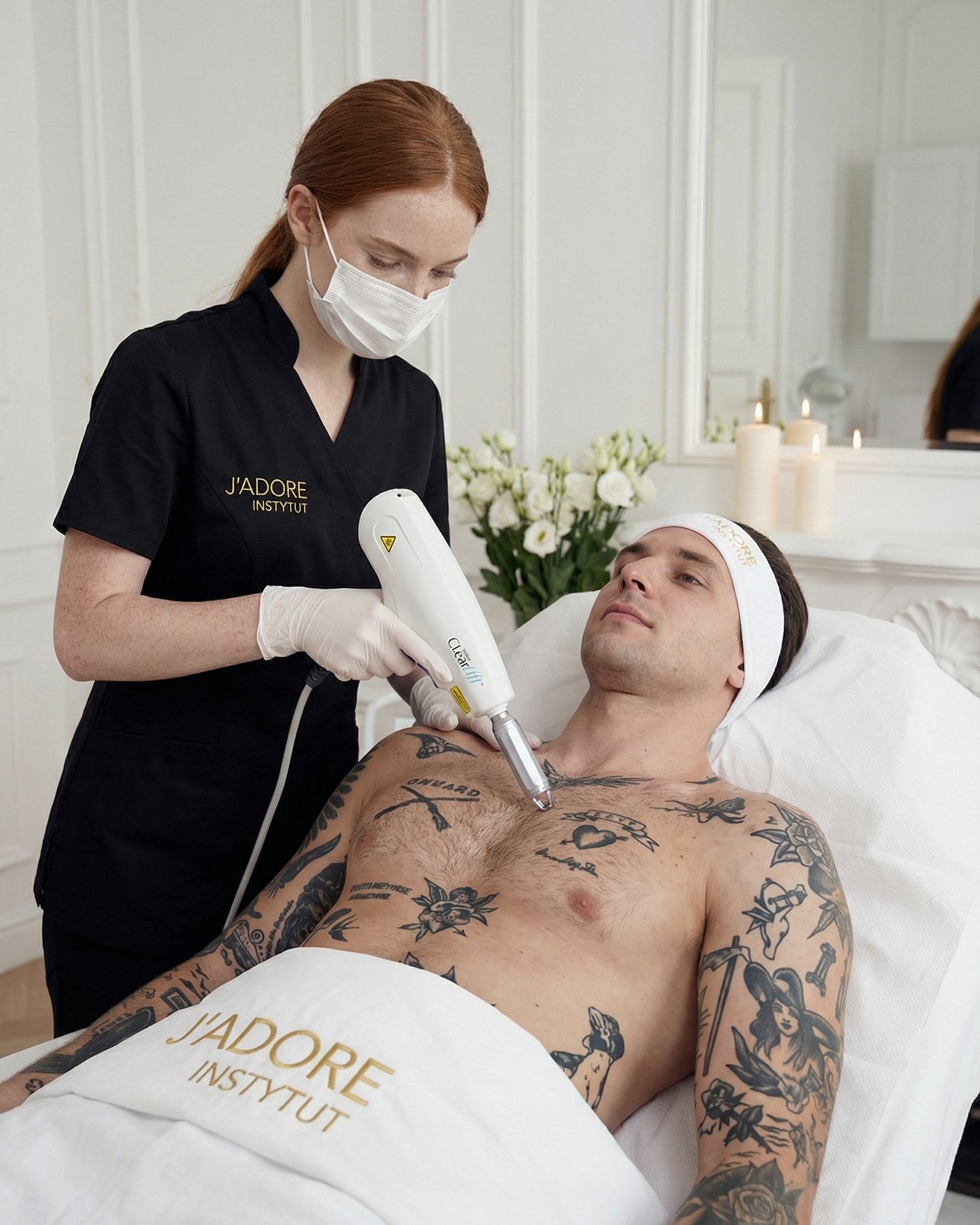
Tattoo ink is embedded deep in the dermis — and that is where it stays. When a tattooist tries to cover an existing pattern with a new one, they work on material that is already saturated with pigment. Dark lines, especially black and navy blue, show through the new layer of ink like a shadow through a curtain. The less ink in the skin, the more freedom for your new design.
Laser lightening is not the same as removal. It is not about completely eliminating the tattoo — it is about reducing the pigment concentration enough so the tattooist can work on a lighter background. Often, a few sessions are enough for the artist to arrange a design that would be technically impossible without laser or would require only dark, heavy colours.
Lightening vs. removal — what makes them different
This distinction is practically important because it affects how many sessions you need and how you arrange things with the tattooist. The goal is different — and that completely changes the scale of the entire process.
Lightening for a cover-up
Preparing the skin for a new design
- The goal is to reduce visibility, not total removal
- Usually requires fewer sessions than full removal
- Leaves the skin ready for the tattoo artist's work
- The result is assessed together with the tattooist — "light enough"
Full tattoo removal
Total elimination of pigment from the skin
- The goal is maximum skin cleansing
- Requires significantly more sessions and a longer time
- Results depend on ink colour, depth, and individual predispositions
- Assessed by percentage — we aim for no visible pigment
If your goal is a cover-up, inform the laser specialist about it immediately. This changes the treatment plan — you determine the target level of lightening together with the tattooist who has a specific design in mind. There is no point in doing more laser sessions than necessary.
Step by step — what skin preparation for a cover-up looks like
This is the heart of the entire process. Below you will find the consecutive stages — from the first consultation to the moment you return to the tattooist with prepared skin. An important rule: do not skip stages. Each has its own time and purpose.
- 01
Consultation and plan — photos + cover-up design
It starts with a conversation. The specialist examines the tattoo, assesses the ink depth, colours, and skin condition. If you already have a design for the new tattoo — show it; this helps determine how many laser sessions you really need. Together, you set the goal: not "removal", but "sufficient lightening for a specific design".
- 02
First laser session — starting the process
The treatment covers the tattoo area. The skin reacts immediately after the session — redness and slight swelling are a normal sign that the tissue is responding to the stimulus. For a few days after the treatment, the skin requires calm care: protection from the sun, moisturising, and not disturbing the healing layer.
- 03
Break between sessions — time for the lymphatic system
This is the most important stage, which many overlook. Between sessions, the body gradually absorbs the broken-down pigment particles. Results are not visible immediately after the treatment, but weeks and months later. Breaks between sessions are required — shortening them reduces the effectiveness of the entire process.
- 04
Assessing progress — when it is enough
After each session, you assess the progress: whether the tattoo is already light enough for the planned design. This is the moment for the tattooist — a good artist will tell you if they can work already or if one more session is needed. You do not always have to go to the end.
- 05
Skin regeneration before the tattoo
Before the tattooist touches the skin with a needle, it must be fully healed after the last laser session. Usually, this means waiting at least a few weeks after the last treatment. The skin should look healthy, without signs of inflammation, and have a proper structure — only then will the new pigment settle as it should.
How many sessions you really need
This is a question almost everyone asks during a consultation. And the answer is honest: it depends. It depends on a few specific factors that the specialist can only assess after seeing the tattoo in person.
- Ink colour — black and navy blue usually react best; yellow, white, and green can be more difficult.
- Tattoo age — older tattoos are often already partially faded and may require fewer sessions than fresh ones.
- Ink depth and density — thick, saturated lines require more time than delicate graphics.
- Skin tone — complexion influences the choice of treatment parameters and the pace of results.
- Cover-up design goal — a light design requires more lightening than a dark, stylistically "covering" pattern.
The number of sessions needed to lighten a tattoo for a cover-up is usually lower than for full removal. For many people, a few treatments are enough for a tattoo artist to work freely. An honest consultation will give you more specific estimates than any online calculator.
Skin care throughout the process
Laser results are not just about the treatment. They are largely about what you do between sessions. Your skin is working during this time: the body removes broken-down pigments, tissues regenerate, and the barrier rebuilds. Supporting or disrupting this process has a real impact on the outcome.
What NOT to do during lightening
There are a few mistakes that occur regularly in the process of preparing skin for a cover-up. It is worth knowing them in advance. This will save you time, money and disappointment.
One of the most common scenarios: someone hastily does two laser sessions, gets impatient with the results after a week, and goes to the tattoo artist assuming "it will be enough anyway." The artist works with ink that is still too dark, and the result is far from the design. The whole point of lightening relies on patience and cooperation between the laser specialist and the tattoo artist.
When to book a laser consultation
You do not have to wait until a tattoo artist refuses a cover-up to book a consultation. There are situations where it is worth acting earlier, and starting the process early simply gives you more options.
- You have a specific cover-up design, and the tattoo artist suggests lightening before the procedure.
- The old tattoo has a lot of black or dark blue ink in key parts of the design.
- You want light colours or delicate work in your new design.
- You are planning a cover-up in a few months — this is a good time to start the process in advance.
- You have doubts about whether the tattoo can be covered without laser treatment — a consultation will answer this.
A consultation is a conversation and a live assessment of the tattoo — without obligation and without immediate laser treatment. Afterwards, you know roughly how many sessions you need, what the schedule looks like, and what you are deciding on. This is the only way to plan realistically, rather than based on general information from the internet.