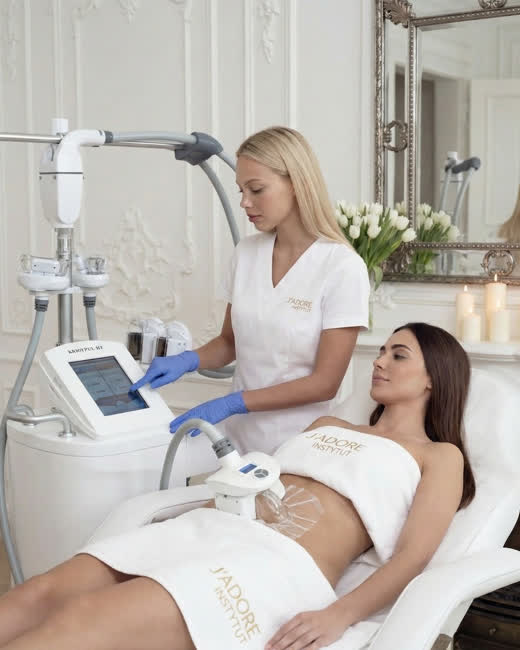
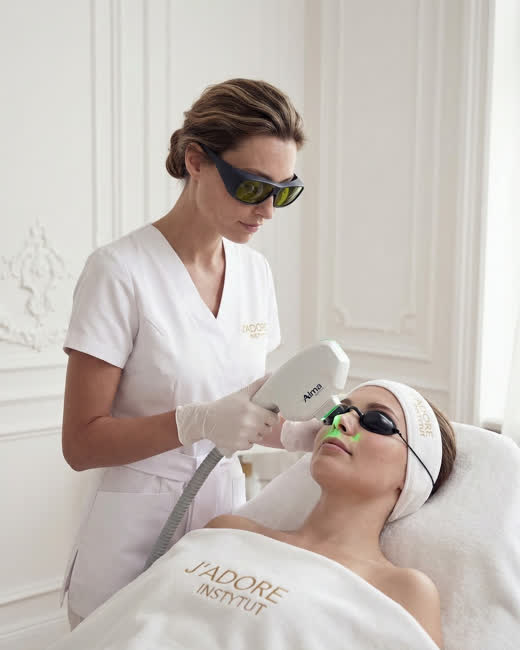
A treatment room at J'adore
LASER THERAPY / HIGH-TECH / REMOVAL
A tattoo meant to last "forever" sometimes stops fitting who you are today — your style has changed, your career has moved on, or the quality of the work itself was never great. Or perhaps you're planning a cover-up and the old design needs lightening so the new one sits well.
Laser tattoo removal is now a safe, controlled and proven method — no cutting, no skin abrasion. The Q-Switch Nd:YAG laser emits ultra-short, nanosecond pulses that break the pigment down into microscopic fragments. Your body does the rest, gradually clearing them away. The tattoo fades treatment by treatment — until it's fully removed or light enough for new work. At J'adore Instytut, the treatment is performed by a doctor or experienced cosmetologist certified by the device manufacturer. Below you'll find everything worth knowing before you start: how long it takes, how many sessions, and what to expect regarding pain, scarring and colours.
series of treatments spaced 6–8 weeks apart; number depends on the tattoo
How it works
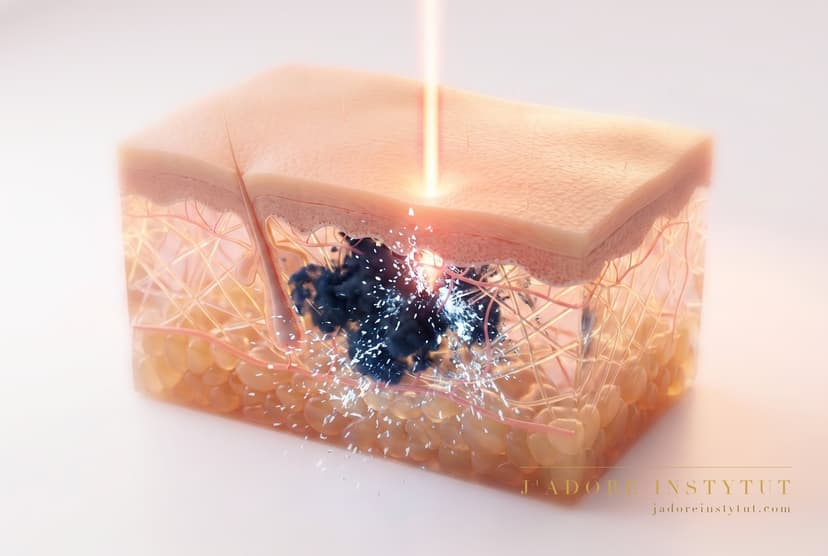
The Q-Switch Nd:YAG laser delivers pulses lasting nanoseconds — billionths of a second. This short, intense flash works photomechanically: the pigment absorbs the energy and literally "shatters" into microscopic fragments. This isn't burning or cutting — it's breaking the pigment into particles small enough for your lymphatic system and cleanup cells (macrophages) to capture and gradually remove.
That's why the effect isn't immediate — and can't be. Between sessions, your body does most of the work. The tattoo fades treatment by treatment, as successive layers of pigment are broken down and cleared away. Crucially, the laser works selectively: the energy is absorbed mainly by the pigment, leaving the surrounding skin largely undisturbed — hence the low scarring risk with correct technique.
Q-Switch Nd:YAG is considered the gold standard in tattoo removal. It's a precise, predictable treatment, but a demanding one — the outcome depends on ink type, its depth, colour, the age of the tattoo, its location on the body, and your skin. That's why we don't work to a fixed formula — we build your plan individually.
Ideal for
Most dark tattoos (black, navy) can be removed to around 90–95%. Light colours (yellow, white, fluorescent) are the hardest and may leave a faint shadow. This isn't a failing of the salon — it's simply the physics of how pigments absorb light. A good specialist will tell you this before the series starts, not partway through.
Women's and men's needs
For women, we most often remove smaller designs in visible areas and correct permanent makeup. What matters here is a gentle approach and the final skin quality in the exposed area. This is classic tattoo removal for women.
What we work with
For men, larger areas and an active lifestyle come into play more often — which shapes a different session schedule and different questions about returning to training. This is tattoo removal for men.
What we work with
Did you know: it's not the laser that "erases" the tattoo — your immune system does. The pulse simply breaks the pigment into fragments small enough for macrophages to "clean up". That's why the tattoo fades over the weeks after a session, not immediately — and why good hydration and a healthy lifestyle genuinely support the result.
Colours and ink types
The better a pigment absorbs the laser's light, the more effectively it clears. Not every colour responds the same way, which is why we work with two wavelengths, matched to the colour of the ink:
PMU and certain dark pigments can change colour after a laser pulse (for example, brown can shift to grey or greenish) — this is a well-known property of pigment chemistry, not an error. That's why we approach PMU corrections very carefully, often starting with a test on a small area. If anyone promises instant, trouble-free PMU removal without a test, treat that with caution.
Safety
With tattoo removal, the outcome and safety depend on a few things worth asking about at any salon:
At J'adore, treatment is carried out by a doctor or experienced cosmetologist certified by the device manufacturer — they assess the tattoo, select the wavelength and parameters, and respond to how your skin handles each session.
We use a Q-Switch Nd:YAG with two wavelengths (1064 nm + 532 nm KTP), CE certified. The nanosecond pulse is short enough to break down pigment while sparing the surrounding tissue.
For more challenging cases (PMU, colours, darker skin tones), it's sensible to perform a test pulse and observe the reaction before treating the whole design.
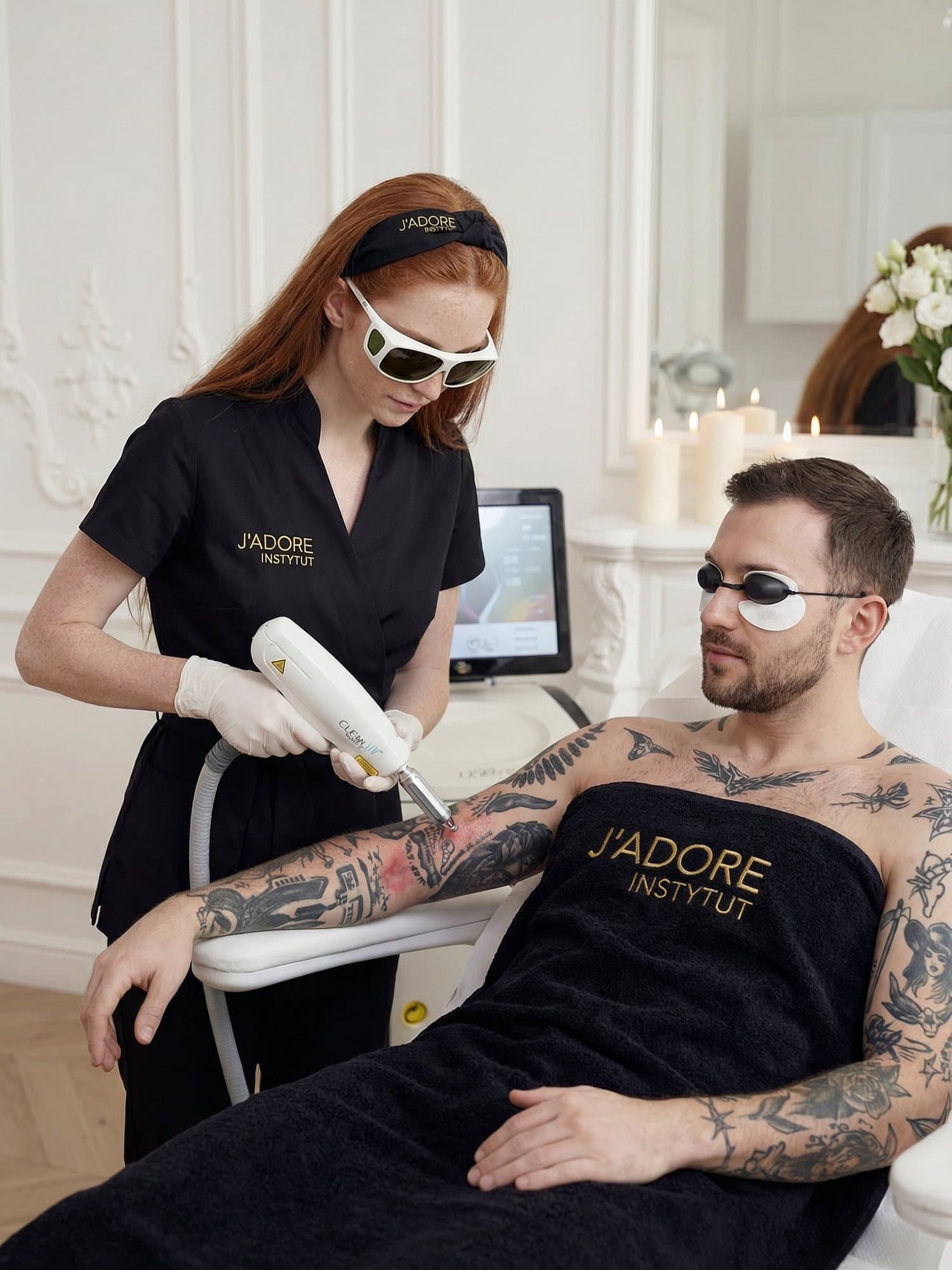
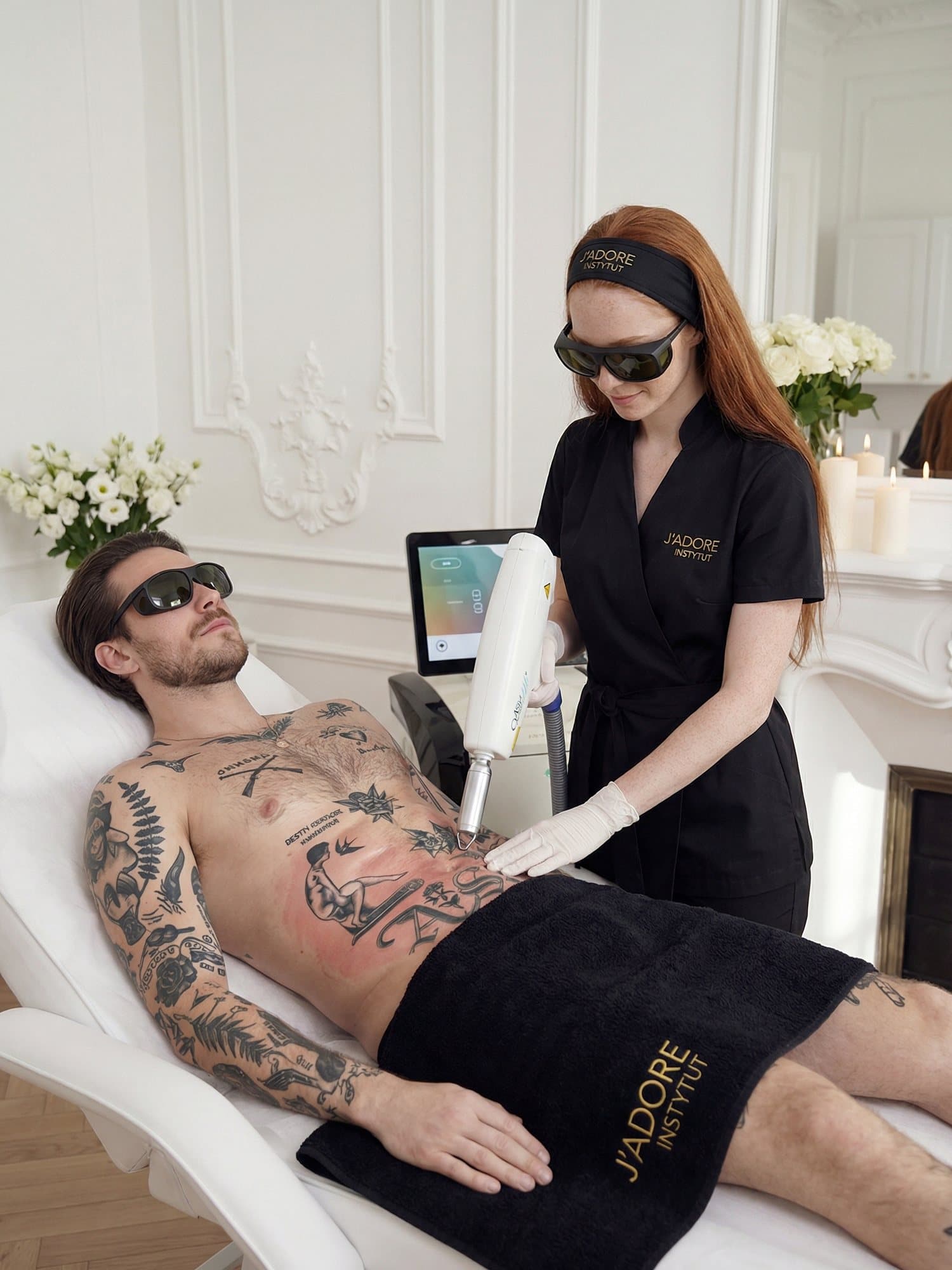
During treatment, both you and your specialist wear protective goggles — this is standard practice, not optional.
Frosting — a whitish film is a good sign · Right after each pulse, a whitish film ("frosting") appears on the tattoo. This isn't a burn — it's the visible effect of pigment fragmentation and micro-bubble evaporation. It fades within ten to a few dozen minutes, followed by normal redness and swelling.
Contraindications
Some contraindications are permanent, others temporary — in which case we simply postpone the treatment until the situation resolves. We'll go through the full list individually at your consultation, but the key ones are:
The most common mistake is tanning between sessions, or booking a "quick holiday session" on freshly tanned skin. A tan competes with the tattoo pigment for the laser's energy — this directly increases the risk of burns, hyperpigmentation and depigmentation. Throughout the whole series: SPF 50+, and no sunbeds.
This isn't a complete list — we'll go through your medications, health conditions and previous treatments (as well as your tattoo's type and age) individually before your first session.
The visit
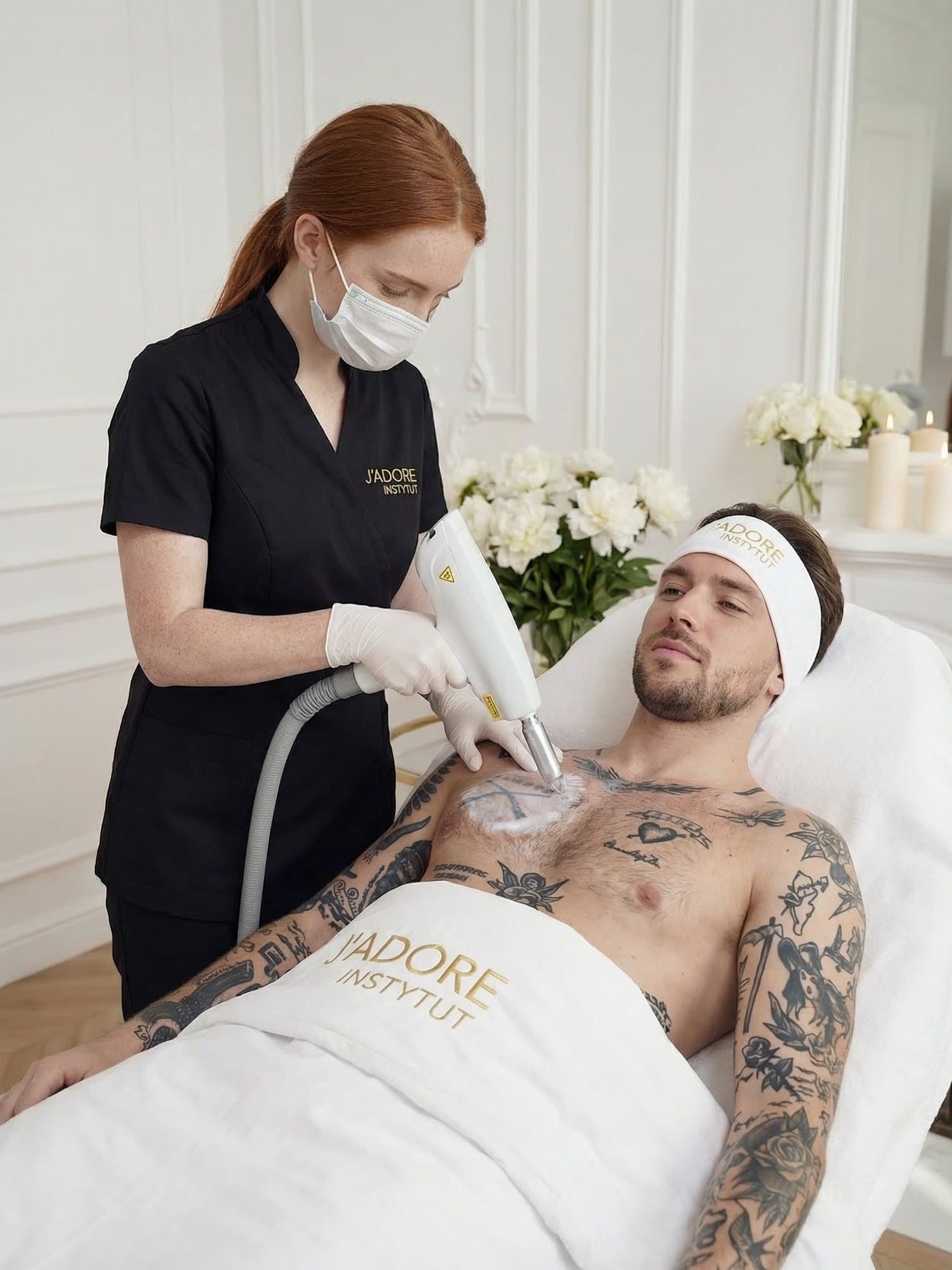
Consultation and tattoo assessment
size, colours, depth, age and location of the design, plus your medical history. We take a photo to document your starting point, so we can properly track progress later.
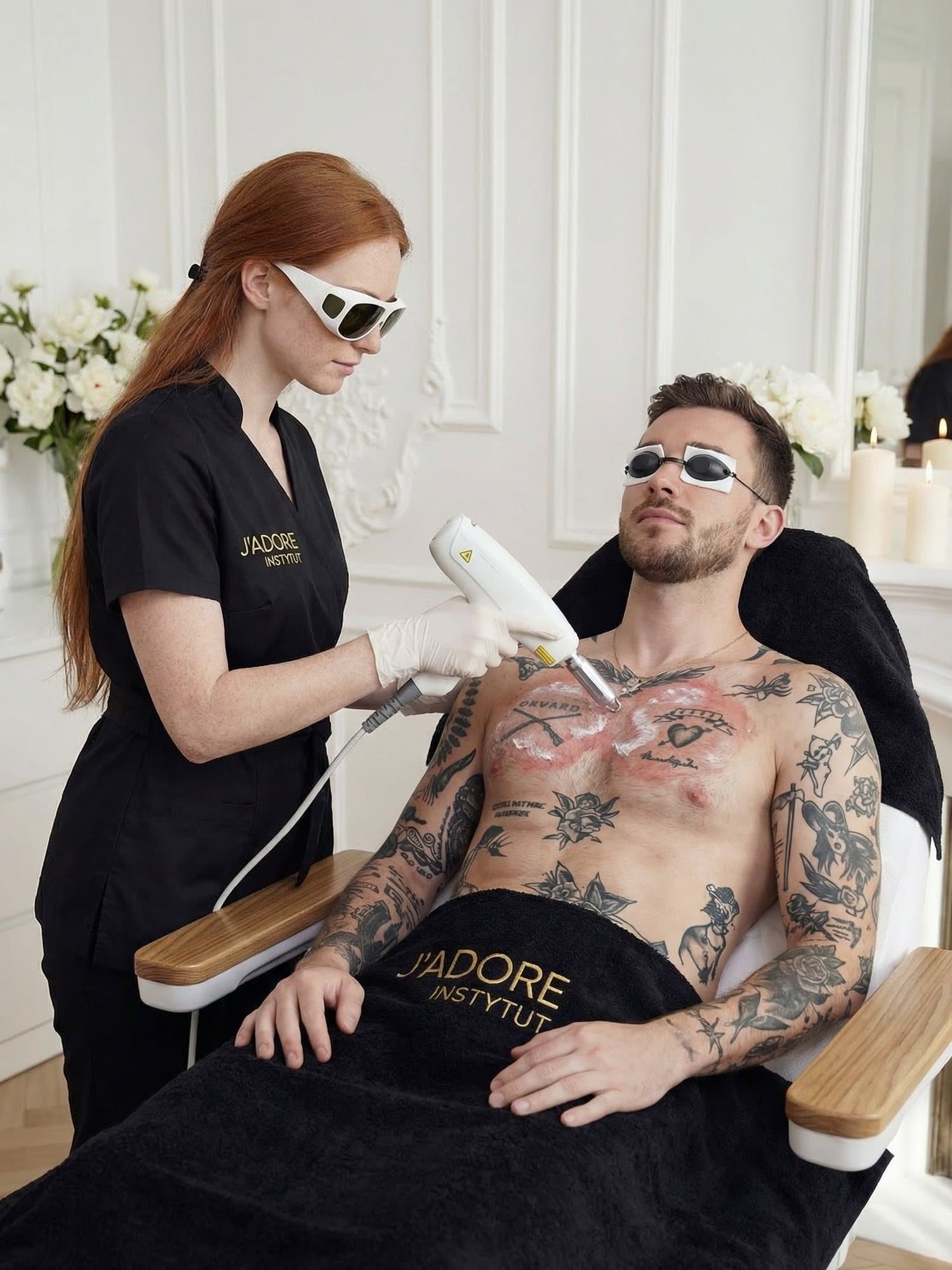
Skin preparation
we apply numbing cream to the area (takes effect after about 30–45 minutes) or use air cooling for comfort.
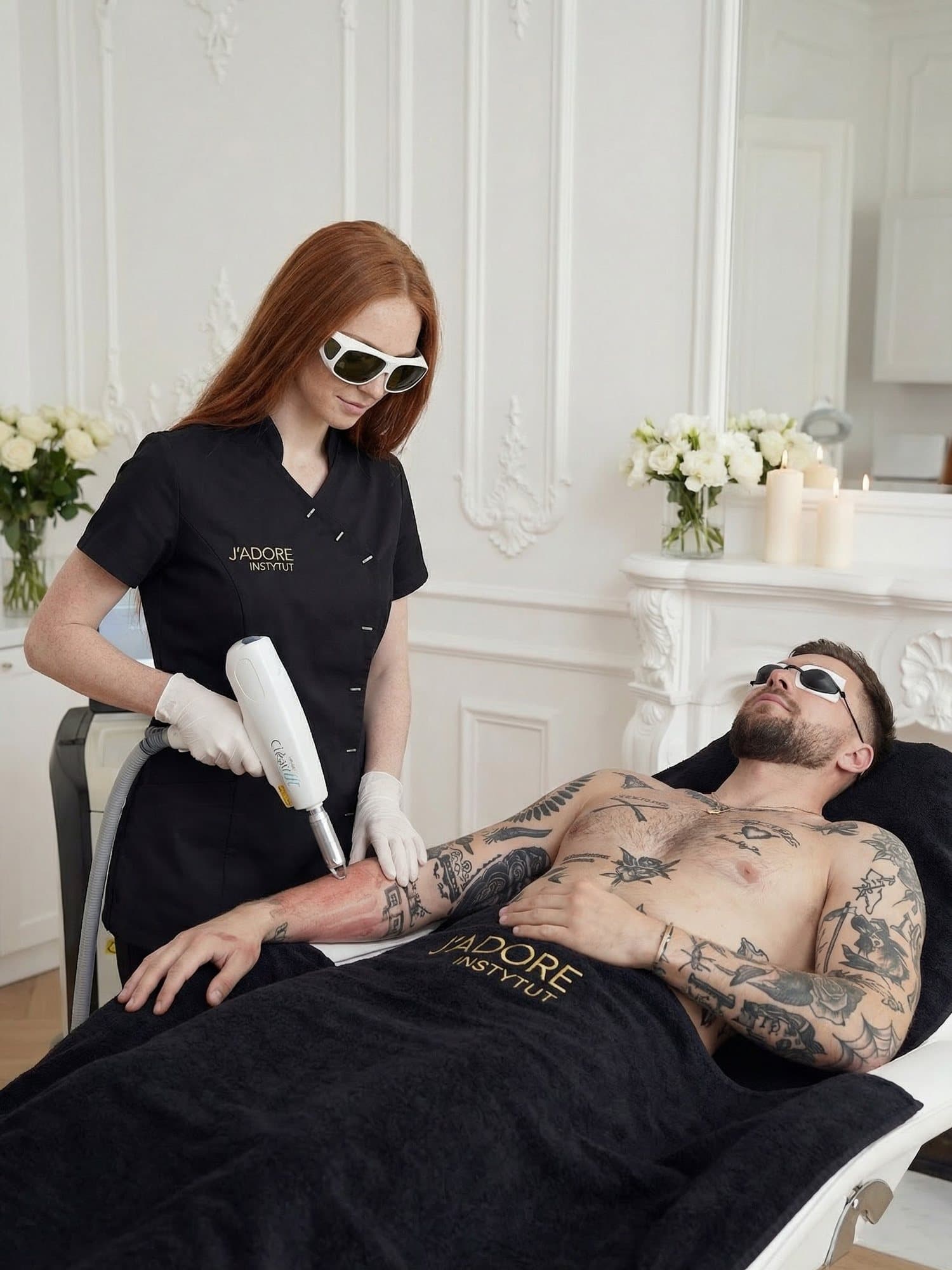
The treatment itself
we guide the laser handpiece over the tattoo, delivering a series of ultra-short pulses. You'll feel brief "snaps" and warmth, and frosting will appear on the design.
Aftercare and guidance
after the session, we apply a soothing cream, sometimes a dressing, and talk you through care for the coming days.
Break and next session
we leave a gap of 6–8 weeks, giving your body time to clear the broken-down pigment and your skin time to fully recover.
What to expect
Most importantly: the tattoo won't disappear after one session — and for the first few days it may look darker than before treatment. This is normal. The real lightening only becomes visible once your body has cleared the broken-down pigment, usually after a few weeks.
I show clients the "before" photo at every visit. It matters because the change between sessions can be gradual and easy to miss day to day — but compared with the starting point, the progress usually makes a real impression.
From the cosmetologist's chair
The most common question is "can this be done in one session?" No — and it's not about laser power, it's biology. Each session breaks down some of the pigment, and your body clears it over the following weeks. Shortening the intervals doesn't speed up the result — it just puts more strain on your skin. Patience genuinely pays off here.
Portfolio
A record of the work in our salons — the place where we publish treatment frames and, after photo sessions, results.
A record of results — in preparation. We publish photographs of our clients only with their consent.
The result of each session is permanent — pigment once removed doesn't return. Fully or nearly fully removing a dark tattoo usually takes a series of several to a dozen or so treatments (fewer for amateur and black ink, more for professional and coloured work). For lightening before a cover-up, the series is usually much shorter — since the goal isn't full removal, just fading.
Tattoo removal and your lifestyle
Most questions aren't about the treatment itself but about what comes after: sun, swimming, training, sauna. There's one rule — for the first few days, the treated area is essentially a fresh healing wound, so we treat it gently and shield it from the sun.
This is the golden rule. Don't tan the treated area — before the series (a fresh tan is a contraindication) and between sessions. Tanned skin is harder and riskier to treat; after treatment, always apply SPF 50+ to the exposed tattoo.
For the first few days, don't submerge the area in a bath, pool or lake — chlorinated water and bacteria increase infection risk and slow healing. A short, gentle shower is fine.
High temperatures dilate blood vessels, increase swelling and delay healing. Save the sauna, hammam and hot baths until your skin has healed.
Avoid intense exercise that puts stress on the treated area for a few days — sweat and friction irritate the healing skin. Training other body parts usually isn't a problem.
The most important healing rule: don't pick at scabs and don't pop blisters. This is exactly how scars and pigmentation issues most often occur. Let your skin heal at its own pace.
Gentle cleansing, a regenerating cream with panthenol, and moisturising all support healing. You can usually return to work straight away — the area can be discreetly covered with loose clothing.
Tattoo removal (Q-Switch Nd:YAG 1064/532)
Plenty of "tattoo removal" methods circulate online, with very different levels of effectiveness and scarring risk. For clarity, here's what's what — and what to actually expect:
selectively breaks down the pigment itself
doesn't remove everything in one session — works as a series with breaks
scattered light, not suited to tattoos
not a tattoo removal method — risk of burns and scarring instead of results
a promise without foundation
don't reach the pigment in the dermis; real risk of irritation, infection and permanent scarring
Combine with
We run the removal itself as a series, and plan any supporting treatments around it — usually only after a given session has healed, or after the whole process is complete. A specialist decides on the order and timing, but the logic stays the same:
I most often see people who've already tried "home" removal methods — creams from the internet, or abrasion. The result is usually the opposite of what they wanted: the tattoo is still there, plus a scar or pigmentation issue. A tattoo sits in the dermis — removing it without scarring means reaching the pigment selectively, and only the right laser can do that.
Technology
Tattoo removal at J'adore is based on a single, specialised laser that works with two wavelengths. This is not "universal" equipment for everything — it is a tool designed to break down pigment, selected according to the ink colour on a given part of the design.
The primary wavelength; it penetrates deeply and is absorbed very effectively by dark pigment, with the nanosecond pulse breaking it down photomechanically.
Dla kogoBlack, navy and dark brown inks clear best.
The second wavelength, produced by frequency doubling — chosen for lighter, "warm" pigments.
Dla kogoRed, orange and yellow inks.
Fact: Where do differences in price and series length come from? From the tattoo's area, its depth and density (amateur vs professional), its colours (dark tones clear faster than green, blue or yellow), the age of the design, and its location on the body. That's why we don't quote a flat "price per tattoo" — pricing and a realistic session plan are set at your consultation, after we've seen the design. Multi-session packages come with a discount.
Price list
Checking free hours…
From the magazine
Editorial pieces on how this treatment works in practice — what happens during the session, how to prepare, where the limits are and what the first days after look like.
See also
The result lastslasting effect — removed pigment does not returnJ’adore Instytut
Treatment information. Laser tattoo removal (Q-Switch Nd:YAG) is a paramedical treatment performed by a doctor or experienced cosmetologist certified by the device manufacturer. The text above is for information only and does not replace an individual consultation. Qualification for the treatment, the number of sessions, parameter selection and a realistic outcome are determined by a specialist after assessing your tattoo, skin type and medical history. Results vary by individual.
Home care
Cosmetics matched to what your skin needs after a treatment — so the clinic effect lasts longer.
 soothing body skinDiego Dalla PalmaSENSITIVE Lipid-Balancing Body Cream 350 mlView in the shop(opens in a new tab)
 body sun protectionSkeyndorBody protective b-phase SPF 50 – Age Photo DefenseView in the shop(opens in a new tab)
 soothing body skinestGenLive Balancing BalmView in the shop(opens in a new tab)
 body sun protectionCell Fusion CAquatica Sun Spray SPF50+ PA++++View in the shop(opens in a new tab)
 soothing body skinPeel MissionAsiatic Face and Body Mist 150 mlView in the shop(opens in a new tab)
 soothing body skinDiego Dalla PalmaSENSITIVE Delicate Cleansing Oil for Body 350 mlView in the shop(opens in a new tab)
 soothing body skinestGenLipid ReconstructionView in the shop(opens in a new tab)
 body sun protectionSelvert ThermalSUN CARE SPORT MIST SPF50 SPRAY 200MLView in the shop(opens in a new tab)