What SMP is — and what it doesn't do
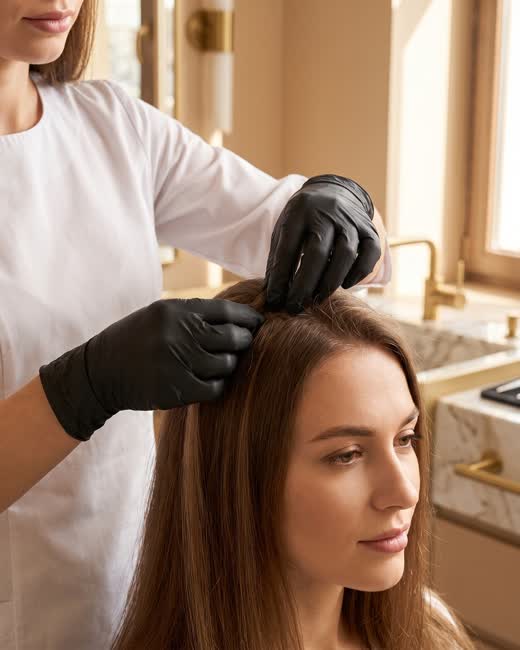
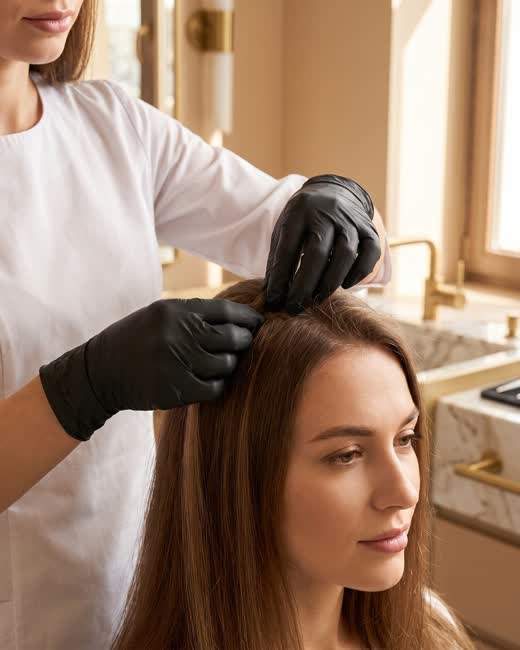
Scalp micropigmentation sits between tattooing and cosmetology. A specialist applies microscopic pigment dots directly onto the scalp — each dot mimics the cross-section of a shaved hair follicle. From a short distance, the effect is a dense, evenly cropped head. Up close, it's precise dot work, not a smudge.
Here's the key thing SMP doesn't do: it doesn't stimulate hair growth, doesn't restore follicles, and isn't a transplant. It's a visual technique, not a medical one — but for many men, that's exactly the solution they've been looking for. They don't want to wait for hair to grow after a transplant. They don't want to take tablets. They don't want surgery. They want to see a result.
SMP
what it offers
- the look of a freshly shaved, dense head
- filling in receding hairlines and a retreated hairline
- lasting results without surgery
- no recovery period
Hair transplant
alternative
- real hair grows in a new place
- natural growth and a hairstyle once regrowth is complete
- lasting biological result
Who SMP suits
A question worth asking before treatment: what hairstyle do you wear, or want to wear? SMP gives the best results with short or shaved hair. That's no accident — the technique mimics closely cropped follicles, so natural hair of a similar length blends seamlessly with the pigment.
- Receding hairline. A few precise sessions can visually bring the hairline forward by several centimetres and fill in the temples — not by pretending hair is there, but with a clear effect of greater density.
- Balding at the crown (vertex). Pigment applied to the thinning area mimics stubble — with the rest of the hair kept short, the effect is convincing and natural.
- Full shave + SMP. Some men choose a combination: a shaved head with SMP across the whole scalp — creating clear, symmetrical “stubble" all over.
- Transplant scars. SMP can often successfully camouflage linear or round scars left by earlier hair transplants.
What the treatment involves — step by step
Before anything touches your scalp, it starts with a consultation. A specialist assesses your skin, the degree of hair loss, your hair colour and your expectations. This is where the hairline is decided — the single most important aesthetic decision in the whole process. It needs to suit your age and face shape, not sit as low as an 18-year-old's.
- 01
Consultation and hairline design
Assessment of the skin and degree of hair loss, and selection of pigment shade. The hairline is agreed together — never a one-sided decision.
- 02
First session
Application of the base pigment layer — lighter, to gauge how your skin responds and how well it holds the pigment. A natural effect is built up in layers.
- 03
Second session
After healing (a break of several weeks) — density is added, the hairline is refined, and contrast is evened out. Most of the result shows here.
- 04
Third session (optional)
Final touch-ups to “seal" the effect. Not everyone needs this session — it depends on your skin and the scope of treatment.
- 05
Assessment after healing
Full results appear a few weeks after the last session, once the pigment settles and the skin finishes healing. This is the right moment to assess the result.
Between sessions, the skin heals and the pigment “settles" — it fades slightly compared to when freshly applied, which is normal and expected. A specialist works with this process, not against it, which is why the result isn't built in a single day.
Pain, downtime and daily life after SMP
The question of pain is fair — but there's no need to dramatise it. The scalp is more sensitive than, say, an arm, so sensations feel more intense than a tattoo on a limb. Most men describe it as “stinging" or “scratching" — uncomfortable, but manageable. After a few minutes, you get used to the specialist's rhythm.
After the session, the skin is red and may be slightly swollen — it looks like the result of a close shave. This usually settles within a day or two. The first few days call for protection from sun, chlorine and sweating — no gym, no pool, no sunbathing. Full normality returns within a few days.
Colour, shade and natural ageing
One of the most important choices in SMP is the pigment shade. Too dark looks artificial, too light gives no contrast. A specialist matches the colour to your natural hair — not the colour you used to have, but what you have now. If grey hair has started to dominate, the pigment needs to reflect that.
This raises a question that every man who starts greying after SMP has to face: hair turns grey, pigment doesn't. For many men, this isn't a real problem, because the difference is subtle and still looks natural. Still, it's worth discussing with a specialist before your first session — especially if you're 35+ and grey already showing at the temples.
SMP and scalp care — what changes
Once healed, scalp care is simple, but it does need a few consistent habits. First: SPF on the scalp — every day in the sun without protection speeds up pigment fading. It doesn't have to be a dedicated scalp product, but it becomes part of your routine, just like moisturising your face.
- Regular shaving — SMP looks best when natural hair is kept short or shaved. The length difference between natural hair and the pigment dots should be minimal.
- Moisturising the scalp — dry skin can affect how the pigment looks. A light oil or aftershave balm is enough.
- Sun protection — SPF 30-50 on the scalp, especially in summer. If you're often outdoors, a cap or hat is no enemy of SMP.
- Chlorine and chemical treatments — heavy chlorine exposure (swimming several times a week) can speed up fading. It doesn't rule out swimming, but it's worth bearing in mind.