What actually happens to the scalp during hair recession
A receding hairline is usually the result of androgenetic alopecia — a process that starts with the gradual miniaturisation of hair follicles under the influence of testosterone derivatives. Follicles produce increasingly thinner, weaker hair, until eventually they stop producing hair altogether. This doesn't happen overnight — which is exactly why there's a window for action.
At the same time, the scalp in receding areas is often poorly nourished — circulation is weaker, and the skin barrier can be compromised by stress, diet, unsuitable care, or simple neglect. Follicles that are theoretically still active get less of what they need. Microneedling addresses precisely this layer — not the hormonal one (that's beyond the scope of cosmetology), but the mechanical and physiological one.
How microneedling works — without the myths
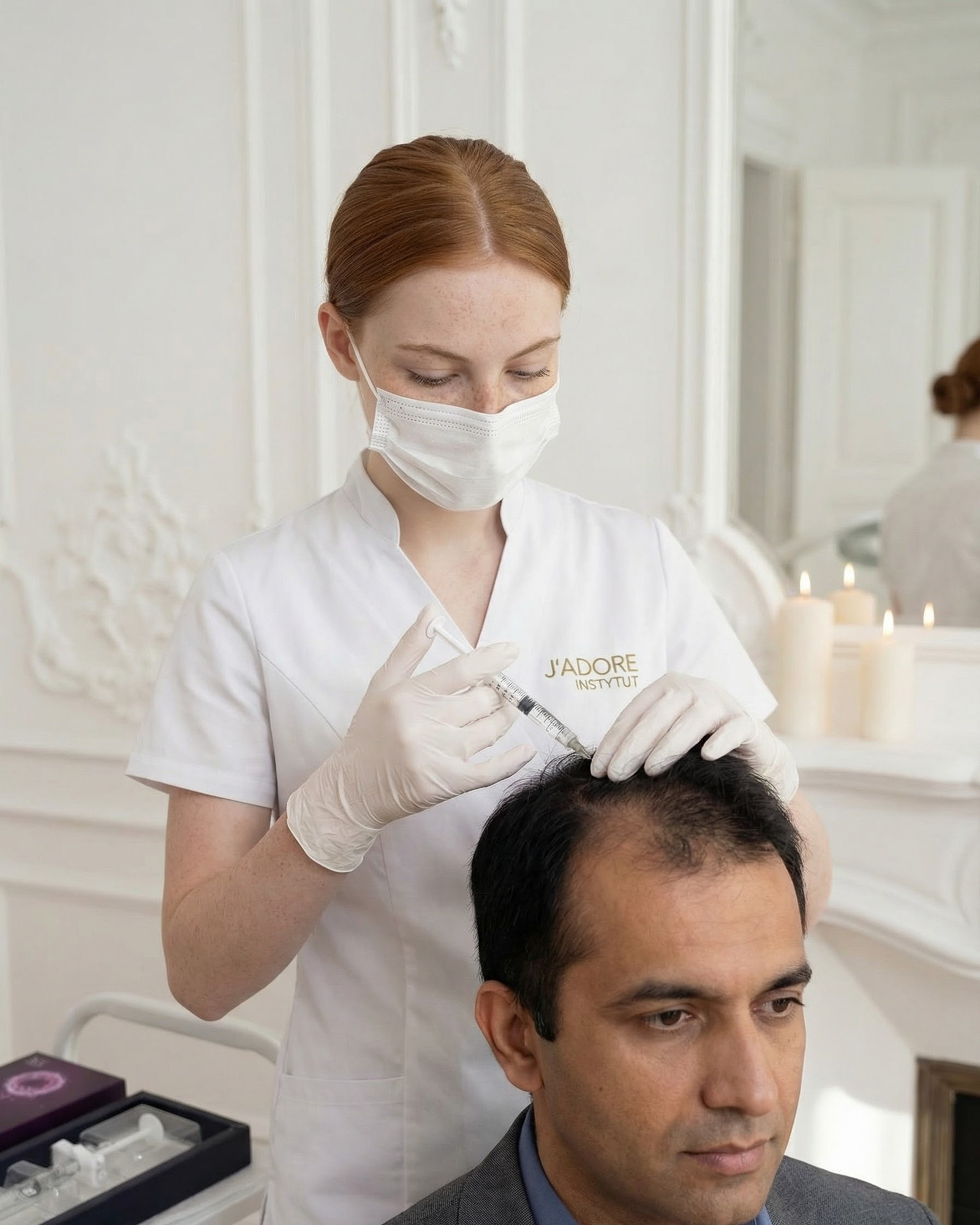
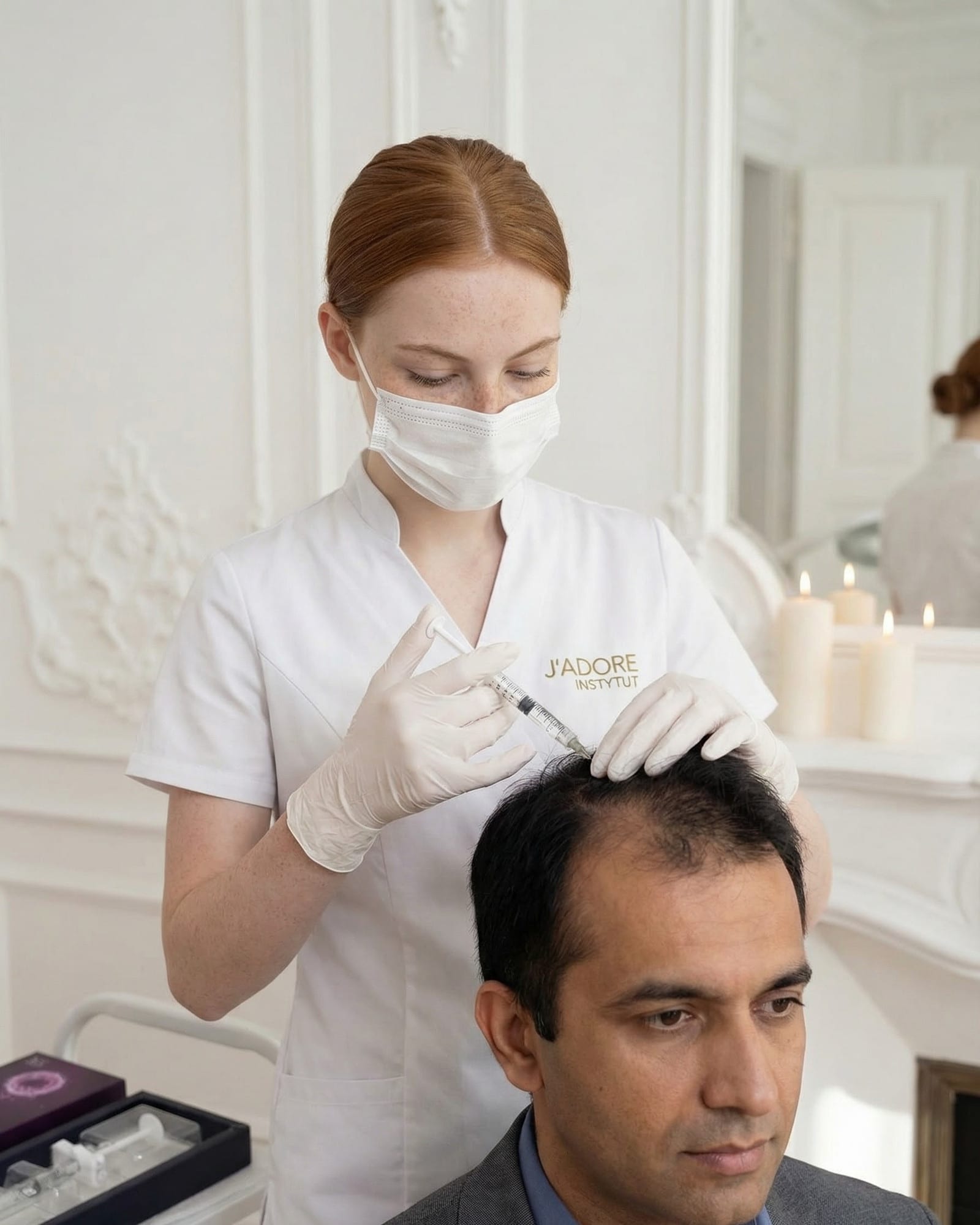
The treatment involves controlled micro-injury to the skin's surface using fine needles. It sounds unpleasant — in practice it's more of a distinctive sensation than pain, and the scalp is less sensitive than, say, the face. The micro-injuries trigger the body's natural healing process: growth factors are sent to the area, microcirculation improves, and collagen production intensifies.
For hair follicles, this means a better-nourished environment — more oxygen, more nutrients, better drainage. If hair-growth-supporting products (for example, peptide- or growth-factor-based ones) are used alongside, microneedling improves their absorption through the scalp — because it creates temporary micro-channels through which active substances reach deeper than with ordinary application.
Microneedling
what it does
- stimulates microcirculation in the scalp
- may improve absorption of topical products
- activates natural growth factors
- improves scalp condition
Applying products alone
for comparison
- works, but penetration through the scalp is limited
- the effect depends on the skin barrier
- no mechanical stimulation of the follicles
When it's worth it — and when it's too late
This is the key point: microneedling supports follicles that are still active. If the scalp in the receding area is already completely bald — meaning the follicles are inactive or gone — no cosmetic treatment will restore growth. That's why we talk about a "window": the earlier you start, the more you have to save.
- A good moment: the hairline is starting to recede, thinning is visible, but hair is still growing — just thinner and weaker.
- A reasonable moment: the recession line is progressing, but the scalp still has "coverage" — hair is there, just less dense.
- A difficult moment: extensive, established baldness — here, microneedling won't be enough. A consultation with a dermatologist or trichologist is needed.
Age is secondary — the stage of hair loss matters more. A twenty-five-year-old with significant recession and a forty-year-old with mild temple thinning can be in opposite situations. That's why the treatment is always preceded by a scalp assessment — after which it becomes clear whether and how microneedling can help.
What the treatment involves — no secrets
The treatment is short. The scalp is cleansed, an active product may be applied, and then microneedling begins. What does it feel like? Distinctive, but not intense pain. The scalp is generally less sensitive than the face, and the treatment is carefully calibrated to each person.
- 01
Consultation & scalp assessment
The specialist examines your scalp, assesses the stage of thinning, and determines whether and how microneedling can help. This is also the time for questions.
- 02
Cleansing and preparation
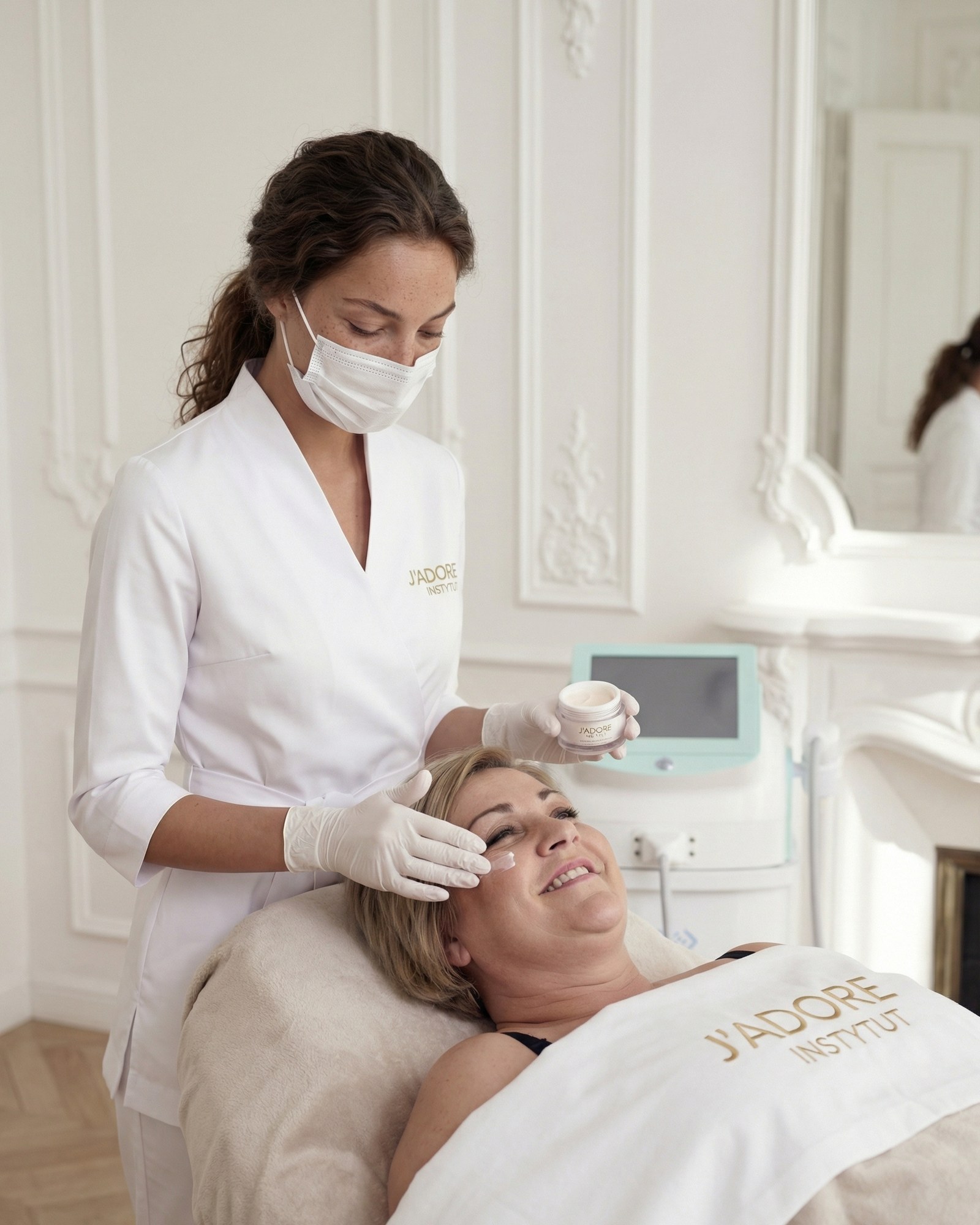
The scalp is cleansed. An active product may optionally be applied, which penetrates deeper during microneedling.
- 03
Microneedling
Carried out precisely in selected zones. Sensations vary from person to person, usually described as an intense tingling.
- 04
Finish and aftercare instructions
The skin is soothed. You receive specific guidance for the first 24–48 hours — what to avoid and how to care for your scalp.
After the treatment, the scalp may be slightly red — this is natural and fades quickly. For 24–48 hours, skip the gym and strong products (including shampoos with strong active ingredients). You return to your normal routine straight away.
What scalp microneedling can be combined with
Microneedling works best not on its own, but as one element of a multi-pronged approach. Mechanical stimulation alone is one thing — but follicles also need the right active substances, and often an assessment (and possibly hormonal treatment) from a dermatologist. Below are treatments that often go together with it.
Scalp mesotherapy
Combines microneedling with delivering active substances directly into the scalp — peptides, amino acids, vitamins. Microneedling opens the way; mesotherapy delivers what the follicles need.
Treatments with PRP (platelet-rich plasma)
Your own growth factors, drawn from your blood, delivered into the scalp. PRP works synergistically with mechanical stimulation — a combination with well-documented potential in trichology literature.
Trichology consultation
Not a treatment, but part of a comprehensive approach. A trichologist will assess whether the cause of thinning is purely androgenetic, or whether there's also a nutritional, inflammatory or other component — and advise whether cosmetic treatments are enough, or whether medical treatment is needed.
Who performs it — and why it isn't all the same
Scalp microneedling requires precision and clinical assessment. It's not something worth doing at just any location, or at home with a roller bought online. The difference matters: a professional salon controls depth, tool hygiene, skin preparation and the entire protocol — at home, all of this is left to chance, and the risk of infection is real.
At J'ADORE, the treatment is performed by a specialist after a scalp assessment — that assessment is key. Without it, there's no way to know whether the treatment makes sense at all, which zones need work, or whether there are any contraindications (such as active scalp inflammation). If you clearly need a dermatologist, you'll be told so directly — without being pushed into a treatment.