Why is there so much confusion around one name?
“Oxygen treatment” is not a protected name — it describes how something works. Just as “massage” may mean classic relaxation on a treatment bed, therapeutic fascial work or a vibrating device from a pharmacy, “oxygen therapy” now includes very different methods. They have one thing in common: oxygen or skin oxygenation appears somewhere in the description. Everything else differs — the mechanism, the carrier for active ingredients, the equipment and, most importantly, clinically studied results.
The issue begins with marketing. When a technology becomes popular and gains positive associations, there is pressure to use similar language — even if the device or treatment works in an entirely different way. You hear “oxygen”, associate it with what you read in an article about a specific system, and may not realise you are buying something completely different. This is not manipulation by definition — but the outcome may be similar.
Four myths about oxygen treatments
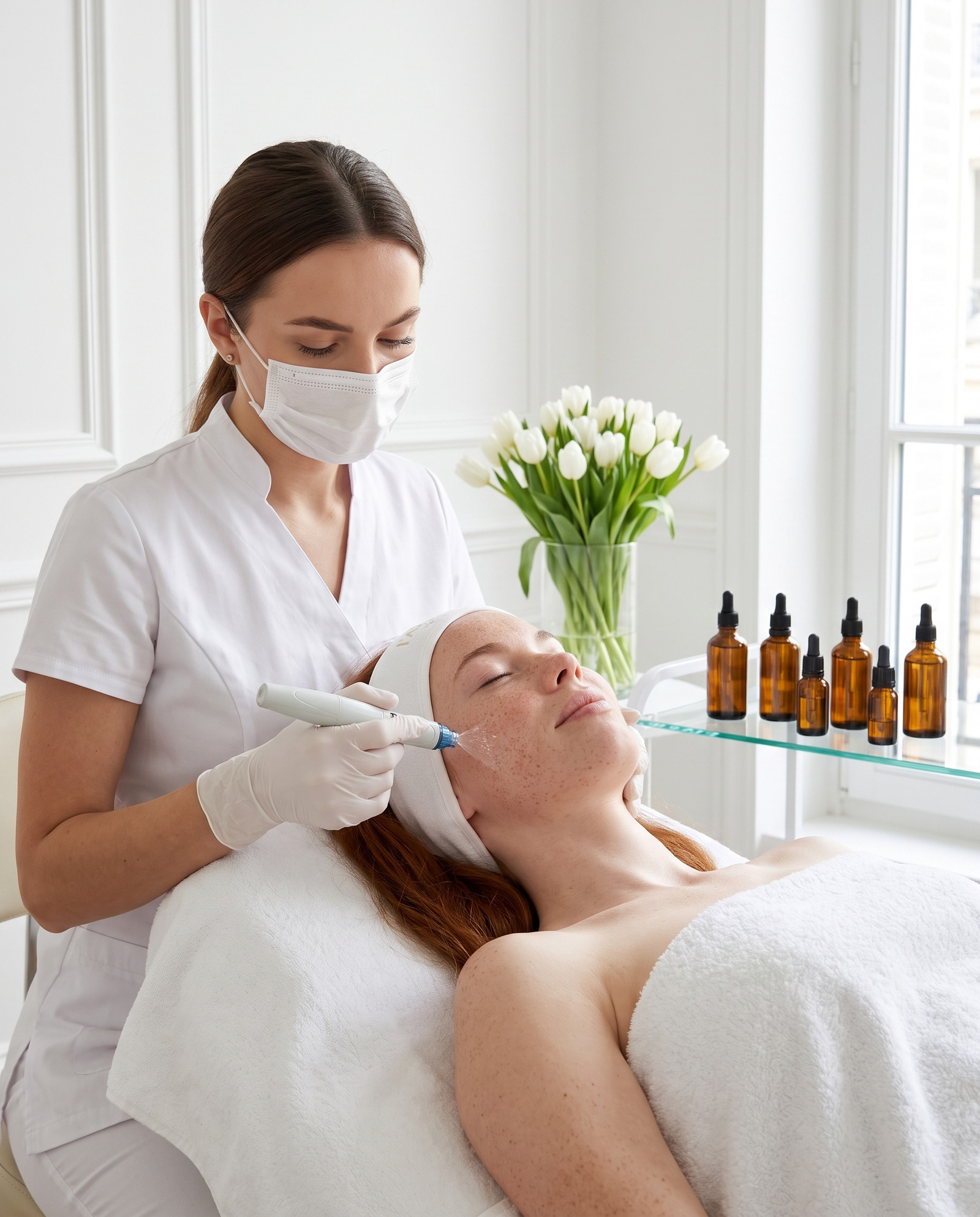
Myth 1: “All oxygen treatments work in the same way.” This is the most costly misconception. Genuine oxygen systems use precisely formulated active ingredients delivered into the skin under oxygen pressure. The delivery mechanism is crucial, as it determines how deeply and effectively substances reach the tissues. Devices borrowing the same name often simply “create a mist” around the face or enrich a cream with oxygen before application. This is an entirely different process. The result may be a pleasant feeling after the treatment. A lasting, documented result remains an open question.
Myth 2: “The cheaper the equipment, the greater the saving.” This is where the false economy lies. Advanced oxygen technologies require certified equipment, regular servicing and original products. These generate costs that must be reflected somewhere. A salon offering an “oxygen treatment” at a fraction of the price will usually use equipment of a different class or products outside the original protocol. Sometimes this is an honest alternative. Sometimes it is simply marketing built on someone else’s reputation.
Myth 3: “An oxygen treatment suits every skin type and is always safe.” Oxygen treatments are considered gentle and non-abrasive — rightly so, compared with a chemical peel or laser. But “gentle” does not mean “neutral for every skin type”. Vascular skin prone to rosacea, skin following recent laser treatments and certain types of irritation are situations where even a gentle technology requires prior consultation. A pre-treatment consultation is the standard in any good salon, not an afterthought.
Myth 4: “The result is visible immediately and lasts a long time.” Some effects of an oxygen treatment — radiance, a feeling of nourished skin and a slight smoothing of minor unevenness — may be noticeable immediately after the treatment. But deeper effects, including improved skin density, reduced hyperpigmentation and a stronger structure, require a series. A single treatment is like one workout: it may show whether the method works for you, but it will not change your skin for the long term. In an honest salon, your cosmetologist will tell you this before you pay — not afterwards.
What truly determines the result?
When we ask why an “oxygen treatment worked” in one salon but not another, the answer rarely lies in staff laziness or bad intentions. Most often, there are three sources of difference. First — the equipment and its authenticity. Professional oxygen systems are not devices you can buy for next to nothing and use without training. They are technologies with a history of clinical studies, protocols and often dedicated products that form an integral part of the result. Replacing the equipment with a cheaper equivalent or the ingredients with “similar” ones means you do not know what you are buying.
Second — the cosmetologist’s expertise. Oxygen technology is a tool. Just as a good paintbrush cannot replace a painter’s experience, advanced equipment cannot replace the knowledge of how to use it. A treatment performed by a qualified cosmetologist who has taken a consultation, matched the method to your skin and has experience with the system will produce a different result from the same equipment used by someone after a weekend course.
Third — the authenticity of the active ingredients. In advanced oxygen systems, what enters the skin under pressure matters as much as the delivery itself. A serum with peptides, hyaluronic acid, vitamin C or other active ingredients is designed as a cohesive protocol. A “substitute from a supplier” may look similar, but it does not have the same properties or a studied absorption profile. This is why someone may have “had the same treatment” in three places and achieved three entirely different results.
Certified oxygen system
original technology with a clinical protocol
- Equipment with a history of studies and certifications
- Original active ingredients within a certified protocol
- Cosmetologist trained by the manufacturer
- Predictable, repeatable result
- Consultation and skin matching before the treatment
“oxygen” treatment at a reduced price
a marketing term borrowed from a recognised technology
- A device with a different level of precision and certification
- Ingredients from different suppliers, outside the original protocol
- Abbreviated training or no manufacturer training
- A result that is difficult to predict and compare
Three questions worth asking before every oxygen treatment
A good salon will have no difficulty answering any of these questions. Your confidence that you know what you are paying for is part of a professional service — not an unreasonable demand.
- Which brand and system does the salon use? — the original equipment manufacturer should be known and easy to verify.
- Which active ingredients are applied during the treatment, and are they part of the original protocol? — “a serum with hyaluronic acid” is not an answer; the answer is a specific product line certified for that system.
- Does the cosmetologist hold a training certificate from the manufacturer of this technology? — not a certificate “from an online course”, but confirmation of training by the distributor or manufacturer.
Who is an oxygen treatment for — and what can you realistically expect?
Professional oxygen treatments work particularly well in several situations: tired, dull skin after an intensive lifestyle, travel or lack of sleep; dehydrated skin seeking deeper hydration than daily skincare can provide; post-summer skin with uneven tone and early signs of photoageing; and skin before an important event — radiance and a more even tone may be noticeable quickly. Many people also experience a gradual improvement in texture and density after a series of treatments, although the extent and pace of these changes vary individually.
What an oxygen treatment will not do — at least not on its own: it will not replace acne therapy for deep inflammatory lesions, “reverse” deep gravitational wrinkles or even out significant hyperpigmentation in one session. It is a regenerative and preventative tool, not a medical intervention. Many cosmetologists combine it with other methods — providing a broader scope of action than each method alone.
Technology and home skincare — what truly supports the result
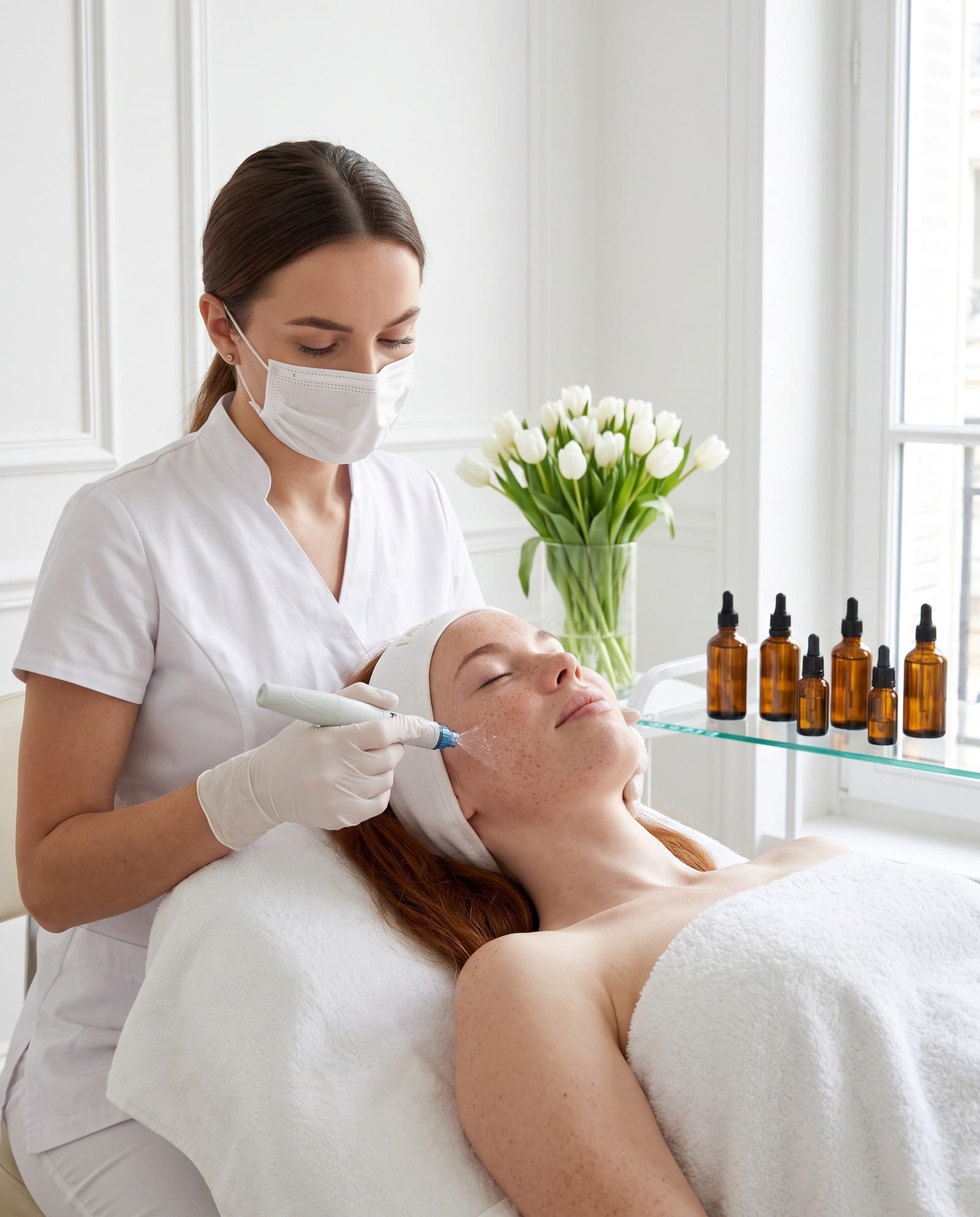
One of the most common myths is the belief that a professional treatment is “enough” and nothing needs to be done after returning home. Yet the effect of an oxygen treatment, like any skincare treatment, depends largely on how your skin is cared for between sessions. Active ingredients delivered in the salon have their own period of action. Home skincare can extend this effect or counteract it.
- Moisturising: skin after an oxygen treatment often absorbs active ingredients more effectively — a good time to introduce a serum with hyaluronic acid or peptides.
- Sun protection: oxygen increases skin sensitivity to UV radiation, especially immediately after the treatment. SPF is not optional but standard — regardless of the season.
- Avoiding irritating ingredients for the first few days: strong exfoliating acids and high-strength retinol — wait a few days before returning to more intensive skincare.
Hydradermabrasion
Mechanical cleansing as skin preparation before oxygen therapy increases the effectiveness of active ingredient delivery — skin free from keratinised cells absorbs more effectively what the oxygen treatment is intended to leave behind.
Needle-free mesotherapy
Electroporation or sonophoresis combined with oxygenation — two pathways for delivering active ingredients at the same time. Often used for dry, dull skin that needs more intensive revitalisation.
Vitamin C radiance treatments
Vitamin C in a stable form enhances the even skin tone effect often initiated by oxytherapy. This combination offers a more pronounced anti-wrinkle and antioxidant effect — especially after an intensive summer.
Before you decide — what to check
Oxygen treatment is one of the gentler, more pleasant options in cosmetology. It involves no recovery period and none of the risks associated with ablative methods. This makes it easy to dismiss as ‘simple oxytherapy available at any salon’. That is a mistake. This gentle method required years of research to demonstrate its potential. Its potential is linked to specific technology, not the name.
Before booking an oxygen treatment — wherever you choose to have it — check three things. Who performs it: a certified cosmetologist experienced with the specific system. What they use: original equipment and certified active ingredients from the protocol. What they say after your skin consultation: whether the proposed treatment follows your skin analysis, rather than simply the price list. These are the three most important questions in cosmetology — not only for oxygen treatments.