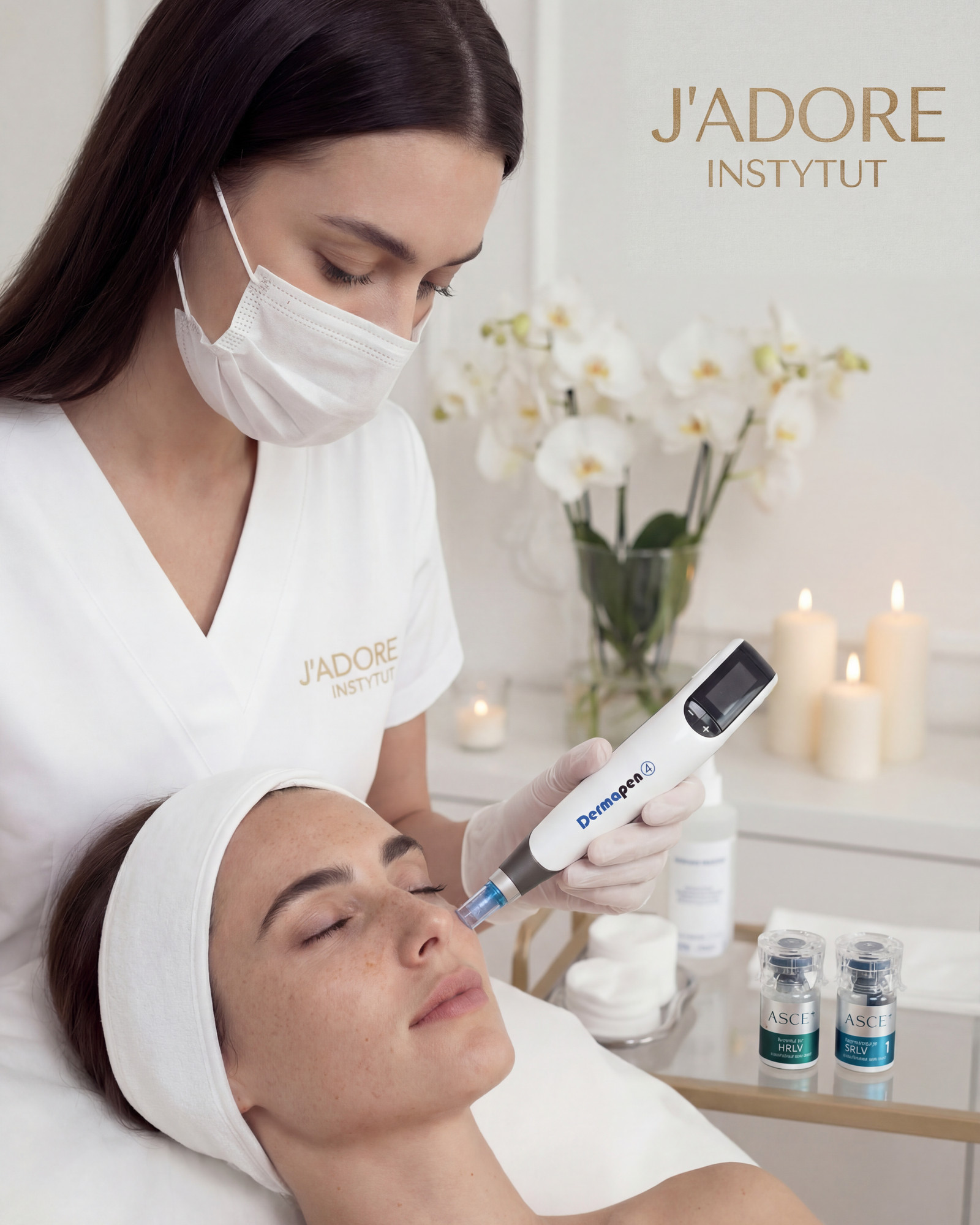
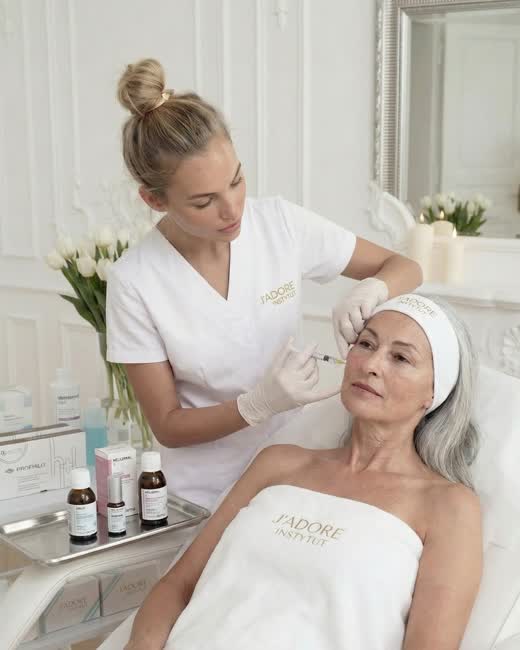
Where so much confusion around one device comes from
Dermapen entered the cosmetology market as a device that's relatively simple to operate. Needles, a small motor, adjustable insertion depth — nothing that looks like it needs long training. This impression is misleading, and dangerous with it. Physically using the device is indeed not difficult. Assessing indications and contraindications, choosing the right depth for a given facial zone and skin type, recognising active inflammation, understanding the risk of post-inflammatory hyperpigmentation (PIH) — these are cosmetology skills, and in part medical skills, built over years, not over a weekend.
Six myths, one by one
Myth 1: "A dermapen is a dermapen — it's the same device everywhere." Devices on the market vary considerably — not just in price, but in depth-adjustment precision, needle quality, evenness of needle distribution and speed stability. Cheaper devices often can't maintain a set depth evenly during movement, which leads to uneven results — too deep in some spots, too shallow in others. The outcome of a treatment depends on the device, not only on the person holding it. There isn't one dermapen quality — there are device tiers, and the difference between them is visible.
Myth 2: “A cartridge is a cartridge — you can use it several times or buy a replacement.” This is one of the most serious myths, because it carries a real health risk. A dermapen cartridge is a single-use, certified sterile component — after one treatment on one person it should be destroyed and thrown away. Needles used multiple times blunt after the first insertion and, instead of cutting the skin, tear the tissues irregularly, which drastically increases inflammation and the risk of scarring. Replacements from random sources often do not pass sterility certification, and that is a simple route to infection.
Myth 3: "Deeper means better, a stronger effect." This misconception keeps circulating in unofficial online courses and among people without solid cosmetology training. Insertion depth is chosen according to the facial zone and the treatment goal — the skin under the eyes, on the nose, on the cheekbone and on the cheek all have different thicknesses, different structures and different safe ranges. Too deep an insertion in a delicate zone can damage blood vessels, worsen hyperpigmentation or, in extreme cases, leave a permanent mark. With dermapen, less is very often more.
Myth 4: "Results are visible after one session." Dermapen triggers a biological skin remodelling process — collagen and elastin production, reorganisation of fibre structure. This process takes weeks, and full results often appear only after a series of sessions carried out at appropriate intervals. A single session can give a slight glow — but expecting a deep change in skin structure after one visit sets you up for disappointment. A realistic protocol is a series of sessions, not a one-off.
Myth 5: "A weekend course is enough to perform dermapen safely." A weekend course teaches you how to switch the device on. It cannot teach — because 16 hours simply isn't enough time — skin and subcutaneous tissue anatomy, diagnosing problem skin, recognising contraindications, managing inflammation, or handling complications. In Poland, dermapen may legally be performed only by a qualified cosmetologist or a doctor. This isn't red tape — it's a safety requirement. People without relevant training don't have the competence to assess skin before treatment, and it's exactly that assessment that determines whether the treatment is safe for a given person at a given time.
Myth 6: "Skin gets used to it — more often is better." Skin has a natural regeneration rhythm, and it can't be sped up indefinitely through needling. Sessions that are too frequent disrupt the repair process rather than stimulate it — overloaded skin responds with inflammation, a weakened barrier and, paradoxically, worse final results. Treatment protocols are based on intervals matched to biology — not on maximising frequency. An experienced cosmetologist plans the series so the skin has time to remodel between sessions.
What really decides quality and safety
When the myths are stripped away, three questions remain — and the answer to each says more about treatment safety than any online review. First: who is performing the treatment, and what training do they have. A cosmetology qualification isn't a formality — it's a guarantee that the person on the other side of the device can assess your skin, recognise contraindications, and know what to do if something goes wrong. Asking about qualifications at a salon isn't rude — it's responsible behaviour on your part.
Second: what equipment and cartridges the salon uses. Certified, single-use, genuine cartridges aren't a luxury — they're the minimum. A salon that takes you seriously will answer a question about the manufacturer of its equipment and cartridges without hesitation, and without irritation. A salon that won't, or brushes the topic aside, is telling you something important. Third: whether there's a consultation before the treatment. Dermapen has specific contraindications: active inflammatory acne, skin infections, keloid scarring, pregnancy, photosensitising medication, and recent laser hair removal in the same area. A professional consultation isn't a formality before signing a consent form — it's a clinical assessment, and the treatment shouldn't go ahead without one.
A salon without a protocol
An offer with no consultation
- No questions about skin or medication
- Uncertified wholesale cartridges
- One depth for the whole face
- No information about the practitioner
- Price discount as the main selling point
A salon with a protocol
Consultation + qualifications + certified equipment
- Questions about skin, medication, contraindications
- Single-use, certified cartridges
- Depth matched to the facial zone
- A qualified cosmetologist
- An aftercare protocol
Who dermapen is genuinely a good option for
Dermapen has well-documented applications — and that's an important point, because not every treatment with broad applications actually works everywhere and for everything. For many people, it can improve the appearance of acne scars — especially atrophic ones, meaning depressed scars. It's often used in skin rejuvenation protocols, in working on skin quality and pore size, and, combined with the right products, on hyperpigmentation and uneven skin tone. On the scalp, it's used as a supporting treatment for certain forms of hair loss, always as part of a broader protocol.
There are also skin types for which dermapen isn't a good option at a given time — and recognising this is exactly what a cosmetologist's expertise is for. Skin with active inflammation, vascular skin, skin sensitive to mechanical irritation, and skin undergoing retinoid therapy are examples of situations where even a proven device in capable hands can produce the opposite of the intended effect. An effective treatment is one performed on the right skin, at the right time, by the right person.
Before you decide — three things worth checking
If you're considering dermapen, do what you'd do before any invasive treatment: check who you're dealing with. The training of the person performing the treatment should be easy to verify — in a professional salon, this won't be an awkward topic. Also ask what equipment they use, and whether the cartridges are single-use and certified. The answers to these two questions will tell you more than any price list.
Notice whether the salon offers a consultation before the treatment — not as a formality, but as a genuine assessment of your skin. Dermapen has scientific grounding and real results. To achieve them, the skin needs to be ready for it, and the protocol needs to match its current condition. Skipping the consultation is a saving you pay for with your skin — sometimes literally.