Where a low price comes from — and what really sits behind it
A treatment price is built from at least four elements you can't see from the outside: the cost of the product and its origin, the fee and qualifications of the person performing the treatment, the time spent on diagnosis and consultation, and accountability for the result and any touch-up. When a price is two or three times lower than the market rate, one of these elements — or several at once — has been cut. The question is which, and at what cost to your skin.
The second element is qualifications. A rejuvenating treatment isn't a relaxing ritual — it's an intervention in skin tissue that requires knowledge of anatomy, product pharmacology and the skill to assess risk. The hourly rate of a dermatologist, an aesthetic medicine doctor or a certified specialist cosmetologist reflects years of training. Someone without these competencies may perform "the same treatment" for a fraction of the price — but their knowledge of when to stop, or when to refer you elsewhere if something goes wrong, is entirely different.
Five myths about cheap rejuvenating treatments — one by one
Myth 1: "A peel is a peel — the acid is the same everywhere." The name of an acid alone tells you little. What matters is concentration, the pH of the solution, the carrier, the application technique and exposure time — and, above all, the person who adjusts these parameters to your skin's current condition. Overly aggressive exposure on unsuitable skin can lead to post-inflammatory hyperpigmentation (PIH), prolonged irritation or, in extreme cases, damage to the hydrolipidic barrier — which can take months to repair. Choosing the right treatment starts with a skin assessment, not with picking "the cheapest option on the menu."
Myth 2: "Mesotherapy is simple — an injection is an injection." Needle mesotherapy delivers products directly into the layers of the skin. Effectiveness depends on injection depth, the distribution of injection points, the composition of the cocktail — and on whether the person administering it understands the difference between superficial and deeper skin, and between a hydrating effect and a stimulating one. Errors in technique can cause lumpy changes, bruising, uneven results, or a short-lived improvement that masks a lack of real action on skin structures.
Myth 3: "The result will be the same, just the treatment a bit weaker." This is one of the most deceptive assumptions. Skin doesn't respond in a straight line to the strength of a stimulus. Too weak a stimulus brings no result; too strong — or poorly matched — one can cause damage. A "lighter version" of a treatment, without the right product and technique, usually leads either to no result (a loss of money and time) or to an unpredictable result (potential harm).
Myth 4: "If I don't like it, I can always come back and get it corrected." Correcting a failed or poor-quality treatment is often far more expensive than a well-performed treatment done right the first time. A properly performed fractional laser, plasma mesotherapy or biostimulator builds into the tissue over months — but so do the flaws from cheap procedures. Post-inflammatory hyperpigmentation, scarring or a damaged skin barrier are problems that require long, specialist repair. There's no guarantee they can be "put right."
Myth 5: "Promotions are just a lower margin — the quality is the same." Seasonal promotions from reputable specialists make sense — they fill the schedule during quieter periods. But a deep discount of several dozen per cent below the standard market rate usually signals a different category of service: a different product (a cheaper substitute without clinical studies, or one close to its expiry date), less time for consultation, no follow-up after the treatment. In medical cosmetology, the time spent on diagnosis beforehand and on assessing results afterwards isn't an extra — it's the foundation of safety.
What you're really buying when you choose a rejuvenating treatment
A professional rejuvenating treatment isn't a product off a shelf — it's a complex diagnostic and treatment process. It starts with a skin assessment: thickness, hydration, firmness, treatment history and current concerns. A good specialist asks about medications, supplements, any intolerances and recent sun exposure. Only then is the product chosen — a specific brand and concentration — along with an application technique matched to the facial zone and the depth of the concern.
After the treatment, follow-up and home care matter just as much, reinforcing the result. This isn't a "by the way" product sale — it's part of the protocol. Skin that has undergone a regenerative treatment or a peel needs proper protection and support for several weeks afterwards. A lack of this guidance — or simply no time to give it, because "the next client is waiting" — is one reason results from cheap treatments fade faster than they should.
Low price — what it often hides
What to watch for
- A product without documented clinical studies, or a lower-certified substitute
- No detailed consultation before the treatment
- A shortened visit without a thorough skin assessment
- No follow-up, and no home care plan
- Difficulty getting information about the product's composition
Market price — what it includes
The standard of a professional salon
- A certified product with documented composition and studies
- Consultation: history, skin assessment, a protocol matched to you specifically
- Time for careful application and monitoring of your skin's response
- Aftercare instructions and a home care plan
- The option to contact the salon and get follow-up after the treatment
When a lower price is fine — and when it's a red flag
Not every lower-priced offer is a bad one. There are situations where a price below the peak rate is fully justified: treatment packages spread across several visits can be cheaper due to scale; loyalty offers for regular clients reward loyalty, not a cut in quality; basic treatments such as hydrating mesotherapy cocktails are reasonably priced lower than advanced biorevitalisation stimulation. The difference is simple: a good salon can explain why a given service costs what it does, what it includes and what its scope is.
A red flag should go up when the price is significantly below the market rate, and at the same time there's no time for conversation, no questions about your skin history, no information about the product's composition, and no follow-up plan at all. That's a sign the saving is coming from exactly the elements that matter most in medical cosmetology.
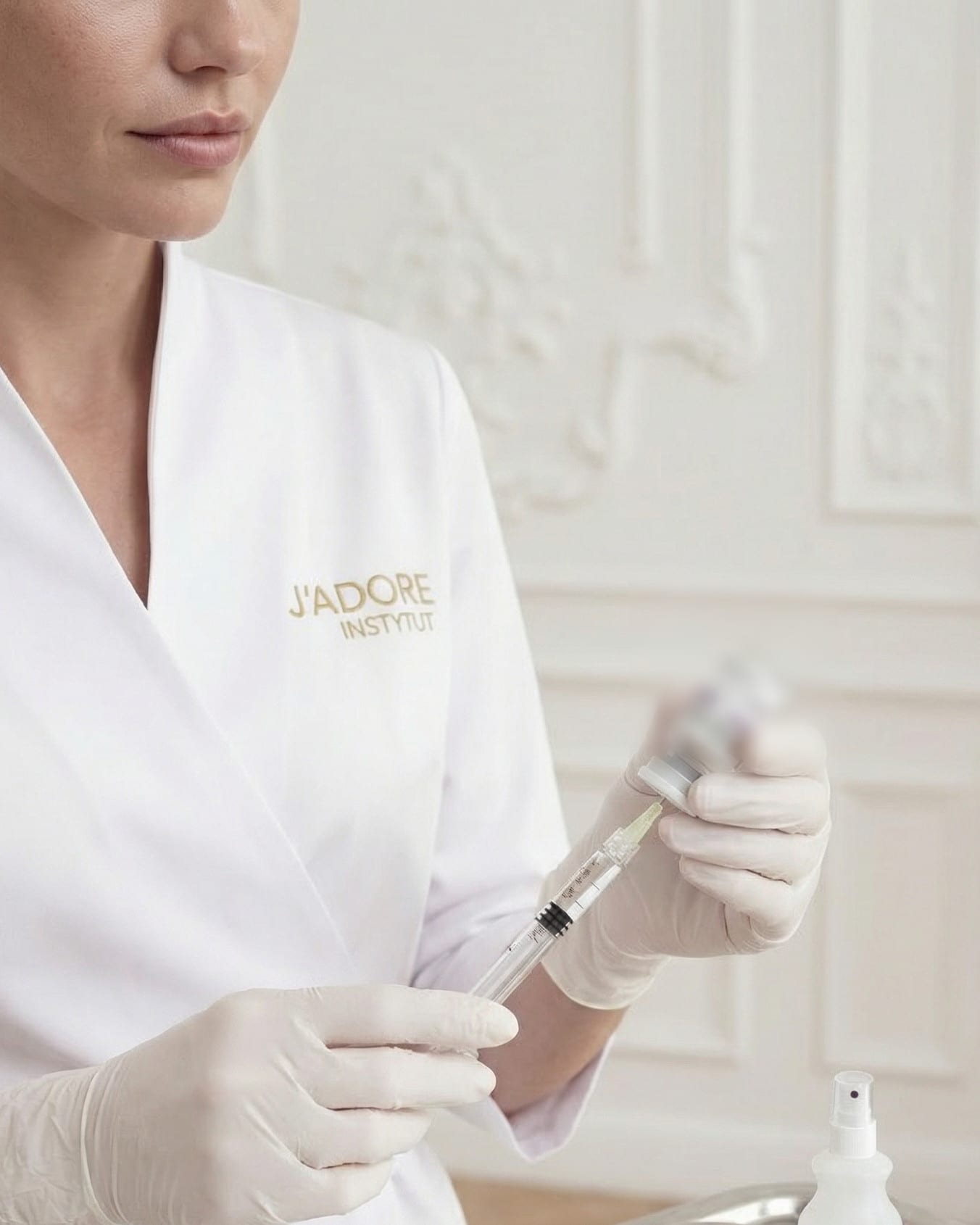
How to choose well — instead of choosing cheap
The first rule: start with a consultation, not with the treatment. A professional salon always begins with a conversation and a skin assessment — and doesn't push you straight into a full package. A good specialist will sometimes suggest less than what you ask for, if your skin needs something different. That's a sign of competence, not a weak offer.
- 01
Consultation and diagnosis
An assessment of your current skin condition, treatment history, and a review of medications and home care. Without this step, choosing the right treatment isn't possible.
- 02
Choosing a protocol
A specific product, technique and frequency matched to your skin — not a generic "rejuvenating package."
- 03
A treatment with full attention
Time spent on careful application, observing your skin's response, and adjusting technique during the session if needed.
- 04
Recommendations and follow-up
A home care plan that reinforces the treatment's effect, plus the option to get in touch if anything concerns you afterwards.
The second rule: compare like with like. Before choosing a cheaper offer, check exactly what it includes — and compare it with what the more expensive offer includes. It often turns out that the price difference reflects a difference in the scope of the service, not just the salon's margin. A cheaper package might mean fewer sessions, a less concentrated product, or the absence of the elements that make a result last rather than fade quickly.
Rejuvenating treatments and gender — the same myth, different context
For women, the "cheap treatment" myth often comes from social pressure to look after your skin without spending "too much" on yourself. The result: choosing an option that meets others' expectations without going over a certain spending limit. Yet a woman's skin after forty — with collagen loss, hormonal changes and accumulated oxidative stress — needs precision, not price compromises. A good treatment is an investment spread over time, not a one-off spend on "something rejuvenating."
For men, the myth is slightly different: "why pay more, when it's just a minor improvement." Yet male skin is thicker, oilier, and responds differently to the same products — which means the treatment protocol needs to be genuinely adapted, not simply copied from women's protocols. Men usually come in with a specific concern: a tired expression, a deep furrow between the brows, grey, stressed-looking skin. Choosing a treatment precisely matched to that concern — rather than "the cheapest anti-ageing package" — delivers a result you can actually see.