What RF energy actually does in the skin
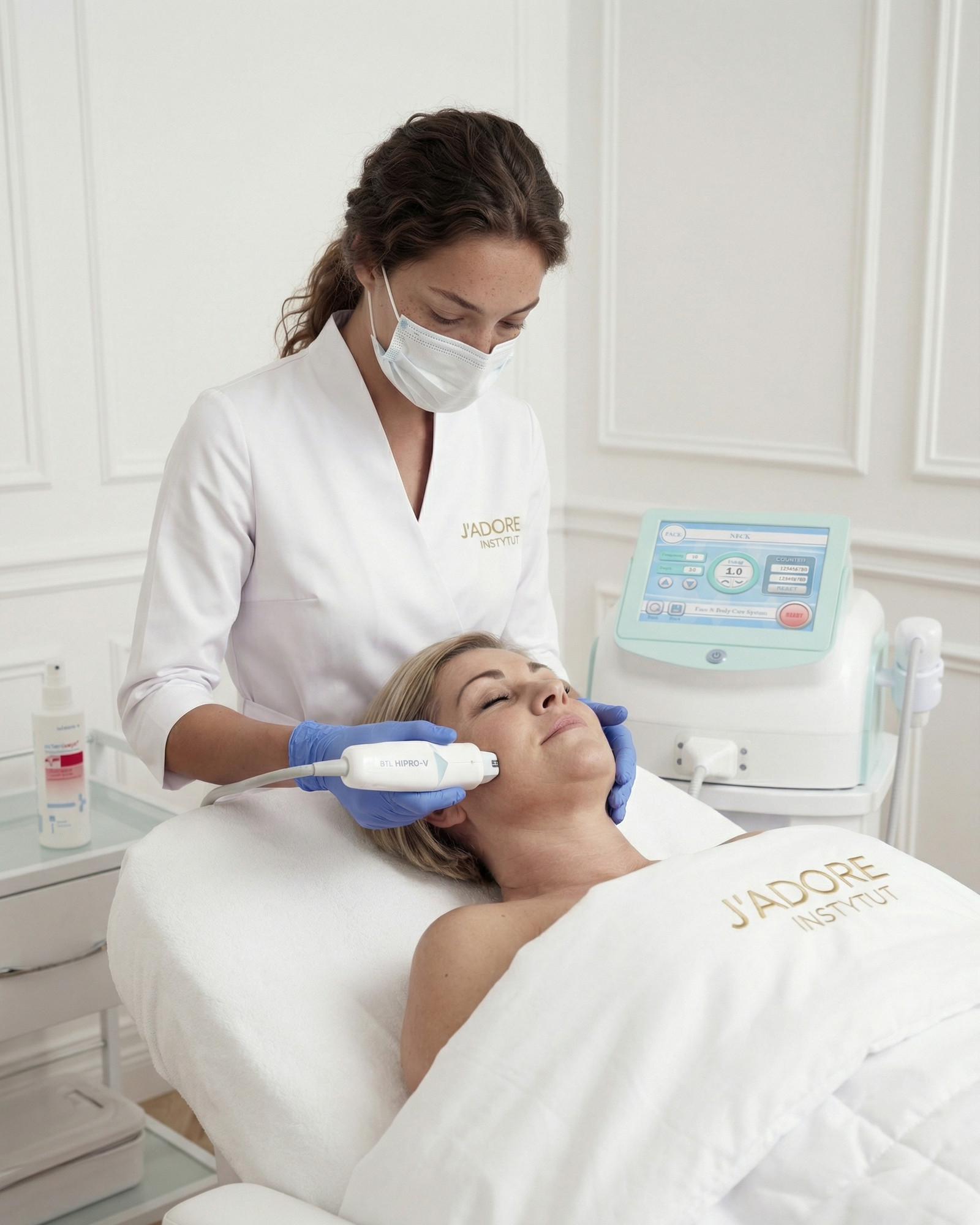
To understand why the result builds gradually, you first need to understand what happens during the treatment. RF thermolifting works through heat — electromagnetic energy converts into heat within the tissue and warms the collagen in the deeper layers of the skin. This warming is deliberate and controlled. It reaches a level where something important happens: collagen fibres contract.
This contraction of collagen fibres is the first step — visible, measurable, immediate. Some people feel their skin is slightly tight and warm to the touch after the treatment. This isn't an illusion: the tissue has physically become denser. But it's only the prologue to the real process, because the body responds to this sudden contraction as it would to any injury: it starts repairing.
And this is where the part of the story that isn't visible in the first week begins. The body launches a cascade of repair processes — it mobilises the cells responsible for collagen production, known as fibroblasts, and gives them one job: rebuild the tissue better than it was before. Old, contracted collagen becomes the signal for new synthesis. And new collagen — denser, better organised, more resilient — is exactly where the lifting effect comes from.
Fibroblasts: the unnoticed factory in your skin
Fibroblasts are connective tissue cells that produce collagen, elastin and hyaluronic acid — the three foundations of firm, resilient skin. The problem is that fibroblasts slow down with age. They produce less and less collagen, and what they do produce is less well organised. Skin loses density, firmness and its ability to "bounce back".
RF thermolifting does something no cream can do: it reaches fibroblasts deep within the tissue and gives them an impulse to get to work. Controlled heat acts like an alarm signal — "there's damage here, repair needed". Fibroblasts respond by producing new fibres. But this is production, not an instant result. New collagen grows and matures over weeks, not hours.
- 01
Treatment — warming the tissue
RF energy warms the deeper layers of the skin. Old collagen contracts and becomes denser. Skin may be flushed and warm to the touch.
- 02
First 72 hours — inflammatory response
The body launches a natural response to heat. This is the "silent alarm" phase — fibroblasts are mobilised and move into the treated area.
- 03
Week 1–2 — collagen production
Fibroblasts begin synthesising new collagen fibres. The visual effect is still minimal — skin may appear unchanged or slightly tighter.
- 04
Week 3–6 — maturation and organisation
New collagen matures and organises into a network. Skin firmness gradually increases. For many people, this is when a visible difference appears.
- 05
Month 2–3 — full result
The collagen network is fully formed. For many people, the lifting effect and improvement in skin quality are most apparent during this period.
Why "nothing is visible" after the first week — and whether this is normal
Yes. This isn't just normal — it's biochemically inevitable. Collagen is a structural protein, and its synthesis happens in stages: fibroblasts must first produce procollagen (a precursor), which is then converted into collagen, which must then arrange itself into a cross-linked network with other fibres. Each of these steps requires time and cellular resources.
There's one more important mechanism at play: after the treatment, skin can look slightly worse before it looks better. Mild redness, slight swelling or sensitivity in the first few days is an inflammatory response that's part of the repair process — and it's a good sign. It means fibroblasts have been mobilised. Once this stage passes (usually within a few days), skin returns to its normal appearance — but beneath the surface, the collagen factory keeps working.
A series or a single session — how the result builds
One of the most common questions before thermolifting is: how many sessions are needed? And the answer — as with many things in aesthetic medicine — is: it depends. But there's one important mechanism that explains why a series of sessions often produces a better result than a single one.
Each subsequent session in a series reaches skin that's already mid-way through collagen remodelling. Fibroblasts are active, and the tissue is in "repair mode". A new thermal impulse builds on the ongoing process and reinforces it — like adding layers when building a wall, rather than starting from scratch. The effect accumulates. That's why, for many people, the result after a full series is noticeably better than after a single session.
Single session
an impulse for remodelling
- Triggers collagen synthesis
- Result visible after a few weeks
- A good starting point or a way to maintain results
Series of sessions
cumulative effect
- Each session reinforces the previous one
- Deeper and longer-lasting collagen remodelling
- Recommended for noticeably reduced skin firmness
The number of sessions, the intervals between them and the treatment area are things your specialist decides individually — after assessing your skin quality and firmness, age, treatment history and expectations. There's no single protocol that suits everyone.
How long the result lasts and what extends it
The new collagen produced after RF thermolifting is real collagen — not a temporary filler or a cosmetic trick. It's a lasting remodelling of skin structure, not an effect that "fades" after a week. But collagen is also living tissue and, like all skin, continues to age naturally. This means the result isn't permanent, but for many people it lasts several months to over a year.
- Sun protection — UV radiation speeds up collagen breakdown. Daily SPF is the cheapest way to extend the treatment's result.
- Hydration and skin care — well-hydrated skin with a healthy barrier holds on to collagen and elastin better.
- Avoiding sudden weight changes — weight fluctuations put strain on the tissue and can weaken the effects of firming work.
- Maintenance sessions — once the result is achieved, many specialists recommend single "reminder" sessions every few months to a year.
- Lifestyle — sleep, hydration, a protein-rich diet — all of this affects the rate at which your body produces and maintains collagen.
RF thermolifting combined with other treatments
RF thermolifting works deep — at the level of collagen and the tissue scaffold. This makes it a good complement to treatments that act on other "layers" of the skin. A properly planned sequence or combination can achieve a result that no single treatment could deliver on its own.
Needle mesotherapy
RF thermolifting rebuilds the collagen scaffold at depth; mesotherapy delivers nutrients and hydration to the deeper layers of the skin. A good combination for mature skin with a simultaneous loss of firmness and quality.
Biostimulators (Sculptra, Radiesse)
Biostimulators stimulate fibroblasts using logic similar to RF, but through different mechanisms. Combining them can strengthen and extend the collagen neogenesis effect — they're typically used in separate sessions, with appropriate intervals between them.
Platelet-rich plasma (PRP)
Growth factors in plasma can support tissue regeneration after thermolifting. Often used in skin protocols focused on quality and condition.
Chemical or laser peels
Thermolifting works "from within" (collagen), while peels and laser treatments work "from outside" (epidermis, texture, discolouration). Two different layers, two different results — good synergy within a full rejuvenation programme.
What you should know before deciding on the treatment
RF thermolifting isn't a treatment for anyone looking for an instant change — and knowing this in advance lets you enjoy the result instead of being disappointed by it. There are a few things that often come up during consultations as "no one told me this before" — worth knowing before you speak to a specialist.
- The result is visible after weeks, not days. For many people, the first clear results appear between weeks 3 and 6. The full result appears after 2–3 months.
- One session may not be enough. With significant loss of skin firmness, a specialist usually recommends a series. Expecting dramatic results after a single session often leads to disappointment.
- The result won't replace surgery for very advanced tissue sagging. RF thermolifting gives the best results for people with early or moderate loss of firmness — it isn't the answer to every issue, and it won't bring identical benefits for everyone.
- The treatment requires proper qualification. Poorly chosen or poorly performed RF energy may fail to give a result, or may cause unwanted reactions. Being treated by an experienced specialist is essential here.