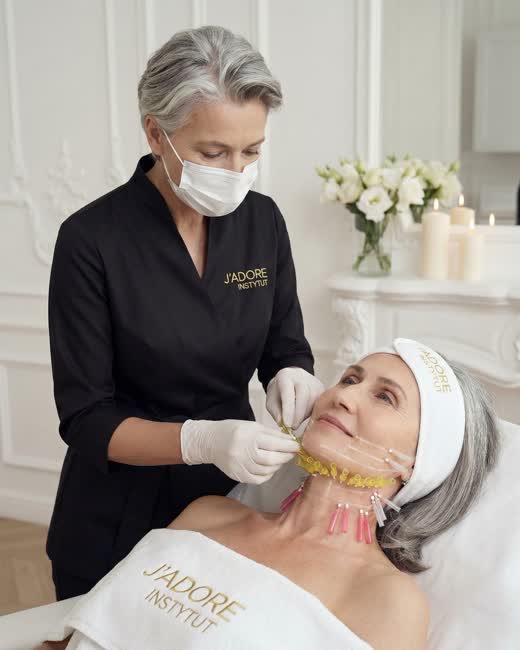
The first result is visible immediately, but swelling inflates the assessment
Immediately after injection, the fold may look shallower and the area fuller. At the same time, the puncture causes a local reaction: redness, tenderness, swelling, or bruising. Clinic lighting and fresh skin hydration also affect the look. This is a good moment to assess safety, not to make a final aesthetic verdict.
During the first few days, we do not add product just because one side seems different. First, you must allow the tissues to calm down and follow the doctor's recommendations.
After a few days, the reaction to the injection subsides, the "entire result" does not disappear
As swelling decreases, the result may seem more subtle than immediately after the treatment. This does not necessarily mean the product has been absorbed. The volume associated with the tissue reaction is disappearing. During this period, we also assess bruising, tenderness, and any potential irregularities.
Severe, increasing pain, changes in skin colour, or vision disturbances are not part of the normal healing calendar and require urgent medical contact.
The follow-up determines if a touch-up is needed
The doctor sets the follow-up date. This is when we compare the result at rest and during facial expressions, assess symmetry, palpate the tissues, and return to the original goal. An additional amount of product makes sense only if there is a specific, correctable deficit.
Not every fold is caused solely by volume loss directly under the line of the crease. Support of the mid-face, skin quality, muscle movement, and bone structure can all be significant. Filling the line itself to complete smoothness can result in a heavy, unnatural look.
This is not a series like peels or physiotherapy
There is no universal "several treatments every few weeks" scheme suitable for every face. After a properly performed injection, the material remains in the tissues for a time depending on the product and the area. The next visit serves for assessment, not automatic repetition.
- First visit: qualification and cautious correction.
- Post-treatment period: swelling reduction and observation.
- Follow-up: decision on completion or a minor touch-up.
- Subsequent months: observation of tissue movement, without adding product by the calendar.
- Next treatment: only after re-assessing the indication.
After a year without maintenance, the face should not be "worse than before"
The result gradually fades along with the product's transformation and natural ageing. This does not mean the face will suddenly collapse. You can decide on a new correction, change the plan, or do nothing. Pressure for mandatory maintenance is a sales argument, not a biological rule.
Previously injected acid may last longer than the visit calendar suggests. In cases of unclear history or suspected migration, the doctor may need additional diagnostics. Adding product without assessment increases the risk of overfilling.
What a filler will not do even after many visits
It will not stop facial expressions, improve all superficial wrinkles, tighten significant excess skin, or reverse the ageing process. Not every deep fold should be completely erased; part of it results from normal facial anatomy.
For someone expecting a completely smooth, motionless face, it is not worth building subsequent layers of HA. It is often better to accept some lines or use a plan combining other, properly qualified methods. More product is not a synonym for a fuller effect.
The Krakow schedule starts with photographs and the history of previous injections
J’ADORE INSTYTUT in Krakow is located at Karmelicka 45/2B. Current information is on the filler page in Krakow. For the consultation, prepare the dates, names, and areas of previous treatments if you know them.
The most sensible plan is: correct as much as anatomy requires, wait for the tissues to calm down, and finish when the goal has been achieved. A filler is a tool for precise correction, not a subscription that must be fulfilled regardless of the result.
The week before the visit is not for buying an ampoule, but for clarifying the goal
Before the consultation, look at your face at rest, while smiling, and in normal light. A fold visible only during certain expressions may require different thinking than a permanent crease present without movement. Write down exactly what bothers you: the shadow, the depth of the line, loss of cheek support, or a general impression of a heavier lower face. Without this, it is easy to order filling the line, even though the cause lies elsewhere.
Gather information about previous injections: dates, areas, product names, and any reactions. Material injected into the cheeks, tear troughs, lips, or directly into the folds affects the assessment of proportions. If you do not know the name, do not guess. Tell the doctor what you remember and show documentation if you have it. Lack of a visible result is not proof of the complete absence of the product.
Do not stop taking medications or change supplementation on your own just after reading an online list. The qualifying doctor assesses health, allergies, infections, skin condition, tendency to bruise, and current treatment. If you need to reschedule, the aesthetic calendar gives way to safety. A filler is not a treatment that must be performed just because time was reserved before an event.
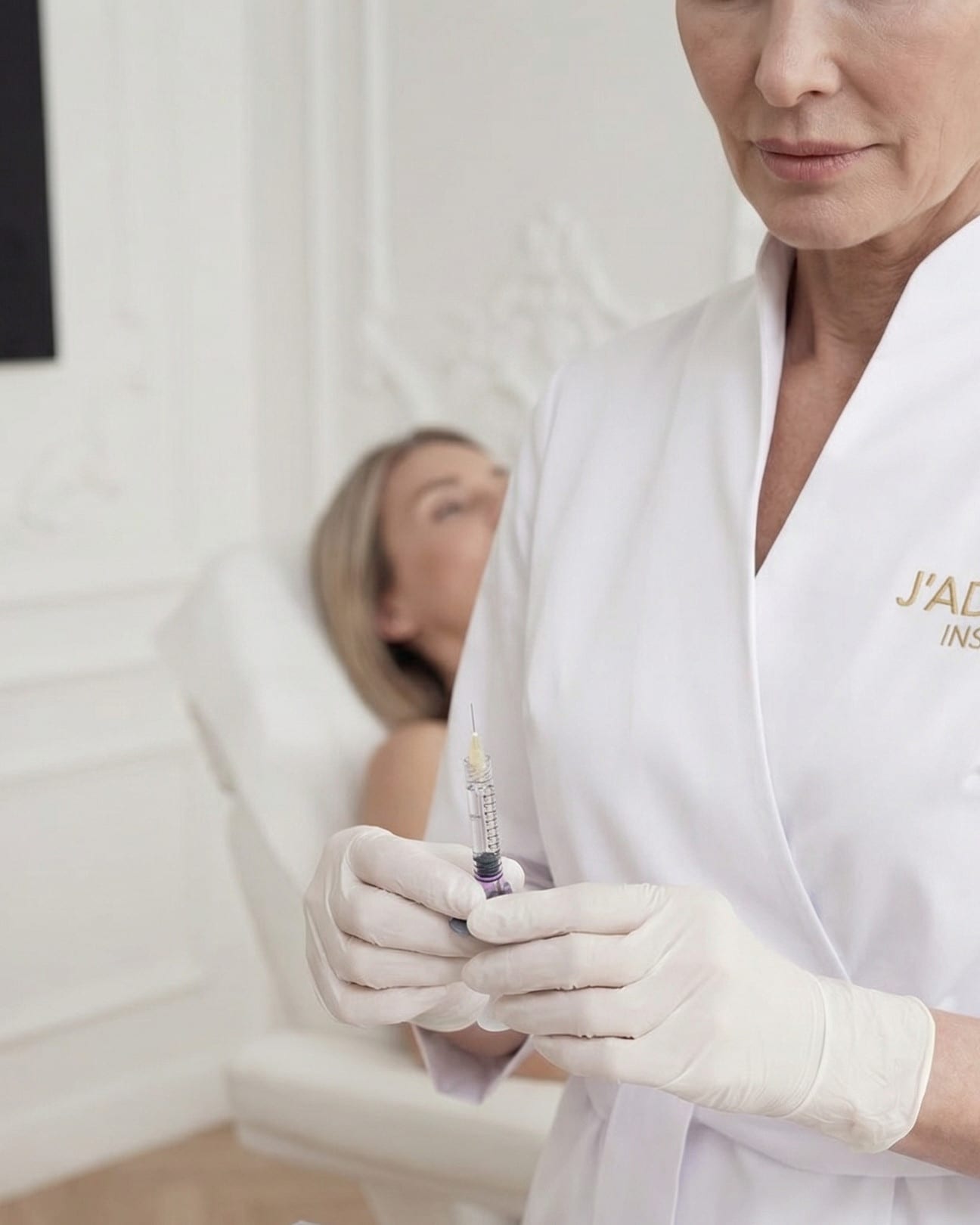
The first twenty-four hours show tissue reaction, not result longevity
After injection, you see the volume of the product and the reaction to the puncture. Swelling may be uneven, and one side may be more red or tender. It is worth treating a photograph taken immediately after as documentation of the procedure. You should not order another portion based on it or assume that asymmetry requires immediate correction.
Follow only the recommendations received after the treatment. Do not knead, shift, or massage the product without specific instructions. Do not test the softness with your fingers every hour. Frequent touching can increase irritation and make it difficult to assess whether the sensation is changing. If the doctor has recommended massage in a specific case, they should show you the technique, the moment to start, and the scope.
Days two to seven are for observation, not a daily verdict
In the following days, swelling and bruising usually change the image. The face may look different in the morning than in the evening, and facial expressions may reveal unevenness invisible at rest. Assessing the result several times a day leads to contradictory conclusions. Photographs in similar light, from the same distance, and with a neutral facial position are better.
When the volume associated with the reaction to the puncture disappears, the result becomes more subtle. This is not automatically a signal of an insufficient amount. The goal may be to soften the shadow and support the tissues, not to erase the entire anatomical line. If the result looks natural in movement, a small remaining fold may mean the correct limit of correction.
Contact the clinic if a symptom goes beyond the received recommendations, intensifies instead of fading, or causes concern. Do not diagnose a lump or asymmetry based on photos of other people's faces. Swelling, bruising, accumulated product, natural structure, and complications can look similar to a person without an examination. The correct reaction depends on the cause.
The follow-up after tissue calming answers three questions, not one
The first question concerns safety: how the puncture sites healed, whether there were unusual symptoms, and how the tissues look during examination. The second concerns the goal: whether the shadow and crease have decreased to the extent agreed upon before the treatment. The third concerns proportions: whether improving one area has not added heaviness or revealed another imbalance.
Only after such an assessment can the doctor finish the plan, propose a minor touch-up, or decide that further adding product makes no sense. "There is some product left" is not a medical or aesthetic argument. The product should not be injected just to use up the package. Likewise, the fact that the patient has arrived for a follow-up does not create an obligation to perform another injection.
If the result is too large, uneven, or inflammatory symptoms appear, the plan does not consist of patient adding. A diagnosis of the problem is needed. Hyaluronidase can be used with HA products in appropriately qualified situations, but it is not a cosmetic eraser used without consequences. The doctor makes the decision based on the examination and the type of problem.
Months after the treatment do not fall into a single expiry date
The product does not disappear overnight on the date written in the brochure. The result changes gradually, and its perception also depends on facial expressions, weight changes, skin quality, natural ageing, and other treatments. Therefore, a plan for the next visit based solely on the number of months passed is too simple. First, we assess what remains and what is really missing.
Previous injections can add up. Every subsequent correction should start with a full history, photographs, and examination, even if the previous result seemed perfect. A face after several treatments is not the same starting point as a face before the first one. Repeating the same amount and the same points without re-qualification can lead to a gradual loss of natural proportions.
Lack of maintenance does not mean neglect. If the result has weakened but the face still looks harmonious, you can observe. If the fold has returned, it is worth asking about its cause again, rather than automatically repeating the old scheme. Over time, another method or resigning from further intervention may be more appropriate. The calendar is meant to serve assessment, not force a treatment.
Before an important event, count backwards from the follow-up, not from the day of injection
A wedding, photoshoot, public appearance, or trip tempts you to choose the latest available date. This is inverted logic. You must leave time for swelling and bruising to subside, for calm assessment, and for any potential follow-up set by the doctor. It is impossible to guarantee that the skin will react identically as in the previous treatment or as in a person shown on social media.
A first-ever filler just before an important day is a particularly poor test of tissue tolerance and your own perception of the change. Even a technically correct result may require time to stop seeming foreign. If the calendar does not leave a margin for healing and decision-making, it is more sensible to postpone the treatment until after the event.
A time plan is good when it allows for three endings: one visit was enough, the follow-up showed the need for a small touch-up, or further injection will not bring a proportional benefit. A schedule in which several injections are pre-booked without seeing the reaction to the first one is not a therapeutic series. It is the sale of subsequent stages before knowing the result.
The first correction and one after many years require two different conversations
During the first treatment, the doctor learns the tissue reaction, and the patient learns their own perception of the change. A cautious scope allows you to assess whether softening the fold actually improves proportions. You do not have to achieve the maximum possible filling. It is easier to accept a subtle result and finish the plan than to reverse excessive volume done in the name of immediate smoothness.
During a follow-up, the question is not just "has the effect faded?", but "what remains in the tissues and how has the face changed?". In the meantime, you may have had other treatments, experienced weight fluctuations, developed new facial expressions, or seen natural changes in your structural support. An old plan is not a template to be copied. Your history helps, but it does not exempt you from a new qualification.
If your documentation from a previous treatment is incomplete, please be direct about it. Do not choose a product name based on the shape of a box or a memory of an advertisement. Your practitioner may decide they need more information or an additional assessment before proceeding. Delaying a follow-up visit is a smaller issue than adding material to an unclear starting point.