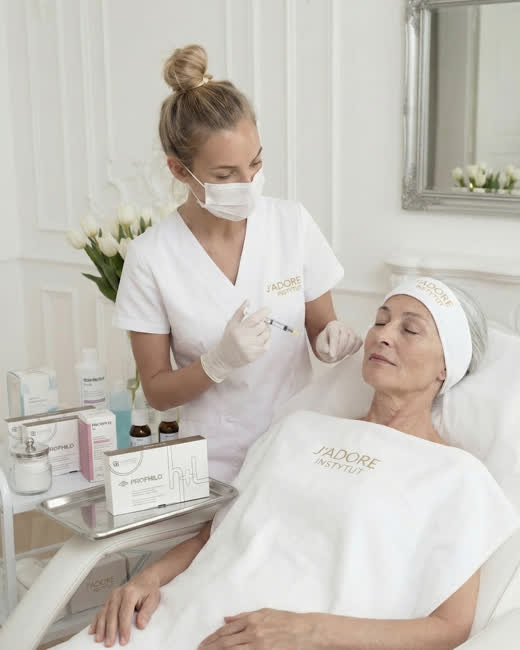
Three variants, one raw material — the real differences
All three share one starting point: your blood. It's drawn during your visit, spun in a centrifuge, then reintroduced into your skin. The difference lies in how the spinning happens, what's separated from the blood, and in what form it goes back into the tissue.
Classic PRP
liquid platelet fraction, fast penetration
- Liquid consistency — delivered by mesotherapy or injections
- Works in the shallower layers of the skin: hydration, firmness, radiance
- Results build gradually, typically over a series of 3 sessions
- A good starting point for tired, dehydrated skin, especially after winter
Activated PRP
enhanced fraction — higher concentration of growth factors
- Activation increases the concentration of active platelets before injection
- A stronger regenerative signal — faster, more intense action
- Recommended for pronounced skin fatigue and early signs of ageing
- Often chosen as a key step in an anti-ageing programme
PRF (Platelet Rich Fibrin)
dense gel, slow release, deeper action
- Spinning without an anticoagulant → a dense fibrin gel
- Growth factors release slowly over days to weeks after the treatment
- Works deeper: scars, tissue loss, hyperpigmentation, the eye area
- Can be used under the eyelids (a delicate area)
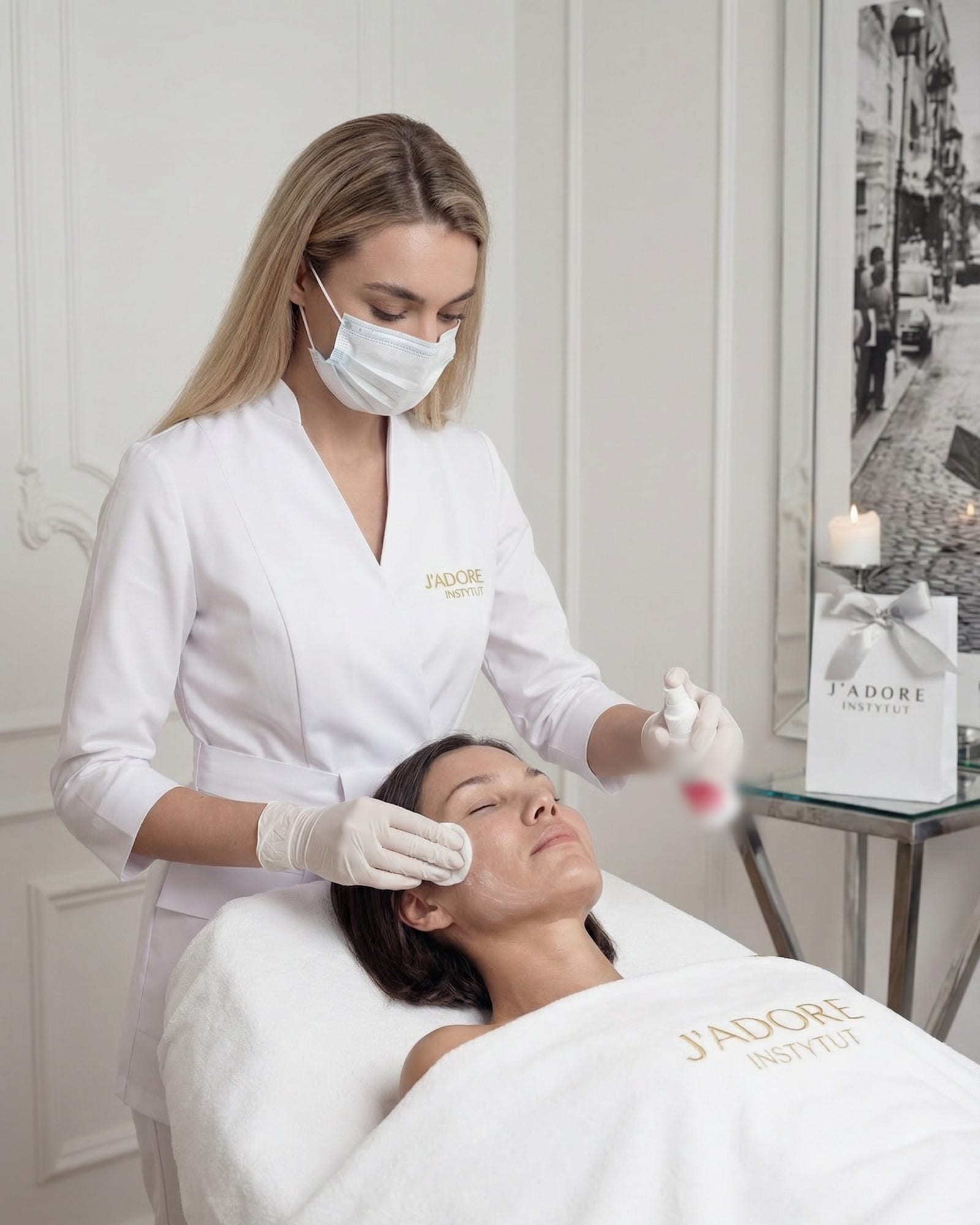
Which variant fits your situation — a quick check before your consultation
The questions below don't replace a specialist's assessment, but they help you arrive at your consultation with a specific concern — instead of a vague "I want something regenerative".
- Skin looks tired, grey, lacking radiance — but without deeper wrinkles or scars. Direction: classic PRP as a hydrating, brightening series. Results are subtle but measurable after 3 sessions.
- First visible signs of ageing: laxity, loss of firmness, superficial wrinkles. Direction: activated PRP, possibly combined with mesotherapy or biostimulators.
- Scars (from acne or previous treatments), deeper tissue loss, post-traumatic hyperpigmentation. Direction: PRF — deeper action, slow release, better penetration into scar tissue.
- Eye area: thin skin, dark circles, a "paper-thin" eyelid texture. Direction: PRF or activated PRP — this zone needs a preparation that doesn't migrate and works gently.
- Scalp, hair loss. Direction: classic PRP or activated PRP — the standard trichology protocol, usually with a session every few weeks.
It's also worth knowing that results can vary with individual biology. Platelet concentration in your blood, your general health, and your diet and hydration on the day of the treatment all genuinely affect the quality of the preparation. That's another reason why "one protocol for everyone" doesn't exist.
When to combine — synergies that make sense
All three plasma variants fit naturally into broader regenerative plans. Rather than standing alone, they usually complement other methods:
PRP/PRF + mesotherapy
the most popular combination: mesotherapy boosts hydration and oxygenation, while PRP/PRF adds growth factors. Together they achieve an effect neither reaches alone.
PRP/PRF + biostimulators or polynucleotides
a rebuilding synergy: polynucleotides and biostimulators (e.g. Nucleofill, Sculptra) work on skin structure, while PRP/PRF speeds up tissue regeneration. A plan spread out over time.
PRF + laser or peel
after treatments that create controlled tissue damage (fractional laser, stronger peels), PRF speeds up healing and reduces inflammation. Usually applied a day or two after the main treatment.
PRP + anti-ageing programme
a PRP series as a regenerative base before or during a more intensive rejuvenating programme.
Combining treatments is a matter of planning, not a single session. A good schedule takes into account what's happening at different levels of the skin — and when each tissue is ready for the next regenerative signal. The most common mistake: too much, too fast. Skin needs time to respond.