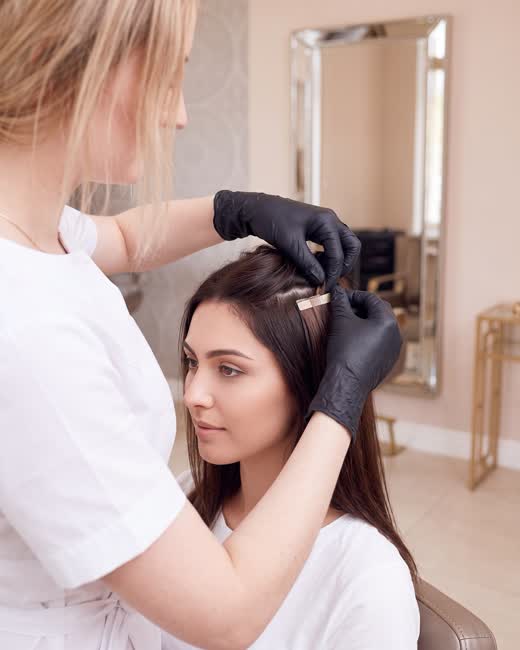
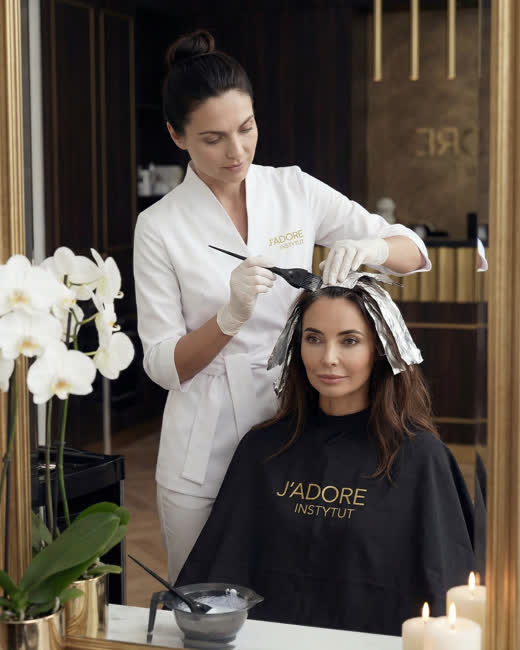
A treatment room at J'adore
ADVANCED HAIR STYLING
Boxer braids — two symmetrical French braids plaited close to the head, running tight against the scalp from the forehead to the nape. This hairstyle is built for movement: it keeps hair off your face all day, doesn't come loose during training, at a festival or in the wind, and looks bold, street-style and modern at the same time. The name comes from the ring and the training room — it's a classic style worn by female athletes and fighters who need their hair to "disappear" during exertion.
Today it's just as popular as a casual everyday look. At J'adore Instytut, it's plaited by experienced hair stylists. Looking for fine, dense braids covering the whole head instead? That's a different technique — see African braids. Below you'll find everything worth knowing before your visit.
a single styling session; we undo and re-braid once the braids "loosen up"
ADVANCED HAIR STYLING
Boxer braids are two symmetrical French braids plaited close to the scalp, one on each side of a central parting, running from the forehead all the way to the nape. "French" means your stylist adds new strands of hair as she plaits — this is what makes the braid sit flat against the head instead of hanging loose like a classic braid tied off at the ends.
The result is both bold and practical: hair is kept off your face all day, your face stays visible, and the style looks street and modern. That's why boxer braids became a favourite with athletes, runners and festival-goers — and everyone else followed. We plait them on hair from about ear length upwards; the longer the hair, the longer and more striking the "tail" of the braid.
How it works
Boxer braids use a strand-adding plait: your stylist starts at the hairline with three thin sections and, at every crossover, picks up a fresh strand of hair from along the parting. This makes the braid grow along the head and lie flat against the scalp instead of hanging loose — each added strand becomes another anchor point pinning the plait to the head. Once there's no more hair to add — usually around the nape — the braid switches into a standard plait and finishes in a "tail" secured with a hair tie. The symmetrical centre parting has a structural role here: it divides the hair into two equal sections, one for each braid to draw from.
Durability comes from two things working together. The first is a continuous line of anchoring — the added strands keep the braid pinned to the head along its whole length, so the style has no way to slip as a whole. The second is ordinary friction inside the plait: the strands lock against each other, which is why a well-plaited braid needs no product to survive a workout. It always loosens first at the hairline, where the shortest hairs aren't long enough to stay caught in the plait — and at night, friction against your pillow adds to this: cotton lifts the hair's outer layer and causes frizz, while silk and satin let strands glide without resistance. So the strength of the plait comes from even tension along its whole length, not from pulling tightly at the root — starting too tight puts strain on the follicles at the forehead and temples without making the style last any longer.
Good to know: the same strand-adding plait has two faces. When strands are crossed over the top, the braid sinks into the hair (a French braid); when they're crossed underneath, it sits raised above the surface (a Dutch braid), giving that distinct sculpted relief boxer braids are known for. The technique is otherwise identical — one change in crossing direction defines the whole character of the style.
Ideal for
Boxer braids for women and men
Boxer braids for women are one of the boldest street-style looks today — sporty yet feminine. We play with braid thickness, the number of braids, patterns and partings, and extensions let us add length and volume. They work equally well for training, festivals and a striking night out.
What we work with
Boxer braids for men are still something of a niche, but plenty of men wear them too, especially active men and athletes with longer hair. For martial artists, runners and cyclists, they're a practical way to keep hair out of the way during training, with a bold, distinctive look as a bonus. The plait itself is the same — it mainly differs in the thickness and number of braids chosen to suit hair density.
What we work with
ADVANCED HAIR STYLING · Boxer braids
Boxer braids are a safe, purely styling service — but in a few situations it's better to wait, or to plait more gently:
This isn't a complete list of contraindications — your stylist will assess your hair and scalp condition in person and choose the thickness, number of braids and tension so the result looks good and stays safe.
Safety and comfort
The braids need to keep hair under control — but never at the cost of your scalp and hair follicles. This is the key difference between a well-plaited and a poorly plaited braid:
The plait should be firm but never painfully tight. A slight feeling of hair being "pulled back" is normal; burning, stinging or a headache is not. If that happens, we loosen the braid.
If you have active dandruff, irritation or inflammation of the scalp, we postpone plaiting until it's healed — tight plaiting would only irritate the scalp further.
Very damaged, over-dried or brittle hair doesn't handle tension well. In that case, we recommend a repair treatment first, and plait more loosely.
We don't leave braids in indefinitely. Pulling too tightly for too long puts strain on the follicles — so after a few days, we undo the braids and let the scalp rest.
Warning sign: braids plaited too tightly · If the plait burns, stings, pulls at the scalp or gives you a headache, that's not "the price of durability" — it's a sign the tension is too high. Repeated, overly tight pulling — especially always in the same spots — can lead over time to traction alopecia: thinning along the hairline and temples. Speak up about discomfort straight away; a good stylist will loosen the plait without question, and you shouldn't wear braids non-stop.
The visit

Consultation and selection
we decide on the number and thickness of braids, the variation (classic, sport, with extensions, with a pattern), and how firmly they should hold.

Hair preparation
we detangle and lightly hydrate the hair so the strands are smooth and easy to work with; longer hair is easier to plait.

Marking the parting
a precise, symmetrical division down the middle of the head; this determines whether the braids come out even.
French plaiting
strand by strand, adding hair as we go so the braid lies flat against the head; we keep the tension even but comfortable.
Finishing
we secure the ends with thin hair ties and smooth flyaways and baby hairs along the hairline. You leave ready to move.
How long they last
Boxer braids are a style for several days, not just a moment. Freshly plaited, they look their smoothest; day by day, they gently loosen at the hairline and become softer, which many people actually prefer. How long they hold depends on your hair's density, your activity level and how you look after them at night.
The question I hear most is "I want them to last as long as possible". The secret isn't tighter pulling — it's what happens at night. A silk pillowcase or headscarf can extend the plait's life by several days and prevents frizz. Pulling tighter does nothing except give you a headache.
Portfolio
A record of the work in our salons — the place where we publish treatment frames and, after photo sessions, results.
A record of results — in preparation. We publish photographs of our clients only with their consent.
Boxer braids and your lifestyle
The greatest advantage of boxer braids is precisely that they withstand life on the move. However, there are a few things that make the difference between "fell apart after a day" and "held up through an entire festival":
This is practically the ideal style for the gym, running or martial arts. After a hard, sweaty session, you can gently cleanse your scalp between the braids — without undoing them.
The most important factor for durability. Sleep on a silk or satin pillowcase, or tie on a headscarf or turban — friction against cotton causes frizz and loosens the plait.
You don't need to undo the braids to refresh your scalp. Dry shampoo or a targeted rinse between the strands is enough; save a full wash for the day you take the braids out.
Pulled-back hair doesn't stick to your neck and dries faster. After salt water or chlorine, rinse the braids with clean water and lightly hydrate with a leave-in conditioner.
Over time, some flyaways will appear along the hairline — that's normal. A touch of gel or wax on your fingers and a soft brush restore smoothness in seconds.
After a few days, undo the braids, wash your hair and let your scalp rest before plaiting again. Wearing tight braids continuously puts strain on the follicles.
Boxer braids
All three involve plaiting hair, but they give completely different results and serve different purposes. The most common question in the chair is: "how is this different from African braids?" Here's the quick guide:
two large, sport-style braids
not dozens of fine braids, and no lasting change to hair structure
many fine braids
a different technique and character — see the dedicated page
a longer-term, more permanent form
not a quick weekend plait — a longer-term form
Boxer braids pair well with other hairdressing services — especially if you're planning for a specific occasion or want to look after your hair's condition before and after plaiting:
A simple rule: want two firm, active-ready braids for a few days → boxer braids. Want dozens of fine braids covering the whole head with a stronger, longer-lasting effect → African braids. Thinking of a style for weeks → dreadlocks.
Variations
Boxer braids aren't a single fixed style — they're a whole family of plaits. Your stylist chooses the variation based on hair length, occasion and how firmly you need the braids to hold:
The most popular, timeless version — two symmetrical braids running along the head with a central parting.
Dla kogoFirst-time wear, everyday use, a versatile look.
A firmer, tighter plait held through the full length of exertion — so not a single strand escapes on the ring or the track.
Dla kogoSport, martial arts, intense training, long active days.
A discreet, colour-matched extension adds thickness and length to the braids — giving a "longer" braid and better durability.
Dla kogoFiner or shorter hair, a bolder effect, longer wear.
Geometric divisions, zigzags, extra thin braids and creative partings — the plait becomes a decorative feature.
Dla kogoFestivals, photoshoots, nights out — when the style itself is the statement.
Good to know: the name "boxer braids" stuck because it's a favourite style among MMA fighters and boxers — two tight braids hold through a whole fight, don't get in the way and can't be grabbed. What works in the ring works just as well at a festival or on a run.
Price list
Checking free hours…
From the magazine
Editorial pieces on how this treatment works in practice — what happens during the session, how to prepare, where the limits are and what the first days after look like.
See also
The result lastsfrom a few days to about a week, depending on hair type and night-time careJ’adore Instytut
Note. Boxer braids are a hairdressing and styling service; the result, durability and comfort of wear depend on hair length, density and condition, on the plaiting technique and on how you care for the style while wearing it. The text above is for information only. Your stylist selects the thickness, number and pattern of braids, and any extensions, during your visit; braids plaited too tightly and worn too long can put strain on the hair follicles, so we take care to keep the tension appropriate.
Home care
Cosmetics matched to what your skin needs after a treatment — so the clinic effect lasts longer.
 hair regenerationOlaplexBROAD SPECTRUM CHELATING TREATMENT 370mlView in the shop(opens in a new tab)
 hair regenerationKevin MurphyYoung.Again Dry Conditioner Oil 100mlView in the shop(opens in a new tab)
 hair regenerationDSD de LuxeTravel PackView in the shop(opens in a new tab)
 hair regenerationSesdermaSESKAVEL Keratin Shampoo 200 mlView in the shop(opens in a new tab)