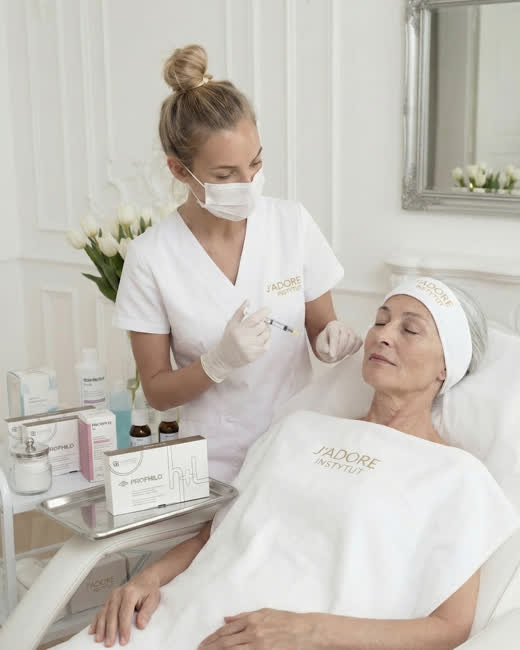
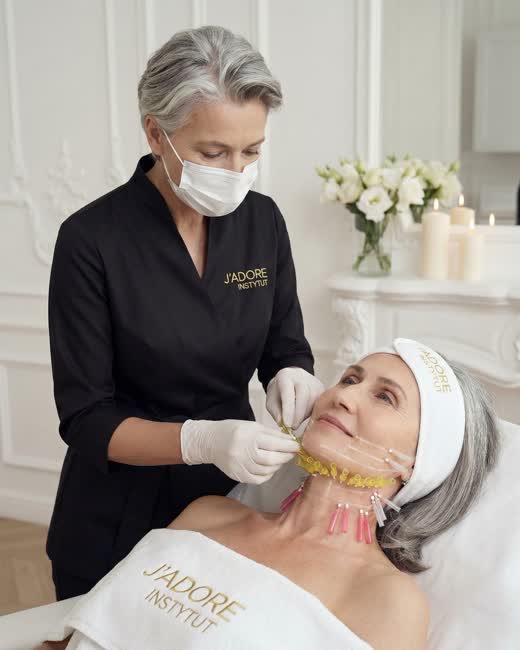
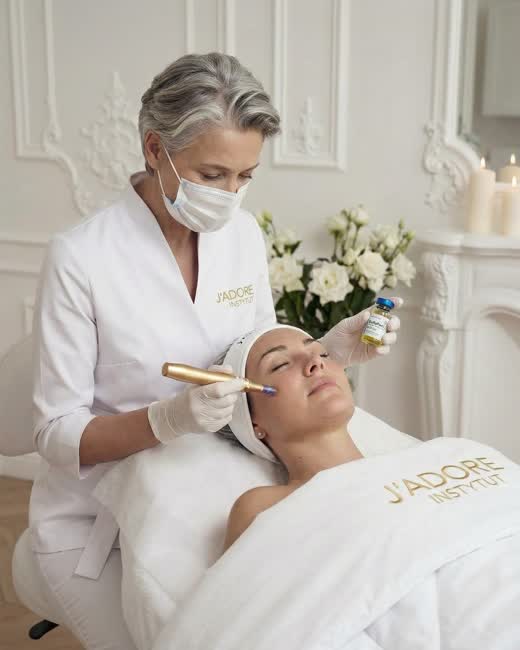
A treatment room at J'adore
AESTHETIC MEDICINE
On this page you will find two services J'adore Instytut concerning the eye area. The medical part — "Medical consultation and procedure in the area of the eyes": the consultation and treatment are carried out by a doctor, who decides on qualification and method. The cosmetic part — eyelid lifting with the Plasma IQ device, Retix C peel and the Thuzzle GMV treatment — are treatments without injections, performed by a cosmetologist.
the number of visits is determined by a doctor or a cosmetologist
The medical part
The consultation concerns the eye area. The doctor takes a history, assesses the area you are asking about, and talks with you about your expectations. Qualification and method are decided by the doctor at the consultation.
Areas patients ask about:
The cosmetic part
These treatments are not medical treatments — they are performed by a cosmetologist and do not require a medical consultation. Before the treatment, the cosmetologist takes a short history; if the treatment is not appropriate, they will suggest another one or a medical consultation.
For Her / Him
The consultation for women is carried out by a doctor. The plan is set individually, after history-taking and assessment.
What we work with
The consultation for men is carried out by a doctor. The plan is set individually, after history-taking and assessment.
What we work with
AESTHETIC MEDICINE
The medical part — the consultation and treatment — is carried out exclusively by a doctor; the treatment takes place only if the doctor qualifies you for it at the consultation. Cosmetic treatments are performed by an experienced cosmetologist (eyelid lifting with the Plasma IQ device — a doctor or an experienced cosmetologist).
From the doctor's clinic
At the consultation the doctor may suggest a different approach or advise against the treatment. This is a normal part of qualification.
The visit
Booking the appointment
online, by phone or at the salon reception.
History-taking
the doctor asks about your health, medications you take and previous treatments.
Assessment
the doctor assesses the area and discusses your expectations with you.
The doctor's decision
qualification and method are decided by the doctor; if the treatment is not indicated, they will say so plainly.
Recommendations
any recommendations before and after the next visit are given by the doctor individually.
Cosmetic treatment
you book it directly; before the treatment, the cosmetologist takes a history and discusses recommendations.
Portfolio
A record of the work in our salons — the place where we publish treatment frames and, after photo sessions, results.
A record of results — in preparation. We publish photographs of our clients only with their consent.
AESTHETIC MEDICINE · Medical consultation and procedure in the area of the eyes
Medical consultation and procedure in the area of the eyes · AESTHETIC MEDICINE
The doctor may postpone the treatment or not qualify you for it, for example when there is:
This is not a full list — your state of health is discussed by the doctor individually at the consultation.
Medical consultation and procedure in the area of the eyes
Price list
Checking free hours…
From the magazine
Editorial pieces on how this treatment works in practice — what happens during the session, how to prepare, where the limits are and what the first days after look like.
See also
Information. The content of this page is for information purposes only and does not constitute medical advice. In the medical part, qualification and method are decided by a doctor after consultation, history-taking and assessment — the consultation and medical treatment are carried out exclusively by a doctor. Cosmetic treatments are performed by a cosmetologist.
Home care
Cosmetics matched to what your skin needs after a treatment — so the clinic effect lasts longer.
 eye areaMesoesteticAge Element Eye & Lip Contour Cream 20mlView in the shop(opens in a new tab)
 eye areaSelvert Thermal+ Pure Vitamin C Vitalizing Eye Contour CreamView in the shop(opens in a new tab)
 eye areaDiego Dalla PalmaSENSITIVE Soothing Eye Cream 15 mlView in the shop(opens in a new tab)
 eye areaMedik8Advanced Night Eye™ – Nourishing Night Cream for EyesView in the shop(opens in a new tab)
 eye areaMedik8Eyelift™ PeptidesView in the shop(opens in a new tab)
 eye areaSkeyndorCorrective Eye Contour Wrinkle FillerView in the shop(opens in a new tab)
 eye areaSkeyndorRedensifying Eye Contour Cream - EternalView in the shop(opens in a new tab)
 eye areaSelvert ThermalL'Esprit Derma Eye Bags & Dark Circles BalmView in the shop(opens in a new tab)