Where dark circles come from — and what you're actually seeing
The eye area is anatomically one of the most demanding zones on a man's face. The skin here is several times thinner than on the cheek. The tissue beneath it is shallow, and it gets thinner with age. Add gravity, sun exposure and chronic lack of sleep, and you get a look a decade older than your age.
Purple-blue shadows mainly come from blood vessels showing through thin skin — the skin becomes translucent, and the blood beneath looks dark. Brown discolouration results from melanin — sun, friction, genetics. Dark shadows that form a "hollow" under the eye bag come from volume loss: fat tissue disappears, the lower eyelid sinks, and the shadow becomes structural — cast by shape, not by skin colour. This distinction matters, because each cause needs a different approach.
Men face an added factor: thicker, heavier facial skin loses tension around the eyes faster, and beard growth on the lower face visually deepens the tired look above it. The result: even in good physical shape, you can look far more tired than you actually are.
Three problems, three different solutions
An aesthetic salon isn't a one-size-fits-all place — "something for under the eyes" isn't a single tool. A good doctor looks first, then decides.
Volume loss / hollowing
Result: structural shadow
- The lower eyelid "sinks"
- A shadow cast by structure, visible from every angle
- The face loses proportion — the eyes look smaller
Purple / blue shadows
Result: visible blood vessels
- Thin skin + vessels close to the surface
- Worsens with lack of sleep and dehydration
- Genetically more common in darker hair and olive skin tones
Bags and puffiness
Result: weakened ligaments + fat
- Fat tissue pushes forward
- Morning puffiness may not fade by midday
- Worsens with age and water retention
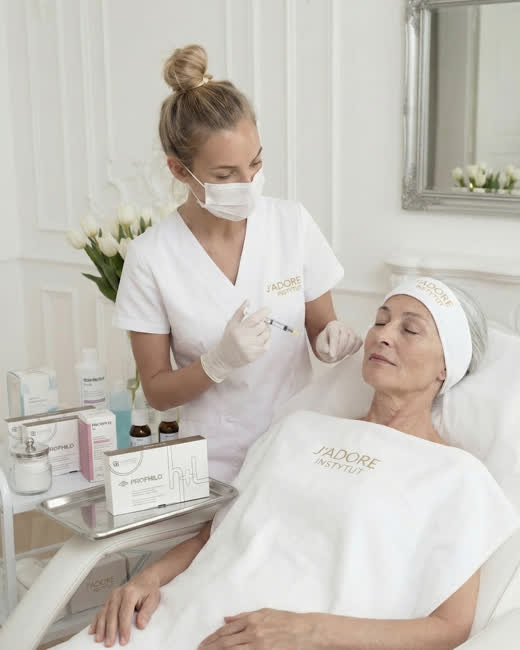
Once the mechanism is clear, the doctor can suggest a specific approach: restoring volume with hyaluronic acid or collagen biostimulators, improving skin quality and thickness with mesotherapy, or combining both. Often this means several treatments spread over time — because the goal is one thing: to make you look rested, not "done".
Hyaluronic acid under the eyes — precision, not volume
The eye area is one of the most demanding zones for hyaluronic acid — and also one where results show most clearly. When the lower eyelid sinks and casts a shadow, restoring lost volume in the tear trough can visually reverse the change by several years. The eyes look bigger, less tired, and the gaze more open.
One thing matters here: this is a zone where the doctor's technique and experience make a huge difference. It calls for a different product density than the lips, a different placement, a different injection method. It's performed by a doctor with specific experience in the eye area — not as an add-on to a lip treatment. With the right product and the right technique, the result is subtle and natural. That's the whole point.
Mesotherapy and biostimulators — improvement from within
When the problem isn't so much volume loss as general thinning and loss of firmness around the eyes, mesotherapy comes into play. A series of micro-injections delivers active ingredients into the skin — low-molecular-weight hyaluronic acid, nucleotides, peptides — that stimulate the skin's natural repair processes from within. The skin becomes thicker, better hydrated, less translucent.
Collagen biostimulators work more deeply: injected precisely under the skin, they trigger your own collagen production, which builds a natural tissue scaffold over the following weeks. This isn't an instant effect — but once it appears, it's lasting and very natural. For men who dislike "overnight" results and want gradual change, this is often the best choice.
Both approaches can be combined — and often are. A volume treatment fills what's sunken, mesotherapy nourishes and thickens the skin, and a biostimulator builds the foundation. These aren't competing methods — they're different layers of the same solution.
Botox for crow's feet — yes, but with judgement
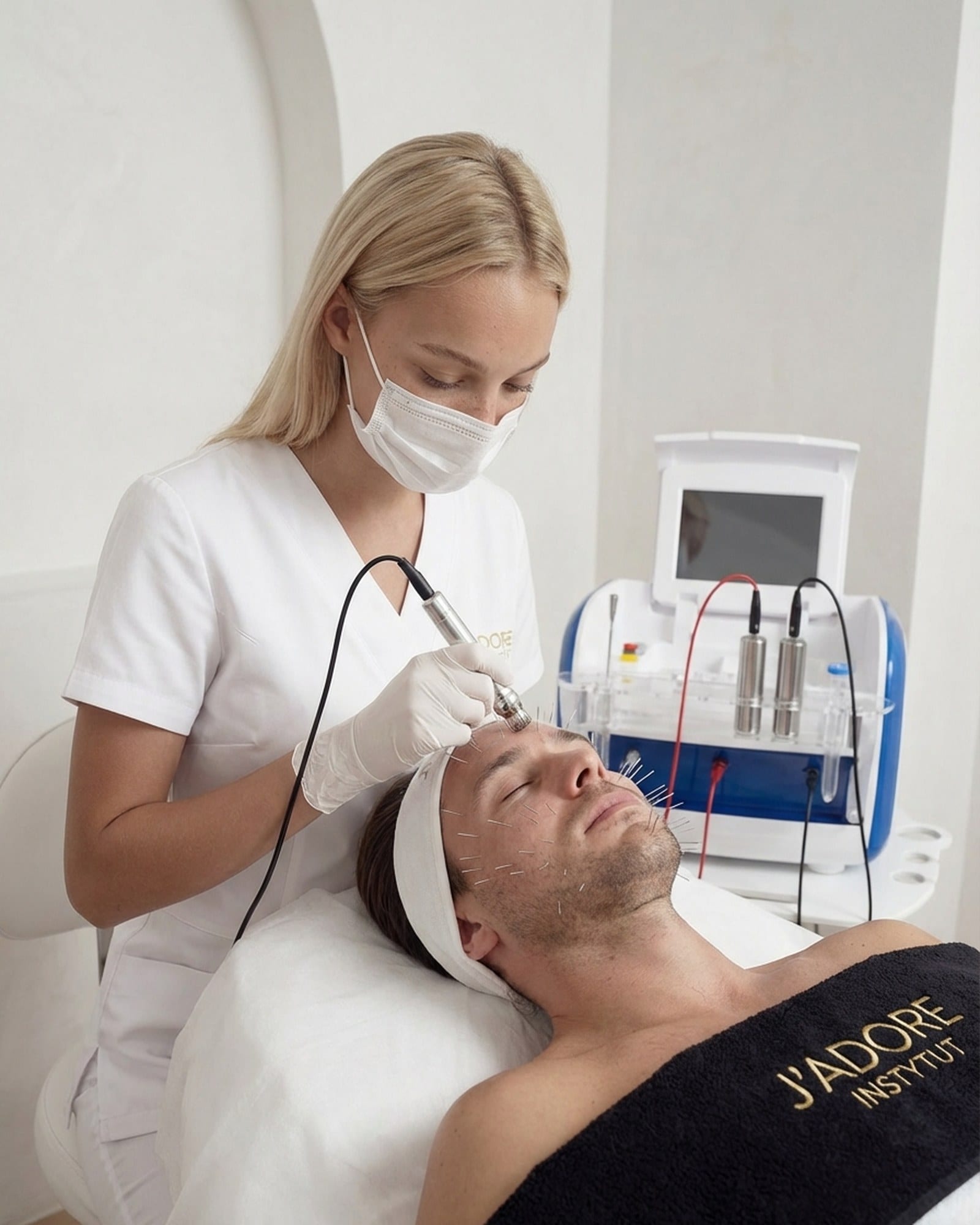
Lines around the outer corner of the eye — commonly known as crow's feet — are often one of the first visible signs of expression in men. Botox relaxes the orbicularis oculi muscle that creates them, giving a calmer, less tired look to the outer part of the eyes. It works, it's invisible as a treatment, and it doesn't change the character of the face.
One thing matters: with crow's feet in men, the doctor must be careful not to lift the outer corner too much. This subtle, slightly drooping angle is characteristic of many male faces, and we don't touch it. The goal is to soften the lines, not change the shape of the eye. That's exactly why a good consultation matters — we don't copy a template designed for a woman's face.
What it looks like in practice — no drama
The most common question: "will people know I've had something done?" With well-performed treatments around the eyes — no. The exception is possible bruising in this area, since blood vessels here are dense, but it fades within a few days and is easy to cover with concealer. This matters if you have something important coming up — leave two weeks of margin.
After mesotherapy or biostimulators, you go about your day as normal the next day. It's much the same after hyaluronic acid, though the doctor may advise avoiding the gym and sauna for 24–48 hours. You'll see the full effect within a few days to a week — with biostimulators, the build-up takes weeks, and that's normal.
Don't expect a transformation after one session — and be wary of places promising a dramatic effect instantly. A good result for the eye area comes from work spread across several visits, with a subtle effect — not "20 years younger". The goal is to look rested, not to stop looking like yourself.
- 01
step
Consultation — assessment of anatomy, the source of the shadows, and a treatment plan (what, when, how many visits).
- 02
step
First treatment — usually mesotherapy or a biostimulator as a base, plus hyaluronic acid if indicated.
- 03
step
Follow-up after 2 weeks — assessment of results, with a dose adjustment if needed (especially after hyaluronic acid).
- 04
step
Series and maintenance — mesotherapy is usually done as a series of several sessions, then maintained every few months.