
Where does this fear of scarring come from?
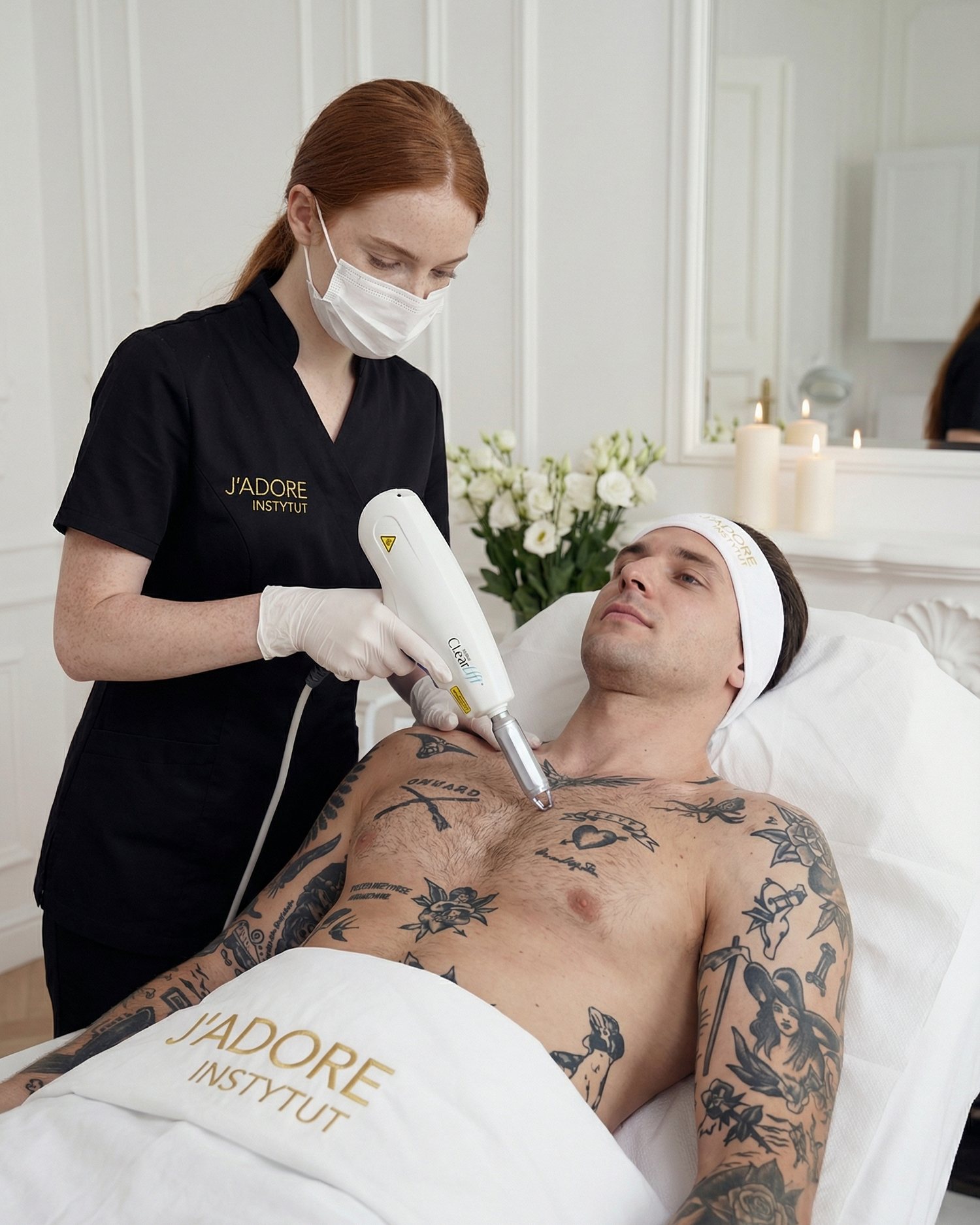
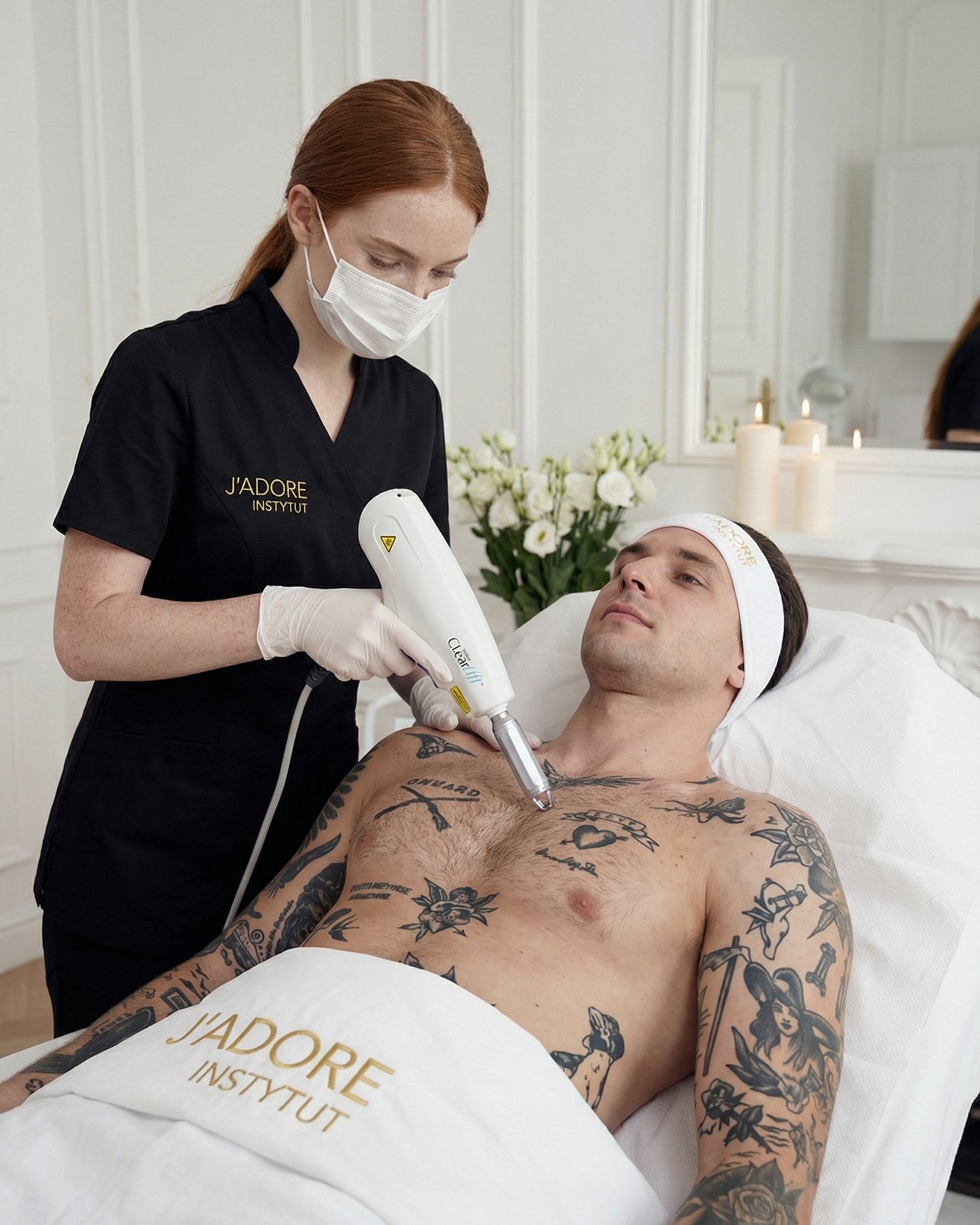
Laser tattoo removal works through selective photothermolysis — laser energy is absorbed by pigment in the skin, rather than the surrounding tissue. Put simply, the laser breaks ink particles into smaller fragments that the immune system can remove. The epidermis and dermis should not be damaged in the process — provided everything is selected correctly. The challenge is that “correctly selected” involves several factors that can easily be mismanaged.
Photographs of scars after laser treatment that circulate online are usually the result of three things: energy that is too high for the skin, intervals that are too short between sessions — the tissue did not have time to regenerate before the next exposure — or healing complications caused by ignoring aftercare recommendations. None of these causes is inevitable. Each is predictable and avoidable.
Myth 1: a laser always leaves a mark on the skin
This is the most common myth and also the greatest simplification. Q-switched and picosecond lasers, used for tattoo removal in professional salons, are designed to target pigment only — not collagen, blood vessels or the epidermis as a whole. With correctly selected energy and appropriate intervals between sessions, your skin has enough time to regenerate. For the clear majority of people, after completing the series, the skin looks as it did before the tattoo was done — with no visible scars or discolouration.
Of course, “the clear majority” does not mean “everyone”. Some skin types carry a higher risk — more on that shortly. But if someone tells you that “a laser always leaves a mark”, it is worth asking for details: which laser, what energy, what intervals between sessions and what aftercare was followed? The answer to the question of scarring usually lies in these four variables.
Myth 2: the type of ink does not matter
It does — and significantly. Tattoo ink is a mixture of pigments, and its composition varies greatly depending on the brand, when the tattoo was done and the studio. Black carbon-based inks absorb laser energy predictably and respond well after just a few sessions. Fluorescent colours, turquoise shades and some greens contain ingredients that absorb energy differently — sometimes less effectively, sometimes in a way that is more difficult to control.
Ink placed deeply, with a high pigment density — typical of tattoos repeatedly applied over an existing design, such as cover-ups — requires more sessions at lower energy levels. Paradoxically, this protects the skin better than trying to “shorten” the process with more aggressive settings. A good specialist assesses the pigment visually and selects the parameters — without this, assessing the risk of scarring is simply guesswork.
Myth 3: dark skin is not suitable for laser treatment
This is not a myth — it is a risk that requires a different approach, not giving up on treatment. Skin with a higher melanin content (Fitzpatrick skin phototypes IV–VI) absorbs more laser energy. With standard settings, this can lead to hypopigmentation (lightening of the skin at the treatment site) or, less commonly, hyperpigmentation. This is not a scar in the classic sense — but a colour change that may be permanent or long-lasting.
The answer is selecting the right type of laser and reducing the energy while increasing the number of sessions. A protocol for darker skin is slower. With appropriate caution, however, it can provide good results without permanent changes. The key is for the salon to have experience with different skin phototypes — and not use “one protocol for everyone”.
Myth 4: the more sessions, the higher the risk of scarring
Intuition suggests that more laser exposures mean a greater chance of damage. In practice, the opposite is true — the time between sessions is key, not their number. Skin usually needs four to eight weeks to fully settle inflammation after the previous session and regenerate the tissue. Treatment performed too early — even at low energy — targets skin that is not yet ready. The risk of complications then rises not gradually, but sharply.
A series of twelve sessions with appropriate intervals is safer for the skin than six sessions performed too frequently. Rushing is the main enemy of a good result — and the most common cause of complications in salons that promise “quick removal” without discussing the schedule during consultation.
- 01
Consultation
Assessment of skin phototype, ink depth and colour, skin history, and any scars within the tattoo. The number of sessions and schedule are established.
- 02
First session
Usually performed as a test on a small area or with conservative energy settings to assess the skin’s response. Cooling and protection are used throughout.
- 03
6–8-week break
The skin heals and the immune system removes the broken-down pigment. This stage happens naturally — but requires proper aftercare.
- 04
Further sessions
Parameters are selected based on your skin’s response to the previous session. The pigment gradually fades and the skin adapts to the process.
- 05
Final assessment
After completing the series, residual pigment and skin condition are assessed. In most cases, the skin in this area looks as it did before the tattoo.
What happens between sessions matters just as much as the laser
Aftercare is not an optional extra — it is an integral part of the protocol. Immediately after the treatment, your skin is warm, sensitive and vulnerable to infection. For the first few days: no sun, no saunas, no scratching. Use gentle protection and moisturising. If the treatment was intensive, use an occlusive dressing for several days. It may sound simple, but ignoring these recommendations is most often behind the scars seen in photographs circulating online.
Sun exposure is a separate issue. UV exposure on treated skin can not only slow healing, but also trigger permanent hyperpigmentation — dark discolouration that, in some cases, is more difficult to remove than the tattoo itself. SPF protection throughout the treatment period — regardless of the season — is not advice “for the cautious”, but a condition for a safe course of treatment.
What really increases the risk of scarring — a straightforward list
The risk of scarring is not random. Several factors genuinely increase it — and it is worth knowing about them before the first session, not afterwards.
- Tendency to keloids — both a personal and family history; this is the most important risk factor, which no laser technique can neutralise
- Skin phototypes IV–VI (dark skin) — with an incorrectly selected protocol, the risk of permanent skin colour changes rises significantly
- A tattoo on a scar — scar tissue absorbs energy differently and unevenly; the outcome is less predictable
- Intervals between sessions that are too short — the most common, fully avoidable cause of complications
- Sun exposure during the treatment period — increases the risk of hyperpigmentation and slows healing
- Cigarette smoking — impairs microcirculation and tissue regeneration; it may prolong healing and increase the risk of complications
- Ignoring healing symptoms — mechanically removing scabs, scratching and using products that have not been recommended
When scarring is unavoidable — let us speak plainly
There is one scenario in which scarring after laser tattoo removal is highly likely. It is often overlooked by salons focused primarily on sales. If a tattoo was applied over an existing scar, the scar will remain — because the laser removes pigment, not the connective tissue that forms the scar. If there is a keloid or hypertrophic scar beneath the tattoo, treatment may stimulate and worsen it.
Similarly, if the tattooing procedure itself damaged the dermis — which can happen with deeply implanted ink, poor technique or a tattoo repeatedly applied ‘over the top’ — there may be micro-scars beneath the pigment that the laser cannot reverse. In this case, an honest specialist will discuss this during consultation, not after four sessions.
Scarring unlikely
Low-risk profile
- Light skin tone (phototype I–III)
- Tattoo on healthy, undamaged skin
- No history of keloids
- 6–8-week intervals maintained between sessions
- Appropriate aftercare and SPF throughout the treatment course
- Black or dark graphite inks
Higher risk — consultation required
Profile requiring assessment
- Dark skin tone (phototype IV–VI)
- Tattoo over a scar or after a previous cover-up tattoo
- Personal or family history of keloids
- Coloured inks that respond poorly to laser treatment
- Smoking or photosensitising medication
Before you decide — what to establish during consultation
A good consultation before laser tattoo removal should answer several specific questions. If a salon does not ask them, this is a warning sign. What are the realistic expectations for the final result? Not every tattoo can be removed completely. Coloured, heavily pigmented or repeatedly tattooed designs may fade but leave residual pigment.
How many sessions will be needed and what will the schedule be? The number of sessions depends on the colour, depth and density of the ink, as well as your skin’s response. No honest specialist will say ‘three sessions and it is done’ without seeing the tattoo. What does the aftercare protocol involve? If a salon reduces this to ‘please do not touch it’, look elsewhere. Good care between sessions includes written recommendations and the option to get in touch if anything concerns you.
Collagen biostimulators
After completing the laser series, they may support the restoration of skin quality around the treated area — particularly if minor textural changes have appeared.
Medical peels
Used carefully after complete healing, they may even out minor post-inflammatory hyperpigmentation and improve the overall appearance of the skin.