Free radicals — what they are and why they have a bad reputation
Before we explain what hydrogen does, it helps to understand what it's dealing with. A free radical is a molecule or atom with an unpaired electron in its outer orbit — and that lack of pairing makes it highly reactive. To "settle down", it takes an electron from a nearby molecule: a fat in the cell membrane, an enzyme protein, or, in the worst case, a strand of DNA. The victim becomes a radical itself, attacks another molecule, and a chain reaction begins — chemists call this oxidative stress.
Oxidative stress isn't exotic — it's with us constantly. We produce free radicals ourselves, as a by-product of cellular respiration. We add more by breathing polluted air, exposing skin to the sun, smoking, or living with chronic stress. The problem isn't that radicals exist — in small doses they play a signalling role and are actually necessary. The problem starts when their numbers exceed the body's ability to neutralise them. That's when something begins that cosmetology describes as cellular ageing from within.
Why hydrogen is an unusual antioxidant
Molecular hydrogen (H₂) has one property that sets it apart from every other known antioxidant: it's so small that it gets in everywhere. Most antioxidants used in cosmetics are large enough that they stop at the level of the intercellular space, or at best the cytoplasm. H₂ reaches the mitochondria — and that's exactly where, during energy production, the largest amounts of the most dangerous oxygen radicals form.
- Selective action. Hydrogen doesn't neutralise every free radical without exception — if it did, it would disrupt the signalling processes where radicals are actually needed. It reacts selectively with the most reactive and destructive types, primarily the hydroxyl radical (·OH) and peroxynitrite (ONOO⁻). Think of it as a surgeon rather than a bomb — precision instead of blanket destruction.
- No by-products. When H₂ neutralises a hydroxyl radical, the only product is water. No new molecules, no metabolites to clear away. This is rare in chemistry — many antioxidants turn into a reactive molecule themselves after "sacrificing" themselves, requiring further neutralisation.
- Deep, fast penetration. As a gas, H₂ diffuses through lipid membranes instantly, without needing special carriers. It doesn't require liposomes, nanoparticles or delivery systems — the very things that, for other active ingredients, determine whether they reach their target at all.
- Compatibility with oxygen. Unlike some other antioxidants, H₂ doesn't "compete" with oxygen or react with beneficial oxygen forms. It supports the cell's enzymatic defence systems rather than suppressing them.
Hydrogen cleansing — what it actually means
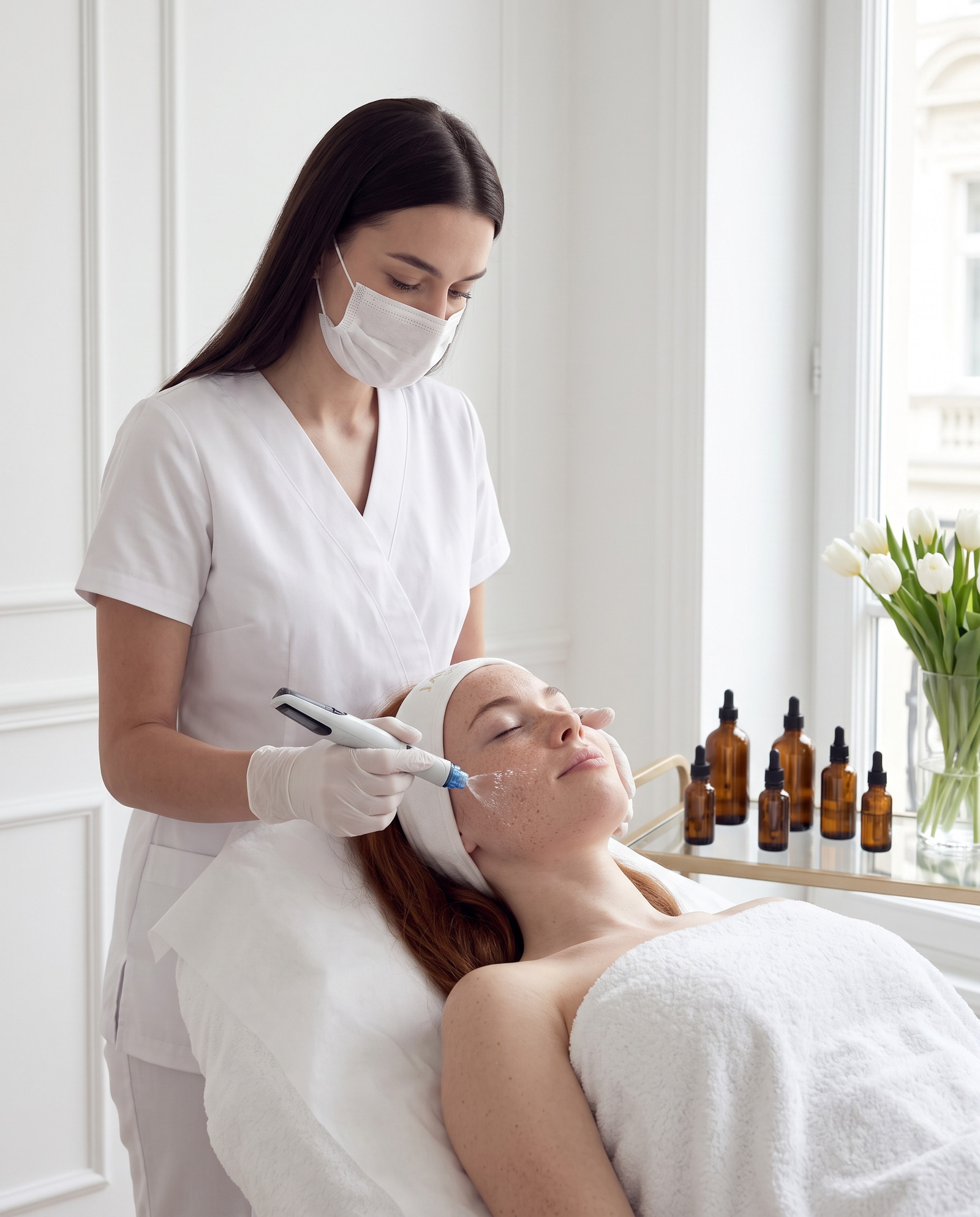
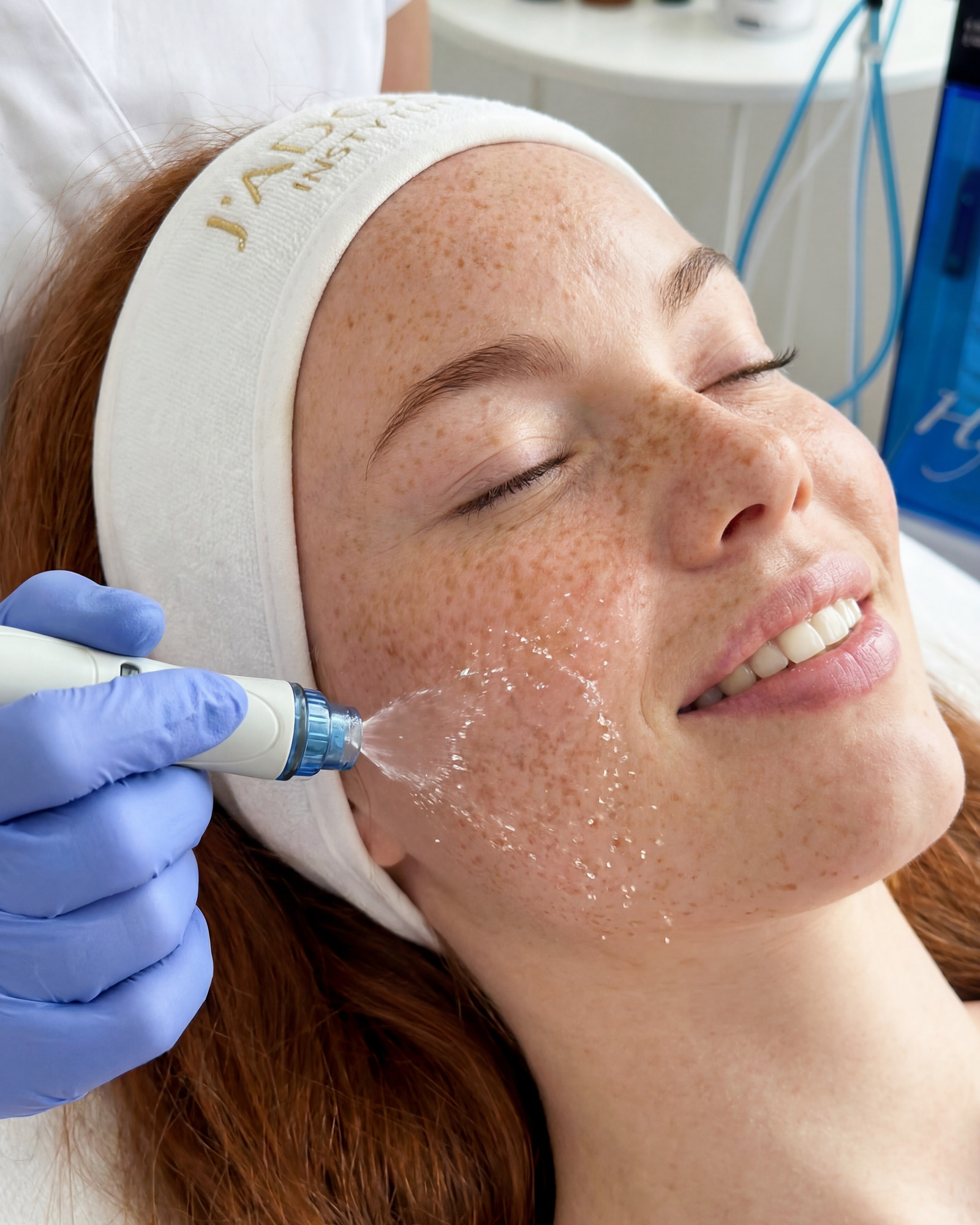
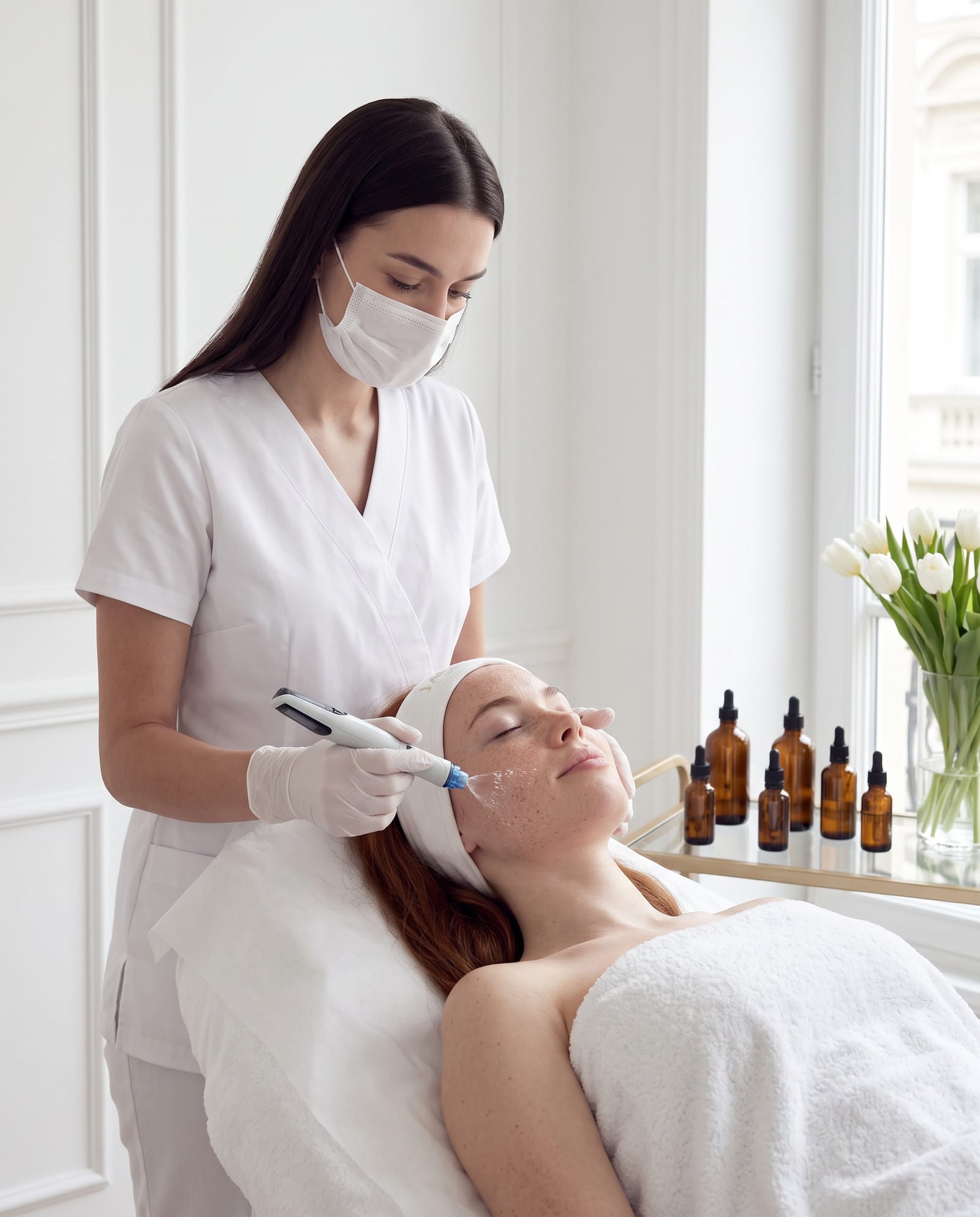
The treatment known as hydrogen cleansing combines several mechanisms of action on the skin, with hydrogen as a key — though not the only — piece of the puzzle. At its core, the skin is exposed to water saturated with molecular hydrogen, or to a stream of H₂ delivered directly to the surface and into the pores.
Classic cleansing
works on the surface
- Mechanical or enzymatic removal of dead skin cells
- Clears pores of impurities and sebum
- Improves texture and smooths the skin's surface
- A refreshed, brighter-looking complexion
Hydrogen cleansing
cleansing + antioxidation
- Clears pores and removes dead skin cells
- Delivers H₂ into the layers of the dermis
- Neutralises free radicals in the tissue
- Supports the cells' natural repair systems
Combining cleansing with antioxidation makes clinical sense: skin that's clean and free of dead cells absorbs active ingredients better, and H₂, being an exceptionally small molecule, penetrates deeply regardless of surface condition anyway. The result of this synergy is skin that's not just visibly cleaner, but — after a series of sessions — in better condition at the cellular level too.
What the research says — an honest look
Hydrogen has attracted a fair amount of enthusiasm that, in places, has outpaced the research. The honest answer to "does hydrogen really work on skin?" is: yes, though with caveats worth knowing.
- What's well documented: the antioxidant action of H₂ at the cellular level, its penetration through biological membranes, and its selective neutralisation of the most harmful forms of oxygen radicals. These mechanisms have solid biochemical foundations and are confirmed in in vitro studies and animal models.
- What's promising but needs more data: clinical effects in long-term care of ageing skin, comparisons of different H₂ delivery methods (baths, mists, in-salon treatments, drinks), and the optimal frequency of sessions.
- What we don't know for certain: how long H₂ remains active in tissue after a session, what the most effective concentration is in the context of cosmetic treatments, and to what extent cellular-level effects translate into measurable changes in skin appearance for specific individuals.
Who should consider hydrogen cleansing
Not every treatment suits every skin, or every moment — and hydrogen cleansing is no exception. It works best where cleansing and soothing are both needed at once, a combination that's relatively rare among salon treatments.
- Tired, reactive skin. For people working in large cities, exposed to pollution, spending long hours in front of screens, or under chronically elevated stress — oxidative stress here is a real factor accelerating skin ageing and worsening skin concerns.
- Mature skin needing regulation. In the context of preventing photoageing and supporting cellular condition, hydrogen cleansing can be part of a wider treatment plan.
- Sensitive, vascular skin. Unlike many cleansing treatments, which can irritate sensitive skin, hydrogen cleansing is gentle — H₂ works to support regeneration rather than irritate.
- Oily skin prone to blackheads. Combining deep pore cleansing with antioxidant action can improve the condition of skin prone to congestion and inflammation.
Hydrogen in your skincare plan — what to do with this
Hydrogen cleansing is a treatment that works cumulatively — a single session gives a cleansing effect, but a deeper impact on cellular condition builds over several weeks of regular visits. That's an important difference from treatments that give an immediate, dramatic "wow" effect after just one go — here, the logic is different. Skin doesn't change its cellular condition overnight, just as a diet rich in antioxidants doesn't change anything after one meal.
That's why it's worth thinking of hydrogen cleansing not as a "one-off cure", but as a regular part of your salon routine — much like we think of good hydration or SPF in home skincare. It can also work as preparation before deeper treatments: cleaner, "calmer" skin responds better to active ingredients, mesotherapy or peels. It's about building a foundation that makes other treatments work better.
What about home care? Here, hydrogen won't replace SPF, retinoids or vitamin C — and that's not its purpose. It works at a different level, in a different place. The sensible approach is to combine both: home care looks after the surface (hydration, protection, skin quality), while the salon addresses deeper condition and regeneration. When these two work together, results are clearly better than either alone.