The skin as a three-layer system — and why order matters
Before we go into the detail of each technology, it's worth understanding one thing: the skin isn't a uniform mass. It's a system of layers, each with a completely different function and structure. The epidermis — thin, outermost — is primarily a barrier. The dermis beneath it is a factory for collagen, elastin and hyaluronic acid. Further down still lie tissues and blood vessels that determine firmness and blood flow.
Each of the three technologies in the Bloom protocol has its own "client" — the layer it speaks to most directly. That's exactly why they work more effectively together than separately: they don't duplicate each other's work, they complement the scope of it.
This logic — open, tighten, repair — is the backbone of the whole protocol. Exfoliation prepares the ground. Microcurrents do the mechanical and metabolic work. Light closes the session and stimulates regeneration. Let's look at each stage more closely.
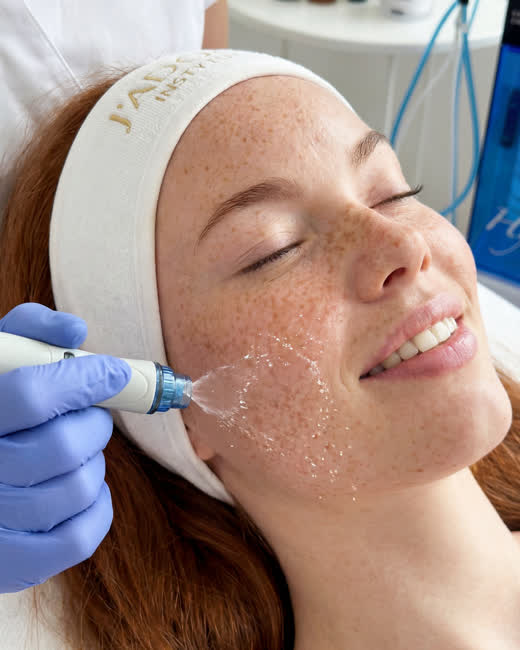
Exfoliation — why "scraping away" is actually opening up
The word "exfoliation" immediately brings to mind scrubbing and removal. And yes, it is the removal of dead epidermal cells — but thinking of it purely as "cleansing" misses something important. What exfoliation does for the rest of the treatment matters more than what it does on its own.
The epidermis is, by definition, a barrier. Throughout life it works to keep out anything the skin hasn't invited in. Dead cells in the stratum corneum are part of that barrier — a function that's desirable in everyday life. But in the treatment room, when we want active skincare ingredients to reach deeper, or microcurrents and light to work more effectively — that same barrier becomes an obstacle.
- Smooths the surface — microcurrent electrodes make better contact with skin that's free of an uneven stratum corneum, which can mean fuller contact and a better impulse flow.
- Evens out absorption — active ingredients applied after exfoliation can penetrate more evenly, without local build-up or areas where the barrier is thicker.
- Prompts the epidermis to renew — removing the dead layer signals to living cells below that it's time to speed up production of new ones. It's a subtle but real regenerative trigger.
- Improves light absorption — light therapy works through the skin; a "clearer" surface after exfoliation can mean less light energy scattered by the stratum corneum.
Microcurrents — a conversation with muscles and metabolism
Microcurrents are the part of the protocol that raises the most questions — and rightly so, since they sound abstract. Electric current in a beauty treatment? What exactly happens then? The answer requires looking a little deeper than the epidermis.
The body's cells work electrically. This isn't a metaphor — every living cell maintains a difference in potential between its interior and its external environment. This voltage determines its metabolic activity: how efficiently it produces energy, how quickly it responds to signals, whether it works sluggishly or intensively. With age and overload, cells often "slow down" — their resting potential drops, and metabolism becomes sluggish.
Microcurrents in an aesthetic treatment work on several levels at once — and it's worth distinguishing what we know fairly confidently from what remains an area where results look promising but are not conclusive.
Surface layer — facial muscles
mechanical and toning work
- Microcurrents reach the mimic muscles through the skin
- Gentle stimulation may support muscle tone and firmness
- Many people notice a "sculpted" effect in the contour and cheeks
- An analogy: very gentle, passive exercise — no effort required from you
Deeper layer — metabolism and tissue
biochemical and regenerative work
- Stimulation of ATP production in fibroblasts (collagen-producing cells)
- Potential support for collagen and elastin synthesis
- Improved microcirculation and lymphatic drainage
- Better nutrient transport to the dermis
One nuance is worth adding: microcurrents don't mechanically "tighten" the face like cling film would. Their effect is subtle and cumulative — for many people, results are more noticeable after a series than after a single session. This is important information for anyone coming in after their first session expecting a dramatic change. The change is there — but it's often more felt than seen, at least at first.
Light therapy — a closing stage that works at cellular level
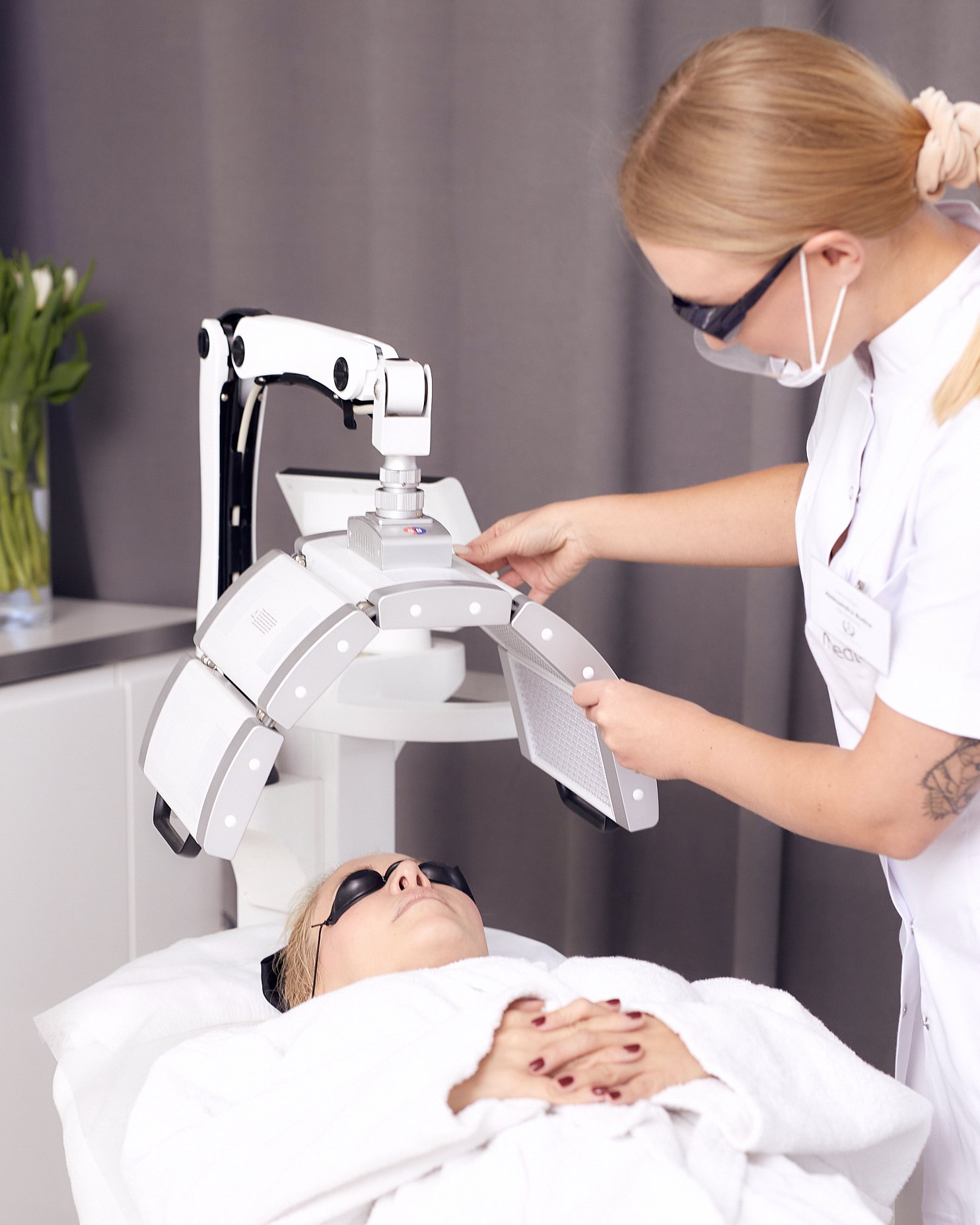
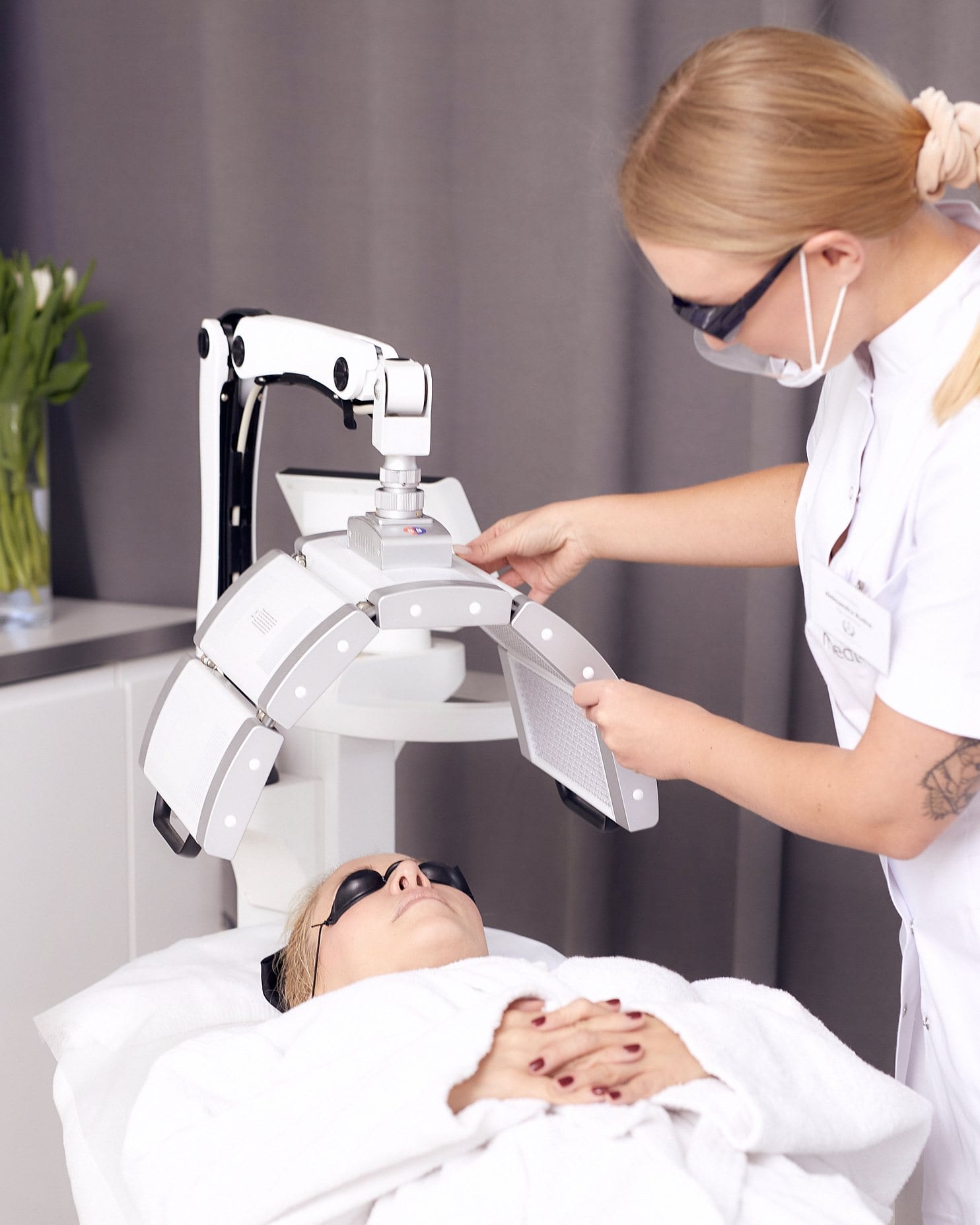
The third stage of the Bloom protocol is photon therapy — treating the skin with specific wavelengths of light. And here a question immediately arises: what does ordinary — if specialised — light have to do with the work of skin cells?
More than you might think. Skin cells have receptors that absorb photons. This isn't a metaphor or science fiction — it's photobiology, a field of science with decades of research behind it. A concrete example is the mitochondrion, the cell's "power plant": it contains an enzyme (cytochrome c oxidase) that absorbs photons within a specific range of the spectrum and responds by changing its metabolic activity. In practice, this means that the right light can — in many people — activate processes that the cell would otherwise perform too sluggishly on its own.
- 01
Red — regeneration and collagen
Red wavelengths reach the dermis and may stimulate fibroblasts to produce collagen. Studies suggest anti-inflammatory effects and accelerated tissue repair.
- 02
Near-infrared — depth and microcirculation
Near-infrared wavelengths penetrate deeper than red light. They may support microcirculation, tissue oxygenation and repair processes in deeper skin layers.
- 03
Blue — controlling bacteria and sebum
Shorter blue wavelengths act at epidermal level — they have confirmed antibacterial effects (particularly against Cutibacterium acnes) and may help regulate sebaceous gland activity.
In the Bloom protocol, light therapy appears as the final stage — and that's no accident. After exfoliation, the surface is "clear" for photons to work on. After microcurrents, cells are in a state of heightened metabolic activity — and can make better use of light stimulation. This is synergy: each previous step improves the conditions for the next.
Why three together give more than three separately
If each of these elements were simply "one more shot" of a good ingredient, combining them would only make sense from a marketing perspective. But together, these three technologies create something more interesting: a sequence in which each stage increases the effectiveness of the next.
Exfoliation opens the way — physically, by removing the barrier of dead cells. Microcurrents make use of that openness to reach muscles and tissue with minimal resistance, while also "waking up" cellular metabolism. Light therapy then meets ground prepared twice over: a clean surface and active cells — and can trigger repair processes more efficiently. This isn't three layers stacked together — it's a well-linked causal chain.
Who it suits, and when — a practical perspective
A protocol combining exfoliation, microcurrents and light therapy tends to suit several specific situations — though final qualification always depends on an assessment of your skin during consultation.
- Tired, grey skin — when skin looks "as if through frosted glass", lacking radiance and firmness, and the causes are more functional than structural.
- Early signs of losing firmness — when skin isn't yet visibly lax, but is starting to lose elasticity and density.
- Preparing for an important moment — treatments like this are often chosen ahead of important events, when skin needs to be at its best.
- A regular reset — some people treat this protocol as regular skin "maintenance", a few times a year, to keep neglect from building up.
- Combination or acne-prone skin — thanks to the blue LED component, which may help control bacteria and sebum.
Needle mesotherapy
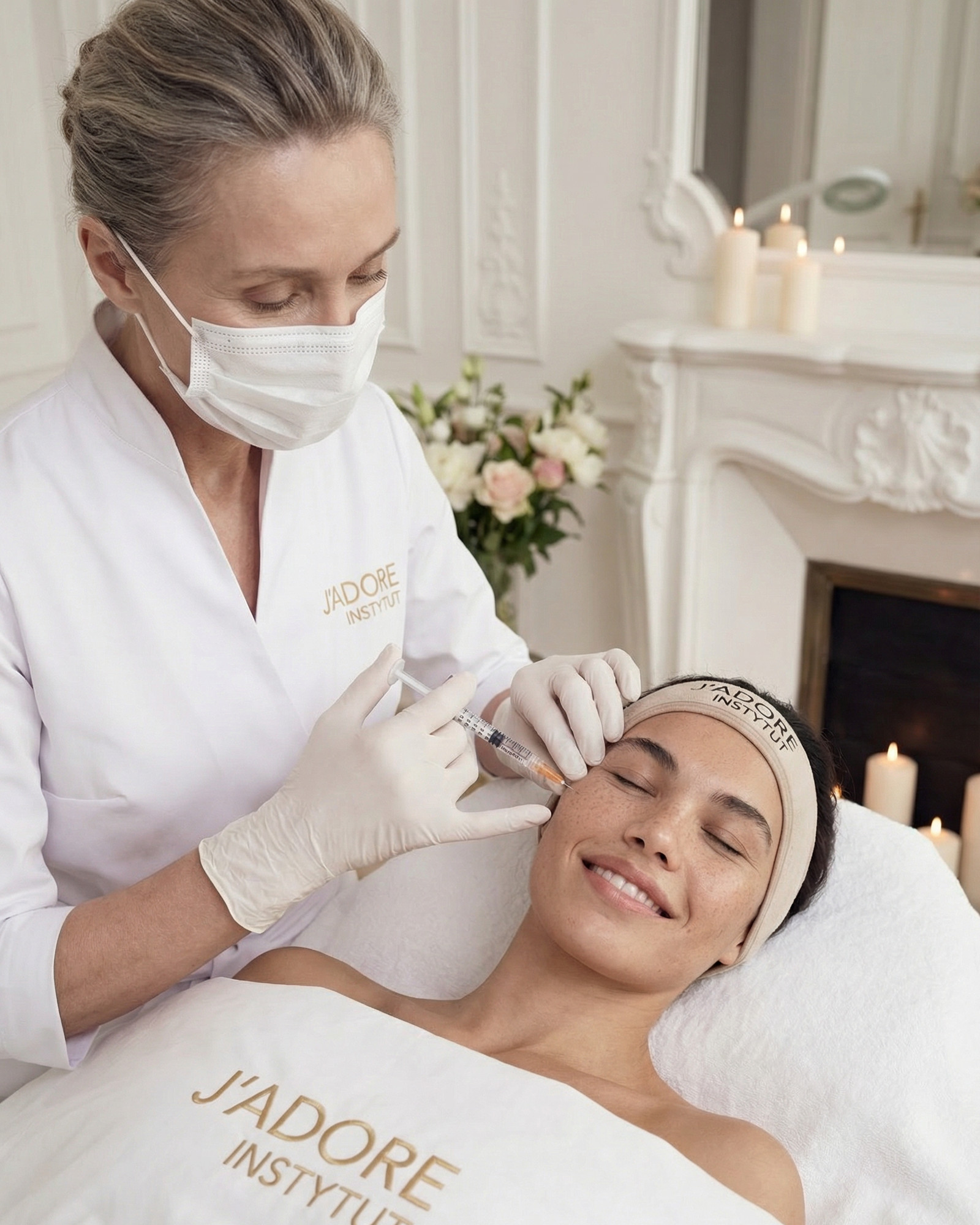
Mesotherapy delivers active ingredients directly into the dermis — combined with light therapy, it can amplify regenerative and hydrating effects, since cells working at a "higher rate" make better use of the substances delivered.
Hydrodermabrasion cleansing
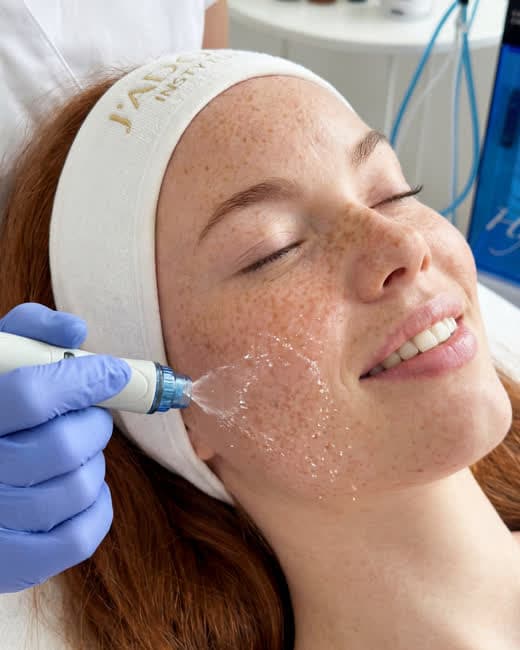
Deeper cleansing of pores and channels before a microcurrent protocol means electrodes conduct and make contact with the skin better — the microcurrent effect can be fuller as a result.
Biostimulators (polynucleotides / skin biostimulator)
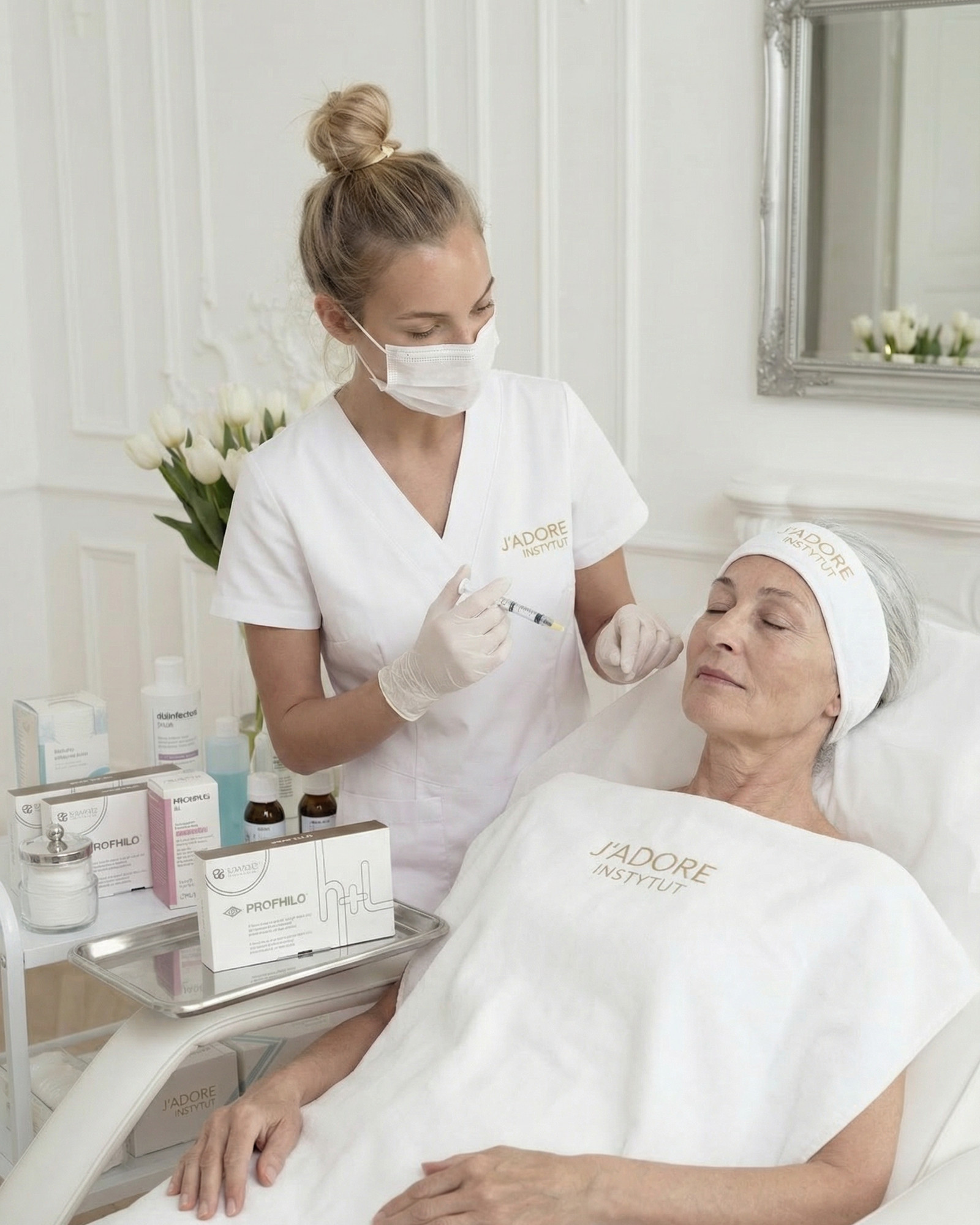
Treatments that stimulate fibroblasts from within complement light therapy and microcurrents: those stimulate cells to work, while biostimulators supply the raw materials for building new collagen.