
Ayurveda in brief — what this science really means
Ayurveda (Sanskrit: āyur — life, veda — knowledge) is a medical and philosophical system originating from the Indian subcontinent. It is not a religion or a relaxation technique — it is a science of living in harmony with your own nature and the rhythm around you. The World Health Organization recognises it as a traditional medical system, and in India and Sri Lanka it is officially practised alongside conventional medicine.
The foundation of Ayurveda is the belief that every person is different — each has a unique psychophysical constitution, known as prakriti. This constitution is described through three energies (doshas): Vata (movement, space, air), Pitta (fire, transformation, heat) and Kapha (stability, earth, water). Health is the state in which these energies sit in the proportion that is right for you. Illness — and, more broadly, discomfort, tension, chronic exhaustion — begins when this proportion is disturbed.
Why does this matter to someone who simply wants calm and a better sense of wellbeing? Because Ayurveda offers something missing from many modern approaches to wellness: a language to understand why you react to stress differently from your friend — and why what helps her does not necessarily help you.
What grounding means — and how to tell you lack it
Grounding is a concept found in Ayurveda, in somatic psychology and in yoga alike — because it points to something very specific: a sense of stability, rootedness and presence in your body and in the moment. It is the state in which you are not chasing your thoughts ten minutes ahead, not reacting impulsively to every stimulus, and you feel safely "at home" in yourself.
In the Ayurvedic understanding, grounding is linked mainly to the energies of Earth and Water — that is, to the Kapha dosha and the earthy aspect of Vata. When Vata (dominant in many people leading intense urban lives) becomes overstimulated, grounding drops: scattered thinking, difficulty falling asleep, a feeling of being "everywhere and nowhere", chronic unease with no obvious cause.
Grounded state
Vata in balance
- Calm without effort, emotional stability
- Falling asleep easily and waking up rested
- Focus — you can finish what you started
- Decisions come with confidence, not anxiety
- You can "feel" your body — aware of tension and relaxation
Ungrounded state
Vata in excess
- Thoughts running in circles, unable to switch your mind off
- Shallow sleep, waking at 3–4am
- Jumping from one thing to another endlessly
- Impulsiveness, reactivity, "everything irritates me"
- A feeling of cold, dryness, wind in the head
Worth noting: lack of grounding is not a character flaw and not a mental health condition. Very often it is simply a natural consequence of modern life's rhythm — constant screen stimulation, lack of regularity, too little contact with nature and with your own body. Recognising this state is the first step towards change.
Check your own state — a simple self-assessment
Before moving on to the practices, pause for a moment and answer a few questions honestly. There is nothing to calculate — the point is simply to notice where you are. The more "yes" answers you give, the more likely it is that your Vata is currently overstimulated, and it is worth starting with grounding work.
- You find it hard to sit still in one place for more than a few minutes without reaching for your phone.
- You fall asleep late, wake up during the night, or wake up tired despite getting enough hours of sleep.
- You feel as though your head "won't switch off" — thoughts circle round and round, especially in the evening.
- You change plans often and find it hard to finish one thing before starting the next.
- You feel restless or irritable without a specific reason.
- Your meals are irregular — you sometimes skip breakfast or eat on the go.
- You tend to feel cold — cold hands, cold feet, a sense of chill even when others feel warm.
Where to start — a step-by-step plan
Ayurveda does not call for a revolution. Shifting your daily rhythm by 10–20% can achieve more than a radical detox or a weekend retreat. The plan below moves from the simplest, most fundamental steps to more targeted practices. You can introduce each step separately — you do not need to start with the last one.
- 01
Regularity as a foundation
Ayurveda states it plainly: the body loves rhythm. Get up at the same time — even at weekends. Eat meals at regular intervals. Go to bed before 10:30pm. This is not a cliché; for Vata, regularity is literally an anchor. Even three weeks of consistent rhythm can significantly change sleep quality and levels of unease.
- 02
Morning: warmth and slowness (dinacharya)
In Ayurveda, the morning sets the energy for the whole day. Instead of starting with your phone — start with a glass of warm water. A moment of quiet before the first stimulus. A few minutes of stretching, or a walk. This does not need to take an hour; even 10 minutes of a slow, warm morning works differently from being swept into the rush before you have even opened your eyes.
- 03
Contact with the Earth — literally and figuratively
Walking barefoot on grass, earth or the floor at home is one of the simplest grounding practices. Physical contact between your feet and the ground is not a metaphor — receptors in the feet have a direct link to regulating the nervous system. Do it daily, even for a few minutes. If you cannot — a foot massage with warm sesame oil works in a similar way.
- 04
Warm, moist food — Vata-pacifying
Cold salads, raw vegetables and cold drinks stimulate Vata. For someone in an ungrounded state, food is literally information for the body. Switch to warm, cooked dishes, gently seasoned with fats (ghee, olive oil). Porridge in the morning, soup at midday, a light dinner — this is a classic Ayurvedic stabilising strategy.
- 05
Abhyanga — self-massage with oil
Abhyanga is one of the pillars of the Ayurvedic daily routine: a self-massage of the whole body with warm oil before bathing or showering. Sesame oil has a warming, grounding effect — ideal for dysregulated Vata. The technique is simple: circular movements over the joints, long strokes along the limbs, 10–15 minutes. Regular abhyanga can support sleep quality, reduce muscle tension and improve skin condition.
- 06
Evening: slow down earlier
The Vata nervous system needs a long wind-down — not one hour, but two. Limit screens after 9pm, prepare warm milk with cardamom and turmeric (golden milk is a classic Ayurvedic preparation for restful sleep), take a warm bath, read something calming. The evening belongs to Kapha — wasting it on stimulation is literally squandering your grounding resources.
What not to do when seeking grounding
Grounding is not only about what you add — often what you limit matters just as much. Several common habits work directly against Vata stabilisation, even though they may look like "self-care" on the surface.
When it is worth strengthening grounding with massage
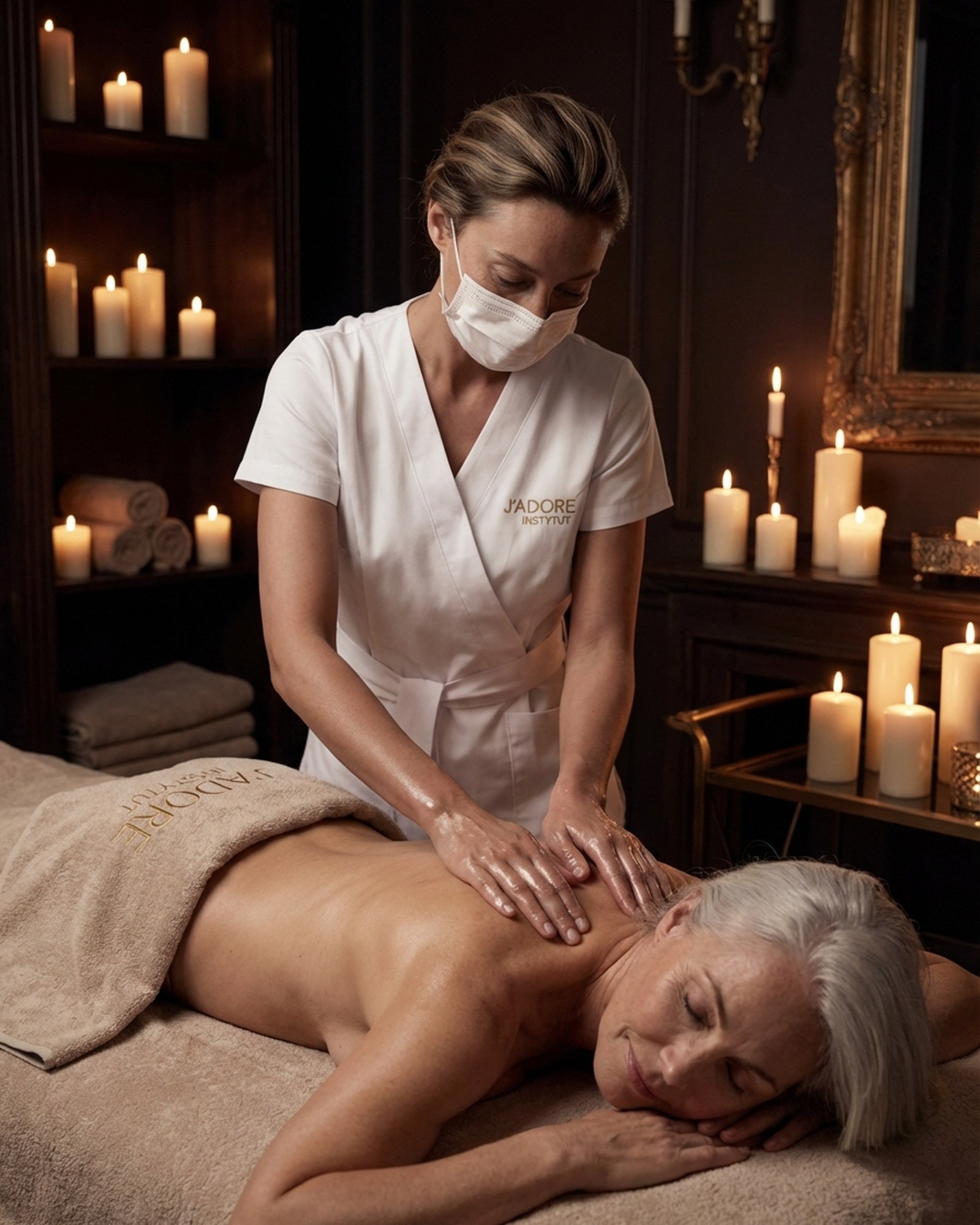
Self-administered abhyanga and changes to your daily rhythm are the basics. But sometimes the nervous system needs a deeper reset — particularly after long periods of overload, after intense life changes, or when self-practice alone is not enough. This is where a professional massage with a holistic orientation comes in.
When choosing a massage, it helps to consider its properties: warming, slower, oil-based — this profile supports grounding. Hot stone massage, lomi lomi, Thai massage — each of these styles can have strong stabilising properties, achieved through different means. Which one you choose depends on your needs and on how overstimulated your Vata currently is.
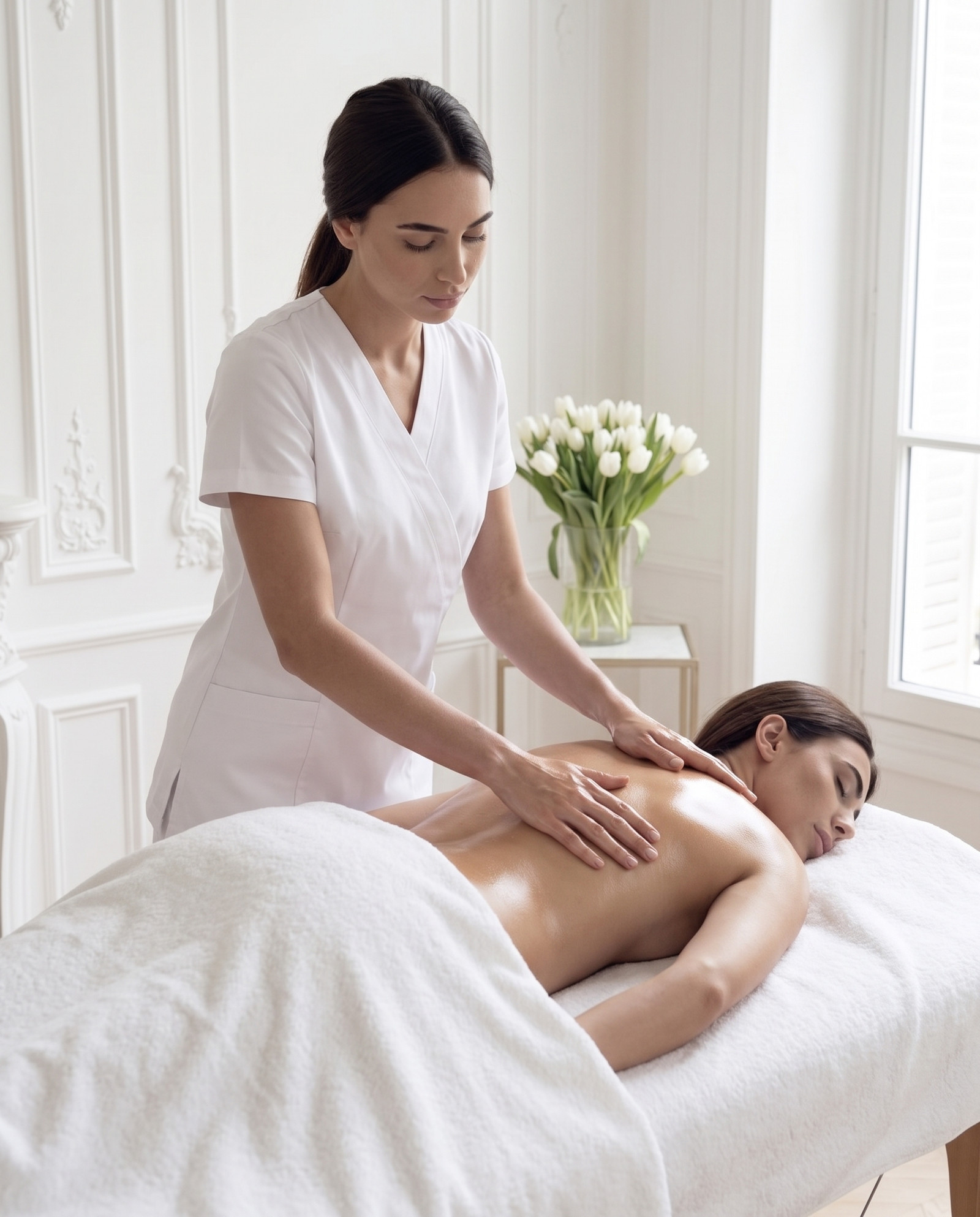
Ayurvedic massage
Full grounding with warm oil, a slow rhythm, whole-body work — a classic protocol for Vata-balancing.
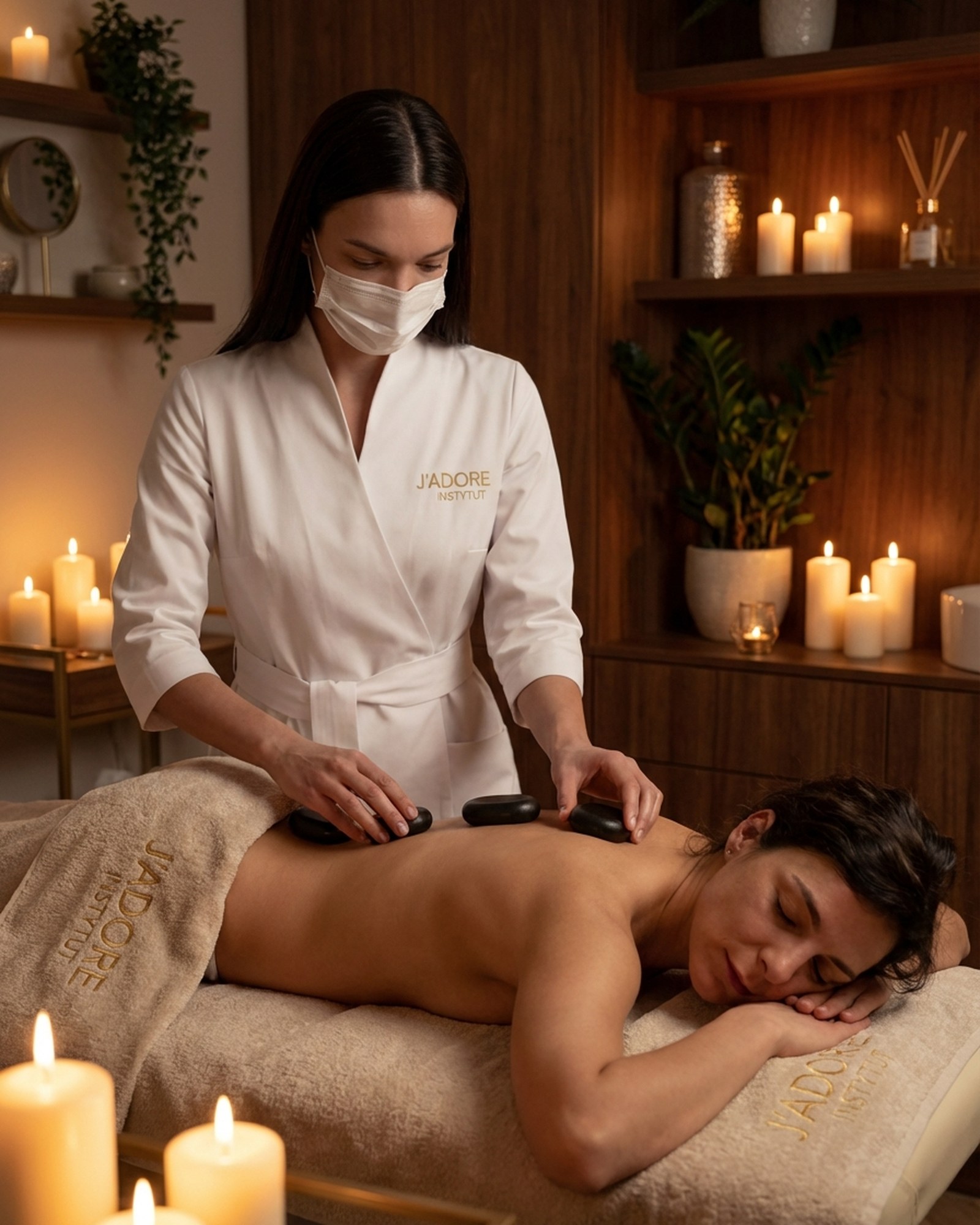
Hot stone massage
The heat of basalt stones has a deeply warming, grounding effect — particularly useful for chronic tension and a feeling of cold.
Lomi lomi
A Hawaiian massage with a flowing rhythm — helps release tension rooted in the tissue, with a strong releasing effect.
Thai massage
Deep work with the meridians and body mobilisation — a good option when nervous tension is combined with muscular-fascial stiffness.
Face and head massage
The head and jaw are often the centre where Vata tension accumulates — working in this area can bring quick, noticeable relief.