Where shiatsu comes from and what it has in common with acupuncture
Shiatsu is a Japanese word that literally means “finger pressure” (shi = finger, atsu = pressure). The method grew from Eastern traditions of bodywork — specifically Japanese anma massage and the Chinese theory of meridians, known from acupuncture. It does not use needles, but it is based on the same premise: the body contains energy channels known as meridians, and points along them can be stimulated to influence the flow of vital energy — known in Japanese as ki (or qi in Chinese).
Shiatsu developed as a distinct, codified method in Japan during the 20th century. In 1955, the Japanese Ministry of Health officially recognised it as a separate field of manual therapy. This matters because it formally distinguishes shiatsu from both classical massage and acupressure. Today, it is practised worldwide. In Europe, it is particularly popular as a form of work with stress and chronic tension.
Unlike acupressure — which focuses on pressing isolated points — shiatsu works along entire meridian lines, sequentially and rhythmically. It is more like reading a melody than striking individual keys. The therapist does not look for one “magic point”. They follow the course of the channel and respond to what they feel beneath their hands.
Why through clothing — and what difference it makes
This is the most common question — and it is a valid one. Intuition suggests that skin-to-skin contact must offer “more”. In shiatsu, however, that intuition is misleading because the aim is not the same as in classical massage.
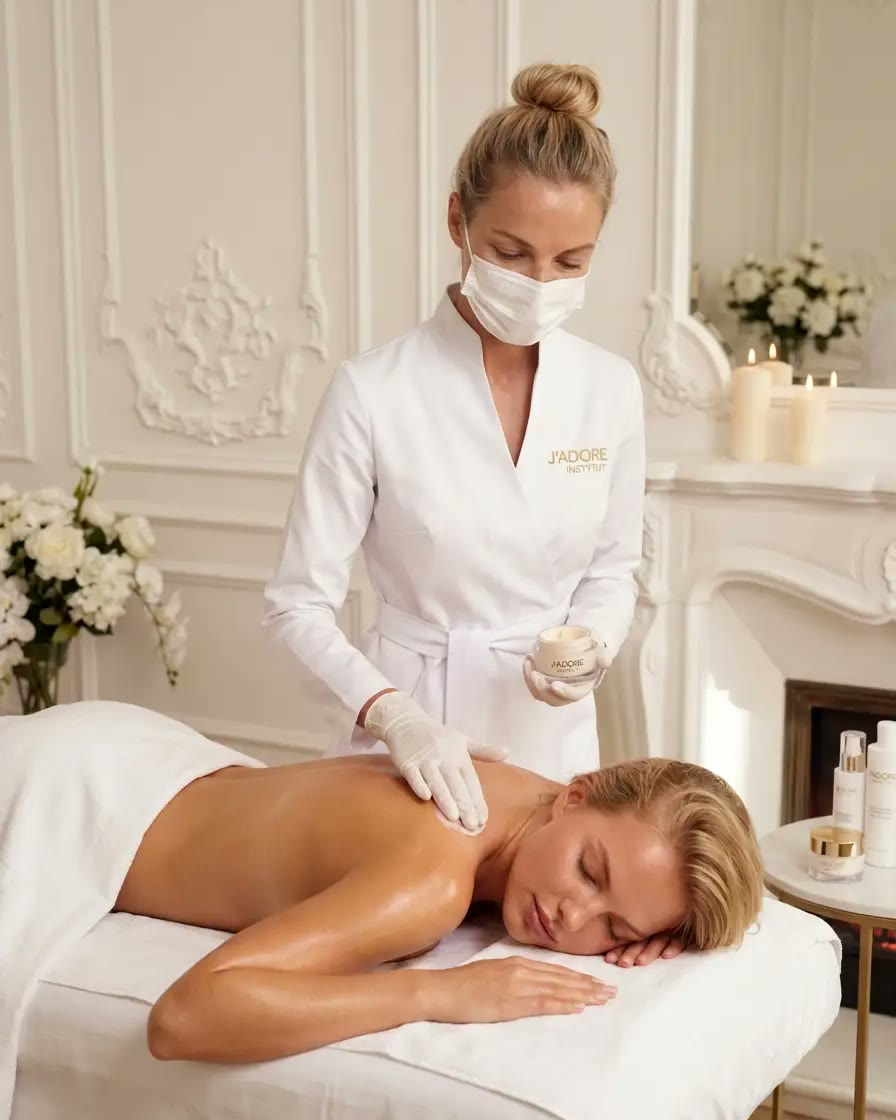
In classical massage, oil is essential — the hands need to glide over the skin to perform stroking, kneading and rubbing movements. The techniques themselves, such as effleurage and pétrissage, rely on movement across the surface. Oil reduces friction, supports glide, warms and moisturises the skin. It is an essential tool for this specific purpose.
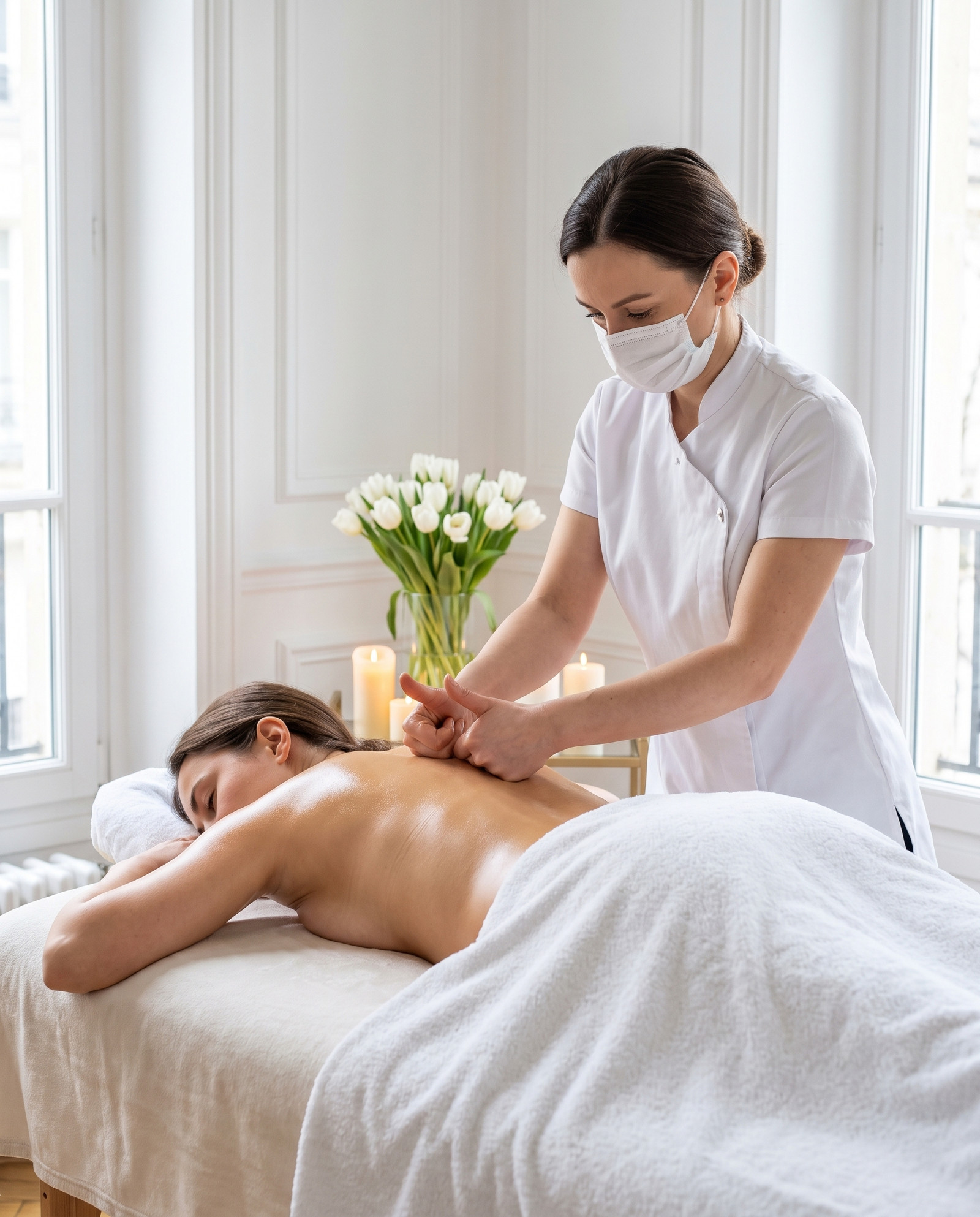
In shiatsu, the hands do not move across the skin — they press, hold and listen. The therapist places their thumbs, hands or elbows on the body and applies vertical downward pressure. It is static, focused and intentional. Gliding movement is not needed here. A layer of fabric between the hands and body allows pressure to spread evenly and reach deeper, rather than dispersing across the skin’s surface.
Classical massage
movement across the surface with glide
- Oil — essential for the hands to glide
- Skin must be uncovered
- Techniques: stroking, kneading, rubbing
- Work mainly on muscles and superficial tissues
Shiatsu
static pressure through fabric
- No oil — fabric distributes pressure evenly
- Clothing stays on — contact through fabric is intentional
- Techniques: pressure, holding, stretching, traction
- Work along the meridians, in depth
What the therapist really does — the mechanism of pressure and listening
Shiatsu is often described as “a massage for people who do not like being massaged” — and there is some truth in that. A session may appear passive: you lie down while the therapist holds points, sometimes remaining still for several seconds. Yet what happens beneath their hands is anything but passive.
The therapist works with their whole body — not only their hands. Pressure comes from the hips and body weight, not arm strength. This matters: muscular force produces pressure that is sudden and superficial. Body weight transferred through straight arms enters slowly and deeply — your body has time to respond, soften and let go. A good shiatsu therapist does not push — they wait until the tissues invite them deeper.
- 01
Hara — diagnosis through touch
At the beginning of the session, the therapist examines the abdomen (hara). Through gentle touch, they assess tension and flow in the meridians. It is a form of diagnosis through listening to the body, before the main work begins.
- 02
Meridian pathways — sequential work
The therapist moves along the meridian lines — from the feet upwards, or from the neck down the back. Pressure is held at each point for a moment while the therapist listens to the tissues’ response.
- 03
Tsubo — key points
Along the meridians, the therapist looks for areas of increased tension, blockage or “emptiness” — known as tsubo. These correspond to acupuncture points. Here, pressure may be stronger and held for longer.
- 04
Stretching and traction
Gentle stretching of the limbs and joints complements the pressure. This work can sometimes resemble gentle judo or passive yoga. The body is guided, not forced.
- 05
Closing — integration
The session ends calmly. The therapist returns to the hara to check whether the body’s response differs from the beginning. A few minutes of silence after the session are part of the method, not an option.
An important concept in shiatsu is ki — the energy whose flow the therapist aims to support. Whether you accept Eastern philosophy or prefer a more physiological interpretation involving the nervous system, fascia and circulation, the effect of pressure held on tissues for several seconds is measurable: muscles soften, tension decreases and the nervous system shifts from a state of activation into rest.
What shiatsu can do for the body — and what it cannot
Shiatsu is not medical therapy in the sense of treating specific diseases — and an honest discussion of this method begins with that statement. What practitioners and their clients describe is mainly an effect on tension, stress and wellbeing — areas where evidence is limited, but experience is consistent.
- Muscle tension — static pressure may help muscles relax, especially in areas of chronic tightness such as the neck, shoulders and lower back. For many people, the effect is noticeable after the first session.
- Nervous system — rhythmic, predictable bodywork appears to activate the parasympathetic nervous system — the system responsible for rest and recovery. This is why drowsiness after shiatsu is characteristic.
- Sleep quality — some clients who use shiatsu regularly describe improved sleep quality, although this is an indirect effect rather than a direct aim of the method.
- Emotional tension — shiatsu is often described as “the massage after which you cry without knowing why”. The body holds emotional tension in the tissues. Deep, calm touch may release it.
- Headache and migraine — work on the neck and base of the skull can be helpful for tension headaches. Migraine requires caution and individual assessment.
What shiatsu is not: it is not a slimming massage, it does not shape the silhouette, remove cellulite or replace physiotherapy for structural injuries. The strength of this method lies in working with tension, stress and overall wellbeing — and this is where many people find its real value.
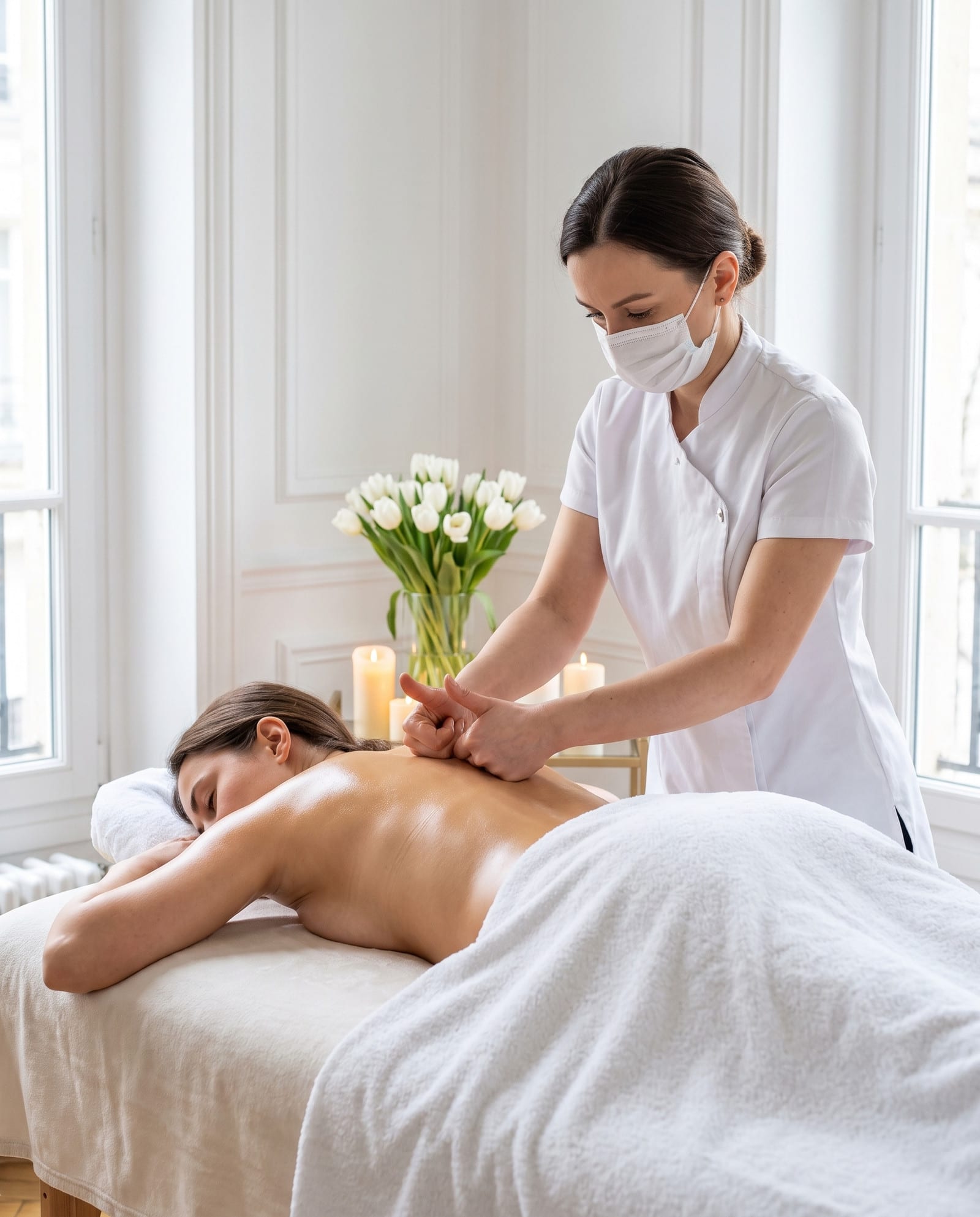
What a session looks like in practice — what to expect
The frequency of sessions depends on your goal. For chronic tension and stress, schedule a session every two weeks or once a month as part of regular self-care. For a specific concern, such as tension headaches, the therapist may suggest several sessions closer together. Shiatsu works cumulatively — results build with subsequent sessions and are not limited to a single visit.
Shiatsu combined with other treatments
Shiatsu fits well into a wider programme of care for body and mind. It also complements treatments that work in other areas. Combining methods does not require complex planning. Simply consider what is the priority at that moment.
Classic massage
Shiatsu and classic massage work according to different principles — shiatsu works deeper and through the meridians, while classic massage works across the surface of the muscles. Depending on what your body needs most, they can be alternated within a monthly cycle.
Deep tissue massage
When tension is not only nervous but also structural — involving deep muscle tissue, contractures or scarring — deep tissue massage and shiatsu can enhance each other’s results.
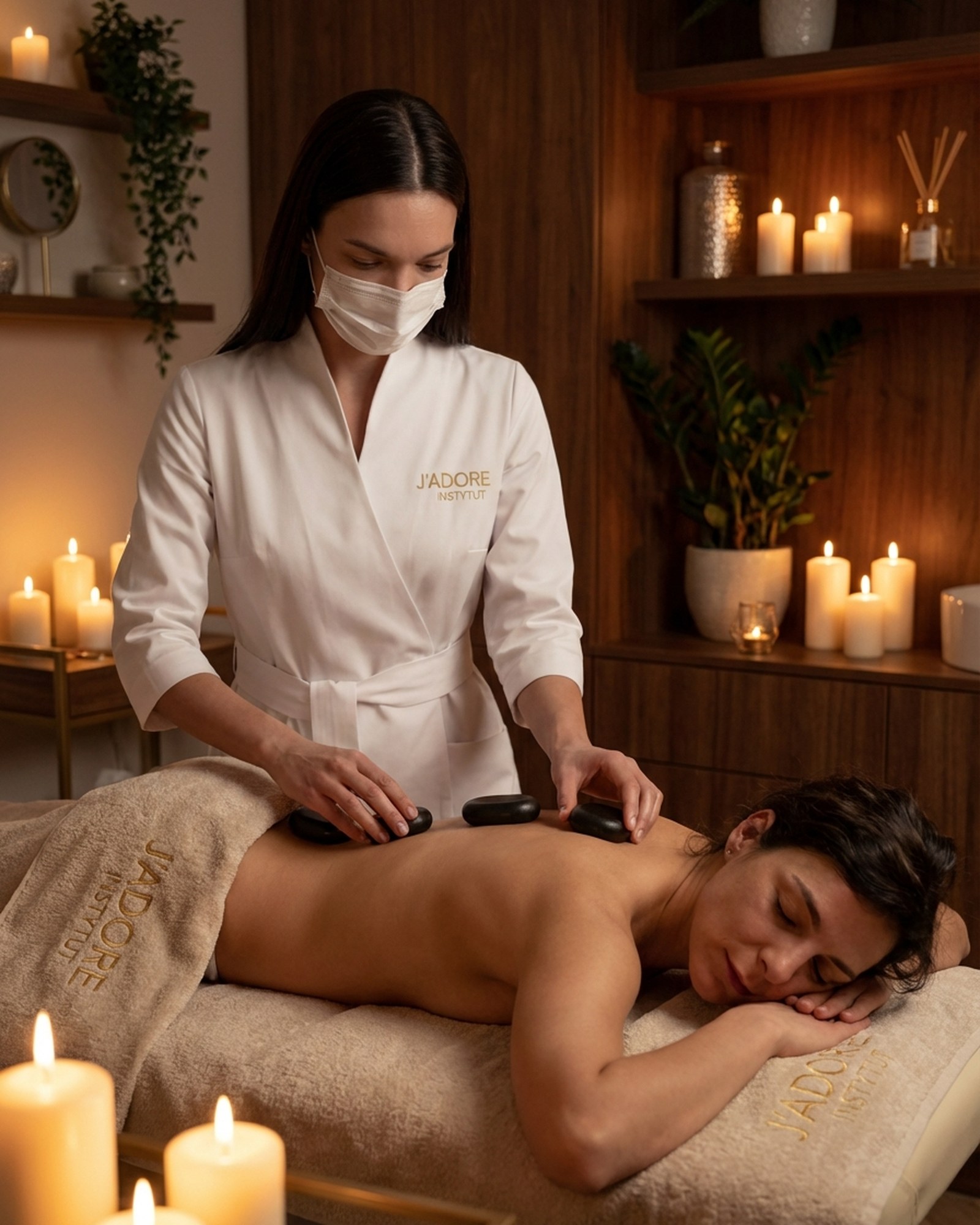
Hot stone massage
The warmth of the stones relaxes tissues physically. This may support meridian work during a following shiatsu session. Many people describe this combination as particularly helpful for chronic tension in the neck and shoulders.
Body rituals and aromatherapy
A shiatsu session followed by an aromatherapy treatment or body peel creates a complete relaxation ritual — a body relaxed through manual work may respond more readily to skincare treatments.