What's really happening in skin with melasma
To understand why melasma returns, you first need to look at who produces it. Melanin — the brown pigment responsible for hyperpigmentation — is made by melanocytes, specialised cells in the lower layer of the epidermis. In melasma, these cells aren't diseased or excessive in number. They're hypersensitive instead — they respond to stimuli that healthy skin barely reacts to, or doesn't react to at all.
This hypersensitivity has a hormonal basis. Melanocytes in people with melasma carry more oestrogen and progesterone receptors than in others. This means sex hormones literally switch on melanin production. That's why melasma so often appears for the first time during pregnancy — hence its unofficial name, "the mask of pregnancy" — or after starting oral contraception. But hormones are only one mechanism. The second is just as important, and just as often overlooked.
The second key mechanism is communication between melanocytes and the skin's nerves and blood vessels. Research shows that skin affected by melasma has a higher density of blood vessels and nerve endings in the affected areas than healthy skin. This means the pigmentation has its own "supply line" — it reacts not only to UV, but also to heat, inflammation and oxidative stress. Any of these triggers can set off a cascade that ends in more melanin.
Why summer is the worst time for melasma
Across the year, summer is when several factors driving melasma switch on at once. This build-up is exactly why pigmentation in the warmer months can be exceptionally hard to control. It isn't only about how strong the sun is.
- UV radiation — both UVA and UVB. UVA (the long wave) passes through clouds and glass. It's present year-round, but its intensity increases in summer. UVA is responsible for deeper activation of melanocytes, and many popular sunscreens — which mainly protect against UVB — don't block it well. That's why melasma requires a broad-spectrum filter, not simply a high SPF.
- Heat — a separate enemy, independent of the sun. This is a finding that still surprises people: heat alone, without any UV, can stimulate melanocytes. That means walking in the shade on a hot day, a sauna, a hot bath, or even intense exercise can all worsen pigmentation. The mechanism involves heat receptors (TRPV1) present on melanocytes, and it's especially active in people with active melasma.
- Skin inflammation. Sun, heat, and — importantly — skincare mistakes all trigger micro-inflammation. Any inflammation in the skin signals melanocytes to work harder. That's why post-inflammatory hyperpigmentation (PIH) and melasma so often overlap and reinforce each other.
- Longer exposure time. Holidays, terraces, open-top cars, outdoor activity — the maths is simple. More time outdoors in summer means more triggers for skin with melasma.
Summer skincare mistakes that make melasma worse
This is probably the most practical point — and the most often overlooked. Summer is the season when many popular active ingredients and treatments should be set aside. Not because they're bad, but because they add extra load to melanocytes that are already overactive, and to skin that's already prone to irritation. The result is the opposite of what you intended.
- 01
Retinoids in summer
Vitamin A and its derivatives (retinol, retinal, tretinoin) are some of the most effective skincare ingredients. But they work by speeding up epidermal renewal, which makes skin thinner and far more prone to sunburn. In people with melasma, every sunburn or inflammatory episode means new pigmentation. In summer, it's best to pause retinoids or reduce them to a minimum, using them only in the evening with strict sun protection. The same rule applies to other exfoliants — AHAs (glycolic, lactic, mandelic acid) used at high concentrations.
- 02
High-strength chemical peels
Peels are one of the most effective ways to lighten melasma, but timing is crucial. Deeper peels (TCA, resorcinol, higher acid concentrations) require several weeks of meticulous sun protection afterwards, because freshly renewed skin is especially prone to photo-damage and post-inflammatory hyperpigmentation. Summer — with daily sun exposure, heat and outdoor activity — is the worst time for this kind of intervention. Melasma-lightening peels are planned for autumn and winter, when sun exposure is minimal.
- 03
Laser treatments for pigmentation
Laser therapy can be very effective for melasma, but in the wrong hands or at the wrong time of year, it can make it dramatically worse. Any laser treatment triggers inflammation in the skin, even at a microscopic level. In active, hormonal melasma, that inflammation can restart melanin production. This is the "rebound" effect — pigmentation returns darker than before the treatment. In summer, when skin faces daily sun and heat, the risk of rebound rises sharply. Laser treatments for melasma are a job for an experienced specialist, done in the right season and with the right preparation.
- 04
Saving sun protection for "when I'm actually in the sun"
The most common mistake: applying sunscreen only before going to the beach or for a walk. Meanwhile UVA — the culprit behind deeper damage — passes through office windows, car glass and café windows. Many people with melasma notice their pigmentation worsening without any obvious sun exposure. This happens because small doses of UVA add up throughout the day. Sunscreen goes on every morning, regardless of the weather.
What melasma looks like from the inside — three types, three depths
Melasma isn't uniform, and this matters in practice for treatment. Depending on how deep in the epidermis the melanin sits, melasma responds to treatment differently and at a different pace. There are three types, and telling them apart is one of the first things an experienced specialist assesses.
Epidermal
the shallowest, with the best outlook
- Melanin sits in the upper layers of the epidermis
- Under a Wood's lamp it darkens — with a clear border
- Responds to brightening ingredients and peels
- The fastest response to treatment
Dermal
deeper, more difficult
- Melanin sits in the dermis
- Under a Wood's lamp the contrast is weak or absent
- Doesn't respond well to topical ingredients
- Requires methods that reach deeper
There's also a mixed type — a combination of both depths, and the most common one in clinical practice. It's this mixed type that means part of the skin responds well to treatment while another area stays unchanged, or improves more slowly. In these cases, a multi-stage approach matters most — combining topical methods with deeper-reaching ones — along with patience, since visible results can take months of regular work.
What works — the logic behind a smart approach to melasma
Melasma is chronic, and accepting that word helps you avoid disappointment. There's no treatment that removes it once and for all if the triggers — hormones, sun, heat — are still present. But there is something that genuinely works: a consistent, multi-layered approach spread over time, adapted to the season. The best results come from combining prevention, active ingredients and well-timed treatments.
- Photoprotection — all year round, not just at the beach. A mineral or broad-spectrum combination filter each morning, topped up during the day, plus physical shielding (a hat, shade). This is the foundation. Without it, no treatment will hold its results.
- Active brightening ingredients — used seasonally. Arbutin, kojic acid, niacinamide, vitamin C, tranexamic acid — these work by inhibiting the tyrosinase enzyme, key to melanin production, or by calming inflammation in the skin. Used consistently through autumn and winter, they can produce clear lightening — but they need time. There are no quick results here.
- Brightening peels — autumn and winter. Carboxytherapy, acid peels at the right concentrations, Yellow Peel and similar treatments — planned for periods of low sun exposure. They boost the effect of skincare ingredients and speed up epidermal renewal.
- Laser and light-based treatments — only in the hands of a specialist experienced with melasma. Not every laser is suitable for hormonal pigmentation. Choosing the right method, settings and season is essential to avoid triggering a rebound.
- Pausing hormonal contraception — a medical decision. If melasma appeared or worsened after starting contraception, it's worth discussing alternatives with your gynaecologist. This isn't always possible or advisable, but for some people, switching contraceptive method visibly improves their skin.
Brightening chemical peel
The foundation of melasma treatment in the autumn–winter season. Controlled exfoliation of the epidermis combined with ingredients that inhibit melanogenesis — it removes pigmented epidermis and slows new melanin production. Requires a series of sessions and diligent sun protection.
Needle mesotherapy (brightening cocktails)
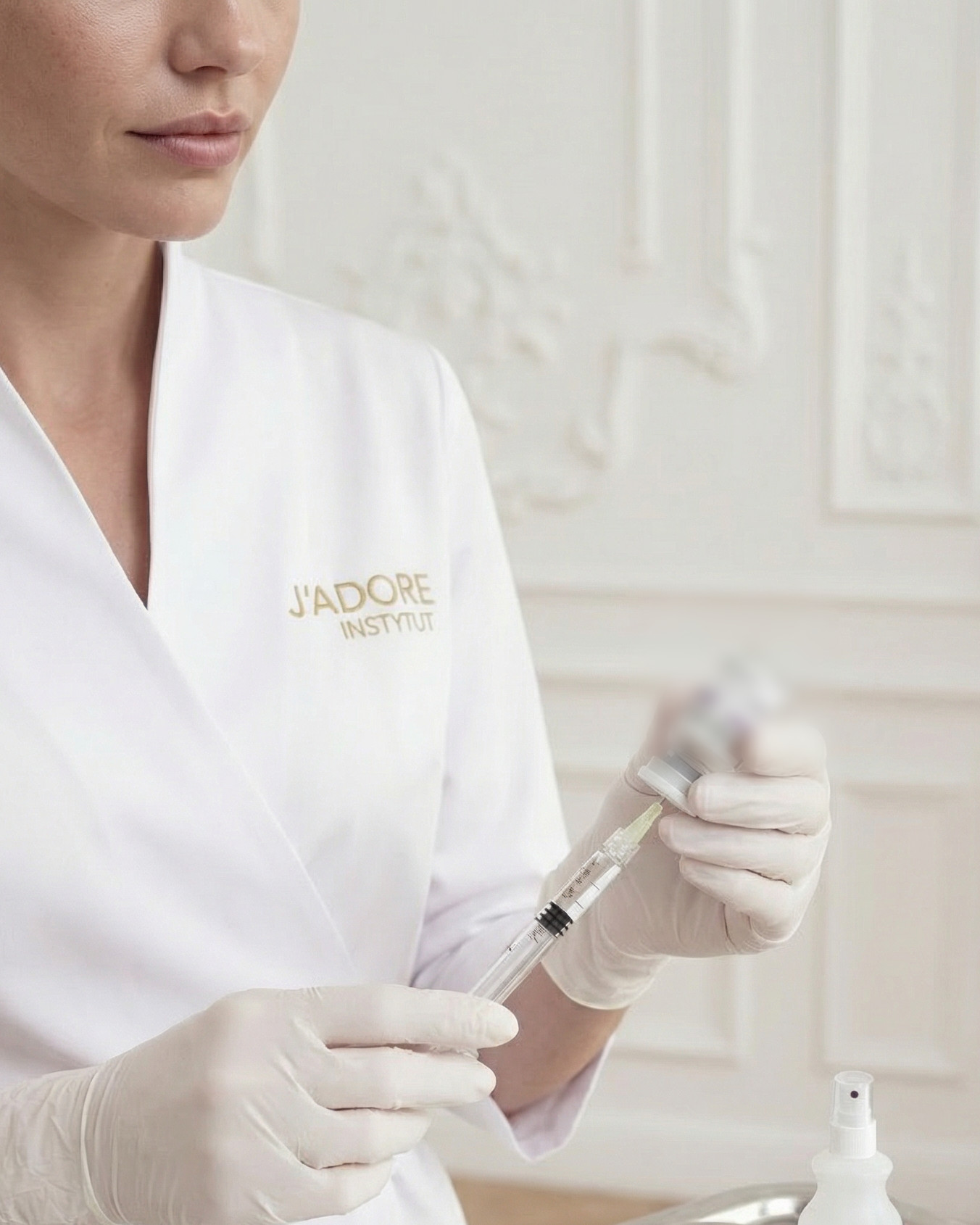
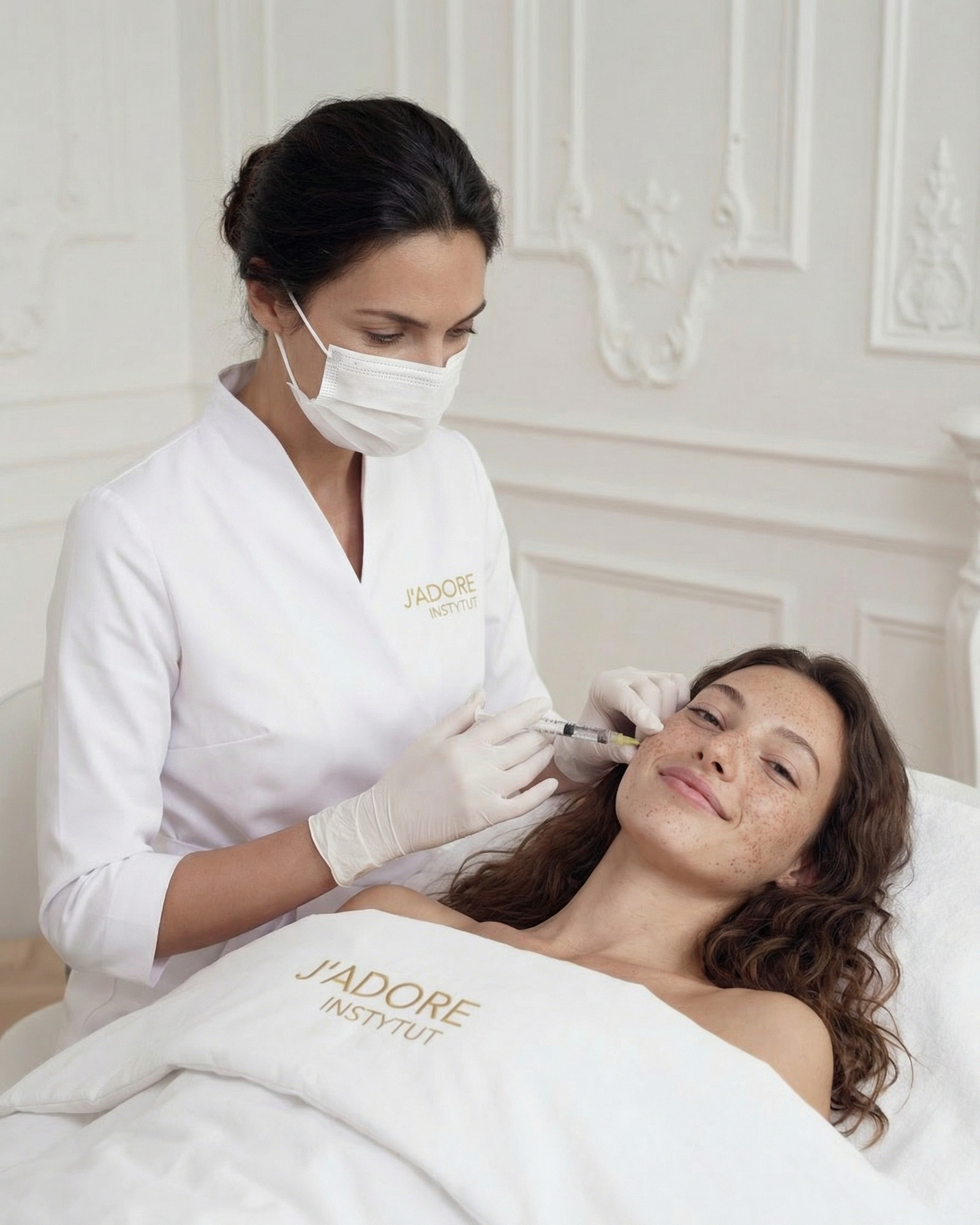
Delivers active ingredients — antioxidants, tyrosinase inhibitors, peptides — directly into the dermis. Especially useful for dermal-type melasma, where topical ingredients can't reach deep enough.
Carboxytherapy
Carbon dioxide delivered into the skin improves microcirculation and tissue oxygenation, reducing the dark tone of pigmentation. Well tolerated, and can be used year-round provided sun protection is maintained.
BBL / IPL for pigmentation
Broadband pulsed light technology — effective for epidermal pigmentation, but melasma requires particular caution and an experienced specialist. Planned only outside the summer season.