What's actually inside the hair
Before you can understand why blonde turns brassy, you need to know where hair colour comes from in the first place. There's one answer: melanin. It's the natural pigment produced in hair follicles that determines the entire spectrum — from black through browns and reds to natural light blonde.
Melanin isn't a single pigment. There are two types, and different proportions of each give every natural hair shade:
- Eumelanin — dark, black-brown. It dominates in dark hair. The more eumelanin, the deeper the brown or black.
- Pheomelanin — light, yellow-red-orange. It dominates in red hair and natural blonde. But it's also present in all hair — even very dark hair — just masked by eumelanin.
And here's the crux of the whole story. Pheomelanin, that yellow-red fraction, is chemically much harder to remove than eumelanin. Lightener breaks down eumelanin molecules relatively efficiently — that's why dark hair passes through brown, chestnut and red tones during lightening. Pheomelanin holds on firmly. It remains in the hair cortex even when eumelanin has largely been removed. And it's pheomelanin that's responsible for lightened blonde having a yellow or warm undertone — not because something has gone wrong, but because pheomelanin is still there.
Why blonde turns brassy: three mechanisms at once
Brassiness in lightened blonde is the sum of several processes happening at the same time. Breaking them down into individual factors helps explain why toning works — and when it works best.
- 01
Residual pheomelanin
Every lightening process removes eumelanin first and foremost. Pheomelanin, the yellow-red fraction, is chemically more stable — it remains in the hair cortex and gives blonde a warm, yellow undertone. The lower the level of lightening (fewer sessions, darker starting base), the more pheomelanin remains.
- 02
Oxidation and UV exposure
Lightened hair has an open, porous cortex structure. UV radiation and environmental factors (minerals in water, pool chlorine, air pollution) can gradually oxidise the remaining pigments and shift the colour towards warmer, more yellow tones.
- 03
Fading of the tone
Toning deposits temporary or semi-permanent dyes onto the hair that neutralise yellow tones. These dyes don't penetrate deep into the cortex — they gradually wash out with every wash. Once the tone fades, pheomelanin's yellow undertone becomes visible again. Blonde "returns to its base" — this isn't new brassiness, it's simply the reveal of what was there all along.
The colour wheel: why purple and blue neutralise yellow
This is where a principle you could explain to a child comes in: opposite colours on the colour wheel neutralise each other. Combine them in the right proportions, and they visually "cancel out", producing a neutral or grey tone.
The problem: yellow undertone
pheomelanin + faded tone
- A warm, yellow-straw blonde shade
- Especially visible in daylight
- More pronounced near the root at regrowth
- Can shift towards gold or orange on a warmer base
The solution: purple and blue
complementary dyes on the colour wheel
- Purple (violet) neutralises yellow — the opposite colour on the wheel
- Blue neutralises orange — the complementary colour to warm red
- Purple toner → cool, platinum, ash blonde
- Blue or blue-grey toner → neutralises warm red tones
That's why blonde shampoos have their characteristic purple colour — it's not a marketing gimmick, it's a direct application of the colour wheel principle to hair care. Every wash deposits a minimal amount of purple dye, which continuously reinforces neutralisation between salon visits. These products work gently and superficially — so they support, but never replace, professional toning.
What toning actually does — and what it doesn't
Toning is often described in the simplest possible terms: "it gives colour". That's true, but imprecise. To understand when toning makes sense and what to expect from it, it helps to know how it interacts with hair structure and how it works.
Toners are low-alkaline or acidic dyes — they work under mild conditions that don't damage the hair the way lightening or permanent colouring do. Rather than penetrating deep into the cortex and breaking down natural pigments, they deposit new pigments on or just below the surface of the hair structure. This has two important consequences.
- Temporary effect: toner pigments gradually wash out with every shampoo. Toning isn't permanent — that's a feature, not a flaw. Its lifespan depends on the type of toner, hair porosity, water temperature and the products you use. For many people, the effect lasts several weeks to a few months; for others, less.
- No damage to the structure: toning doesn't damage hair the way lightening does. That's why it can be repeated relatively often without risking hair condition.
- Neutralisation, not coverage: a toner doesn't "dye yellow hair grey" — it optically balances the colour by adding a complementary shade. The result differs from applying dye directly — hair looks natural because the colour isn't uniform. It's the outcome of pigments interacting.
There's another dimension to toning that's rarely discussed directly: condition and shine. Many toning formulas close the cuticle and smooth the hair's surface. Lightened hair is often rough, dull and porous — a toner can, alongside neutralising colour, improve the hair's feel. Toned blonde is not only cooler in tone but often silkier to the touch and shinier in the light.
At-home toning versus salon toning — what really differs
The market offers a wide range of at-home toning products: purple shampoos, colour-depositing masks, bottled toners. They work on the same colour-wheel principle — and, within reasonable expectations, they can work well. But there are a few differences between at-home colour maintenance and salon toning worth understanding before you decide.
At home: shampoo, toning mask
maintenance and refreshing between visits
- Works superficially — pigment sits on the cuticle
- Gentle, gradual effect, easy to control
- Purple shampoo: neutralises current yellowing with every wash
- Toning mask: a more intense dose of colour, once a week
- Processing time — a few minutes to around twenty, depending on instructions
Salon: professional toner
precise shade matching and colour reset
- Deeper penetration into the hair structure
- Precise pigment selection for a specific base and goal
- Can correct unevenness (banding, tonal transitions)
- Longer-lasting effect than at-home products
- Can be combined with a care treatment
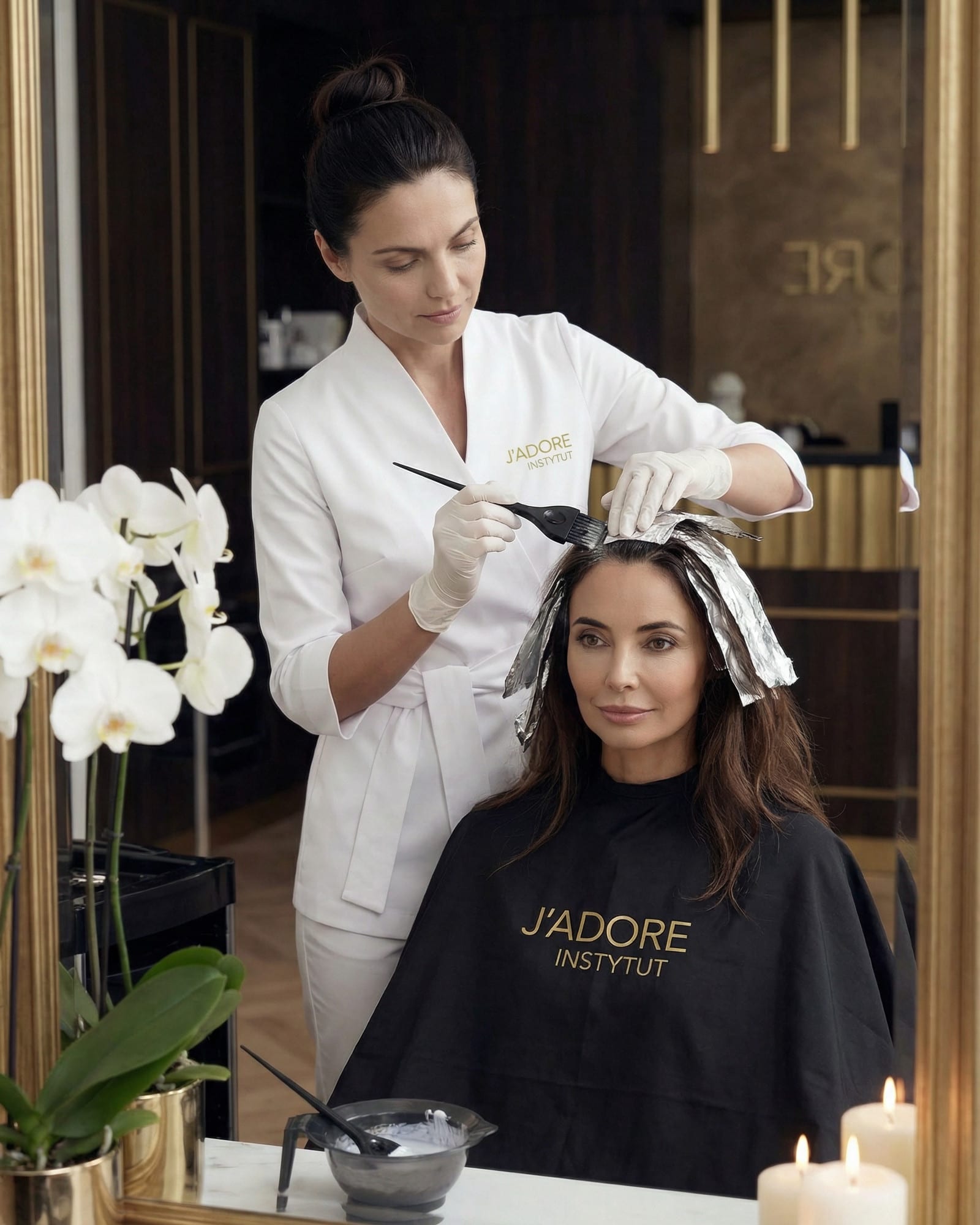
Why your blonde ages faster — factors you can control
How quickly brassiness returns and toning fades isn't purely a matter of your base colour or your stylist's technique. There are several care and lifestyle factors that can significantly affect how long your colour stays fresh.
- Water temperature when washing. Hot water opens the hair cuticle and speeds up the loss of toning pigments. Cool or lukewarm water closes the cuticle and slows this process down. It's one of the simplest habits that genuinely affects how long colour lasts.
- Washing frequency. Every wash removes some of the temporary dye. Less frequent washing means slower fading — there's no simpler relationship than that.
- Sun exposure. UV degrades dyes and can intensify pheomelanin oxidation. Spring and summer are the seasons when colour fades fastest — especially on the upper layers of hair.
- Pools and the sea. Chlorine and sea salt accelerate hair porosity. Coloured hair absorbs chlorine particularly readily, which can shift the colour towards greenish or dull tones. A protective mask before swimming isn't overkill.
- Styling products. Some alcohol-based products dry out and open the cuticle, speeding up colour loss. Care products designed for lightened hair typically have a pH suited to closing the cuticle.
What a good toning touch-up looks like — step by step
If you've never had a standalone toning session — only full colour services — it helps to know what to expect. Toning is a relatively short procedure, though how it unfolds can vary depending on your hair's condition and colour goal.
- 01
Colour assessment and toner selection
Your stylist assesses your current hair shade: the level of lightness, the undertone (yellow, warm, orange), whether the colour is even. Based on this, they select the toner pigment — purple, blue-grey, beige, pearl, or a blend. This is the most important stage: choosing the wrong toner can result in a colour that's too cool, too grey or uneven.
- 02
Applying the toner
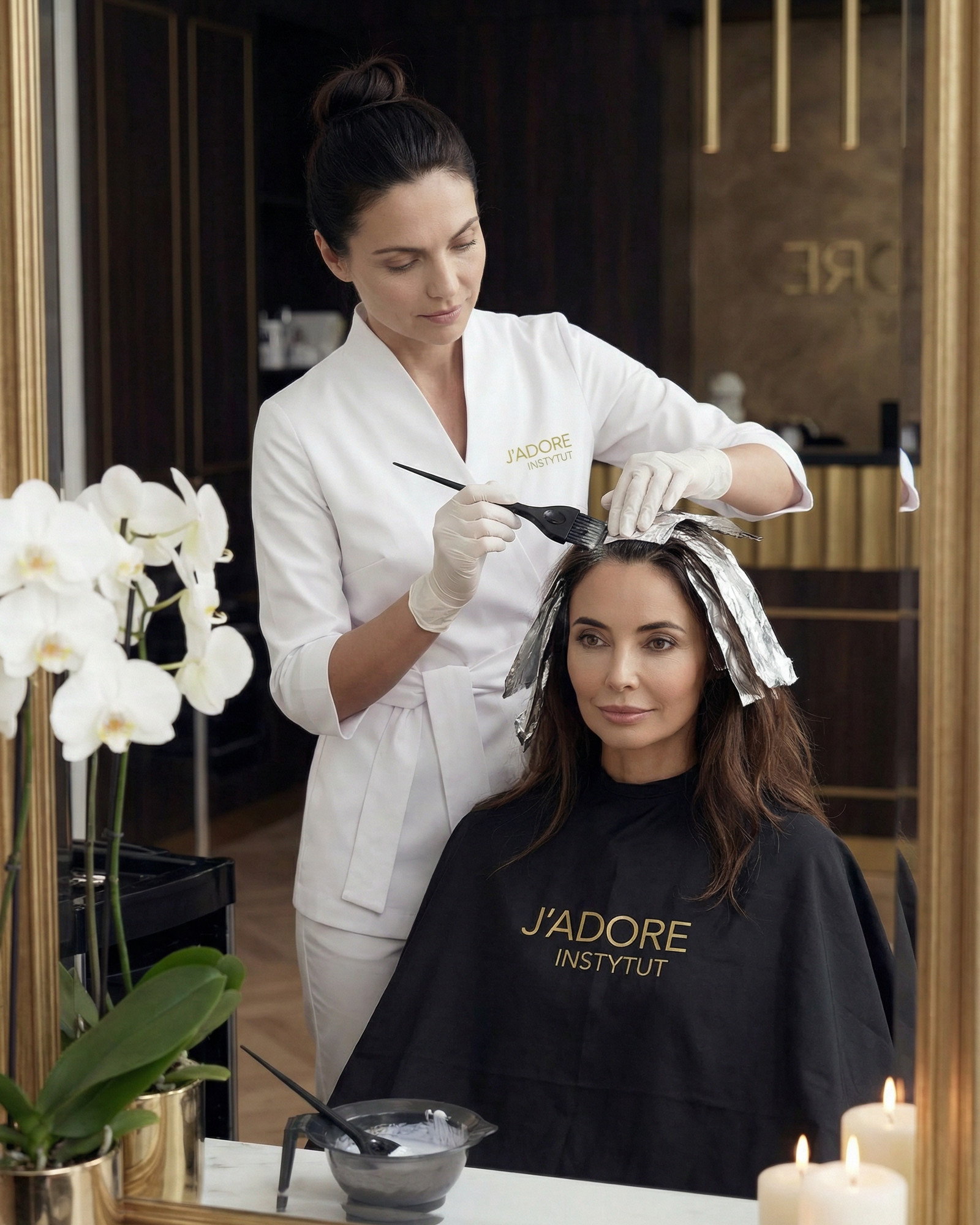
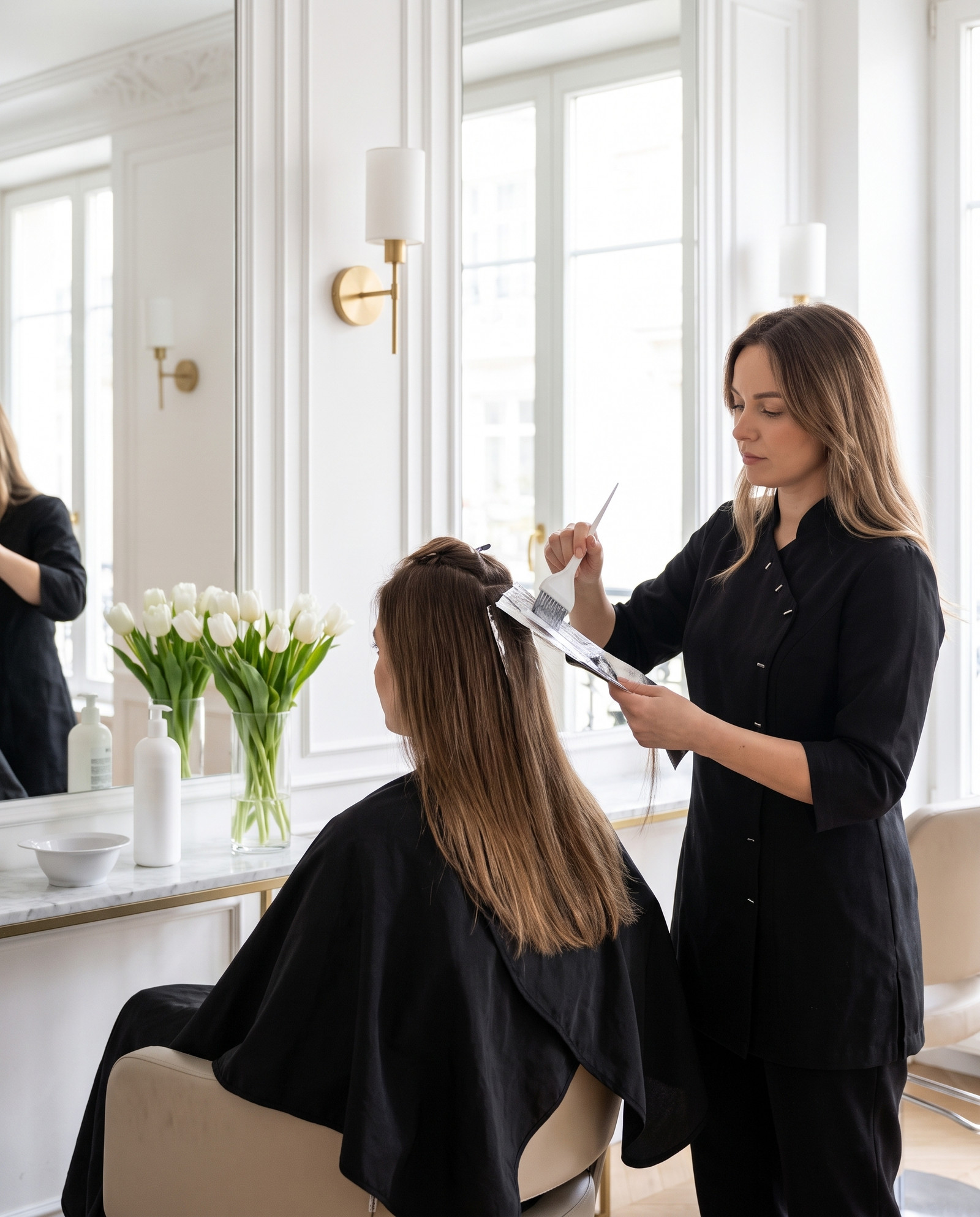
The toner is applied to dry or slightly damp hair, evenly, from the roots or from mid-length — depending on what's needed. Processing time is short compared to permanent colouring. You can watch the colour develop as you go.
- 03
Rinsing and sealing the structure
After rinsing the toner, an acidifying product or a cuticle-sealing conditioner is often applied. This matters for longevity and shine — an open cuticle loses pigment faster.
- 04
Result and aftercare advice
Once the hair has cooled and dried, the full result becomes visible. Your stylist usually explains what to avoid over the first few days (hot washing, pools) and how to extend the effect at home — shampoo, mask, water temperature.
Hair Botox / keratin treatment
Rebuilds the cortex structure and closes the cuticle before or after toning. Smooth, well-balanced hair absorbs dye more evenly and holds it longer — the toning effect is clearer and lasts longer.
Olaplex or a bond-repair treatment
Rebuilds damaged bonds in the hair cortex after lightening. Strengthens the structure ahead of the next chemical step and improves the hair's ability to hold pigment.
Deep-hydrating salon care
Dry, porous, lightened hair often needs hydration before or after toning — smoothing the cuticle translates directly into how long the colour and shine last after the treatment.