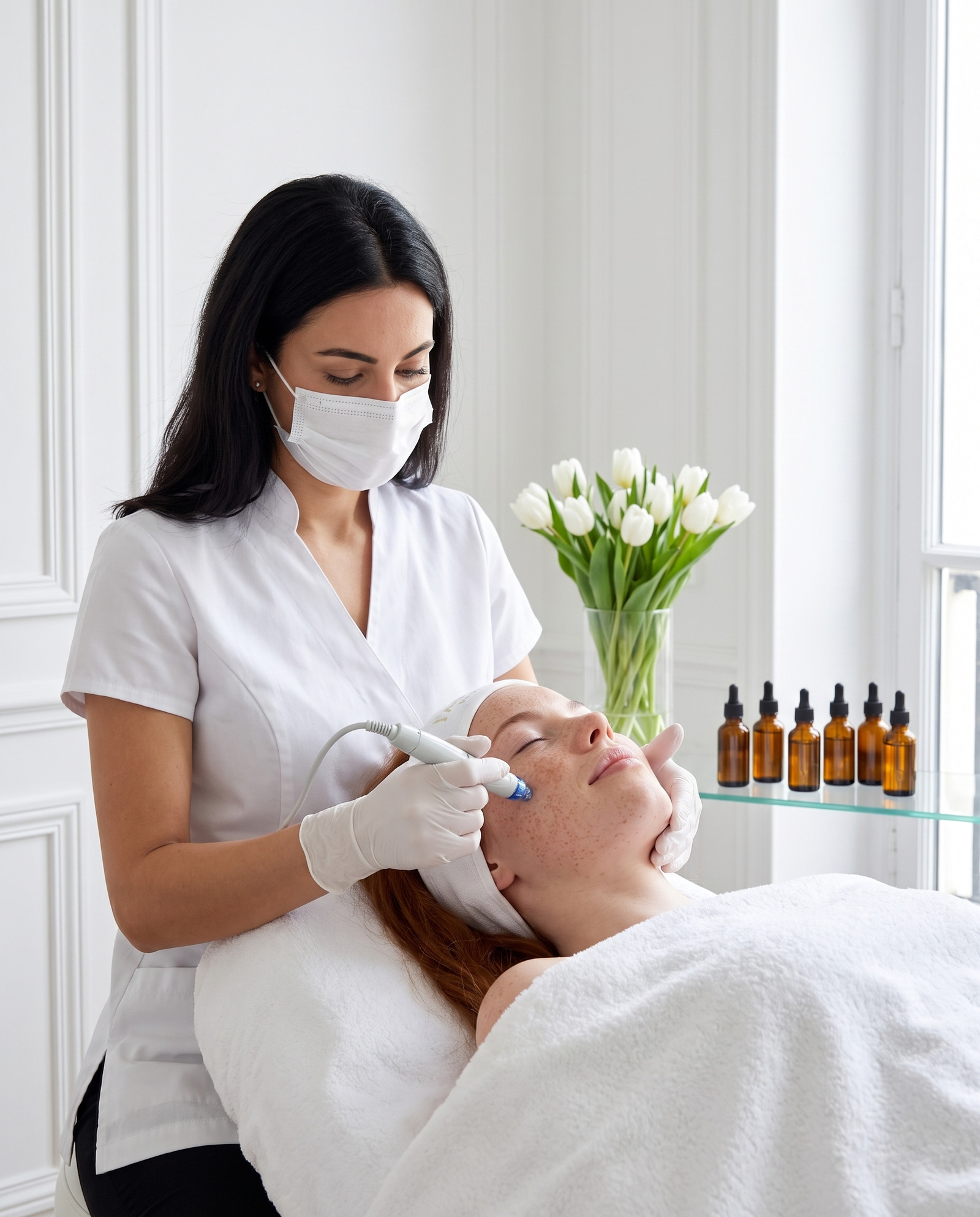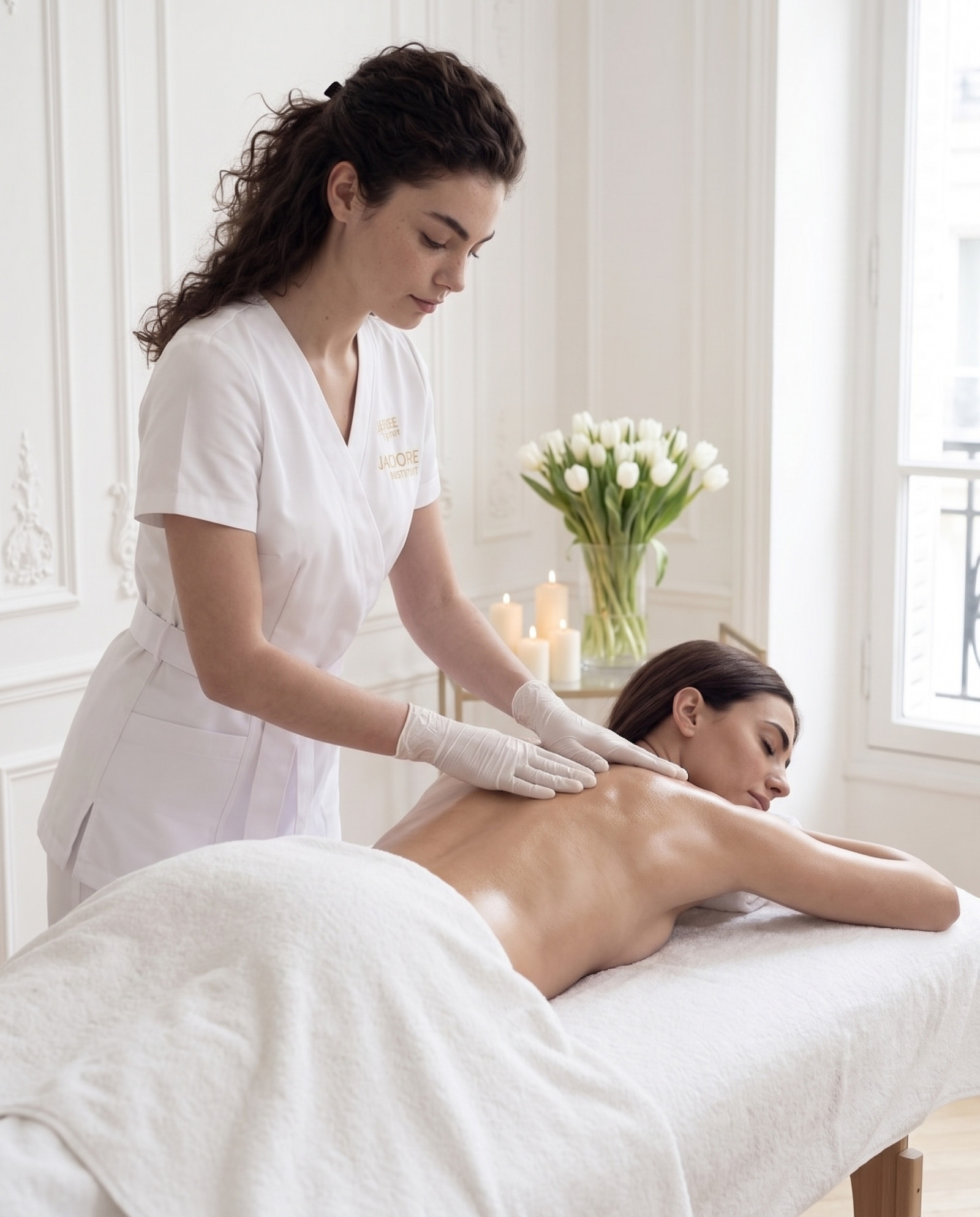

What happens when a roller meets the skin
The ErgoLift treatment is based on two mechanisms working at once: mechanical kneading of tissue with rollers, and vacuum that lifts and draws the skin between them. It sounds simple — but the result of combining them is unexpectedly complex.
Rolling alone would only be a massage. Vacuum alone — a type of cupping. Together, they create something neither tool can achieve separately: three-dimensional stretching and compression of tissue in a controlled, rhythmic way. The skin and underlying tissue are lifted upwards while being moved between the rollers. This allows the treatment to reach deeper than any manual technique.
It also matters exactly where these forces reach. Skin is not a single layer — it is several levels with different properties and different concerns. This becomes clear once we know what ErgoLift really works with.
Four levels beneath the surface — what really reorganises
To understand what ErgoLift does, it helps to know what lies beneath what you see in the mirror. Skin and subcutaneous tissue are not a uniform mass — they are a system of layers with entirely different roles and different responses to age, stress or lack of movement.
- Epidermis and dermis (the surface). This is what we see: texture, colour and fine lines. Collagen and elastin form a network of fibres that determines firmness. With age and external factors, this network becomes sparser and its fibres lose their regular structure. Mechanical stimulation may signal fibroblasts, the cells that produce collagen, that it is time to act.
- Subcutaneous tissue — fat and connective tissue septa. Beneath the skin lies a layer of fat, but not as a uniform “cushion” — fat is divided into cells and compartments by a network of fibrous septa. When these septa lose elasticity and harden, often seen as cellulite, the skin surface above them begins to look uneven. ErgoLift works specifically with these septa.
- The lymphatic system. A network of lymphatic vessels runs between the tissue layers. Its role is to drain excess fluid, metabolic by-products and toxins. When lymph becomes “stagnant” due to lack of movement, a sedentary lifestyle or stress, tissues may feel swollen, heavy and lacking firmness. Rhythmic mechanical kneading may support this drainage.
- Fascia — deeper support. Beneath the fatty tissue lies fascia: a continuous, dense connective tissue membrane surrounding muscles and organs. It may become tense, lose mobility and affect body contour — particularly around the thighs, buttocks and abdomen.
Why tissue needs movement — and why it does not get enough
There is something rarely discussed in body treatments: connective tissue needs movement to function properly. Collagen, fascia and septa between fat cells — all these structures are designed to be regularly stretched, compressed and relaxed. Physical, mechanical movement is what keeps them in good condition.
The problem is that modern lifestyles deprive this tissue of the movement it should receive. Many hours of sitting each day, limited physical activity and chronic stress that tenses the muscles all mean that connective tissue gradually loses elasticity and mobility. The septa harden. Fascia tightens. Lymph drains more slowly. On the skin surface, this appears as loss of firmness, uneven texture and heaviness.
In this context, ErgoLift is a mechanical restoration of movement that the tissue lacks. The rollers and vacuum stretch collagen fibres, mobilise septa and stimulate lymphatic circulation — processes normally driven by physical activity. This is why the treatment works better for active people and requires regularity: results are maintained when the tissue receives this mechanical stimulus regularly.
What really happens biologically — tissue response
Mechanics are one thing. But how do the skin and tissue respond to ErgoLift? This is worth understanding, as it explains why results build over a series rather than after one treatment.
- 01
Immediately after the treatment
Improved lymphatic drainage and circulation — tissues may be less swollen and feel lighter, while the skin may be warmer and pale pink. This is an immediate but short-lived effect of mechanical stimulation.
- 02
Days 1–3 after the treatment
Fibroblasts in the dermis respond to mechanical stretching by signalling the production of new collagen. This is a slow process — collagen needs time to form and arrange itself into a regular network.
- 03
After several treatments in a series
Mobilisation of connective tissue septa — fibres begin to regain elasticity, and the skin surface may gradually become smoother. This is a structural change, not only a temporary effect.
- 04
After a full series and regular maintenance
Maintaining improvements in texture, firmness and drainage requires regular maintenance treatments. ErgoLift results are not permanent — they are the result of an ongoing dialogue with the tissue.
This is an important difference compared with “instant-effect” treatments — those after which the skin looks different as soon as you leave the salon. ErgoLift often gives a subtler immediate effect, but a deeper effect over time. It is not a spectacle for one evening — it is work that accumulates.
Face versus body — ErgoLift in two forms
ErgoLift is used on both the face and body — but while the mechanism is the same, the goals differ. This distinction is worth making, as “is it a face or body treatment?” is often one of the first questions asked.
ErgoLift for the face
lifting and remodelling of the facial contour
- Work on the facial contour and jawline
- Reduction of tension in facial expression muscles
- Stimulation of lymphatic circulation (swelling, a “heavy” face)
- Improved skin firmness and radiance
- Often combined with other lifting treatments
ErgoLift for the body
contouring and drainage
- Body contouring (thighs, abdomen, buttocks, arms)
- Work on cellulite and mobilisation of septa
- Lymphatic drainage — reduction of swelling and heaviness
- Improved texture and firmness of body skin
- Also used for scars and striae
Regardless of the area, the mechanism is the same: rollers and vacuum work with the tissue. Penetration depth, intensity and treatment duration vary. These are selected during consultation to suit your individual needs.
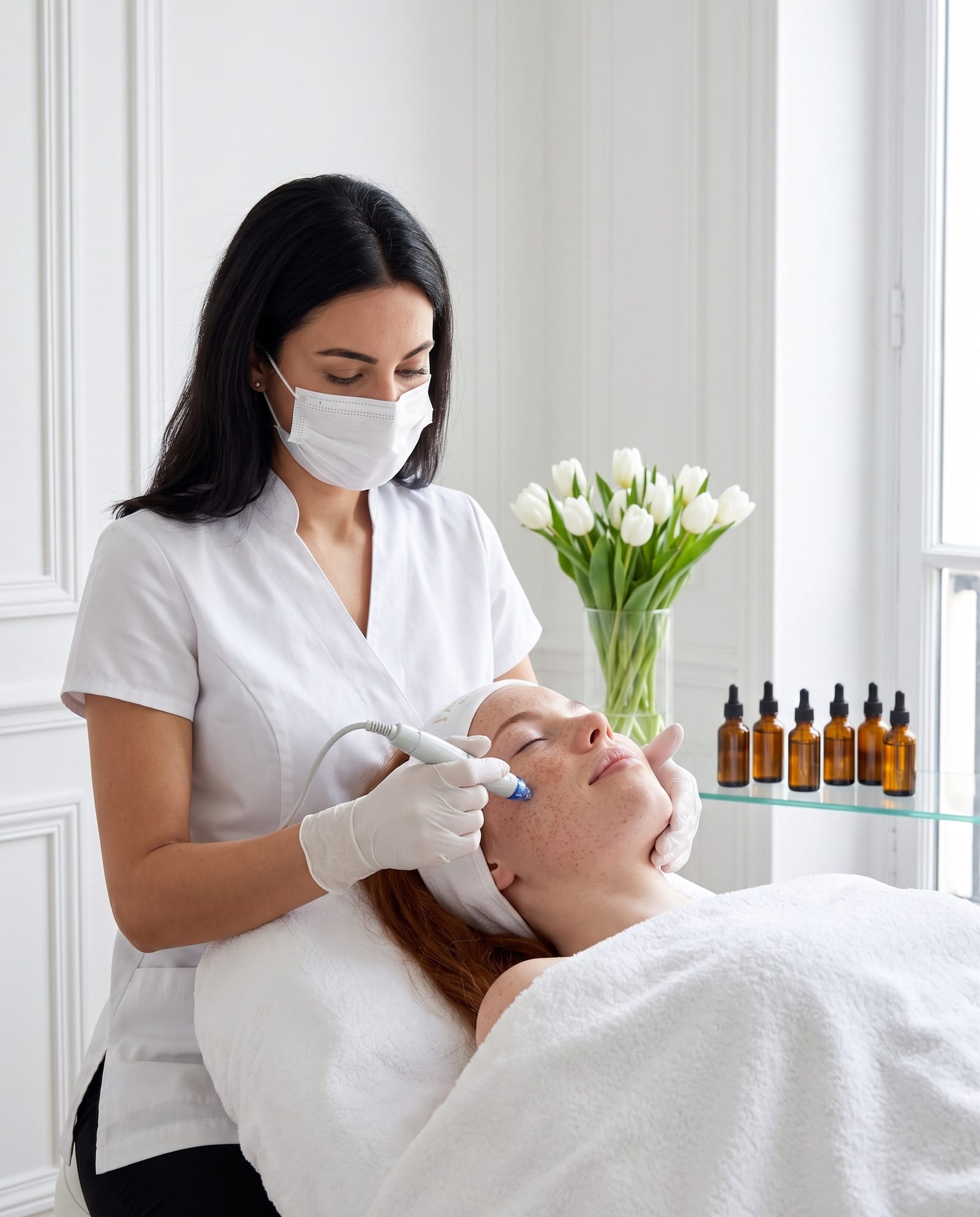
Who ErgoLift is suitable for — and who may benefit less
ErgoLift is not suitable for everyone and does not address every concern. It is worth knowing where its effects make biological sense — and where other tools may work more effectively.
- People with orange-peel textured cellulite — this is where ErgoLift has the best-documented effects. Mobilising the septa and improving drainage may lead to a visible improvement in texture after a series of treatments.
- People with a feeling of “heavy legs” or swelling — mechanical support for lymphatic drainage is one effect that appears relatively quickly. It can be felt directly after the treatment.
- People with a drooping facial contour and loss of firmness — when the concern relates to skin and tissue condition, rather than deeper structural changes, ErgoLift may support firmness and radiance.
- Physically active people — muscle regeneration, reduced fascial tension and improved tissue mobility. ErgoLift is also used to support recovery after exercise.
ErgoLift most often works best not on its own, but in combination with other methods or as part of regular prevention. It fits well into a broader plan. It is not the “only answer”, but one component.
Why a series rather than one session
This is one of the most common questions. It is also one of the hardest to explain. Intuition says: “if it works well once, it should work after one session too”. But tissue does not work like clockwork. It is living matter that responds to repeated stimuli.
One ErgoLift treatment stimulates circulation, mobilises tissue and initiates signals for fibroblasts. But collagen needs several weeks to form. Septa need regular stretching to regain elasticity. Lymphatic drainage works best when the lymphatic system “learns” a new rhythm. These are all biological processes — slow, gradual and sensitive to continuity.