Where does the myth “cheaper = the same treatment” come from?
It all starts with the name. LPG is in fact a registered trademark — an abbreviation derived from the surname of its founder, Louis-Paul Guitay. In the 1980s, he developed endermology, a technique of mechanical connective tissue treatment, as a rehabilitation method. The patent, clinical studies and medical certification apply exclusively to devices manufactured by the original LPG Systems company in Valence. Any other device that “works similarly” is legally a clone — and may work very differently, or not at all.
So where does the belief that it is “the same treatment, only cheaper” come from? From the fact that the mechanism looks identical on paper: a head with rollers, suction and movement across the skin. Yet just as two “stainless steel” frying pans can heat up very differently, two devices described as “endermology” or “LPG-like massager” can operate at different pressures, with different movement dynamics and different tissue tolerance. The difference is invisible from the outside. It only becomes visible in the results — or their absence.
How does an original device really differ from a clone?
Before we go into detail, one clarification: we do not claim that every device inspired by endermology is useless. We do claim that it is not the same product — and it should be presented honestly. The problem begins when a clone is marketed as “LPG”, or when a client compares prices assuming that both offers concern the same treatment.
Original LPG Systems device
Certified medical equipment, owned by LPG Systems (France)
- Registered as a Class II medical device (CE Medical)
- Heads with adjustable, calibrated roller mechanics
- Software and protocol updates provided by the manufacturer
- Clinical evidence base with over 100 independent publications
- Certification by the manufacturer for cosmetologists/physiotherapists is required for leasing
- A fixed protocol chain — every session follows an approved scheme
Clone / “inspired” device
Massage device without LPG medical certification
- General CE certificate (electronic equipment, not medical)
- Mechanics are often fixed or have limited adjustment
- No access to LPG manufacturer protocols
- No independent clinical studies for the specific model
- Operation does not require certification from an external manufacturer
- Protocol freedom — dependent on the operator’s knowledge
The certification myth: “it is just a piece of paper on the wall”
This is one of the most common arguments we hear in conversations about prices. For original LPG, a cosmetologist’s certificate is not a course diploma gained over a weekend. It is formal training with the manufacturer, combined with a practical examination. The operator learns how to set the session sequence for a specific goal, such as lifting, body contouring or improved microcirculation. They also learn how to select pressure for the tissue type and recognise conditions in which treatment should be postponed.
Without this knowledge, even an original device can deliver average results — because the protocol is as important as the equipment. Endermology works because mechanical treatment of connective tissue can trigger a cascade of biological responses: improved circulation, fibroblast stimulation and better metabolite exchange. However, this happens with the right session parameters, the right number of repetitions and appropriate tissue preparation. A clone with an anonymous operator is a gamble — the result depends entirely on that person’s intuition and experience.
Why does the result appear only after a series, rather than one session?
This is another myth that causes clients considerable disappointment — and often expense. Facial endermology, known as LPG lifting, does not work like Botox, which produces an effect within a few days. The mechanism is indirect: mechanical stimulation → tissue response → gradual change in skin structure. This requires time and consistency. The manufacturer recommends specific series of sessions with defined intervals. This is where a non-original protocol can work against biological logic: too infrequently, too aggressively or too randomly.
- 01
Initial sessions
The tissue “learns” to respond to mechanical stimulation. Changes are minimally visible — this is not the time to assess results.
- 02
Middle of the series
Many people notice improved skin firmness and the first reduction in puffiness / more definition of the facial contour. The result is not uniform — it depends on tissue responsiveness.
- 03
Completion of the series
A full assessment of results is only possible after a few weeks from completion. The skin needs time to consolidate tissue changes.
- 04
Maintenance sessions
Regularity maintains the result. A break of several months without maintenance leads to a gradual return to the starting condition.
Where does the risk lie with low-quality equipment?
We have discussed results. But there is also safety. Mechanical tissue treatment at excessive pressure or with overly aggressive head movement can cause petechiae, irritation and, in vascular skin or when clotting is impaired — even damage to small blood vessels. An original device has pressure ranges designed with a safety margin and clinically tested. A clone does not always have this.
This is not abstract. Clients sometimes come to us after a series performed with an unknown device with bruising, lymphatic congestion or simply no result at all. Some of these cases are linked to excessive pressure. Others result from a lack of knowledge about when treatment should not be performed, such as in inflammatory conditions, vascular disease or while taking certain medicines. A cosmetologist certified by the manufacturer knows all this — a random operator using a machine bought online does not always.
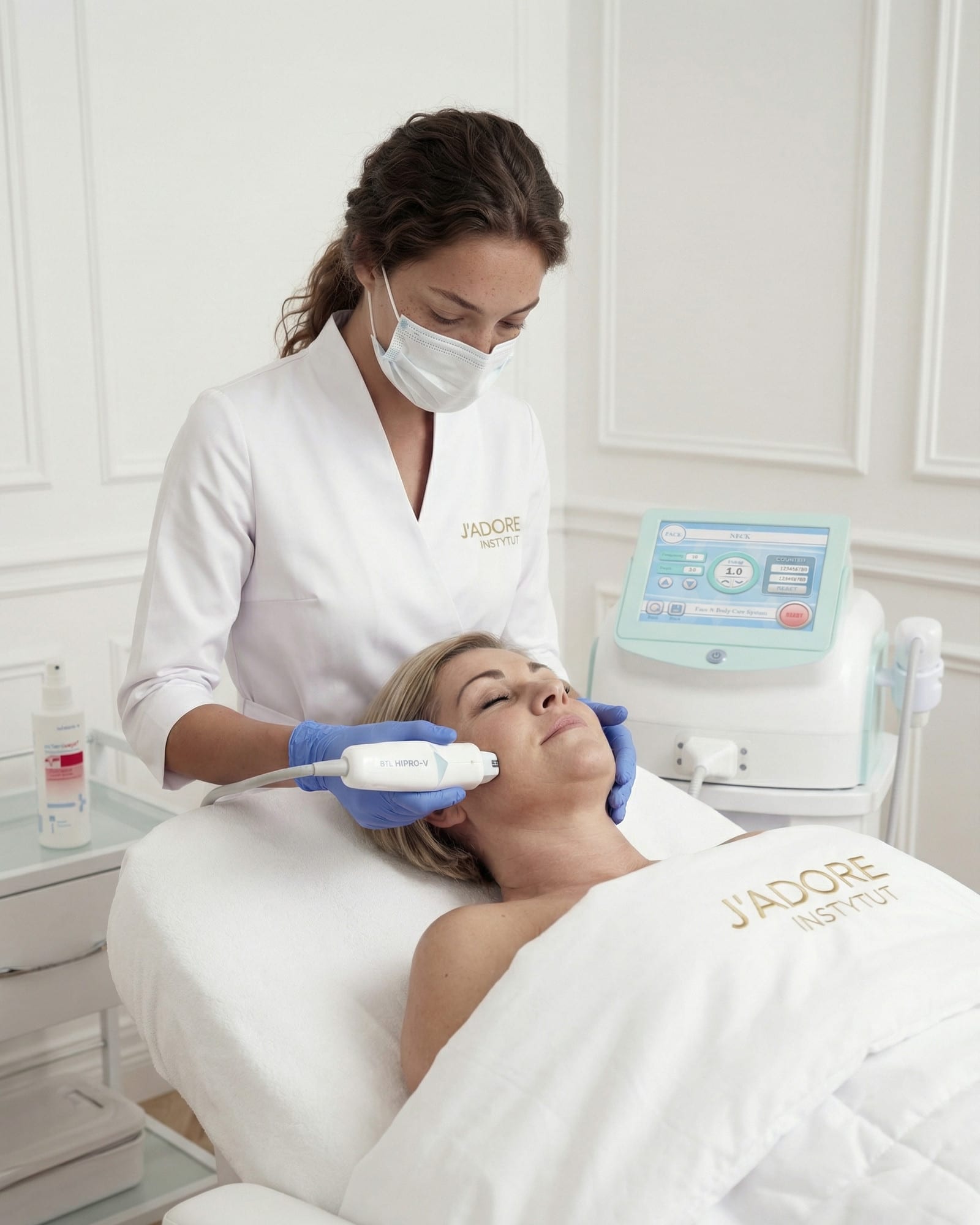
What a higher price in a clinic with an original really means
A higher treatment price at a clinic with the original device is not a margin for "prestige". It is the sum of costs that a cheaper clinic simply does not incur: leasing a certified LPG Systems device is significantly more expensive than buying a clone, plus the costs of updates, service inspections and mandatory training. The original device also means working to the manufacturer's protocols — which limits flexibility, but gives a predictable result.
For the client, this means one thing above all: you know what you are paying for. You have a device with documented clinical efficacy, an operator who has completed certified training and a protocol developed by specialists who have worked exclusively with this type of device for decades. This is not a guarantee of results, because no honest salon can offer one — every skin responds differently. It is, however, a guarantee that every controllable element is at the right standard.
A few myths in brief — because there is more than one
“Facial LPG replaces surgery.” Mechanical lifting can improve skin firmness, facial contours and tissue quality for many people — but it does not replace surgery. These are two different levels of intervention. Endermology works on connective tissue and microcirculation. A scalpel changes anatomy. The honest answer is this: for someone with visible, deep ptosis, different treatments are needed. For someone with loss of firmness but no significant excess skin, LPG can deliver a surprisingly good result.
“It will not work after menopause anyway.” Mature skin responds more slowly and may require a longer series. However, it does not stop responding to mechanical stimulation. Fibroblasts work throughout life — their activity decreases, but does not stop. Protocols for mature skin differ from those for younger skin. This is precisely why operator certification is so important.
“It is just a massage, so it is relaxing and that is all.” Endermology is a precise therapeutic treatment with a documented biological mechanism — not a relaxation massage with music. The difference is fundamental. An LPG session follows a protocol, is tailored to the goal (lifting, contouring, drainage) and requires anatomical knowledge. Treating it like a SPA is the quickest route to disappointment.
How to choose well — a practical checklist
If you are considering a series of LPG lifting treatments — and want a genuine result rather than simply ticking off “I have had treatments” — check a few things before booking your first session.
- Ask about the LPG Systems device model and training — a clinic using the original will answer straight away, without beating around the bush.
- Check the device name — the original is called Cellu M6, Endermolab, Alliance or has a similar name from the official LPG range.
- Ask about the protocol — how many sessions the operator recommends, at what intervals, and what maintenance sessions involve. If there is no clear answer, the lack of a protocol is a major question mark.
- Check the initial consultation — whether tissue condition is assessed before the series, contraindications are discussed and a goal is established.
- Realistic expectations — a good cosmetologist will tell you directly what you can expect for your skin type. They will not promise the impossible.