
How spray tan actually works
The active ingredient in every spray tan is DHA — dihydroxyacetone. It's a sugar compound that reacts chemically with amino acids found in dead skin cells on the epidermis. This reaction — known as the Maillard reaction — produces brown pigments called melanoidins. These are what give your skin its tanned colour.
Here's the key detail: DHA colours the epidermis only — specifically its outermost, dead layers. It doesn't reach living cells, doesn't stimulate melanin, and doesn't affect deeper tissue. This matters because it means one thing: the tan lasts exactly as long as those coloured cells stay on the surface of your skin.
Epidermal cells shed constantly. It's a natural, ongoing process — every ten to several dozen days, the old epidermal layer is replaced by a new one. The faster your skin sheds, the faster the tan fades. And the reverse is true too: the longer the coloured cells stay on the surface, the longer you see the effect. The whole art of aftercare comes down to this — slowing shedding down and helping the pigment break down evenly.
- 01
DHA reaches your skin
Fine DHA particles settle on the surface of the epidermis during the spray session.
- 02
Chemical reaction
Within 2–8 hours, DHA reacts with amino acids in dead epidermal cells, forming brown melanoidins.
- 03
Full result
After around 12–24 hours, the colour reaches its peak — and the maintenance phase begins.
- 04
Shedding
Coloured cells shed gradually along with the skin — the tan fades over several days to a few weeks, depending on your aftercare.
Why most spray tans fade too fast
Many people book a spray tan believing their skin will "eat through it" within a week regardless. In reality, in most cases the tan doesn't fade naturally — it's literally washed and scrubbed off by aftercare that's too harsh. That's good news: if your results haven't lasted long so far, it's probably not the product's fault. It's what happens after the treatment.
- Showering too soon — water and soap in the first hours after the treatment interrupt the DHA reaction before it finishes.
- Scrubbing the body — mechanical exfoliators, bath gloves and exfoliating gels remove coloured cells exactly where you want them to stay.
- Drying soap or gel — dehydrated skin sheds faster, so coloured cells come off in uneven patches.
- Skipping moisturiser — this is the biggest and most common mistake; dry skin means faster epidermal turnover.
- Long baths and saunas — extended soaking softens the epidermis and speeds up shedding.
- Chlorinated pools — chlorine actively breaks down melanoidins, visibly fading colour after just a few swims.
7 rules that genuinely extend the result
The rules below follow a logical sequence — from preparing your skin, through the first hours after the treatment, to your routine over the following days. Each one relies on the same mechanism: keeping coloured cells on your skin for as long as possible, in as even a layer as possible.
- 01
Exfoliate the day before — not the day after
Do a thorough full-body exfoliation 24 hours before your treatment, not after. The goal is to remove old, uneven epidermal cells so DHA meets a uniform, fresh surface. This lets the pigment settle evenly and hold better.
- 02
The first 8 hours: nothing on your skin
For the first few hours after the treatment, avoid water, sweat, deodorant and creams. The DHA reaction with amino acids is still under way — any contact with water can interrupt it or blur it unevenly. The longer you keep your skin dry, the deeper and more even the colour develops.
- 03
Your first shower: lukewarm water, no soap
When it's time for your first shower, use lukewarm (not hot) water and a gentle, SLS-free mousse or gel — or simply rinse with water alone. Hot water opens pores and speeds up shedding; SLS strips lipids from the skin, weakening the skin barrier.
- 04
Moisturise twice a day
This is probably the single most important aftercare rule. Well-moisturised skin sheds more slowly and more evenly. Choose a lotion without alcohol and without AHA/BHA (acids exfoliate). Apply it morning and evening — especially on elbows, knees, ankles and wrists, where skin is thicker and sheds unevenly.
- 05
No acids or active ingredients for 7 days
Retinoids, AHAs (glycolic acid, lactic acid), BHA (salicylic acid), fruit enzymes — all of these speed up epidermal renewal. That's exactly their job in a "normal" skincare routine, but with spray tan they work directly against the result you're trying to keep. Put them aside for two weeks.
- 06
A bath instead of a long shower — and only briefly
Extended soaking in water softens the epidermis and speeds up shedding. If you want a bath, keep it to a few minutes, avoid hot water, and apply moisturiser as soon as you get out, while your skin is still slightly damp — this locks moisture in.
- 07
SPF on exposed areas
Sun doesn't remove spray tan directly, but UV speeds up epidermal turnover and causes discolouration that makes fading look uneven. If you want your tan to fade evenly — rather than in patches — use SPF on your hands, décolletage and shoulders.
Which areas fade fastest — and why
A tan never fades evenly across the whole body — and that's not random. Different areas have different epidermal thickness, different levels of movement, and different natural moisture levels. These factors directly affect how fast skin sheds, and therefore how fast colour fades.
Areas that fade fastest
need extra attention
- Elbows and knees — thick, dry skin, heavy friction
- Wrists and hands — frequent contact with water and soap
- Ankles and heels — thick epidermal layer, intense shedding
- Décolletage areas — exposed to sun and washing
Areas that hold colour longest
natural advantage
- Arms and thighs — thin, even epidermis
- Back — less contact with soap and friction
- Abdomen — protected by clothing, rarely dried out
- Neck — minimal exposure to friction
This is exactly why extra moisturising on elbows, knees, ankles and wrists matters so much — not because "the internet says so", but because these areas genuinely lose coloured cells faster. An extra layer of lotion in these zones is the easiest way to make your tan fade evenly, rather than in patchwork blotches.
What to avoid — habits that cut the result in half
Even with a good moisturising routine, a few specific habits can significantly shorten how long your tan lasts. It's worth knowing them, because some aren't obvious — washing your hands with soap a dozen times a day, regular gym visits or one evening in a hot tub all take their toll.
- Shaving legs with a harsh exfoliant beforehand — combining an exfoliating gel with the mechanical action of a razor removes coloured cells very effectively. Shaving removes your tan along with the hair.
- Wax hair removal — pulls hair from the follicle and takes epidermal layers with it. The result: instant lightening in the treated area.
- Sauna and steam — high heat and humidity rapidly speed up epidermal shedding. A single sauna visit can cost your tan several days of life.
- Intense exercise and sweating — sweat has a mildly exfoliating effect, and friction from clothing reinforces it. You don't need to give up activity, but it's worth reducing intensity for the first 24–48 hours.
- Depilatory creams — the active ingredients break hair down chemically, but they also affect the epidermis — effectively removing the tan in treated areas.
Pre-treatment care: how to give DHA the perfect base
The result of a spray tan depends not only on what happens afterwards, but largely on the condition of the skin DHA is applied to. Dry, unevenly shed skin gives a patchy result — darker where the epidermis is old and thick, lighter where the skin is smooth. That's the opposite of what you want.
- 24 h
Full-body exfoliation
Thorough exfoliation — ideally with a gentle sugar or enzyme scrub — removes the old epidermal layer and evens out the surface. DHA meets a uniform surface, and the result is even.
- 12 h
Hair removal, if planned
Wax or laser hair removal should take place at least 24 hours before the treatment, and shaving at least 8 hours before. Irritated or grazed skin absorbs DHA unevenly.
- 2 h
Moisturising (no body oil)
Right before the treatment, your skin should be dry and free of oils, lotions or creams with strong SPF. Oily substances form a barrier that blocks DHA from penetrating. Moisturise earlier — not right before the treatment.
- 0
Treatment
Applied to clean, dry, evenly exfoliated skin. The full result appears after 8–24 hours.
How to refresh your tan before it fully fades
A spray tan doesn't have to fade to nothing before your next session. Many people maintain a steady, natural shade all season, returning for a treatment before the result fully disappears. This is called maintenance, and it's much simpler than building colour from scratch on pale skin.
Hydrating mesotherapy
Deep hydration from within slows epidermal shedding, which directly extends how long your tan lasts. An ideal pairing before the season, or for dry, sensitive skin.
Laser hair removal
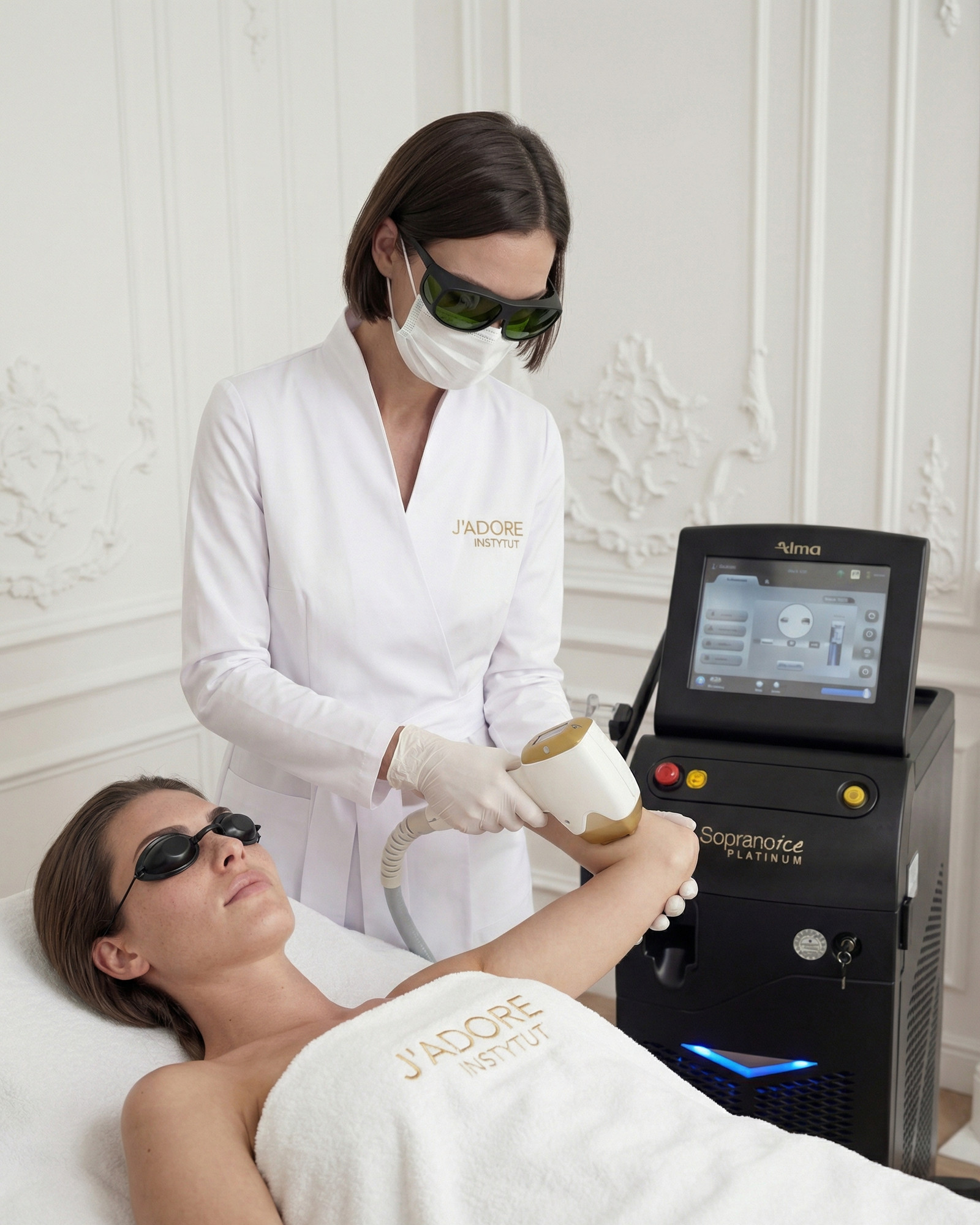
When combining spray tan with laser hair removal, order matters: laser first (at least a week before), then spray tan. Laser hair removal removes the need for regular shaving, eliminating one of the main factors that speed up tan fading.
Cavitation peel
Deeper exfoliation carried out a few days before the treatment creates a perfectly uniform base for DHA. The result is more even and deeper — especially noticeable for people with irregular epidermal texture.