What dermapen actually does — and why it matters for LED
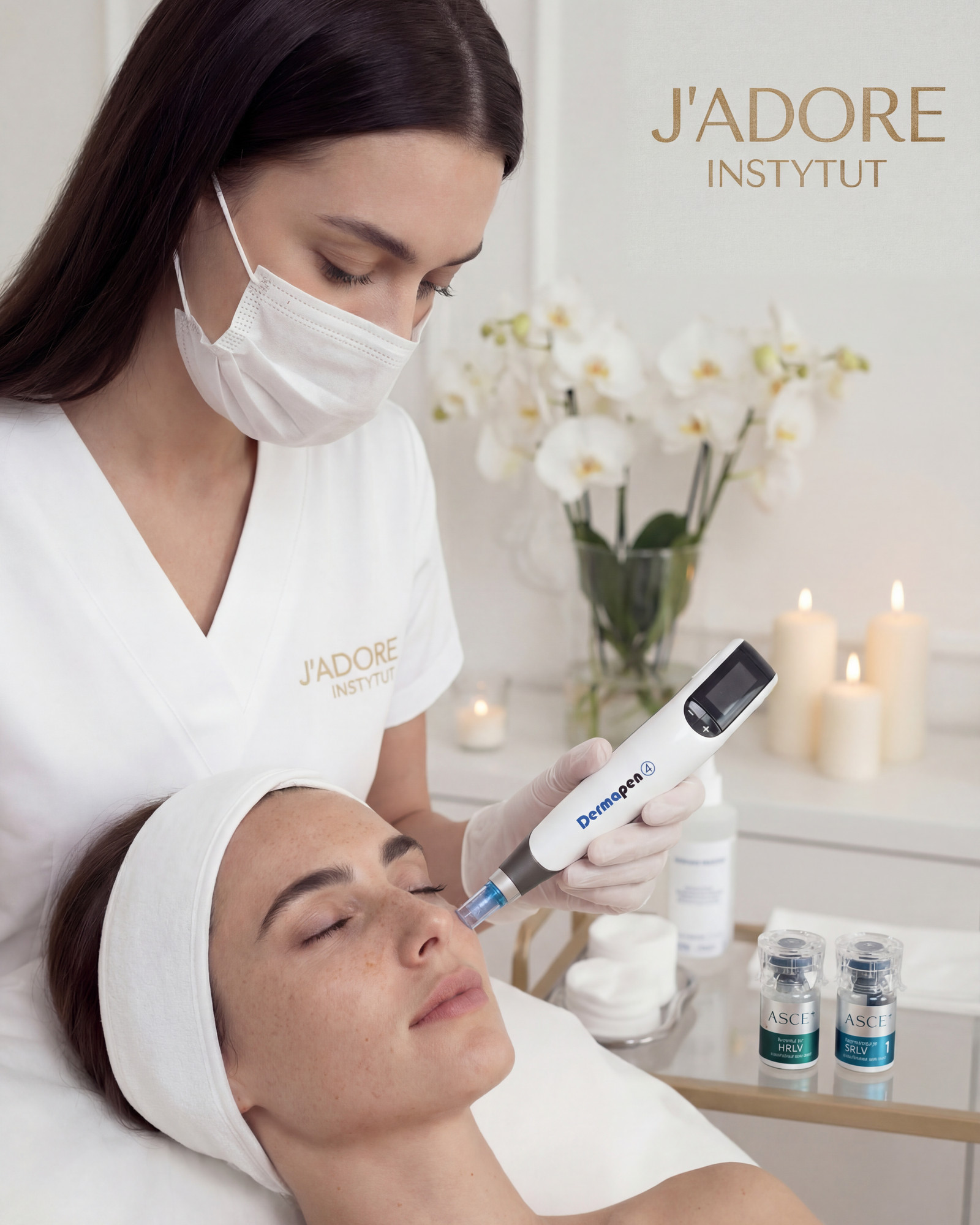
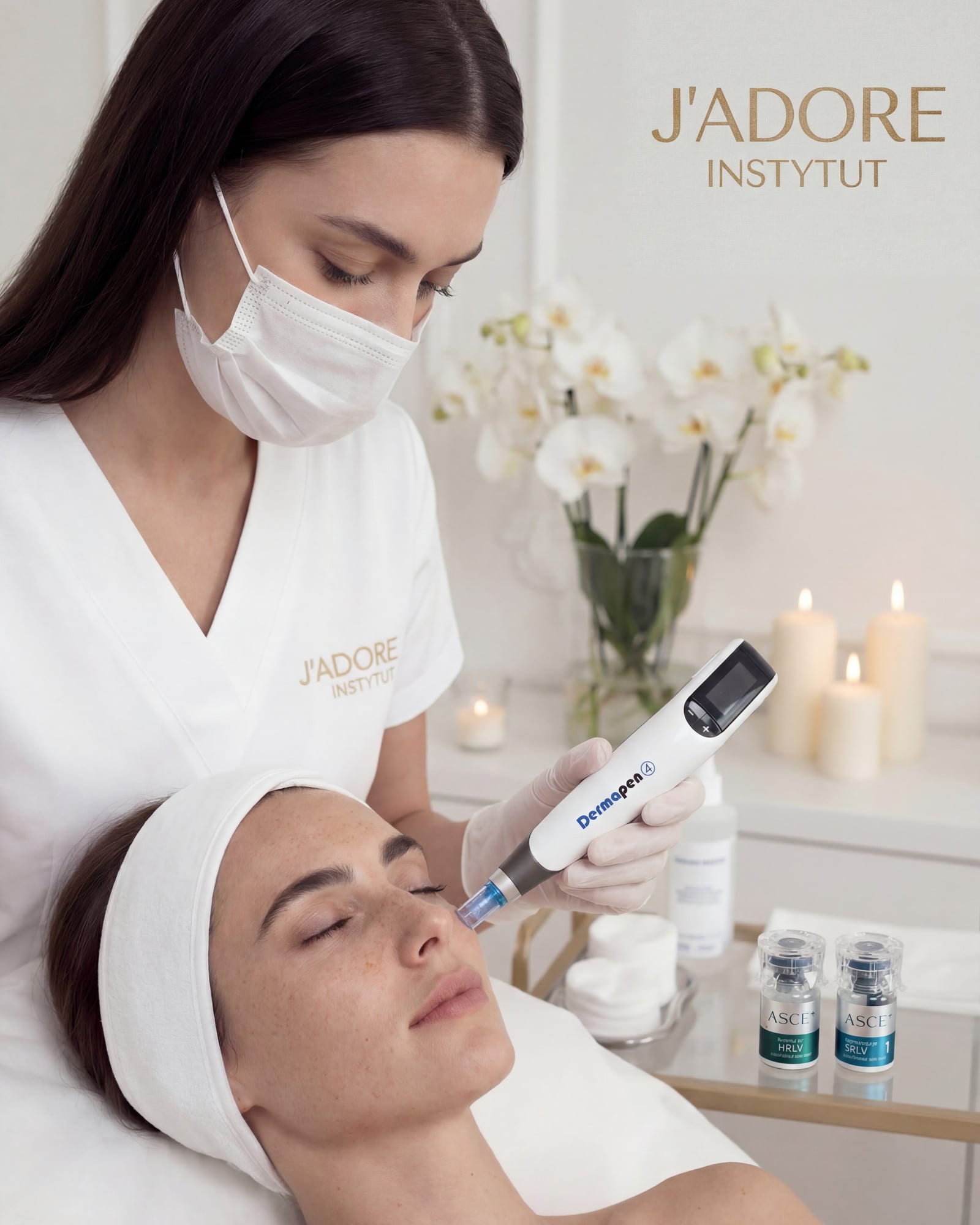
Dermapen uses needles to create hundreds of micro-channels in the skin — very small, very controlled injuries. It sounds unpleasant, but that's exactly the point: skin doesn't distinguish between accidental and intentional injury. It responds the same way — by triggering a repair cascade.
Within minutes of the treatment, skin enters a phase dermatology calls reparative inflammation — not the destructive kind, but the physiological kind that repairs. Signalling cytokines appear, immune cells move in, and fibroblasts — the cells responsible for collagen production — activate. This is the exact moment we create on purpose.
This is where the LED story begins. Skin right after dermapen is in a state of heightened metabolic activity — cells are ready to work, repair pathways are open, and fibroblasts have their engines running. The question is: how do you make the most of this state? Photobiomodulation gives a surprisingly simple answer.
What a chemical peel does — a different tool, the same effect
A chemical peel works differently from dermapen — instead of needles, it uses acid that, in a controlled dose, exfoliates the outer layers of the epidermis. The type of acid, concentration and application time determine how deep the effect goes: some work only on the epidermis itself, others reach deeper towards the dermis.
Regardless of the type, the biological effect is similar to dermapen: skin shifts into regeneration mode. Damaged epidermis is pushed out and replaced by new tissue, while remodelling processes begin in the dermis. Old tissue makes way for new. Here too, cellular activity rises — and here too, LED light can play its part.
Dermapen
mechanical stimulation with needles
- Creates micro-channels through the epidermis
- Triggers a repair cascade in the dermis
- Activates fibroblasts for collagen production
- Temporary redness and swelling
Chemical peel
chemical exfoliation with acid
- Removes the outer layers of the epidermis
- Stimulates cell renewal from below
- Evens skin tone and smooths texture
- Skin remains sensitive for several days after the treatment
What LED light is — and why it's not the same as a lamp or a sunbed
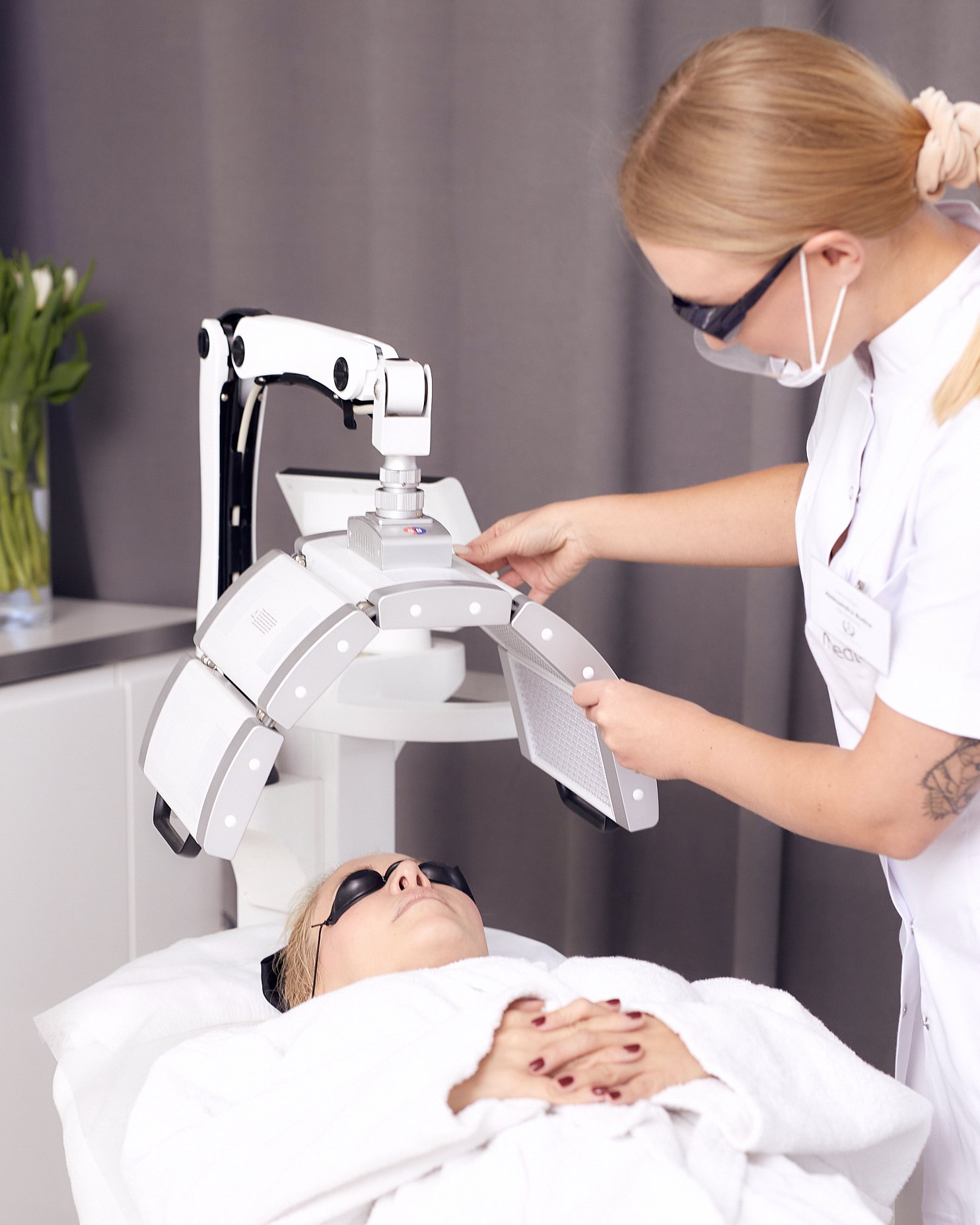
Therapeutic LED (Light Emitting Diode) is a light source with a very narrow wavelength range — a key difference from lightbulbs, sunlight or sunbeds, which emit a broad energy spectrum including UV radiation. Therapeutic LED doesn't tan, doesn't damage DNA and doesn't heat the skin — it's a different tool for a completely different purpose.
The mechanism it uses is called photobiomodulation — modulating cell activity with light. Skin cells contain structures called mitochondria, which act as power plants, producing the energy needed for all life processes. Certain wavelengths of light can stimulate mitochondria to work more efficiently, which for many people translates into faster regeneration and a better cellular response.
LED therapy typically uses several colour ranges, each with a slightly different purpose. Red is the best studied (supporting regeneration, soothing, working at the fibroblast level), along with near-infrared (deeper penetration, action on deeper tissues). Blue light is often used for acne — it has antibacterial properties against specific skin bacteria. Green and yellow are soothing, evening ranges, though their mechanism is less thoroughly documented than red's.
Why order matters — stimulation first, then light
LED works on its own too, without a preceding treatment — it's a legitimate therapy in its own right, particularly for maintaining results between other treatments. But combining it with dermapen or a peel creates biological synergy that doesn't exist when the treatments are kept apart.
Picture a fibroblast right after dermapen: it has received a repair signal, it's active, its metabolic pathways are open. At that moment, delivering "metabolic fuel" through photobiomodulation can produce a clearer effect for many people than the same light applied to a calm, unstimulated cell. This isn't magic — it's optimal timing. The cell is already at work, and instead of letting it rest, we add an impulse that supports that work further.
- 01
Mechanical or chemical stimulation
Dermapen or a peel triggers a repair cascade. Skin enters a state of heightened metabolic activity. Fibroblasts and immune cells get to work.
- 02
Therapeutic window — the first minutes
Right after the treatment, skin is at its most "responsive". The micro-channels from dermapen are still open, and regenerative processes are just beginning. This is the best moment for LED.
- 03
Photobiomodulation — delivering the impulse
LED light reaches cells while they're active. Mitochondria respond more efficiently, cellular energy production rises, and repair processes can proceed more smoothly.
- 04
The soothing effect — this matters too
Red and infrared LED have anti-inflammatory and soothing effects. After dermapen or a peel, when skin is red and sensitive, this brings an added benefit — not just regenerative, but also comforting.
- 05
Regeneration over the following days
The effects of fibroblast activity and photobiomodulation aren't instant — collagen matures over weeks. LED supports this process from the start, but the full result appears gradually.
LED as a soothing treatment — and why that's not just a side effect
Many people first encounter LED as "something at the end of the treatment" — you lie under the lamp, it's warm and pleasant, and you assume it's just relaxation. But this part of the treatment has its own biological purpose: reducing inflammation and shortening healing time.
Dermapen and deeper peels leave skin red, sensitive, and sometimes slightly swollen. Reparative inflammation is necessary — it's how skin regenerates — but too much of it can, in some people, lead to post-inflammatory hyperpigmentation or prolonged discomfort. LED, particularly in the red and infrared ranges, acts on inflammatory pathways and can shorten, for many people, the time it takes for skin to return to its normal appearance.
The soothing effect and the regenerative effect aren't in conflict here — they're two sides of the same mechanism. A cell with well-functioning mitochondria manages both the repair process and the resolution of excess inflammation more effectively. That's why LED after dermapen isn't just "something for the redness" — it's an integral part of the whole protocol.
When LED after dermapen or a peel makes the most sense — and when it's better to wait
Not every skin condition or treatment protocol suits direct combination with LED. Photobiomodulation is generally very well tolerated and rarely has contraindications — but there are situations where caution is advisable.
- Active skin lesions — if you have an active skin infection (such as herpes in an active flare), LED on that area should be postponed.
- Very deep peels — for intensive chemical protocols, it's sometimes worth giving the skin a day or two before adding an extra stimulus; this decision belongs to the cosmetologist.
- Pregnancy — there isn't enough clinical data; as standard practice, LED is postponed until after birth.
- Photosensitivity from medication — some medications increase sensitivity to light; always tell your cosmetologist about any medication you're taking.
- Standard dermapen + a superficial peel — this is where LED immediately after the treatment is the most common and well-tolerated protocol.
It's also worth knowing that LED is used not only right after a treatment, but in series — as a standalone therapy between mechanical or chemical treatments. Used regularly, it can help maintain results and support skin "from within" during the weeks between more intensive sessions.
Three questions worth asking before the treatment
Since the mechanism is fairly precise, it's worth using it in conversation with your cosmetologist. Before a treatment combined with LED, it's worth asking a few things — not because you need to understand every detail, but because the answers will tell you whether the protocol suits your needs.
- Which colour range will the lamp use, and why? Red and infrared after dermapen make sense. Blue after an acne peel — also makes sense. But combinations without a clear rationale can feel arbitrary.
- How long will I be under the lamp after the treatment? Timing matters — too short an exposure may not produce an effect, while too long is rarely advisable. The protocol should be well thought through.
- Will LED be used at the next visits too? A series makes more sense than a single session. If you're planning a protocol spanning several weeks, ask how LED fits into the overall plan.
What LED won't do — so expectations stay realistic
Photobiomodulation is a fascinating branch of cosmetology, but like any tool, it has its scope and its limits. An honest summary of what LED won't replace is an important part of this article.
- LED is not a lifting treatment — it won't lift sagging tissue or restore lost volume. It's a tool for working at cellular level, not tissue level.
- LED doesn't eliminate deep wrinkles — it can improve skin condition and support collagen synthesis, but deep furrows need other methods.
- LED is not a substitute for UV filter — quite the opposite: skin after dermapen or a peel needs strict photoprotection, and LED doesn't replace it.
- LED doesn't produce instant results — improvement is a weeks-long process. A single session often shows no visible change; a series is what makes biological sense.
- LED doesn't work the same way for everyone — individual response depends on skin phototype, skin condition, consistency and protocol.
This isn't a list of drawbacks — it's a list of proper use. LED used in the right context, as a complement to a treatment or as maintenance sessions, offers real support for the skin. Used with the expectation that it will "fix the face" on its own, it falls short — not because it doesn't work, but because it was asked to do a job that calls for a different tool.