Let's start from the beginning: what each treatment does on its own
To understand why these three treatments are combined, it helps to first understand what each does as a standalone stimulus. Each works through a different route and addresses a different tissue layer — and that's exactly what allows them to achieve together what none could achieve alone.
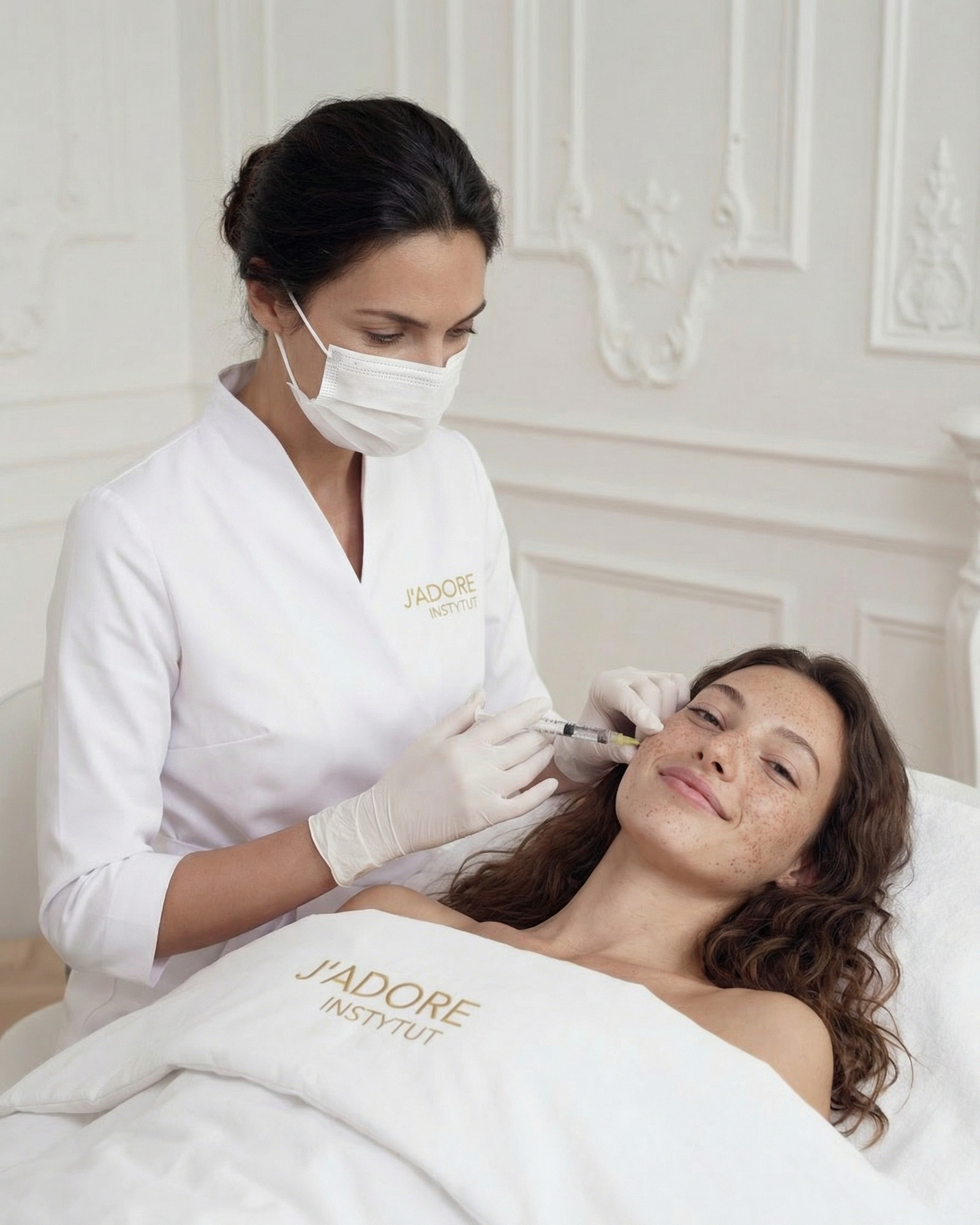
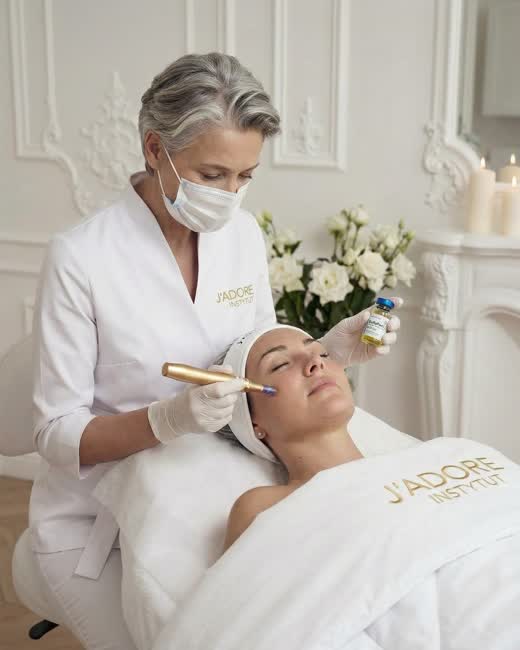
- Mesotherapy — delivering active substances straight to the target. Mesotherapy bypasses the barrier formed by the epidermis or scalp, and introduces active ingredients (such as peptides, vitamin blends, growth factors) directly into the dermis or scalp tissue. This matters, because many substances used in home care can't cross this barrier on their own — a cream applied to the surface simply won't reach where it needs to work. Mesotherapy solves this problem — precise delivery beneath the skin.
- Carboxytherapy — changing the tissue's working conditions. Carboxytherapy involves administering carbon dioxide into the tissue. It sounds simple, but the effect is more complex: CO₂ acts as an alarm signal for the body, which interprets its presence as a clear sign that "oxygen levels here are low, blood flow needs to increase." Blood vessels respond by dilating, microcirculation in the treated area intensifies, and oxygen and nutrients flow in more actively. The tissue works, for a while, under different conditions — better supplied with blood and oxygen.
- LED therapy — photomodulation, a signal for mitochondria. LED therapy (light therapy) doesn't deliver any substance and doesn't puncture anything. It works differently: photons of a specific wavelength are absorbed by mitochondria (each cell's power plant) and trigger increased energy production inside them. A cell stimulated by LED can work more intensively — regenerating faster, producing more collagen, repairing damage more efficiently. It's a bit like recharging a battery that has just finished a major job.
The window effect: why the time right after mesotherapy is special
There's one key reason why LED is applied right after mesotherapy — not a day earlier, not a week later. It comes down to what happens to the tissue immediately after an injection-based treatment.
Mesotherapy punctures are micro-injuries. Every injection is a brief disruption of tissue structure, which triggers the body's natural repair response — an influx of growth factors, fibroblast activation, increased cellular metabolism. The tissue enters a short, intense state of regeneration. That alone is a therapeutic mechanism. But there's something else: the micro-channels opened by the needles temporarily increase tissue permeability. The substances delivered during mesotherapy are still diffusing and being absorbed — and the cells are on standby, ready to work.
Carboxytherapy fits into this logic as a reinforcing link: the CO₂ administered causes a temporary rise in microcirculation, which means the substances delivered by mesotherapy have better conditions for transport. Blood actively circulates at the treatment site. When LED adds a third signal — a metabolic one — the cells have, all at once: active substances (from mesotherapy), oxygen and nutrients (from carboxytherapy), and energy to work with (from LED). These are the three conditions needed for full regeneration, delivered together.
What actually happens during a session — step by step
It helps to see this sequence not as a list of treatments, but as a logical chain of events within the tissue. Each step changes the conditions for the next.
- 01
Mesotherapy — delivering active substances
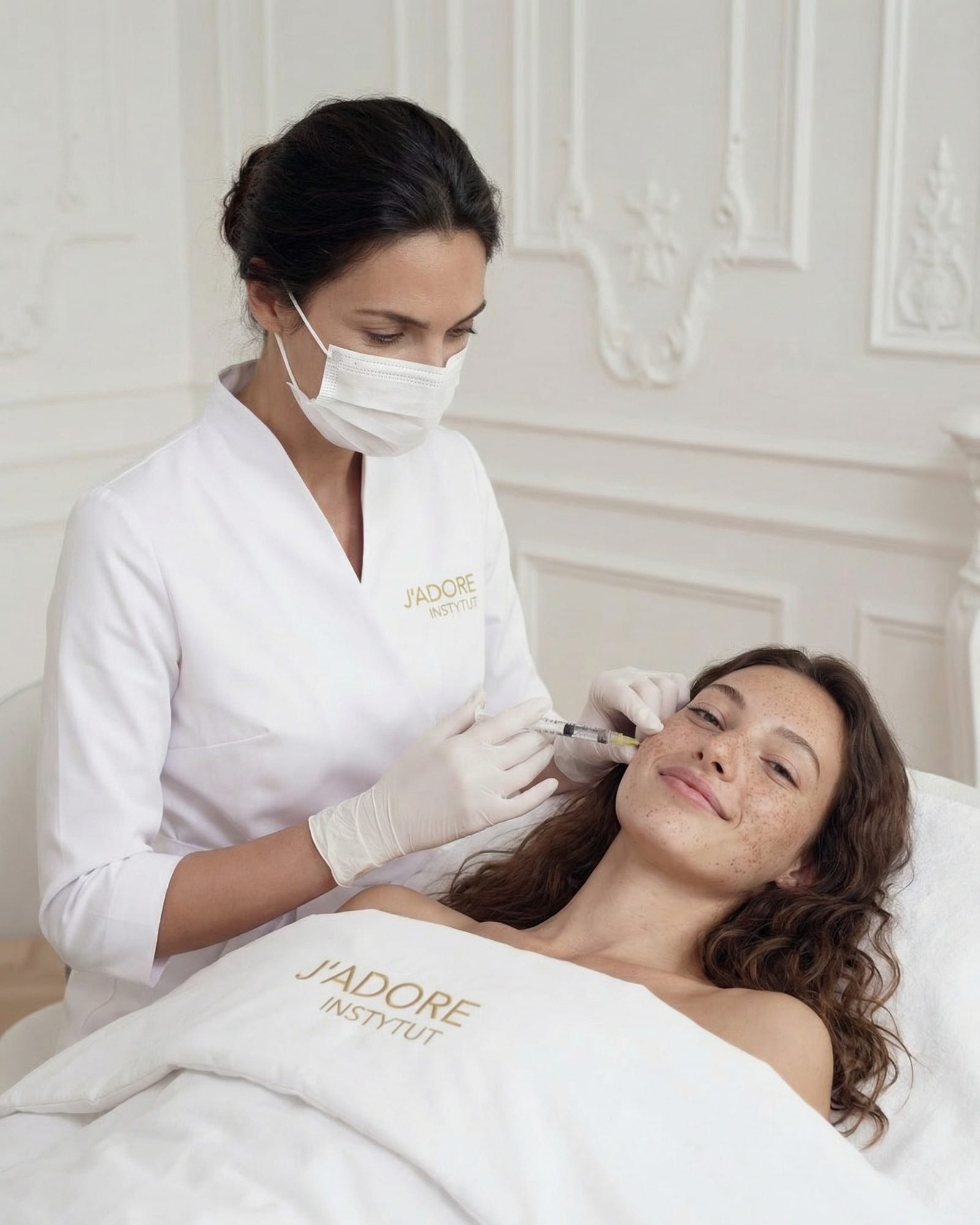
Active substances are introduced directly into the scalp or dermis. We bypass the skin barrier, so delivery precision is high. At the same time, the micro-injections trigger a local repair response.
- 02
Carboxytherapy — activating microcirculation
Administering CO₂ triggers a local vascular response. Blood vessels dilate, and the flow of oxygen and nutrients increases. The substances delivered in the first step now have better conditions for absorption and transport.
- 03
LED therapy — stimulating cellular metabolism
Photons reach the mitochondria of cells that are already primed after the previous two stimuli. LED can boost cellular energy production, support regeneration and act as an anti-inflammatory — which matters particularly after injection-based treatments.
- 04
After the session — the tissue keeps working on its own
The combined effect of the three stimuli doesn't end when you leave the salon. Regenerative processes continue — the cells stay stimulated, active substances keep being absorbed, and fibroblasts and hair follicle stem cells may show heightened activity for dozens of hours after the treatment.
Why this combination makes particular sense for hair
The scalp is a uniquely specific environment. The hair follicle — the structure from which hair grows — sits deep within the tissue and depends on several things happening at once: adequate blood supply, access to nutrients, stem cell activity in the hair bulb, and a response to growth signals. If any of these elements is missing or weakened, the follicle starts to underperform, the hair's growth phase shortens, and hair loss accelerates.
This three-treatment sequence addresses exactly these weak points. Mesotherapy delivers active substances directly to the level where the follicle sits — something no shampoo or conditioner can do. Carboxytherapy improves microcirculation in the scalp, which in many people with hair loss is genuinely limited (too low a density of capillaries, poor vasomotor response). LED can stimulate the activity of stem cells and fibroblasts within the follicle.
Mesotherapy alone
delivery of active substances
- Precise delivery of ingredients to the scalp
- Micro-injuries trigger regeneration
- Substances diffuse through the tissue
Mesotherapy + carboxytherapy + LED
delivery + conditions + energy
- Active substances in the tissue
- Increased microcirculation and oxygenation
- Metabolically stimulated cells
- Three complementary stimuli in a single session
Photomodulation and its anti-inflammatory dimension
There's another aspect of LED therapy after injection-based treatments that gets talked about less, but matters in practice. Treatments such as mesotherapy or carboxytherapy involve deliberate micro-injuries — and while this inflammatory response is desired and therapeutic, it can also cause post-treatment discomfort (redness, swelling, sensitivity of the scalp or skin).
LED therapy — particularly in the ranges that act on inflammatory processes — may help modulate this response: not switch it off entirely, since it's needed, but soften its excessive manifestations. Some people report less post-treatment discomfort and a faster return to a calm skin state after sessions that finish with LED. This effect isn't guaranteed for everyone, but it's consistent with what we know about photomodulation's effect on pro-inflammatory cytokines.
That's why LED applied after mesotherapy serves a dual function: it reinforces the therapeutic effect (stimulating cells to work harder, supporting regeneration) while also helping to control the inflammatory response triggered by the injections. This is another reason it belongs at the end of the session — not before, and not in the middle.
What this means in practice
Combining mesotherapy, carboxytherapy and LED isn't a trend for its own sake. It's a sequence in which each step has its own rationale and place. Understanding this logic also helps you assess what to expect from such a session — and what's a normal part of the process, versus a sign to consult a specialist.
- Redness and scalp sensitivity right after the session are a normal response to injection-based treatments — for many people, they subside faster precisely because of the LED at the end.
- Results usually build gradually — after a series of sessions, not after a single one. Improved hair condition or reduced hair loss can become noticeable after a few weeks of regular sessions.
- Order matters — LED after mesotherapy and carboxytherapy isn't the same as LED before them, or instead of them. The logic of the sequence is part of the effect.
- Home care works alongside the treatments — your specialist can suggest products that reinforce the session's effect; it's worth asking what makes sense to use between treatments.
Scalp mesotherapy
The foundation of the whole sequence — it delivers active substances directly to the level of the hair follicle.
Carboxytherapy
Improves tissue microcirculation and oxygenation, creating better conditions for absorbing the ingredients delivered by mesotherapy.
LED therapy
Closes the session and reinforces the regenerative effect — stimulates cellular metabolism and can shorten post-injection discomfort.