Why skin after chemotherapy behaves differently from ordinary sensitive skin
Before we get to the myths, one thing is essential to understanding everything that follows: skin after chemotherapy is not "ordinary sensitive skin" in the common sense of the term. Its hydrolipidic barrier is temporarily disrupted at a cellular level — cytostatic drugs act on rapidly dividing cells, and epidermal keratinocytes fall into that category. As a result, skin rebuilds more slowly, reacts more sharply to stimuli that wouldn't normally affect it, and is often noticeably thinner than before treatment.
This sets it apart from "hypersensitive" skin caused by, say, allergies or atopic dermatitis — and that's exactly why standard advice for sensitive skin can fall short here. A product labelled "hypoallergenic" or "for sensitive skin" says nothing about whether it's suitable for someone during or shortly after chemotherapy. The mechanism behind the sensitivity is different — and it calls for a different approach.
Six myths — one by one
Myth 1: "The richer and more nourishing the cream, the better." This is one of the most common mistakes. The instinct is understandable — skin is dry, so we reach for something "intensely hydrating" or "richly nourishing". The problem is that many rich creams contain ingredients that, with a disrupted skin barrier, absorb deeper and faster than usual — and can trigger reactions they never caused before. Fragrances, essential oils, strong plant extracts, alcohol — everything well tolerated by healthy skin can become a source of irritation after chemotherapy. The rule here runs counter to instinct: less is safer.
Myth 2: "The salon can wait — I'll finish treatment first." No one is encouraging treatments during active chemotherapy — that decision always requires your oncologist's approval. But the belief that "after chemo" automatically means "ready for treatments straight away" is misleading. Skin needs time to rebuild its barrier and regulate its reactivity — and that time varies from person to person. Stimulating skin too soon — peels, acid-based treatments, massages with strong oils — can delay recovery rather than speed it up. The first step isn't a treatment. It's a consultation with a cosmetologist experienced in oncology care, who can assess your skin's current condition and decide where to start.
Myth 3: "Natural ingredients are always safer than chemical ones." This myth is particularly dangerous here, precisely because it sounds so reasonable. Yet many strongly irritating substances are entirely natural: tea tree oil, citrus extracts, plant-derived retinol, fermented fruit acids, potent herbal extracts. "Natural" doesn't mean "gentle" — and with a disrupted skin barrier, that distinction becomes critical. Meanwhile, a well-researched synthetic moisturiser — pharmaceutical-grade glycerine or urea, for instance — can be many times safer than an exotic oil from a trending fruit.
Myth 4: "I avoid the sun anyway, so I don't need SPF." Skin after chemotherapy is often photosensitised — sometimes a direct effect of certain cytostatic drugs. This means even brief UV exposure can trigger a reaction disproportionate to the time spent in the sun, and post-inflammatory hyperpigmentation (PIH) sets in faster than usual. SPF here isn't a matter of aesthetics or summer routine — it's year-round therapeutic protection, cloudy days included. Many people skip sunscreen in winter or when staying indoors near a window — a mistake that's especially costly for skin recovering from systemic treatment.
Myth 5: "If hair is growing back, the skin must be healthy too." Hair regrowth is a good sign and an important marker of recovery — but skin and hair follicles rebuild at different rates. You can already have new hair growth while still dealing with impaired skin barrier function, persistent dryness, heightened reactivity to skincare ingredients, or a tendency towards hyperpigmentation. These two processes run in parallel, but not in sync. Seeing hair grow back isn't enough to assume skin has returned to normal — and this misjudgement is behind many premature decisions to resume intensive skincare or treatments.
Myth 6: "I have to avoid all treatments anyway — a cosmetologist can't help me." This is the myth in reverse — and often just as harmful. Believing that "everything is off-limits" after chemotherapy leads people to skip even gentle, appropriate forms of care that could genuinely improve skin comfort and speed up recovery. In reality, there are treatments specifically adapted for skin after cancer treatment: gentle hydrating and barrier-repairing therapy, mild collagen stimulation, scalp care that supports hair regrowth. The key is careful selection, not blanket avoidance.
Where to actually start — a safe order of steps
Rather than focusing on what to avoid, it helps to build a simple hierarchy of what actually helps — and in what order. Skin after chemotherapy has very specific needs that can be addressed step by step, without risk.
- 01
Rebuilding the hydrolipidic barrier
The foundation for everything else. Simple, dermatologically tested emollients, free from fragrance and active ingredients — used regularly, not occasionally. The goal: rebuild the skin's protective film.
- 02
Hydration — from outside and within
Water-binding ingredients in the epidermis — humectants such as glycerine, low-concentration urea, hyaluronic acid — combined with adequate hydration throughout the body. Without this, even the best cream only gives a temporary effect.
- 03
Photoprotection — all year round
Broad-spectrum SPF, applied daily — regardless of weather or season. Particularly important while drug-induced photosensitivity is still active. Choose formulas free from irritating ingredients.
- 04
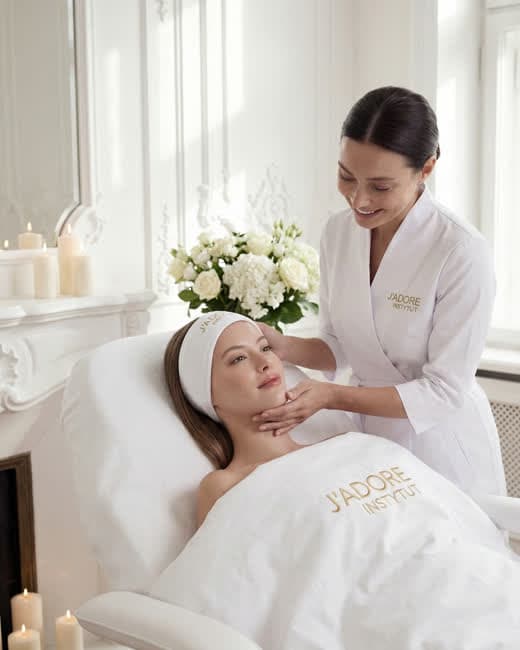
Cosmetology consultation — skin assessment
Only once the barrier has stabilised is it worth assessing which treatments are appropriate and safe. A cosmetologist experienced in oncology care will tailor a protocol to your skin's current condition and stage of recovery.
- 05
Gentle stimulation and regeneration
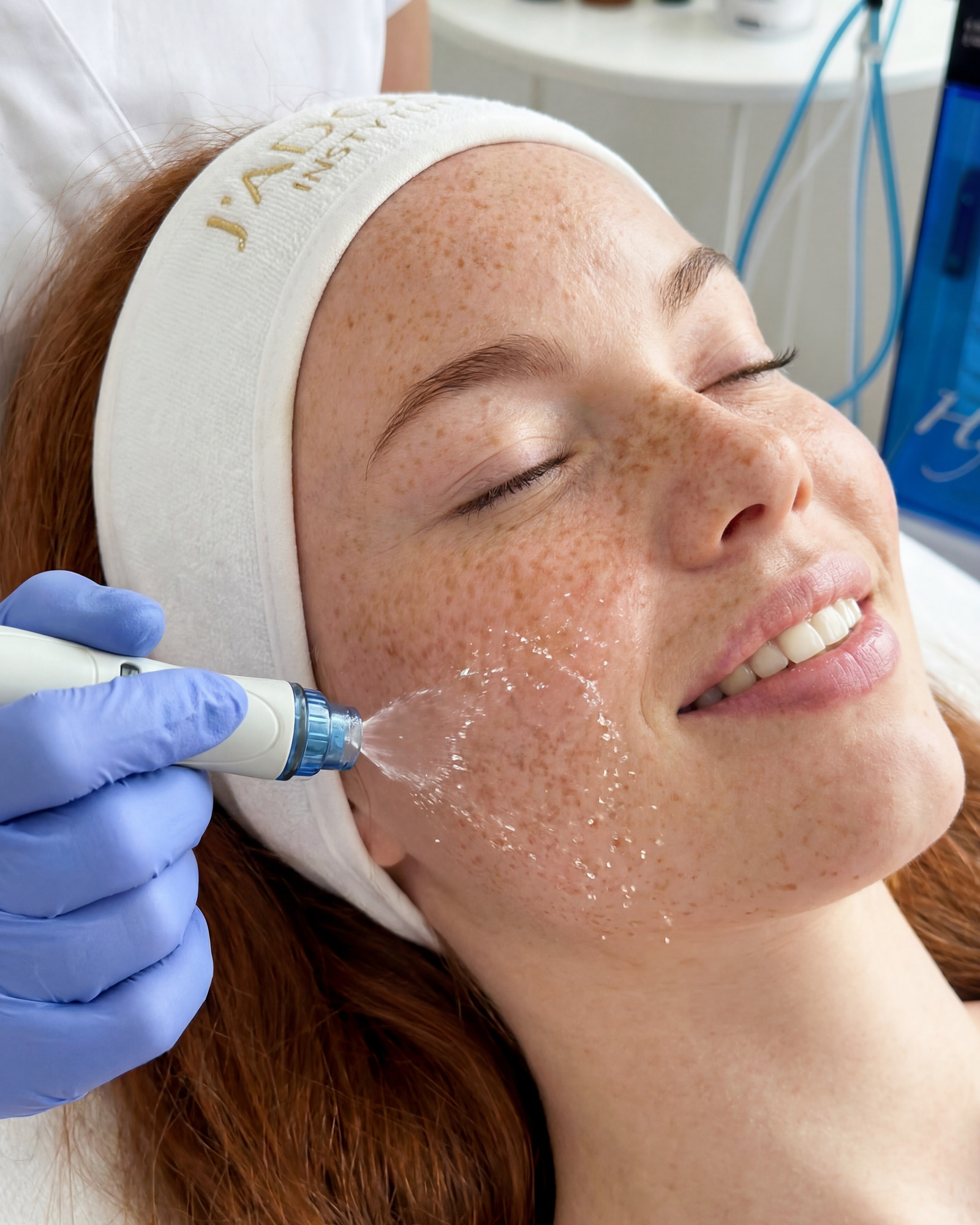
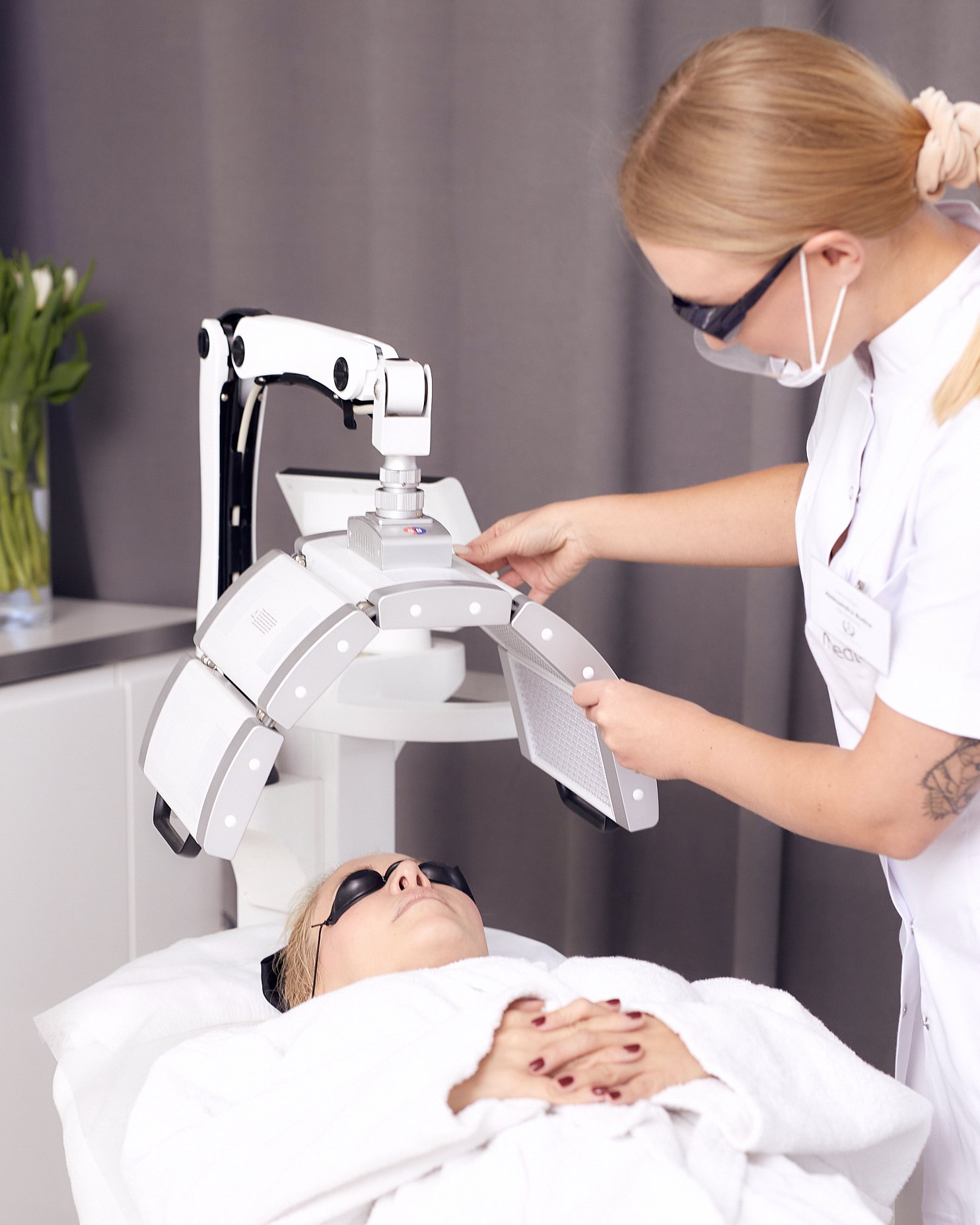
Treatments that support skin recovery — hydration, biostimulation, scalp care after hair loss. Intensity is matched to your skin's tolerance, not to a generic protocol. Every step is monitored.
The myth of isolation — oncology skincare isn't uncharted territory
One of the most invisible beliefs we hear in the salon isn't about creams or treatments at all — it's the idea that "with skin like this, you're on your own." That doctors have more important things to deal with. That a cosmetologist is for healthy people. That skincare at such a difficult time is a luxury, not a need. Yet the condition of your skin during and after cancer treatment has a real impact on quality of life — on your ability to wear clothes without discomfort, on your sleep, on returning to everyday activities, on how you feel looking in the mirror.
Oncology cosmetology is now a specialised field with its own literature, protocols and training for practitioners. If you find a salon that asks about your treatment history before proposing any treatment — that's a good sign. If they don't ask — keep looking.
Before you start searching online
The internet is full of well-meaning advice about skincare after chemotherapy. Some of it comes from people who genuinely want to help and are sharing their own experience — and that sincerity deserves credit. But one person's experience isn't a protocol that works for everyone. Chemotherapy isn't a single treatment — it's dozens of different regimens, different drugs, different individual reactions. Every person's skin responds differently after chemotherapy — and that's exactly why an individual consultation with a cosmetologist familiar with skin after systemic treatment is worth more than the best-written article (this one included).
Instead of searching for "the best cream after chemotherapy" — look for a cosmetologist with oncology experience and start with a conversation. Describe what stage of treatment you're at, what skin symptoms you're noticing, what you've already tried. That's enough to get specific, safe guidance — tailored to your situation, not to an average case from a forum.