
Where absorbable threads came from — and why surgery deserves credit
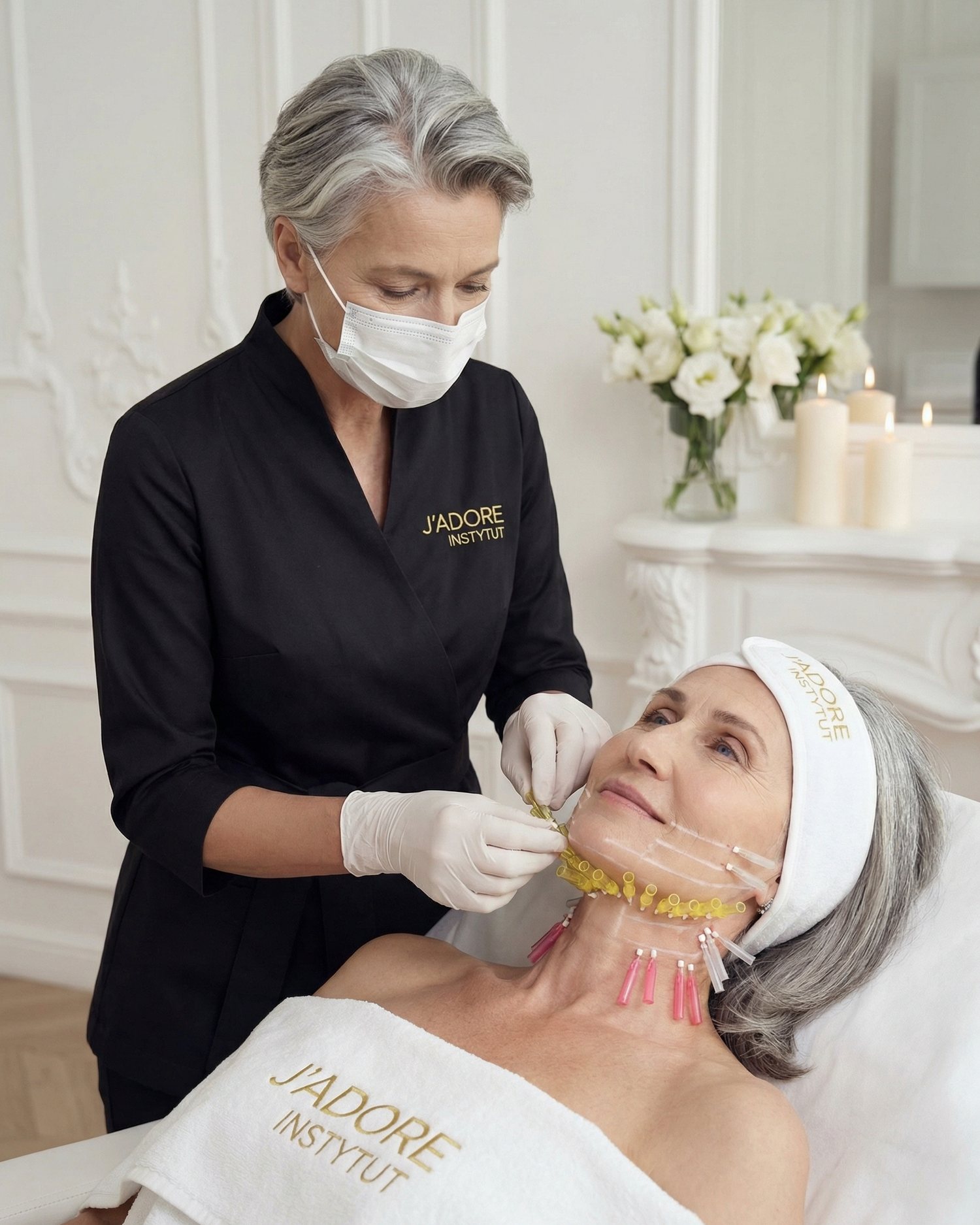
Absorbable threads did not originate in Aesthetic Medicine salons. Their origins lie in surgery. For decades, they were used to close wounds and internal tissues so that sutures did not need to be removed later. The body was meant to break them down itself. This mechanism — controlled absorption over time — became the basis for lifting threads. Aesthetic treatment developers realised that the same materials surgeons place invisibly inside the body could work beneath facial skin. They could lift tissue mechanically while also stimulating collagen production as they are absorbed.
The word “absorbable” matters here. It distinguishes threads used in Aesthetic Medicine today from earlier concepts involving gold or polypropylene threads, which were non-absorbable. Non-absorbable threads remained in the body permanently. Over time, they could cause problems such as adhesions, material migration and inflammation. An absorbable polymer solves this issue: it disappears, but not without a trace — stimulating the skin to work on its own along the way.
Three materials — three distinct characteristics
PDO, PCL and PLLA are abbreviations for the chemical names of polymers. To a non-specialist, they may sound similar. Yet from the perspective of what will happen beneath your skin over the coming months, the differences are fundamental. It is worth understanding them not as a curiosity, but as a selection criterion.
PDO (polydioxanone)
the shortest-acting and most widely used
- Threads are absorbed over several to a dozen or so months
- Lifting result — relatively quick and mechanical
- Collagen stimulation — moderate and shorter-lasting
- The longest clinical track record — used for the longest time
- Available in the widest range of configurations (smooth, barbed, mesh)
PCL (polycaprolactone)
long-lasting, with strong stimulation
- Absorbed more slowly — the result extends over 2–3 years
- Stronger and longer-lasting stimulation of collagen production
- Used when a more lasting result is the priority
- Often chosen for more noticeable loss of firmness
- More expensive than PDO because of its duration and material
PLLA (poly-L-lactic acid)
a biostimulator in thread form
- Absorption extends over more than 2 years
- Main mechanism: intensive biostimulation — rebuilding, not lifting
- The result develops gradually over many months
- Indicated when skin quality and skin density are the priority
- Also known as the ingredient in the biostimulator Sculptra (the same molecule)
In short: PDO offers a quicker start and a shorter duration. PCL balances mechanical lifting with a long-term collagen result. PLLA is primarily a biostimulator — rather than lifting, it rebuilds the skin’s structure from within. None of these threads is “better”. Each is a tool for different goals.
What really happens beneath the skin — a two-stage mechanism
Many people assume threads work like hooks — they go in, catch and hold. And indeed, the first stage is mechanical. A thread with micro-barbs or cones literally grips the tissue and lifts it upwards. This result is immediate — visible straight after the treatment. Yet some of this mechanical lift starts to settle relatively quickly as the tissue adapts to its new position. This is not a flaw — it is physiology.
The second stage — and the more important one — is the inflammatory response caused by the presence of a foreign body. The body treats each thread as an intruder and mobilises fibroblasts to surround it with a collagen capsule. As a result, a new collagen scaffold forms around each thread. It remains in the tissue after the thread is absorbed. The lasting effect of the treatment comes from this collagen — not the thread itself, which is no longer there. This is where the key difference between PDO, PCL and PLLA lies: the longer a thread is absorbed, the longer stimulation lasts and the more collagen has time to form.
- Stage 1 — mechanical lifting. Immediately after the treatment, the tissue is “held” by the thread structure. The result is visible at once, but partly settles during the first weeks as the tissue adapts.
- Stage 2 — neoangiogenesis and fibroblasts. The body surrounds the thread with a collagen capsule. New blood vessels supply the area, while fibroblasts work intensively throughout the material absorption period.
- Stage 3 — collagen residue. Once the thread is fully absorbed, a collagen matrix remains in the tissue. This is what determines the lasting effect — and its thickness and quality depend on how long the thread stimulated the surrounding cells.
How long threads work — and what “work” means
“How long do threads work?” — this is a question asked during every consultation. The answer is always the same: it depends. Not because we are avoiding the question, but because the “action” of threads involves not one but at least two overlapping processes with different durations.
- Physical absorption time — the number of months the body needs to break down the polymer. PDO: several to a dozen or so months. PCL and PLLA: up to 2–3 years. Active collagen stimulation continues throughout this time.
- Visible clinical result — how long you can see an improvement in the mirror. This period is usually longer than absorption itself, because the collagen that has formed does not disappear overnight. However, it is not permanent either. Ageing processes do not stop, so the result gradually diminishes.
- Individual variables — age, skin quality, lifestyle, smoking, sun exposure and metabolism. People with a good collagen base and a healthy lifestyle usually enjoy the result for longer.
As a guide, PDO threads give a visible result for one to one and a half years. PCL — for two to three years. PLLA, thanks to its very slow absorption and strong biostimulation, may maintain a similar or longer-lasting result. However, these are averages, not guarantees — which is why a good doctor will never give you one fixed number.
Why prices vary — and what determines them
Lifting threads appear in different price lists, and the differences can be substantial. Before assuming that one clinic is “expensive” and another is “cheap”, it is worth understanding what really affects the price. It is not arbitrary.
- Type of thread — material and structure. PDO is less expensive to produce than PCL or PLLA. Threads with cones or an advanced barb structure cost more than smooth threads. Braided threads involve different logistics from monofilament threads.
- Number of threads. A treatment using a few threads has a very different cost from a full protocol using several dozen. Realistic lifting of the facial contour and jawline usually requires more threads than lifting one brow. This explains price differences between clinics, which may be comparing very different scopes of treatment.
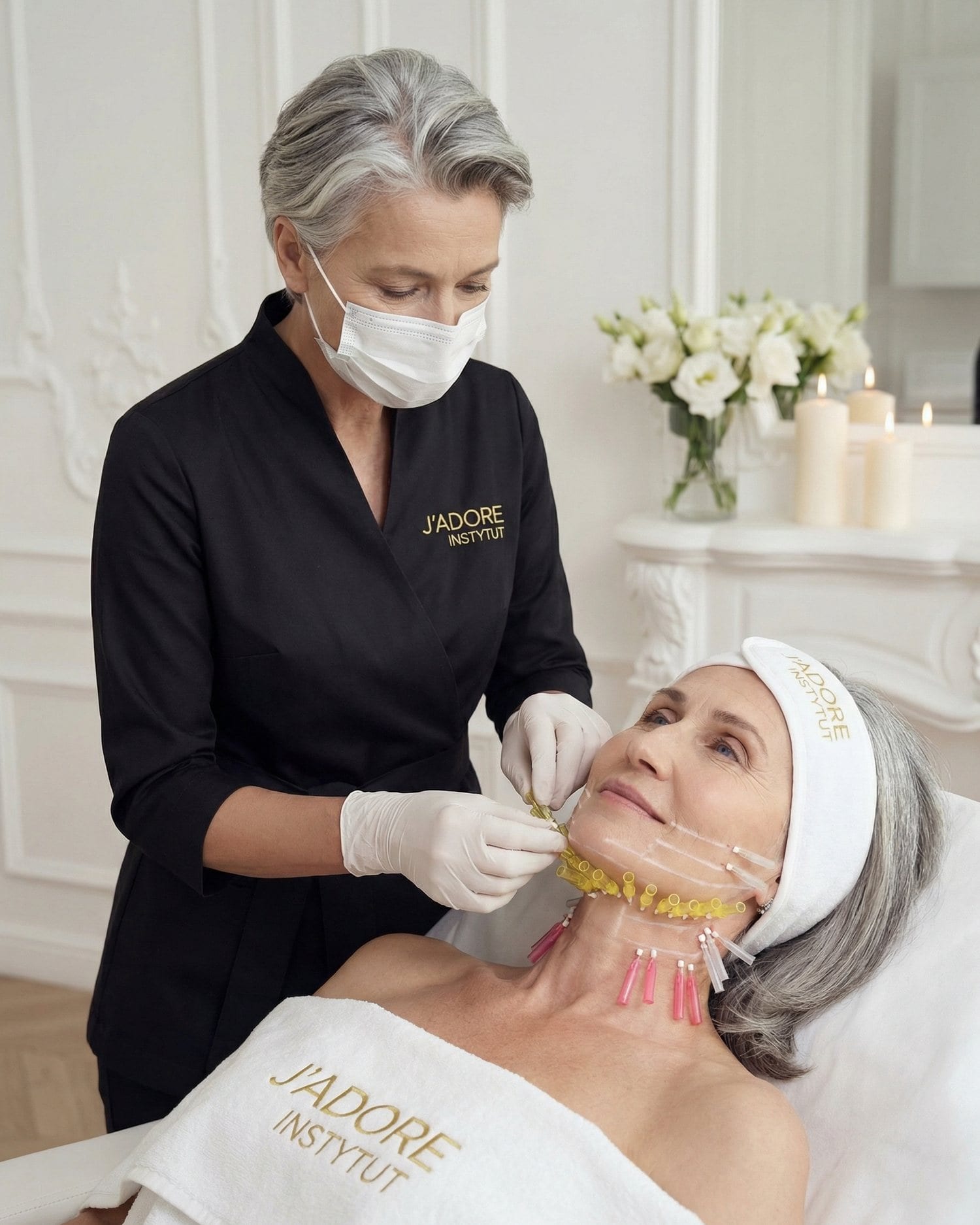
- Doctor’s experience. Thread insertion is an invasive procedure that requires anatomical precision. Threads are placed in the fatty tissue layer, avoiding nerves, blood vessels and muscles. An error here is more costly than with an injection. A doctor with greater experience and specialist expertise charges a higher fee — and for good reason.
- Protocol — the procedure alone or a package. The best results come from combining threads with other treatments, such as biostimulators, collagen or plasma. A package has different costs from a thread procedure alone — and a different final result.
The most common mistake when comparing offers? Comparing the price without knowing how many threads are included, what type they are and who performs the treatment. “Thread lift for X” may mean two PDO threads at the corners of the mouth, or an extensive protocol using several dozen PCL threads with full anatomical planning. It is not the same service — even if it has the same name.
What to do with this information — how to come to your appointment well prepared
This article is not intended to persuade you to have threads. It is intended to help you know what to ask. There is a major difference between a consultation saying, “I want threads”, and one saying, “I want to improve my facial contour and jawline — what and when?” The second conversation allows the doctor to select the material, technique and any complementary protocol rather than automatically choosing the most popular option.
- Ask which threads will be used and why. A good doctor should explain the choice between PDO, PCL and PLLA. If they recommend a specific material, they should explain why it suits your skin, age and expectations.
- Ask about the number of threads and the scope. A “thread lift” is not one-size-fits-all. Ask how many threads are included in the price and which area the treatment covers.
- Ask about combinations. Threads work very well with a biostimulator, plasma or hyaluronic acid. They often give a better result than a thread procedure alone. If the doctor immediately sees a synergy, that is a good sign.
- Do not plan the treatment before an important event. The fresh post-treatment result, with swelling and injection marks, looks different from the result after 6–8 weeks. It is worth planning ahead.
Lifting threads are one of the more striking non-surgical treatments. With the right selection, they can give such a natural result that nobody will know what has changed. Understanding the difference between PDO, PCL and PLLA will not replace a consultation. However, it will make that consultation far more productive. A doctor who does not need to explain the basics from scratch can focus on what really matters: your individual face.