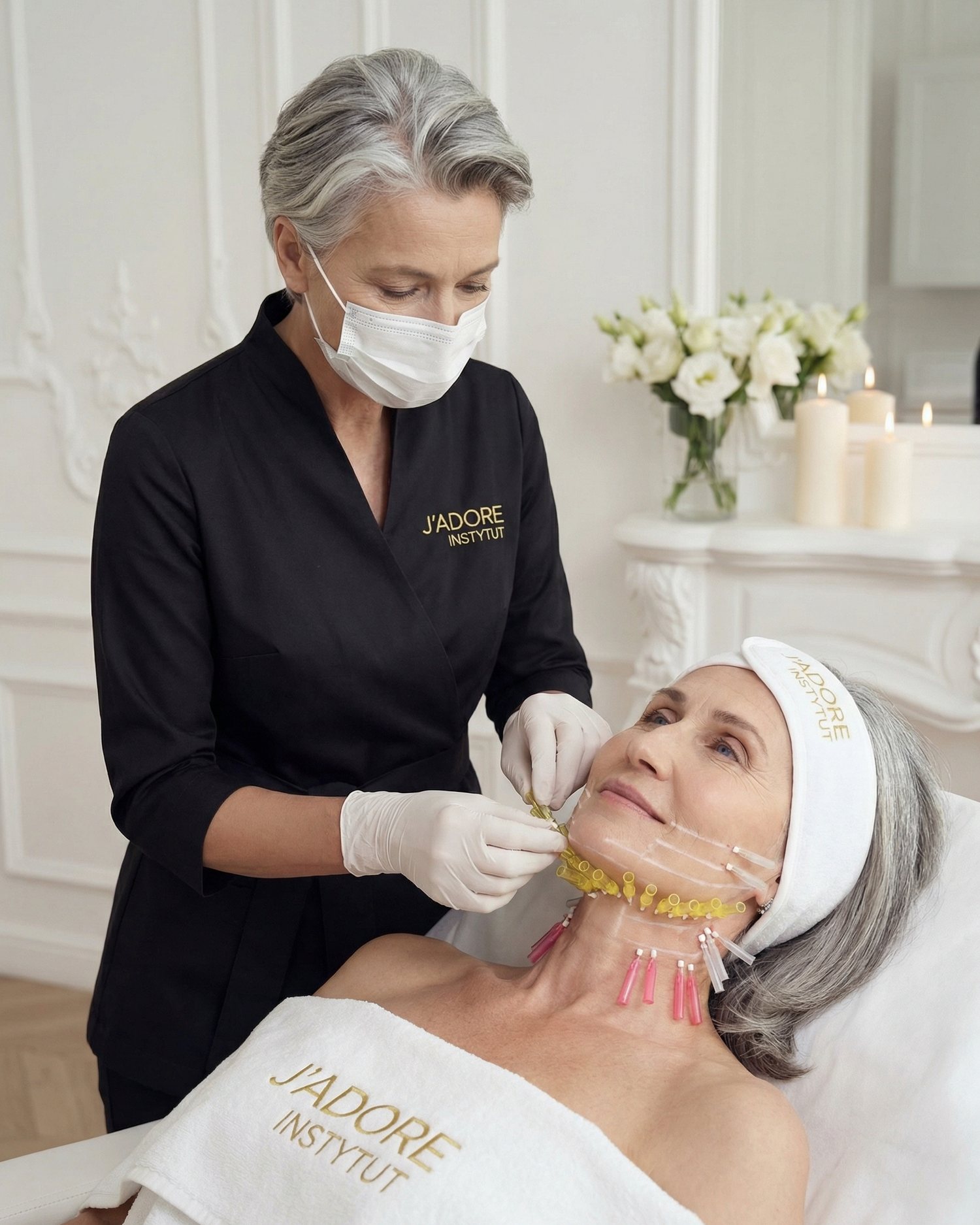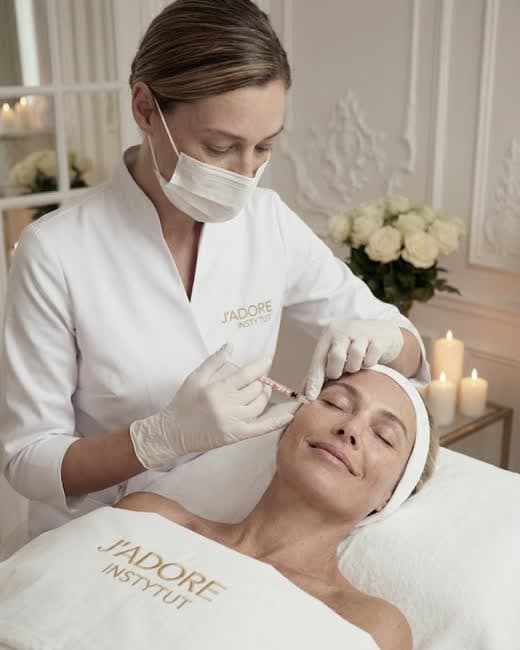
Why a plan is more important than a promised result when it comes to threads
When choosing a place for the treatment, it is easy to get stuck on the question of the number of threads or their brand name. Meanwhile, for safety and results, it is more important whether the doctor can justify the path of each thread: which area they want to support, which tissue layer they will work in, what vector of pull they are planning, and what they will not try to achieve as a result. Threads are not a decorative addition to the face. They are a mechanical tool that works in a specific place and in a specific direction.
A good consultation does not resemble ordering a service from a menu. The doctor examines the face at rest, while speaking, smiling, and during muscle tension. They ask you to turn your head, assess the jawline in profile, compare both sides of the face, and check tissue mobility and subcutaneous tissue thickness by touch. They pay attention to the skin: thin and lax skin behaves differently than heavier, oedematous, or clearly sun-damaged skin. These are not minor details. The chance of the planned effect looking natural depends on them.
For example, a patient may see "sagging cheeks" in the mirror, but during the examination, it turns out that the mid-face does not have significant sagging; instead, it lacks volume, and the nasolabial fold deepens mainly during facial expressions. Simply pulling the tissues upwards might then create an overly tight appearance near the ear without solving what bothers the patient in the centre of the face. A reliable doctor will not force threads into a problem they do not suit.
This is precisely why a lifting thread treatment in Krakow should start with a consultation separated from the impulse of "I want to do something before an important event". Haste during qualification is not a sign of a clinic's efficiency. It is a reason to ask more questions.
Who should perform the qualification and the treatment itself
During the consultation, ask directly who will be inserting the threads. An answer like "our team" or "a lifting specialist" is not enough. Ask for the doctor's full name, their medical licence, and information about their practice in thread treatments. Asking about experience does not have to sound like an interrogation. You can say: "I want to understand who I am entrusting my face to. How often do you perform such procedures and which areas most frequently?"
The way they answer also matters. A doctor with practice does not need to talk about themselves as if in an advertisement. Instead, they should freely explain which cases they qualify, when they advise against the treatment, and what actions they take if a problem arises. Generalities, avoiding answers, or redirecting every question to a sales person are worrying signs.
It is good when the same person examines the patient, discusses the plan, and performs the procedure. If someone else conducts the consultation, ask if the doctor performing the treatment will see you before insertion, confirm the indications, and has the authority to change the arrangements. This is especially important if several weeks have passed since the consultation, the skin condition has changed, or the patient has started taking new medications.
- "Who exactly will perform the treatment and will I meet this person before the procedure begins?"
- "What are the most common reasons why you refuse to insert threads?"
- "If I experience worrying symptoms after the treatment, can I contact the doctor who is treating me?"
- "What is the clinic's procedure if an urgent check-up is needed?"
What the doctor should check before marking insertion points
- Health history. The doctor should ask in detail about chronic diseases, allergies, coagulation disorders, and a tendency for keloids.
- Treatment history. It is crucial to collect information about previous facial treatments, implants, fillers, and the body's reactions to surgical interventions.
- Pharmacotherapy. It is essential to determine what medications and over-the-counter preparations the patient is taking, as some of them may affect the healing process or increase the tendency for bruising.
You must report active infections, skin inflammation, cold sores, dental problems, recent dental treatment, and planned dental procedures. A patient sometimes considers an aching tooth to be a topic unrelated to the cheek. The doctor should not ignore it, because an inflammatory focus in the vicinity of the planned procedure may change the timing and sense of the treatment.
In practice, a good medical history can be longer than just looking at the face. A person who has come for the first time may not remember the name of the preparation administered a few years ago to the cheek area. In such cases, old treatment cards, photos, a message to the previous clinic, or simply an honest "I don't know" are helpful. Pretending that previous procedures do not matter is worse than a lack of memory.
The conversation with a patient after several aesthetic treatments looks different. The doctor may notice irregularities, persistent deposits of preparations, local tenderness, or oedema that the person in front of the mirror does not interpret. In such a situation, a reasonable decision might be: first, we clarify what was done and how the tissues react, and only then do we consider threads. Postponing the treatment does not mean a wasted visit. It means that someone does not want to add another procedure to an unclear situation.
Questions that will help you recognise if a consultation is factual
The best questions are not meant to check if the doctor knows buzzwords. They are meant to show their train of thought. Instead of asking only "how many threads will be needed?", ask for a description of the problem as seen by the doctor. "What do you want to correct in my face and what indicates that threads are a good solution here?" — this question requires a concrete answer. You will then hear about skin quality, tissue displacement, asymmetry, proportions, or that the effect will be limited.
It is worth asking: "What will happen if I don't have this treatment?" An honest answer is usually calm: nothing sudden, the face will age at its own pace, and the decision can be postponed. Pressure based on a supposedly fleeting biological deadline has no place here. An aesthetic treatment is undertaken when the patient understands its scope and can afford a recovery period.
Another good question is: "What effect do you consider realistic in my case, and what cannot be achieved?" Do not expect a visualisation that guarantees the future. You can, however, expect a clear definition of the procedure's boundaries. The doctor may say that the improvement will be subtle, that the skin will not suddenly become denser, or that one cheek reacts differently than the other. Such an answer builds trust more than catalogue assurances.
Also ask about alternatives. If the answer to every difficulty is more threads, the consultation is too narrow. Sometimes the doctor will suggest skincare and postponement, sometimes a treatment to improve skin quality, sometimes correction of another area, and sometimes no indications for action. You do not have to use every option proposed. You do, however, need to know why one path is supposed to be better than another.
- "Which features of my face speak in favour of threads, and which limit their effect?"
- "Where do you plan the insertion points and why exactly there?"
- "Are there any previous treatments or medications that change the plan or the date?"
- "What symptoms after the procedure are expected, and which ones should I report urgently?"
- "What other solution would you consider if I decided against threads?"
- "When will the follow-up be and who will assess whether the healing is progressing correctly?"
Documentation, consent, and product identification are not bureaucracy
The documentation should contain data regarding the medical device used, including its identification, allowing for the reconstruction of what was applied. Asking for labels, a record in the chart, or information after the treatment is completely justified. The patient has the right to know what was introduced into their tissues and to keep this information for the future, especially if they ever consult elsewhere.
Pay attention to how the workstation is prepared. It is not about a theatrical display of sterility, but about an orderly procedure: skin disinfection, aseptic opening of single-use packages, preparation of materials before insertion, and clear rules of conduct. If the patient sees chaos, searching for tools during the procedure, or open elements left without explanation, they have the right to stop the procedure and ask for an explanation.
Photos before the treatment also matter. Taken in repeatable light and positioning, they help to honestly assess the change, rather than comparing two random selfies. One photograph with the chin raised and another with the head tilted will not show the effect — they will show the difference in angle. A clinic that documents the initial state treats the assessment of the result as an element of medical responsibility, not promotional material.
Red flags: when it is better to leave before the treatment
The second warning signal is a plan determined too quickly. One photograph, a few sentences about a "tired look", and a ready proposal for insertions are not enough. You do not need to expect a ninety-minute examination, but a conversation about health, an assessment of the face from different perspectives, and time to discuss alternatives are needed. When staff pressure you to use a "free slot" on the same day, you can calmly say that you will make the decision later.
Beware of language that shames. Comments about a "neglected" face, scaring you with rapid deterioration, or suggesting that the patient must do more than planned immediately are not part of a professional consultation. A well-conducted conversation can be honest, even when the doctor points out limitations, but it should not exploit insecurity.
A lack of a clear contact path after the treatment should be worrying. Ask what to do in the evening, at the weekend, or outside the clinic's working hours if increasing pain, clear asymmetry, a change in skin colour, fever, discharge, or rapidly increasing oedema occurs. It is not about assuming the worst-case scenario. It is about knowing who takes responsibility for care after the procedure.
Another red flag is a reluctance to answer a simple question about the possibility of resignation. A patient can change their mind even just before starting. Discomfort related to refusing is not a reason to undergo the procedure. The face is not a place for a decision made under the influence of awkwardness.
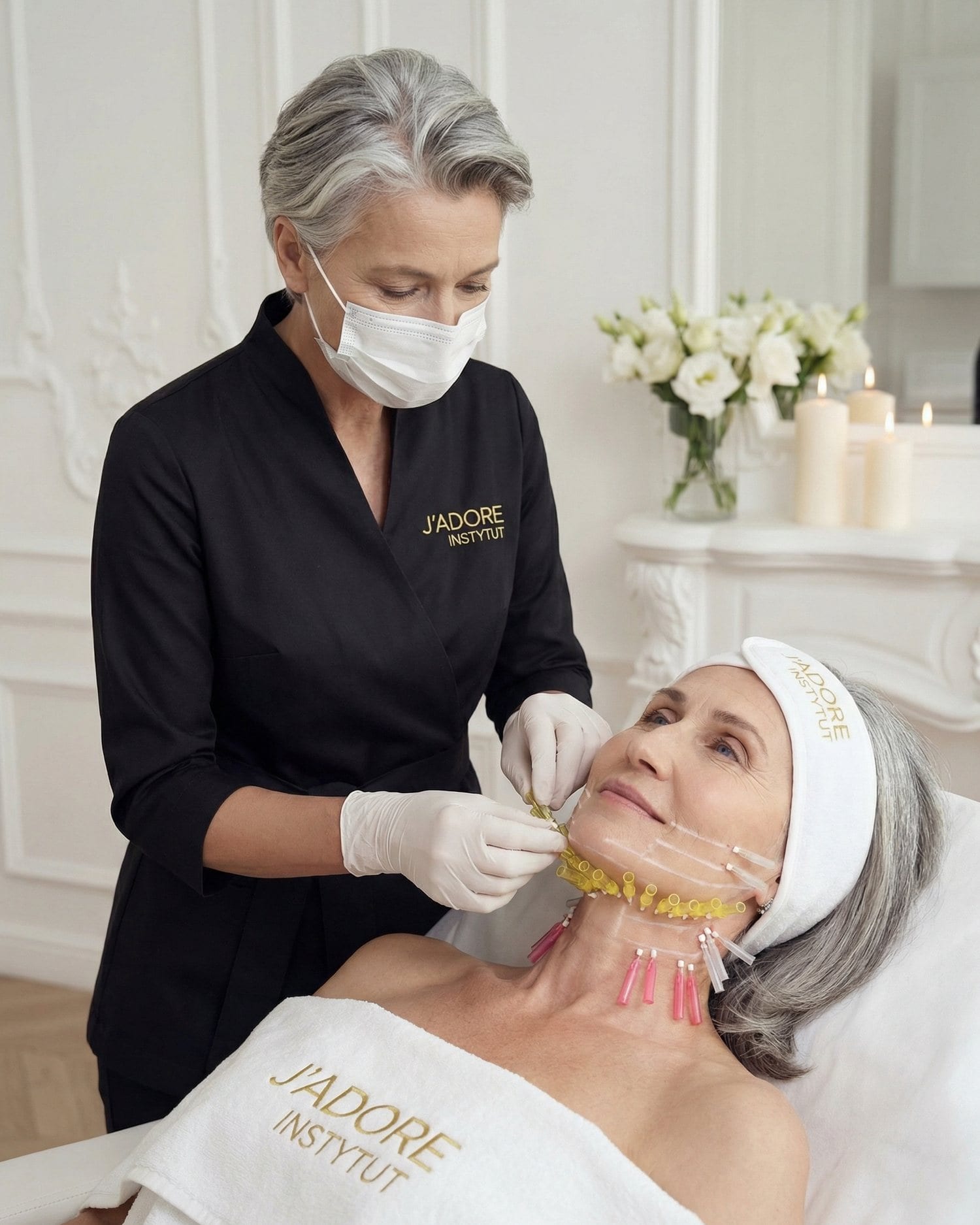
The third day after thread insertion shows whether the recommendations were practical
The third day is sometimes the moment when the patient feels well enough to return to their usual habits. This is exactly when it is easy to make a mistake: vigorously massaging the face while applying cream, chewing hard food for a long time, stretching facial expressions excessively, sleeping on the side despite the recommendation, or returning to intense training because the bruising has started to fade. Not every such situation means damage to the effect, but it unnecessarily increases discomfort and anxiety.
A well-prepared clinic does not stop at prohibitions. It explains what the patient may feel and how to distinguish typical tenderness from a signal that should not be observed at home. If after the third day there is a sudden increase in pain, the skin becomes clearly warmer, redness spreads, there is unusual discharge, or the change in appearance grows instead of gradually calming down, you must contact the clinic according to the instructions provided.
A patient returning for a follow-up after another procedure usually asks less about the moment of insertion and more about how the face behaves in everyday life: "Is this indentation when smiling normal?", "Can I book a dentist?", "Why is one side more tender?". This shows that good care does not end with the technical execution. The clinic should treat such questions as normal, not as troublesome.
How to recognise if the proposed scope is too large or too small
There is no universal number of threads for every face. Trying to purchase a procedure in a package detached from an examination can lead in two directions. It may lead to dissatisfaction if the scope does not match the problem, or to over-treatment if injections are multiplied without a clear goal. You have the right to ask for an explanation of what each part of the plan contributes.
Imagine two people of a similar age. The first has well-preserved cheek volume but notices a slight shift of tissues along the jawline. The second complains about the same "lack of contour", yet the doctor primarily sees a heavy, oedematous face and a clear loss of proportions in the mid-face. Replicating the same plan would be an oversimplification. In the first case, subtle support for a selected area may make sense. In the second, a particularly cautious conversation about limitations and other possibilities is necessary.
The opposite situation also occurs. A patient after a third visit wants "a little more" because they have become accustomed to seeing themselves under harsh light and from very close up. The doctor should be able to assess whether an additional procedure truly meets the needs of the tissues or is instead driven by comparing oneself to filtered photos. A refusal does not have to be a disappointment. It can protect the natural proportions of the face.
A good plan has boundaries. The doctor should explain why they are not proposing threads in a specific area, why they are not combining procedures in one session, or why they recommend waiting. The more detailed the justification for what is not being done, the greater the chance that they are acting according to a medical assessment rather than a sales script.
Make your decision after a consultation, not in the clinic at the reception desk
After a good consultation, you should be able to answer a few questions in your own words: what problem the procedure is meant to solve, what its limitations are, who will perform it, what the aftercare looks like, and what you will do if something concerning appears. If the answers are vague, you do not need to convince yourself that "it will be fine". It is better to return to the topic after reflection or to seek a second opinion.
Before leaving, you can ask for a written plan, aftercare instructions to read at home, and time to decide. This is particularly sensible for someone having threads for the first time. A patient who has had previous procedures may already know their reaction to anaesthesia or swelling, but they should still not assume that another area will heal identically. Every plan requires a new assessment.
The simplest filter is this: after the conversation, do you feel greater clarity or greater pressure? Trust is not born from assurances that everything will be perfect. It is born from the doctor seeing the face accurately, naming the risks without fear-mongering, setting the boundaries of the procedure, and remaining available even when post-treatment emotions are stronger than you anticipated.
You do not need to go to Krakow with a ready-made decision about threads. It is enough to come with a specific problem, a list of medications, information about previous treatments, and the courage to ask "why this particular choice?". If the answer is precise, calm, and also includes the possibility of opting out, you have the basis for making an informed choice of clinic.