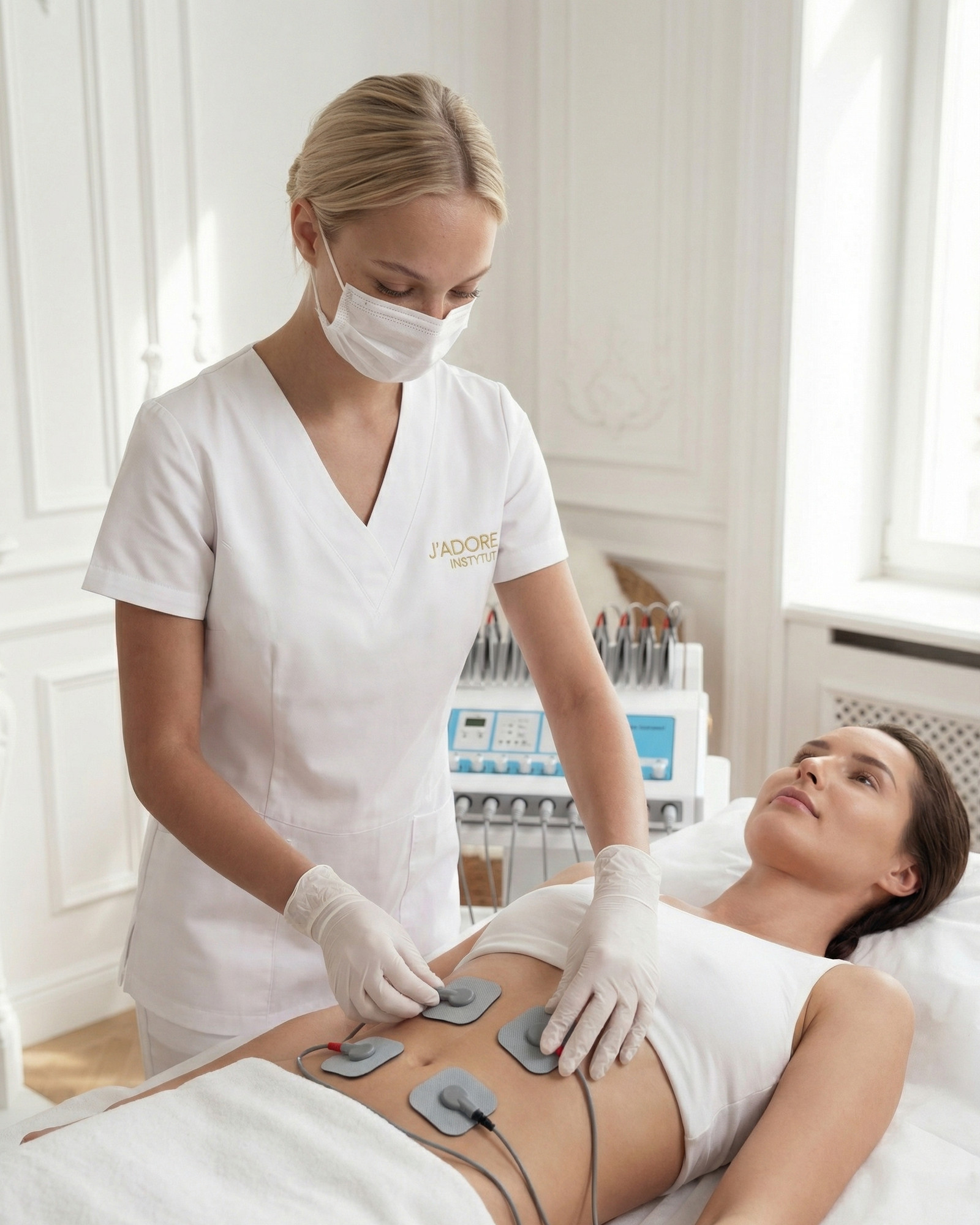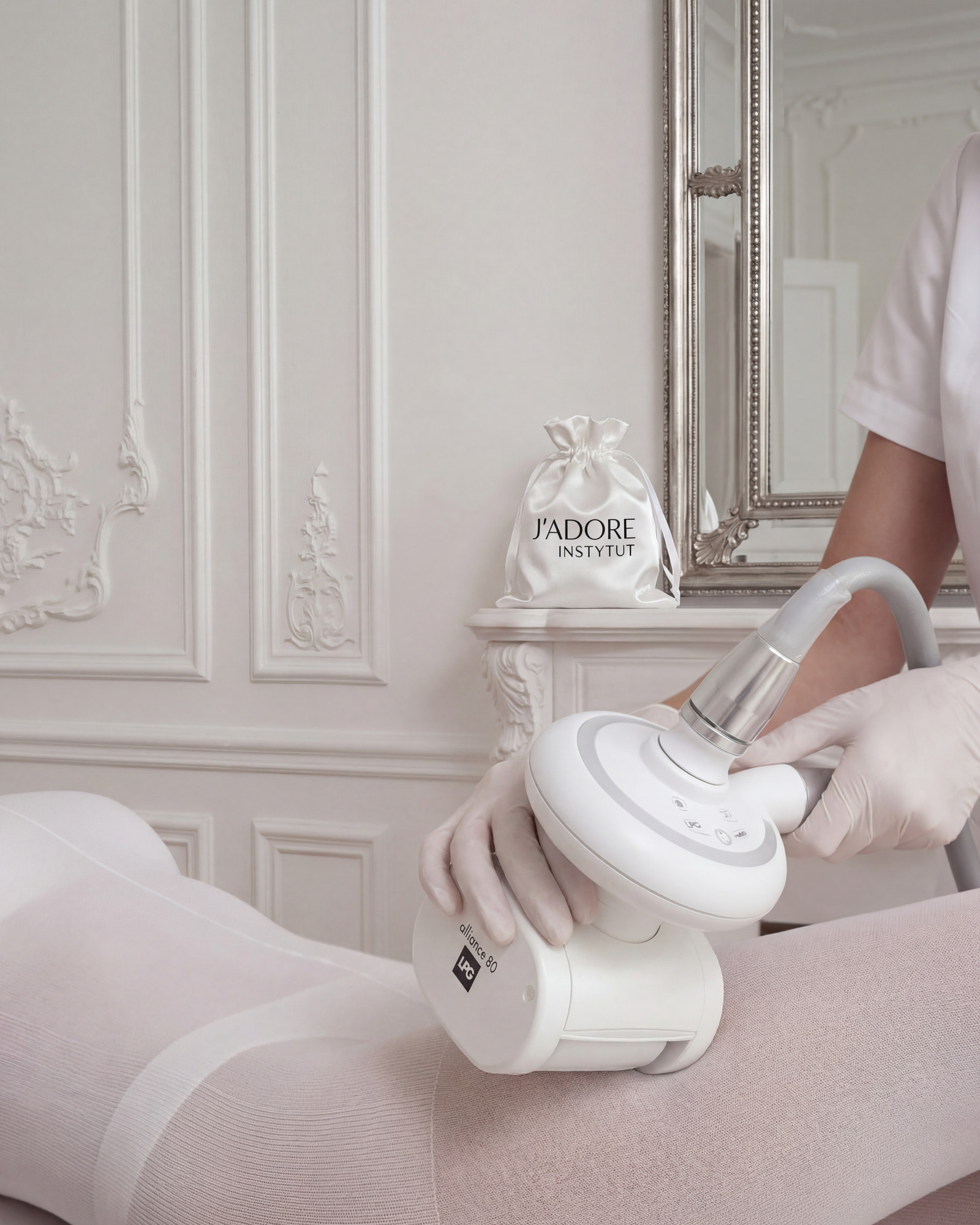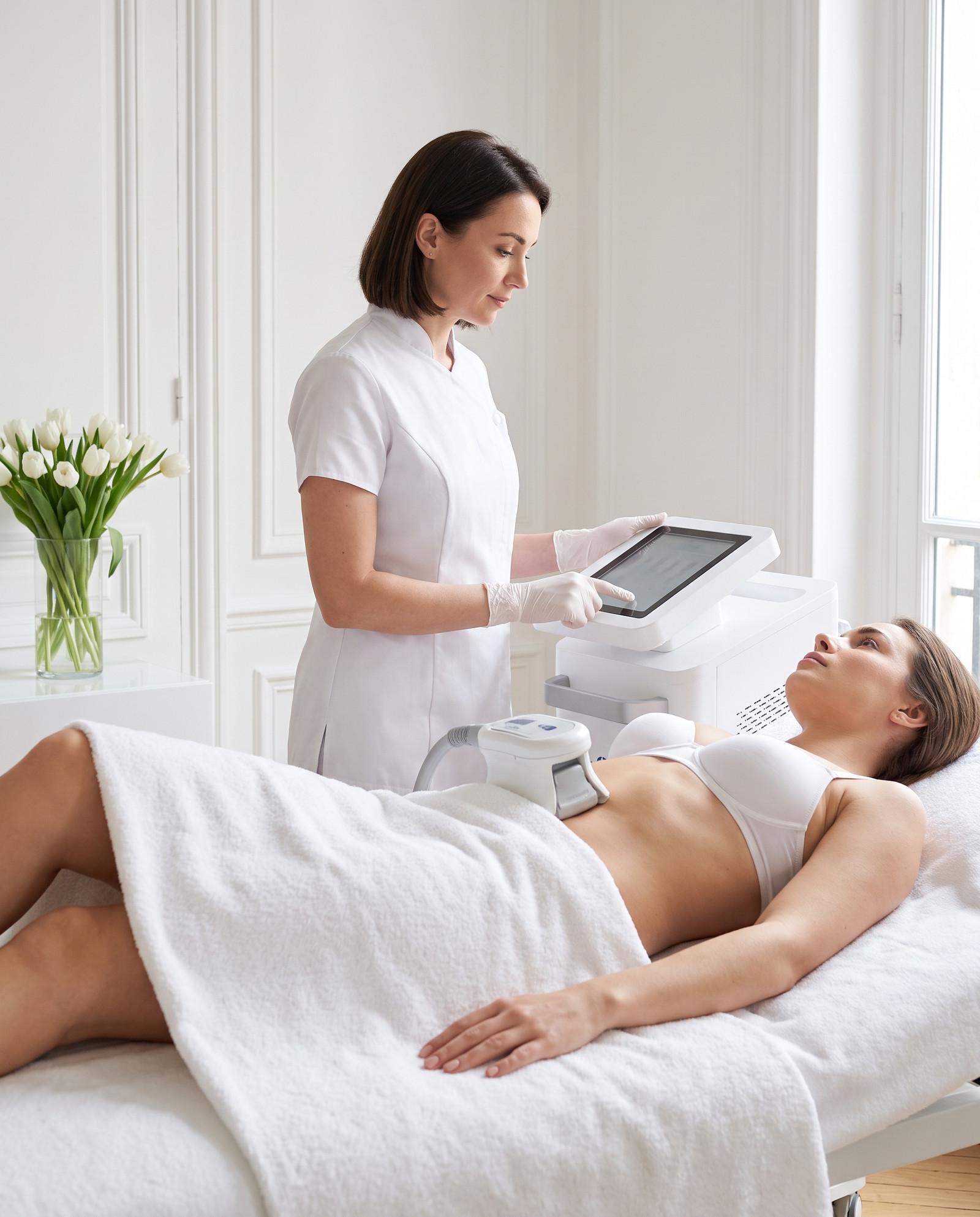
First, determine if the review concerns electrical EMS, HIFEM, or massage
Classic EMS delivers impulses through electrodes on the skin. HIFEM uses an electromagnetic field and triggers a different type of intense contraction. Endermologie acts mechanically on the skin and tissue. A reviewer might use one popular name for all of them, especially when the salon itself communicates the technology imprecisely.
Look for details: were electrodes applied, was an applicator used, and how was the sensation described? If the review does not allow you to identify the method, do not apply its results to your chosen treatment. A rating of the staff's politeness may still be valuable, but the body contouring result loses its significance.
Reviews about centimetres require information about diet, exercise, and other treatments
EMS works on the muscle. It does not remove a layer of fat locally. If a review describes a large decrease in circumference, you need to know if the series included a diet, training, drainage, endermologie, wraps, or weight loss. Without this, attributing the entire result to the current is a mistake.
Measuring right after a session can also be misleading. Breathing, abdominal tension, time of day, and hydration change the circumference. A more reliable review describes the time, the number of visits, and the maintenance of the effect after completion, not just the moment on the treatment couch.
The most valuable review describes the qualification before the first electrode
Look for information on whether they asked about a pacemaker, electronic devices, implants, heart disease, epilepsy, pregnancy, thrombosis, scars, and injuries. This shows a standard that you cannot see in a photo of the interior. The lack of a mention does not prove that there was no consultation, but a detailed description is a strong plus.
A review saying "I walked in and we started immediately" might sound like praise for efficiency, but with an electrical treatment, it is a signal to ask additional questions. Speed must not bypass contraindications. Paradoxically, a refusal of treatment in a review is often the best proof of responsibility.
- Was the questionnaire discussed, rather than just signed?
- Were you asked about changes in your health before subsequent sessions?
- Was a fresh scar or wound overlooked?
- Did the salon refer you to a physiotherapist for muscle separation?
A description of the sensation is only useful with information about the staff's reaction
Tingling and rhythmic contraction are expected. One person will describe them as intense, another as easy to tolerate. The pain scale itself is subjective. It is more informative whether the power was increased gradually, whether they asked about your feelings, and whether they reacted to localised stinging.
A negative review about pain does not have to disqualify the method if the salon stopped the session, checked the electrode, and proposed a safe solution. A positive review saying "I endured the maximum" is not proof of quality. EMS is not a contest of endurance.
Description of the process
provides data
- power increased gradually
- electrodes adjusted when stinging occurred
- staff was present
- symptoms after the session were checked
Description of emotions
little data
- it was great
- it hurt, so it works
- maximum power
- abdomen like after the gym
A review after one session evaluates mainly the service and a brief sensation
After the first visit, you can evaluate the consultation, cleanliness, communication, electrode placement, tolerance, and any sensation of muscle work. You cannot reliably assess long-term tension or a change in silhouette. Reviews written at the reception a minute after the treatment have limited value for the effect.
Better reviews provide the number of sessions, frequency, your own activity, and the time since completion. Even better ones admit limitations: the muscle is more noticeable, but the fat tissue has not disappeared. Such a description is less spectacular and more consistent with the mechanism.
- 01
After the first session
Process, comfort, and skin reaction.
- 02
Halfway through the series
Repeatability and the possibility of progression.
- 03
After the series
Tension, muscle control, and the context of movement.
- 04
After a break
Maintenance without automatically attributing everything to EMS.
Before and after photos can show posture instead of muscle
A sucked-in abdomen, exhalation, tensed buttocks, pelvic rotation, and side lighting change the silhouette in a second. High-waisted clothing also contours the circumference. The photo should have the same position, distance, light, time, and state of tension.
Even a reliable photo does not say which element of the package provided the change. If the person exercised and changed their diet, it is the success of the entire plan. The salon should note this instead of presenting the result as the action of the electrodes in isolation.
Extremely good and extremely bad reviews must be read with the same detachment
One delighted person may have a goal perfectly suited to the method, train regularly and tolerate muscle contractions well. A disappointed one may have expected fat loss. Both are telling the truth about their experience, but neither predicts your result.
Look for patterns in multiple reviews. Repeated mentions of a lack of consultation, absent staff, burns under the electrode, pressure to buy a package or confusion about the technology are more important than a single conflict. Similarly, repeated praise for calm progression and plan adjustment increases the credibility of the process.
- Check the dates and whether the reviews are spread out over time.
- Read the salon's responses to criticism.
- Pay attention to whether it reveals the client's personal data.
- Separate the assessment of the reception from the assessment of the result.
A salon's response to a negative review says more than a perfect average.
A professional response does not diagnose publicly, reveal health conditions or blame the client. It proposes private contact, refers to the standard and investigates the incident. When faced with an allegation of pain or a burn, saying that "everyone reacts differently" is not enough.
Aggressive defence, publishing survey details or intimidating the reviewer should be concerning. Such behaviour shows a way of managing problems that might also affect you. High quality includes the reaction after a mistake, not just prevention.
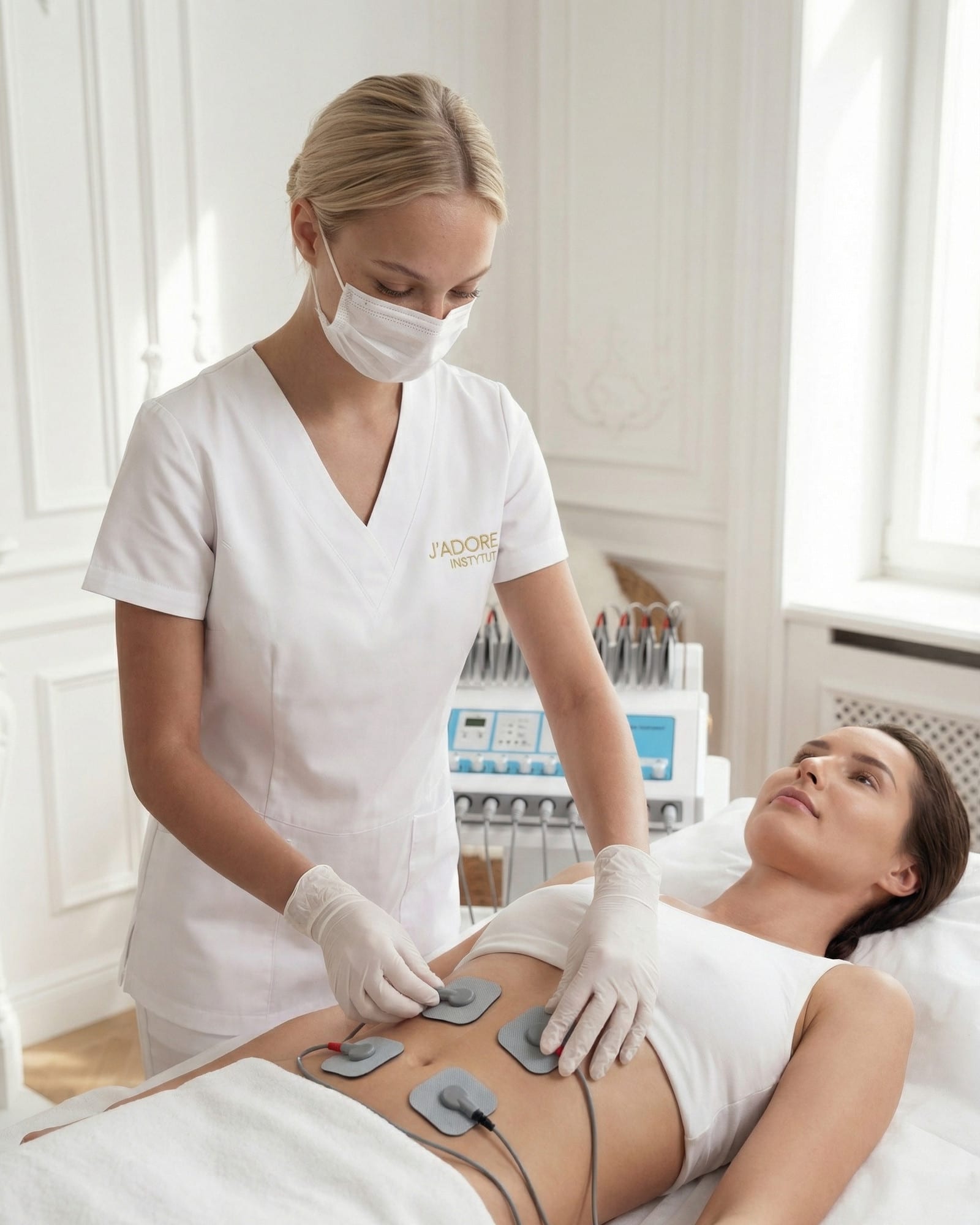
What no review will check for you before the first session
A review does not know if you have a pacemaker, an implant, a fresh scar, arrhythmia, epilepsy, thrombosis, pregnancy or rectus abdominis diastasis. It will also not assess the placement of electrodes on your anatomy. These issues require an up-to-date medical history and sometimes a consultation with another specialist.
Before payment, ask about the device name, mechanism, the person performing the treatment, contraindications, progression method, the possibility of stopping and the package rules. Ask for an explanation of what EMS will do for your goal and what it will not. Answers take precedence over a star average.
The lack of reviews about contraindications does not prove that the salon does not check them.
Most reviewers describe the result, atmosphere and service, not the health form. Do not judge the standard solely by the absence of words like "pacemaker" or "thrombosis". Treat this as an area for your own verification. Call and ask how the qualification looks and whether it is repeated before subsequent sessions.
On the other hand, repeated stories about starting without questions are significant. Check the dates, location and the salon's response. One old review may concern a different team; several similar, new descriptions suggest a pattern that is not worth ignoring.
The best test is your own first consultation without buying a series. See if questions appear before a package is proposed. The standard exists in the process, not in a declaration under a review.
A package review does not always allow you to assess a single EMS treatment.
Modelling offers often combine electrostimulation with endermology, drainage, wraps, diet or a training plan. A reviewer might simply write "EMS made a difference", even though they are actually assessing the entire programme. This does not make their experience false, but it limits the conclusion about one method.
Look for a breakdown: how many times the current was used, how often other treatments were performed, and whether body weight changed. If this data is missing, treat the review as an assessment of the package. When purchasing, ask the salon to explain the role of each element and the criteria for opting out of a part that adds no value.
Opinion about EMS
identifiable method
- electrodes on a specific area
- number of sessions provided
- description of power progression
- without other treatments or with a clear separation
Opinion about the programme
multi-component result
- diet and training
- drainage or endermology
- change in body weight
- no breakdown of methods
Verify reviews in terms of publication time and how they were obtained.
An opinion written at the reception after a discount, freebie or request from staff may be sincere, but it usually assesses a fresh impression. It does not have time to describe the maintenance of the result or the reaction the next day. Reviews after a few weeks have greater value for a series, especially when they provide context.
A large wave of similar-sounding reviews in a short time is not automatically false — the salon may have started actively asking for reviews. However, pay attention to details, the diversity of language and repeatable specifics. Text limited to the name of the treatment and superlatives has little informational value.
- Check the reviewer's profile without looking for private data.
- Does the review describe a specific visit?
- Does a date or number of sessions appear?
- Do subsequent reviews not copy the same sentences?
Your own review should separate the process from the result.
After your visit, note the qualification, technology name, zone, sensation, skin reaction and staff behaviour. Assess the silhouette result later, under the same conditions, together with information about training and other methods. Such a record also helps the salon to correct the series.
If you publish a review, do not reveal details about an employee beyond public information or the health data of other people. Describe the facts: what you expected, what was performed, what was said and how the problem was solved. This will be more useful to other clients than the number of stars alone.
In the event of an adverse reaction, first contact the salon and get the necessary help. An opinion is important, but it does not replace an urgent consultation for cardiac symptoms, burns, persistent numbness or severe pain.
Warsaw: read reviews separately for Żelazna and Mińska.
Before booking, read a few new reviews, a few older ones and responses to criticism. Write down three specific questions that the reviews do not resolve: which model is available, who performs the qualification and how the settings are documented. Thanks to this, you do not turn other people's experiences into a forecast, but use them as a map for your own consultation.
If reviews for two locations are combined on one platform, ask the reception to confirm the team and technology at a specific address. The brand may have a common standard, but availability, people and dates differ. The conclusion from the reviews should be assigned to the place it actually concerns.
J'ADORE INSTYTUT operates at Żelazna 59 and Mińska 29A/46. Confirm the availability of a specific variant for the chosen location; you will find data and booking on the electrostimulation page in Warsaw. Reviews about the brand may mix locations, performers and technologies, so pay attention to the date and the indicated address.
The most useful review does not say "it works" or "it doesn't work". It says: what the goal was, what was performed, how many times, how the staff reacted, what else the client changed and when they assessed the result. Check the rest during the consultation. Five stars may open the list of places, but it should not close the selection process.