What lactic acid peel actually is — and why "lactic"
Lactic acid peel is based on lactic acid — an alpha-hydroxy acid (AHA) derived from fermentation. It's one of the gentlest acids used in salons. Its large molecule means it penetrates the skin more slowly and less deeply than, say, glycolic or salicylic acid. It doesn't "strip" the epidermis — it dissolves the bonds between dead skin cells and lets them shed naturally. The effect is gradual and subtle, but after a few sessions — clear.
That matters for men's skin. Men have thicker skin with more active sebum production, and often visible pores and uneven texture after years of shaving. A strong acid can trigger a disproportionate reaction — redness, flaking, sensitivity. Lactic acid targets what actually needs fixing, without causing unnecessary fuss.
Why men's skin needs this
Men rarely say "I have a skin problem". They say: "my skin's oily", "my pores are big", "my face looks tired somehow", "my skin's irritated after shaving". These are specific problems with a specific cause — usually excess keratinisation and overproduction of sebum, which together create clogged pores, dullness and uneven texture.
- Dullness. A layer of dead cells builds up on the skin's surface and reflects light unevenly — the face looks grey, tired, "flat". Lactic acid removes this layer without visible peeling.
- Uneven texture and pores. Skin stops looking smooth — visible pores, micro-bumps, acne marks. Regular lactic acid peels gradually even out the surface.
- Post-shave irritation. Skin shaved daily or several times a week is under constant micro-trauma. Lactic acid supports regeneration and strengthens the skin barrier — which can reduce redness and ingrown hairs.
- Early signs of ageing. Fine lines, loss of density, skin that feels less "firm" — lactic acid stimulates collagen synthesis, improving elasticity with regular use.
What actually happens in the salon
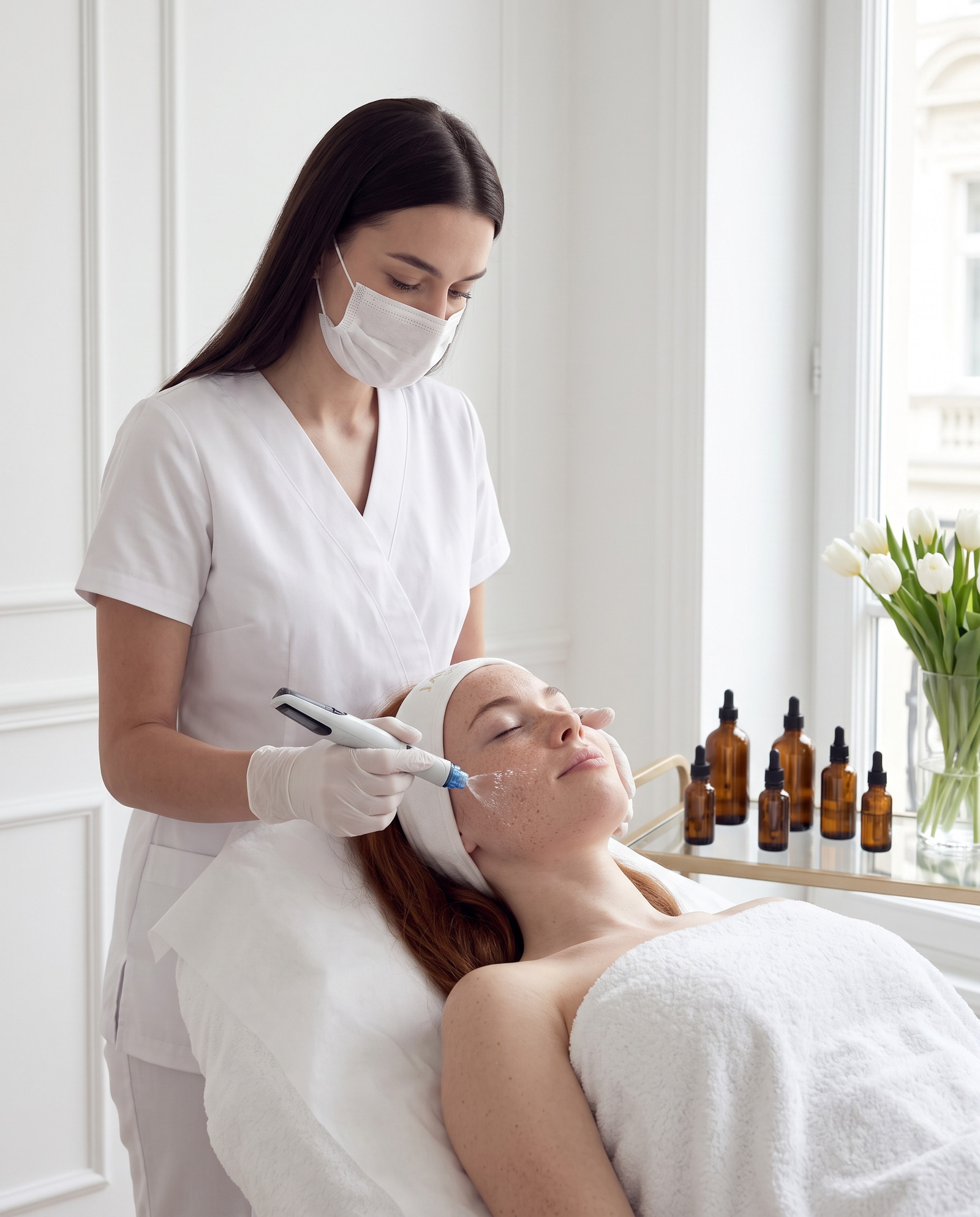
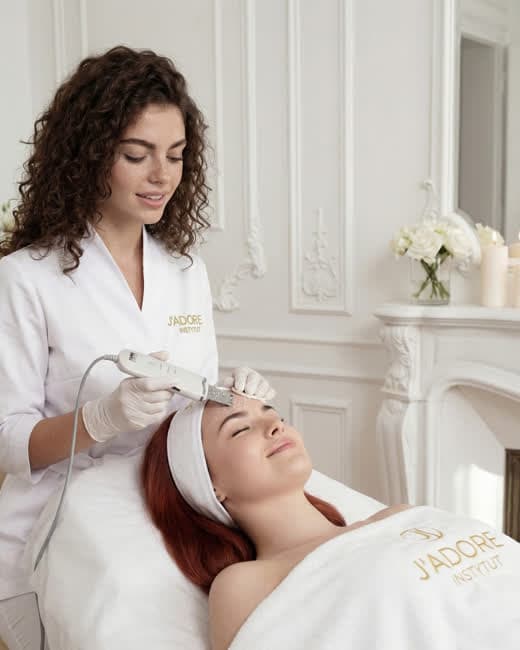
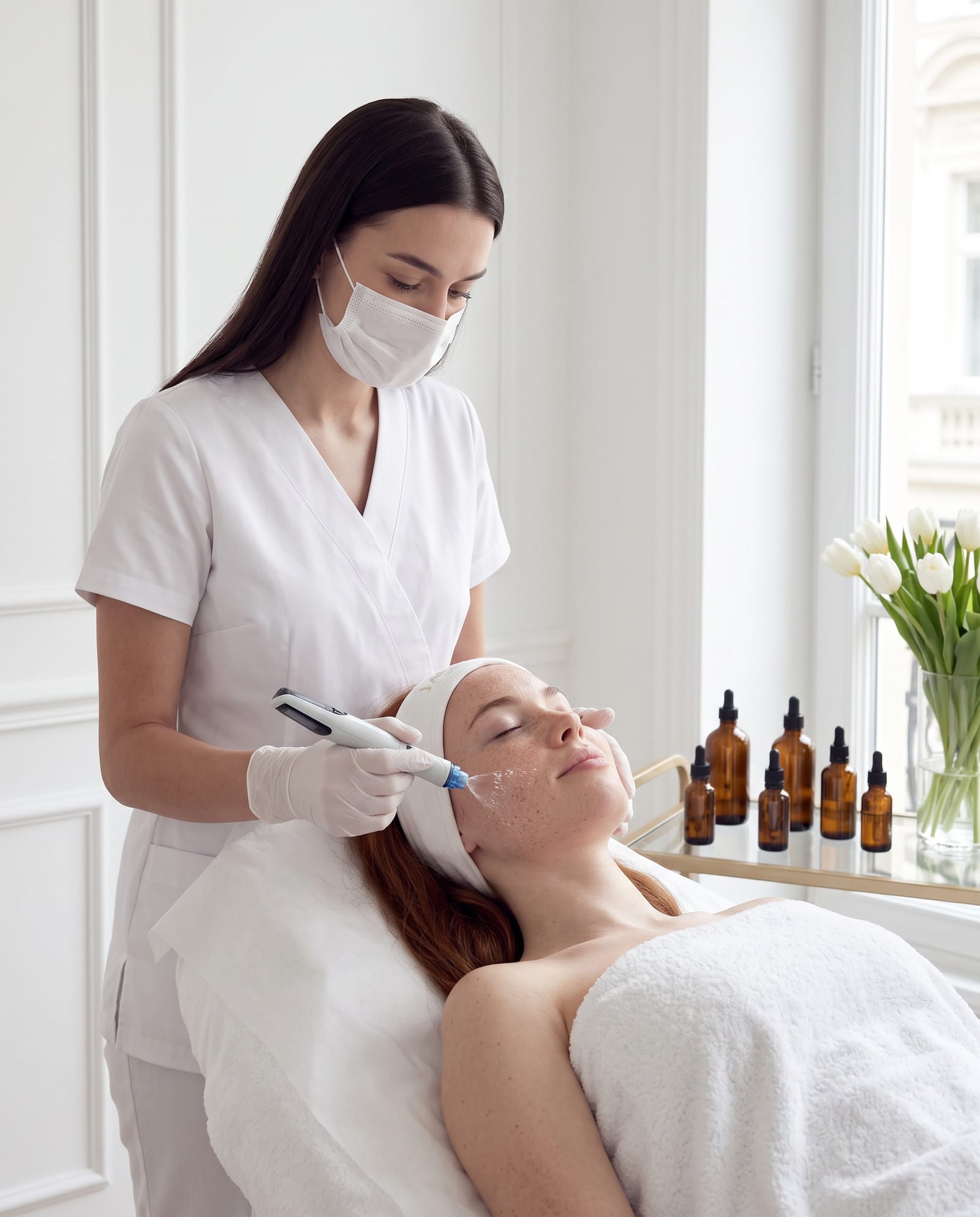
The treatment is short and straightforward. Your face is cleansed, then a lactic acid preparation is applied at a concentration chosen by the cosmetologist to suit your skin. The preparation stays on the skin for a set time, then is neutralised. A mask or serum is often added to boost the effect. Nothing dramatic happens throughout — at most you'll feel a slight warmth or tingling that passes quickly.
After the treatment, your skin may look slightly pink — this usually settles within an hour. There's no peeling, no staying home, no need to explain to anyone what you've done. You get on with your day. You'll notice the full effect of one session after a few days — skin becomes more even, less shiny, "fresher" for no obvious reason.
- 01
Skin assessment
The cosmetologist checks your skin type, sensitivity and needs — then selects the acid concentration and any additional steps.
- 02
Cleansing
Two-step cleansing removes sebum and impurities — important so the acid penetrates evenly.
- 03
Acid application
The lactic acid preparation is applied to the face. Tingling and mild warmth are normal — a sign the acid is working.
- 04
Neutralisation
The acid is neutralised — its action stops at a controlled point.
- 05
Finishing and protection
A soothing mask or serum, then an SPF cream to finish — mandatory on the day of the treatment and for several days after.
Lactic acid peel vs other acids — how it compares
If you've heard of glycolic acid, retinol or TCA peels and aren't sure how to approach them, here's a simple overview. Lactic acid peel sits at one end of the spectrum: effective, but without the risk of an excessive reaction.
Lactic acid peel (AHA)
gentle start, zero downtime
- large molecule — slower penetration
- evens texture and hydrates at the same time
- good for sensitive skin and first-time treatments
- no visible peeling
Stronger acids (TCA, retinoids)
advanced correction, takes time
- deeper action — more noticeable recovery
- effective for scars, pigmentation, deeper wrinkles
- requires the skin to build tolerance and a slower introduction
Lactic acid peel also makes a great foundation before stronger treatments: regular sessions gradually accustom the skin to acids and strengthen its barrier, making it safer to move on to stronger treatments later — if you decide to go further.
How many sessions, and when to see results
One session makes a difference you can see in the mirror — skin looks more even and "fresher". But lasting change in texture, pore size and skin density comes from a regular cycle. This usually means a series of several sessions a few weeks apart, followed by maintenance sessions.
That's good news if you don't have the patience for long processes: results build up quickly, and each session shows an effect straight away. You don't need to wait months to confirm something's working — you'll feel it after the first session.
A good combination: what to combine lactic acid peel with
Lactic acid peel works well alongside other treatments if you want to deepen the effect or address a specific issue. Below are a few combinations we often recommend to men — depending on what they're looking for.
Hydrafacial
Lactic acid peel prepares the skin, hydrafacial deep-cleans the pores. Together — fewer blackheads, better texture and hydration in one cycle.
Needle mesotherapy
After a series of lactic acid peels, skin is better prepared to absorb the active ingredients in mesotherapy. The combination can give a more noticeable rejuvenating and densifying effect.
Fractional laser
Lactic acid peel as preparation before laser — it smooths the epidermis and can improve how evenly the laser works on deeper layers. A specialist sets the timing between sessions.
HIFU lift / Ultherapy
HIFU works deep on subcutaneous tissue, the peel works on the surface. These are two different levels — together they can address both facial contour and skin texture.
Ideal for — and who should hold off
Lactic acid peel is one of the few treatments where the "ideal for" list is longer than the "not for" list. It works well for men with thick, oily skin, skin sensitised by shaving, early signs of ageing, dullness and uneven texture. It's also well tolerated by dark and olive skin tones — lactic acid is one of the safer choices where there's a risk of post-inflammatory hyperpigmentation (PIH).
Hold off if you have active inflammatory lesions on your face, recent sunburn, or know you're allergic to lactic acid or dairy products (rare, but worth mentioning at consultation). The cosmetologist will assess your skin and tell you plainly — no pressure.