The first wash at home requires a change of habits
The first time you wash your hair after a salon visit is the moment your existing routine changes. Standing in the shower, you might feel the temptation to vigorously massage shampoo into your scalp, as you have always done. With the tape-in method, however, you must be more cautious. The bonds, although flat and imperceptible, require gentle treatment to keep the adhesive durable for longer.
- Avoid intense rubbing of the areas where the tape-ins connect with your hair.
- Distribute the shampoo gently, focusing on the scalp between the strands, not directly on the bonds themselves.
- Remember to rinse the product thoroughly but gently so that no residue remains near the roots.
The key to success is choosing the right product. Not every shampoo is suitable for caring for hair extensions. Ingredients such as silicones or certain oils can weaken the tape bond, leading to premature detachment. Choose dedicated products that are safe for the adhesive and do not disrupt the structure of the bonds.
After washing, the hair requires careful drying. Instead of rubbing hard with a towel, gently squeeze out the excess water. Remember that wet hair is more prone to damage, so treat it with care, ensuring you do not pull on the areas where the tape-ins are located. The correct washing technique from day one allows you to enjoy your hairstyle without worrying about the condition of the bonds.
Brushing is the most important ritual every morning
When you wake up with hair extensions, your morning routine must undergo a slight adjustment. Forget about aggressively pulling with a brush from roots to ends. In the case of tape-ins, patience and technique are key, allowing you to keep the bonds in perfect condition for many weeks. Your primary tool is now a soft-bristled brush, designed specifically for hair extensions. Its design allows it to glide gently over the strands without catching on the flat bonds at the scalp.
Proper brushing
- Sectioning the hair
- Starting from the ends
- Using a soft-bristled brush
- Holding the strands at the roots
Morning mistakes
- Brushing quickly from the top
- Pulling on tangled ends
- Using fine-toothed combs
- Brushing without holding the tape-ins
The safest method is to brush your hair in sections. Divide your hairstyle into smaller parts, which will allow you to control every movement. Always start from the ends, gradually moving upwards. When you reach the area where the tape-ins are located, hold the strand with your other hand just above the bond. This prevents unnecessary tension and pulling on your own hair at the roots. It is a simple habit that protects both your natural hair and the durability of the application.
Sleeping in hair extensions prevents matting
Sleeping with hair extensions requires a new routine that protects both your natural strands and the bond areas. Tape-in hair extensions, although very comfortable to wear, are exposed to friction against the pillow during nightly rest. It is this mechanical movement that is the most common cause of matting right at the roots, where your own hair connects with the extensions. To avoid morning surprises, it is crucial to limit the free movement of the strands during sleep.
- Tie your hair in a loose braid or a low, gentle ponytail before going to bed.
- Avoid tight updos that could unnecessarily strain the scalp or put weight on the bonds.
- Use pillowcases made of smooth materials, such as satin or silk, which reduce friction.
A morning with tape-ins starts with a quick check of your hairstyle's condition. When you wake up in the morning, it is worth taking a moment to check that the bonds are not tangled after the night. Gently brushing your hair with a special soft-bristled brush, starting from the ends and gradually moving upwards, allows you to separate the strands and check that none of them require attention. It is a simple habit that keeps your hairstyle in impeccable condition for the entire time you wear the tape-ins.
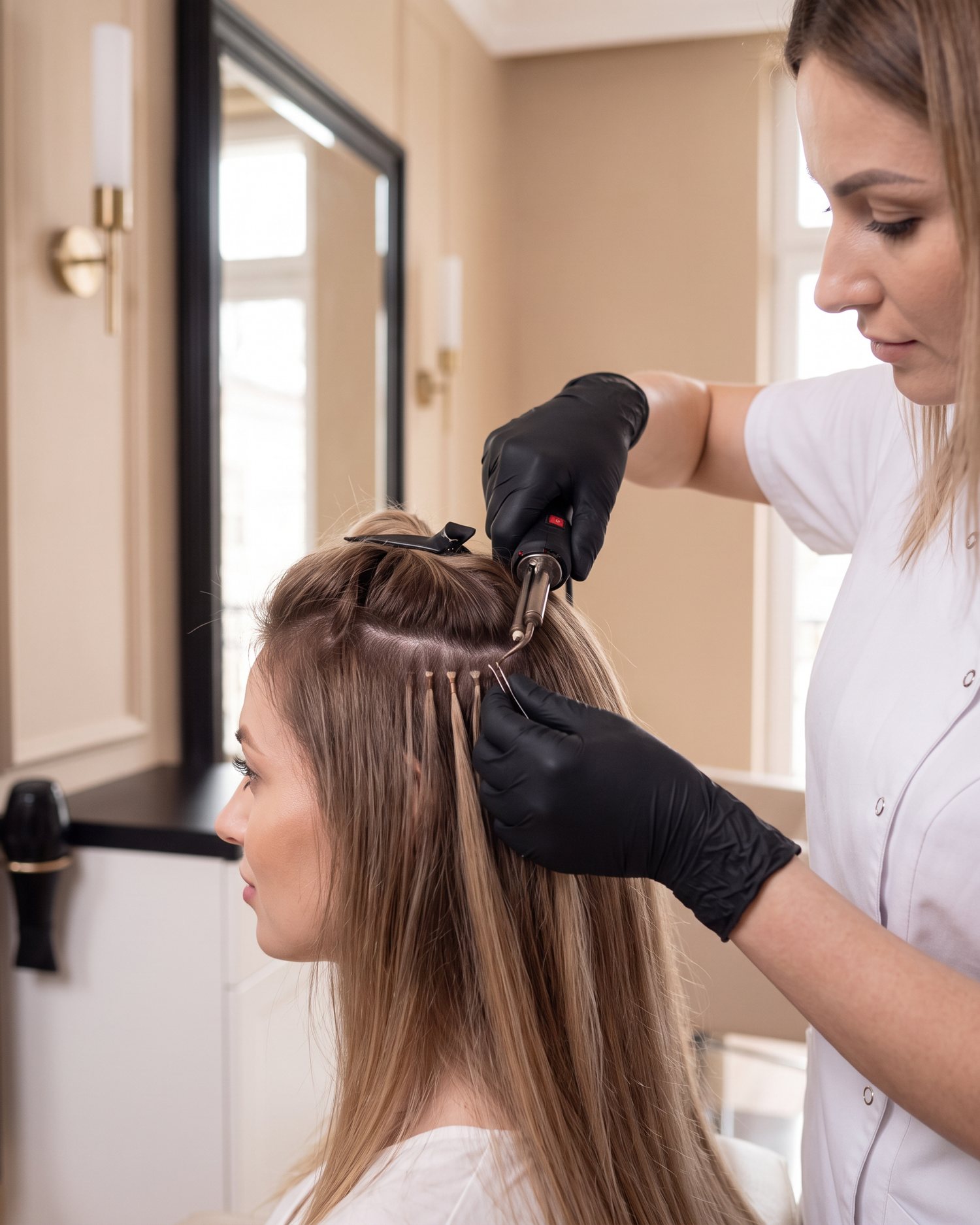
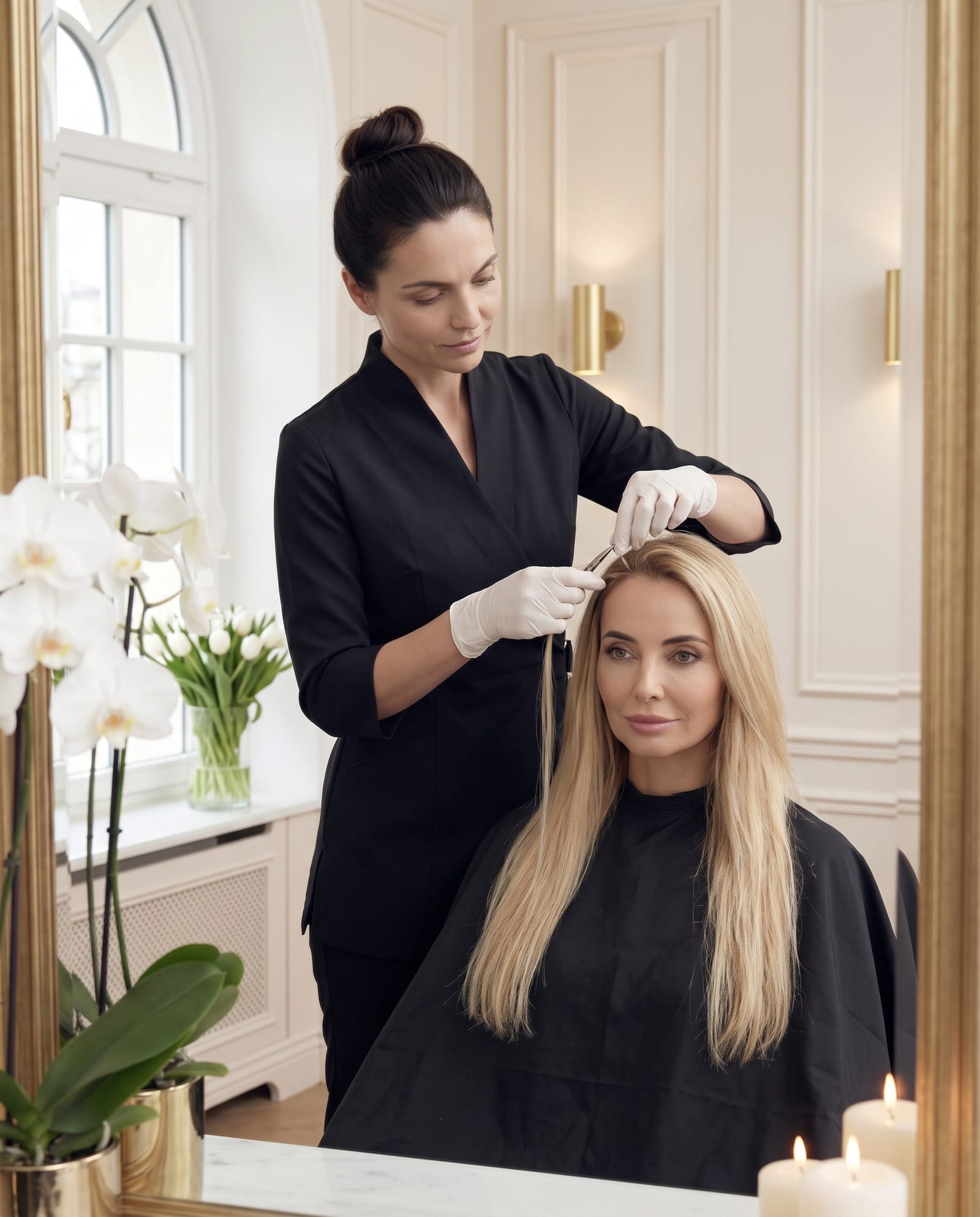
Illustrative photo, showing an example of the treatment process. Regular care for your hair during sleep ensures that every subsequent salon visit for tape-in re-application goes smoothly, and your own hair remains in good condition. Because the tape-ins are flat and flexible, after a short time, you will become so accustomed to their presence that the nightly routine will become a completely natural part of your hair care.
Hair growth necessitates a re-application visit
Your hair grows at its own pace, and with it, the bonds that were recently right at the scalp move down. You notice that the tape-ins are now a centimetre lower than on the day of application, which is a natural signal that it is time to schedule a salon visit. This is not a flaw of the method, but physiology, which necessitates regular re-application of the strands. If you ignore this moment, the bonds will start to become more perceptible, and the hairstyle will lose its former lightness and perfect alignment.
- 01
Dissolving the adhesive
The stylist removes the tape-ins using a special liquid that safely dissolves the adhesive without damaging the structure of your hair.
- 02
Cleaning the strands
The removed strands are thoroughly cleaned of product residue to prepare them for re-application.
- 03
Application in a new position
After preparing your hair, the tape-ins are re-applied right at the roots, restoring the hairstyle's original density.
- How often do I have to come for a re-application?
The frequency depends on the growth rate of your hair; it is usually a period of several weeks. The stylist will assess what interval will be optimal for your hairstyle during your first visit.
- Does removing tape-ins damage my hair?
A correctly performed removal using a dedicated liquid is safe. It is crucial not to attempt to remove the tape-ins yourself at home, which could damage the hair structure.
Care products must avoid the roots
Choosing the right products is the foundation that determines how long the bonds remain invisible and stable. Your daily routine must undergo a slight modification because the adhesive that holds the strands at the roots is sensitive to oily substances and silicones. These are what cause tape-ins to lose their grip faster than planned.
When washing your hair, focus on thoroughly cleaning the scalp and roots with a silicone-free shampoo. When it is time for a conditioner or mask, apply them very carefully, ensuring the product does not run onto the areas where the strands connect with your hair. This is a key habit that protects the durability of the application. Follow the same procedure with leave-in styling products. If you use a light mist or serum, spray them only on the ends and lengths, leaving the roots completely dry and clean.
- Shampoo: choose silicone-free formulas that do not weaken the tape-in bonds.
- Conditioner: apply it from the mid-lengths, avoiding contact with the bonds.
- Serum and mists: apply only to the lengths, protecting the roots from an oily layer.
- Brush: use only soft-bristled accessories intended for hair extensions.
Remember that even the best products cannot replace application technique. If you notice that a strand is starting to shift, do not try to re-attach it yourself. This is a natural signal that it is time for a salon visit, during which the stylist will refresh the bonds and re-apply them at the new growth. Keeping the roots clean is the simplest way to enjoy a dense hairstyle without unnecessary complications.
The reaction to tape-ins near the face can be misleading
Often, a few days after a salon visit, a sudden anxiety arises: "the tape-in at the temple seems looser." This is the most common signal clients report. Before you decide that the bond has lost its grip, however, it is worth analysing your daily care routine. In most cases, the cause is not a stylist's error, but accidental contact with an oily product.
How to check what is happening? If you feel that the strand near your face is "behaving" differently than the others, perform a simple test. Gently pull the hair back and check if the bond is clean or if you feel a slippery film under your fingers. If your daily facial care is intensive, it is worth pulling your hair back with a headband or clip while applying creams until the product is completely absorbed. This is a simple habit that protects the durability of the application.
- If the tape-in at the temple has loosened, do I have to return to the salon immediately?
Not always. If the bond is only slightly shifted but still holds stably, it is enough to be more cautious when washing and brushing. However, if you feel that the strand is clearly coming away from the roots, book a follow-up visit so the stylist can safely remove and re-apply it.
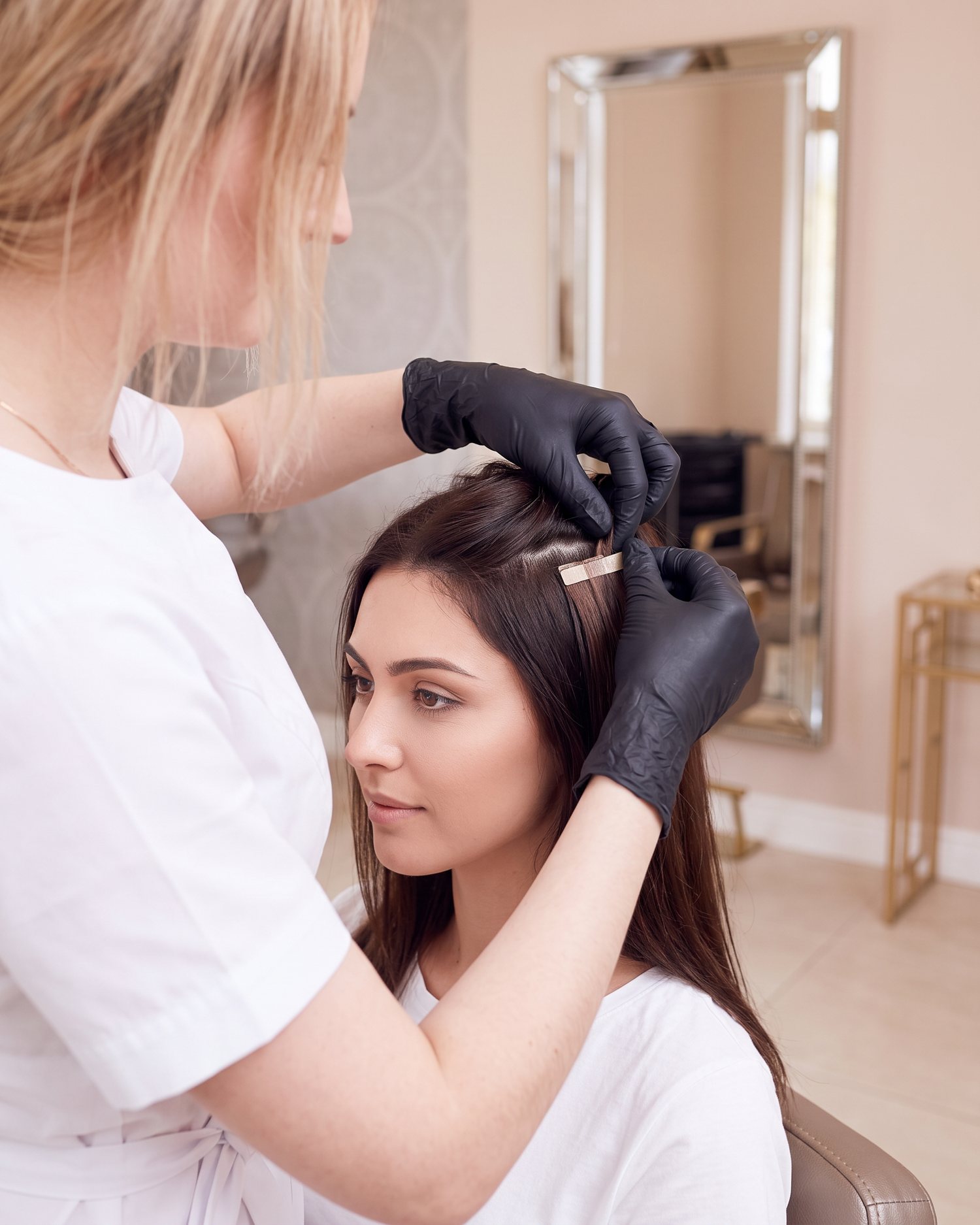
Illustrative photo, showing an example of the treatment process. Remember that tape-ins require precise treatment. If you notice that the loosening problem returns in the same place, it is worth consulting your stylist. Sometimes a small correction in the placement of the strands is enough to avoid contact with the products you use daily.
Updos require strategic placement of the strands
Many people choose hair extensions precisely to be able to enjoy fuller updos. Although the tape-in method allows for great freedom, it requires a bit of strategy when styling. The key is to place the strands so that the bonds remain invisible even when hair is pulled up tightly.
- With a high ponytail, always check that the bonds at the nape of the neck are fully covered by a natural layer of hair.
- Avoid tying the hair tie too tightly, which prevents excessive tension on the bonds at the roots.
- Use the natural direction of the strands so the bonds "work" together with your hair.
During your visit, the hair extension stylist shows you how to pull your hair back so the bonds are not visible even in windy weather. Often, a gentle smoothing of the strands with your hand or using a soft-bristled brush is enough to perfectly blend the extensions into your natural hairstyle. It is worth remembering that strategic placement of the strands is the foundation that allows you to wear ponytails or loose buns without worrying about the discretion of the bonds.
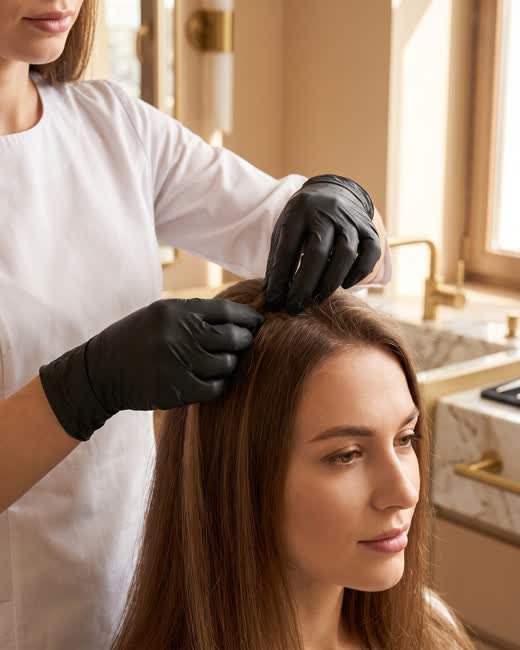
Remember that the illustrative photo, showing an example of the treatment process, shows how smoothly tape-ins adhere to the scalp. Because the bonds are almost imperceptible, updos become a natural part of your daily life, rather than a challenge requiring complicated masking techniques.
The condition of your own hair determines the comfort of wearing them
How your hair handles the presence of tape-ins becomes clear about three weeks after application. During this time, you observe whether your natural strands are reacting to the extra weight with excessive strain. Remember that extensions are additional support, not a change in the structure of your own hair. If you notice discomfort at the roots or your hair seems more strained, it is a signal that it is worth looking at its condition before the next re-application.
Observation of the roots
Check regularly that the bonds lie flat and that your hair does not tangle at the connection point.
Reaction to weight
If you feel discomfort, consult your stylist — perhaps you need fewer strands at your next visit.
Many people choose additional regeneration to strengthen the hair structure before the next re-application. Healthy, elastic hair holds tape-ins better and is more resistant to daily brushing or styling. It is worth including products in your routine that do not weigh down the bonds, while simultaneously caring for the ends and lengths that do not have access to natural sebum.
- Use a silicone-free shampoo so as not to weaken the adhesive on the tape-ins.
- Apply conditioner only from the mid-lengths of the hair down.
- Use light moisturising mists, avoiding the bond areas.
- Brush your hair with a soft-bristled brush, starting from the ends.
The renewability of tape-ins allows for long-term wear
Many people fear that hair extensions are a one-time investment that ends with the first regrowth. With the tape-in method, it is completely different. This is a renewable solution, which means the same strands of natural hair can last for many months, provided they are treated properly during daily care.
When you sit in the chair after a few weeks of wear, this process looks almost identical to the first application. You see that after re-application, the hairstyle looks just as fresh as the first time. The strands retain their structure, shine, and volume, and thanks to the professional refreshing of the bonds, the whole thing again lies flat against the head. This is a great comfort, because you do not have to buy a new set of hair every time, but only pay for the service of their professional re-application.
- Can every strand be re-applied multiple times?
Yes, provided the extensions are of good quality and have been properly cared for at home. During each visit, the stylist assesses the condition of the strands and decides whether they are suitable for further wear.
- How often do I have to come for a re-application?
The frequency depends on the growth rate of your natural hair. Usually, the visit is planned every few weeks so that the bonds do not become too visible and do not excessively strain the roots.
Thanks to this system, you can enjoy your dream length and density for a long time. Regular re-applications are the natural rhythm of wearing tape-ins, which allows you to maintain an aesthetic hairstyle without having to give up extensions after a short time.