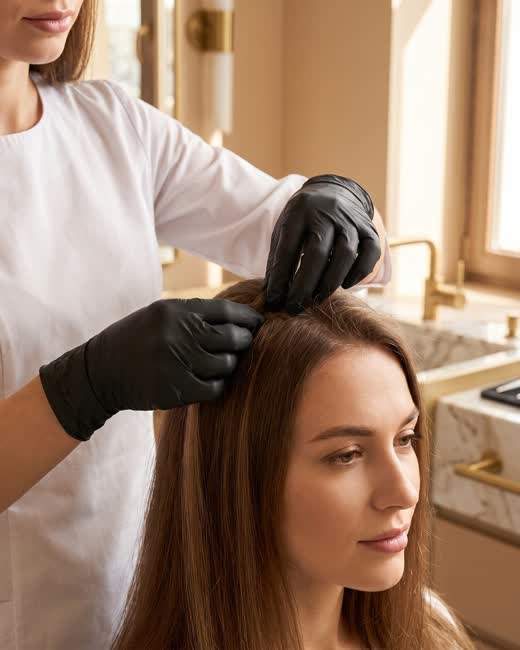
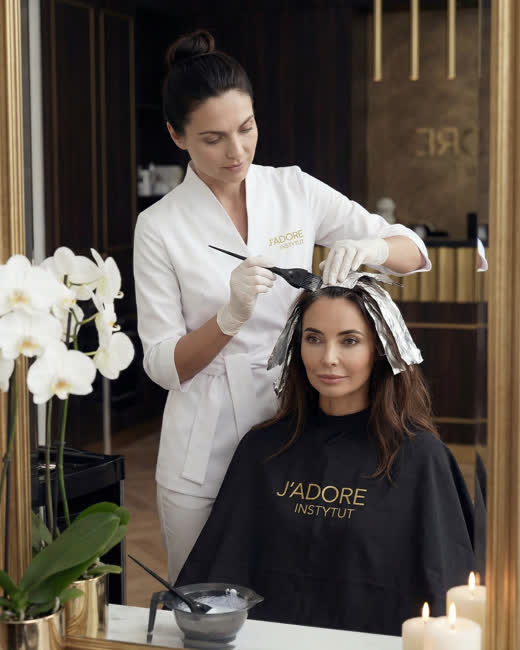
A treatment room at J'adore
HAIR EXTENSIONS & THICKENING
Dreaming of longer, fuller hair "right now", but wary of heavy fusion bonds and stiff joins? The tape-in method is today's most comfortable way to extend and thicken hair. We attach ready-made, flat strands with strong double-sided tape right at the root of your own hair — no keratin melting, no hot tools, no hard "knots" you can feel under your fingers. The bonds lie flat and disappear under your hair, so your style looks and moves naturally from the very first moment.
This is a hairdressing and styling service. Below you'll find everything worth knowing before you sit in the chair — including how to care for the tapes at home and what a "move-up" actually means.
application + move-ups every few weeks as your hair grows
How it works
The tape method, also known as tape-in or informally as bio-tapes, uses ready-made, flat strands of natural hair finished at the top with a thin strip of strong, double-sided adhesive tape. Your stylist applies them "sandwich-style" — a strand above and below encloses a thin layer of your own hair right at the root. No keratin melting, no hot fusion, no hard beads.
The result? The bonds lie completely flat and are practically undetectable to the touch, and the added hair moves together with your own. Application is quick, and wearing them is exceptionally comfortable — which is why tapes are now one of the most popular methods, especially for hair that "doesn't like" heavy, point-fusion bonds.
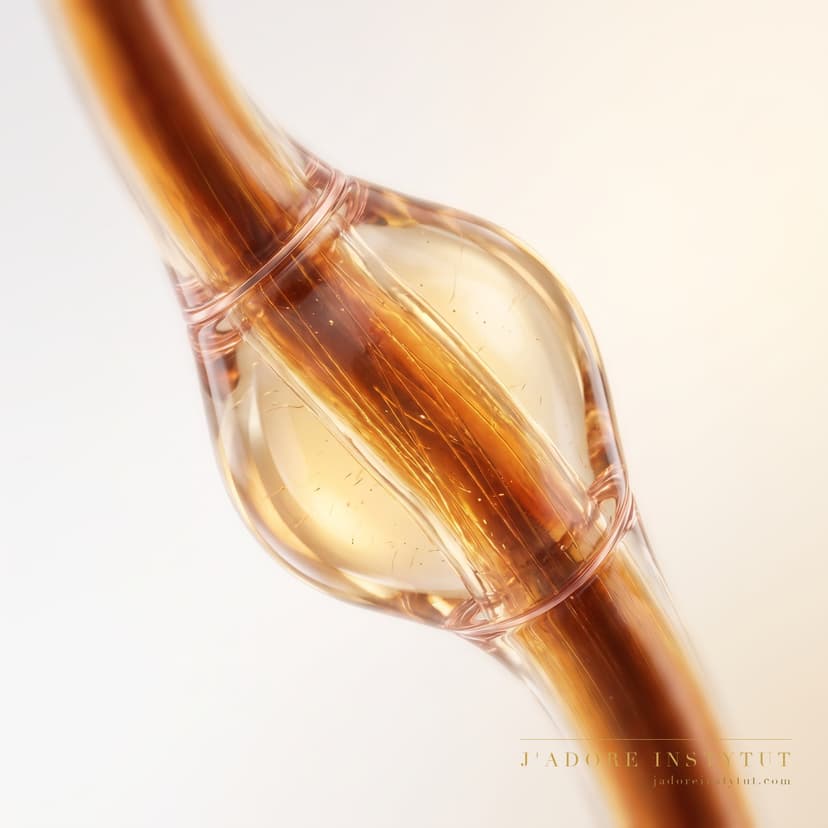
Ideal for
If you're noticing increased shedding, thinning or visible patches of scalp — this isn't the moment for extensions. Tapes add visual volume, but they don't treat the underlying cause and won't make your hair grow back. In this situation, book a trichology consultation and treatment or scalp mesotherapy first — we'll return to styling once your hair's condition allows it.
Women's and men's needs
This is classic hair extension and thickening for women — the most common reason for a visit. The goal varies: from dramatic length to discreetly adding density where hair is "thinning at the ends". Flat tapes sit beautifully in loose hair and let you wear a fuller ponytail or updo.
What we work with
For men, the topic is usually thickening thinning hair, not dramatic length — and here we need to be direct. Tapes can discreetly add density to longer hair, but with real hair loss or a receding hairline, this isn't the right tool. In that case there's only one path: a trichology consultation first, and only afterwards a conversation about styling.
What we work with
Did you know: you can wear the same strands multiple times. At a move-up, your stylist removes the tapes, refreshes the adhesive strip, and reapplies them higher up — at the new regrowth. That's why tapes are sometimes called a "renewable" method: you're not buying new hair every few weeks, just repositioning the hair you already have.
HAIR EXTENSIONS & THICKENING
What to expect
Most importantly: your finished style is ready straight away. No downtime, no healing — you leave the salon with longer, fuller hair. On the first day, you may feel a slight "awareness" of the bonds at the root; this usually fades within a day or two, once you get used to it.
The most common thing I hear after a week: "I think my tape has come loose near my face". This is usually not a fault in the application, but conditioner or oil that got too close to the root. Tape adhesive doesn't like oil. Simply apply care products from mid-length down, and the tape holds as it should.
A move-up is normal, not a failure. Your hair grows, so over time the bond moves away from the root and becomes visible — at that point, you book a touch-up, and your stylist reapplies the same strands higher up. I'll tell you this plainly at your consultation, so you can plan your budget and time sensibly.
Portfolio
A record of the work in our salons — the place where we publish treatment frames and, after photo sessions, results.
A record of results — in preparation. We publish photographs of our clients only with their consent.
Home care
Tapes are convenient, but adhesive has two enemies: oil and friction at the root. The whole home routine comes down to leaving the bonds alone and directing your care to the lengths.
This is the most important rule: oils and rich, oil-based conditioners applied at the root loosen the tape and shorten its lifespan. Use care products only from mid-length down, avoiding the bonds.
Sleep with your hair loosely braided or tied. Let wet hair dry before bed — moisture and friction against the pillow speed up tangling near the bonds.
Wash with a gentle, silicone-free shampoo, massaging the scalp with your fingertips — not your nails — and without vigorous scrubbing at the root. Rinse thoroughly and dry well — damp bonds are the enemy of durability.
Detangle from the ends upwards, using a soft brush designed for extensions. Be gentle at the root — never tug sharply at the bonds.
You can style your hair, but never touch the tape strip itself with a hot tool — high heat softens the adhesive. Work on the lengths only.
Chlorine, salt and high heat weaken the adhesive. Tie your hair back before swimming, and rinse it with clean water and dry it as soon as possible afterwards.
When tapes won't work
Tapes are a great method, but not for every type of hair or every situation. Sometimes it's better to postpone the application, or choose a different route — we'll say so directly at consultation.
From your stylist
I'd rather advise against something than disappoint you. If I see that tapes won't hold well, or that the cause of "thin hair" is something a trichologist should address — I'll say so right away. An honest conversation at the start beats disappointment two weeks later.
Bio-tapes
Extension methods differ in how they attach, how comfortable they are, and which hair type they suit best. None is "the best" independent of your own hair — that's why we choose the method at consultation.
flat bonds glued at the root
hold less well on very fine, quickly greasy hair
individual keratin fusion bonds
harder bonds, longer application — see the keratin method
strands on micro-rings
point pressure on the root; not for very delicate hair
Combine with
Tapes are a styling service — they look best on hair in good condition. Your stylist decides the order at consultation, but the logic stays the same: health and colour first, extensions second.
A simple guideline: if your hair is delicate and doesn't tolerate weight concentrated in one spot — tapes usually win on comfort. If your hair is strong and dense, and you want maximum freedom for updos — it's worth considering the keratin method. We'll choose the best fit by feeling your hair at your consultation.
Variants and methods
"Tapes" covers several variants and systems. You don't pick them "off the shelf" — your stylist matches them to the density, length and condition of your hair, and to your expected result.
Flat strands glued "sandwich-style" at the root. Quick application, comfortable and invisible bonds, no heat.
Dla kogoExtensions and thickening, for hair that doesn't tolerate heavy fusion.
Removing the strands at regrowth, refreshing the tape and reapplying higher up. The same hair, used repeatedly.
Dla kogoOngoing tape wear — a rhythm of every few weeks, as your hair grows.
Dissolving the adhesive with a dedicated remover and gently sliding off the strands without pulling on your own hair.
Dla kogoEnding your wear period, or a break between series.
Determining the number of strands, length and shade. Good, natural hair is the foundation of a lasting, attractive result.
Dla kogoEvery client — pricing and a plan before application.
Fact: Why does pricing vary? It depends on the number of strands, the length and quality of the added hair, and the amount of work the application requires. We price it individually — a package matched to the result, not "a fixed rate per centimetre". You'll know the final price after your consultation.
Price list
Checking free hours…
From the magazine
Editorial pieces on how this treatment works in practice — what happens during the session, how to prepare, where the limits are and what the first days after look like.
See also
The result lastsseveral months of wear, with a move-up as your hair growsJ’adore Instytut
Information. Tape-in hair extensions (tape-in / bio-tapes) are a hairdressing and styling service; the results and how long they last depend on the method, the quality of the added hair, the condition of your own hair and your home care, and they require a touch-up (move-up) as your hair grows. If you're experiencing hair loss or thinning, a trichology consultation is recommended first. This text is for information only. The details and choice of method are determined by your stylist during your visit.
Home care
Cosmetics matched to what your skin needs after a treatment — so the clinic effect lasts longer.
 hair regenerationOlaplexBROAD SPECTRUM CHELATING TREATMENT 370mlView in the shop(opens in a new tab)
 hair regenerationKevin MurphyYoung.Again Dry Conditioner Oil 100mlView in the shop(opens in a new tab)
 hair regenerationDSD de LuxeTravel PackView in the shop(opens in a new tab)
 hair regenerationSesdermaSESKAVEL Keratin Shampoo 200 mlView in the shop(opens in a new tab)