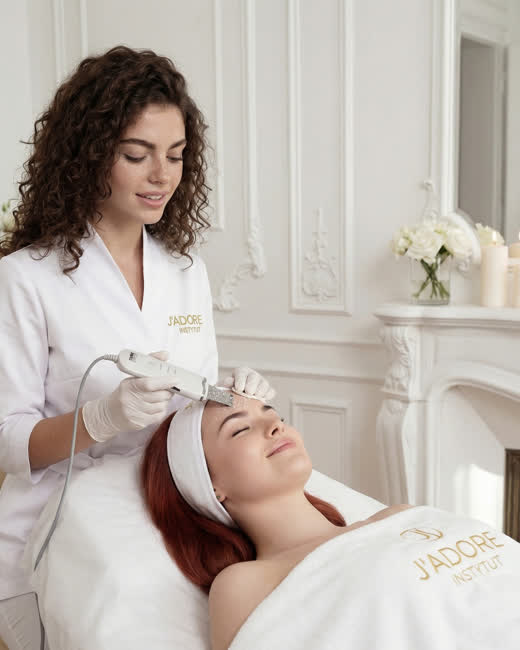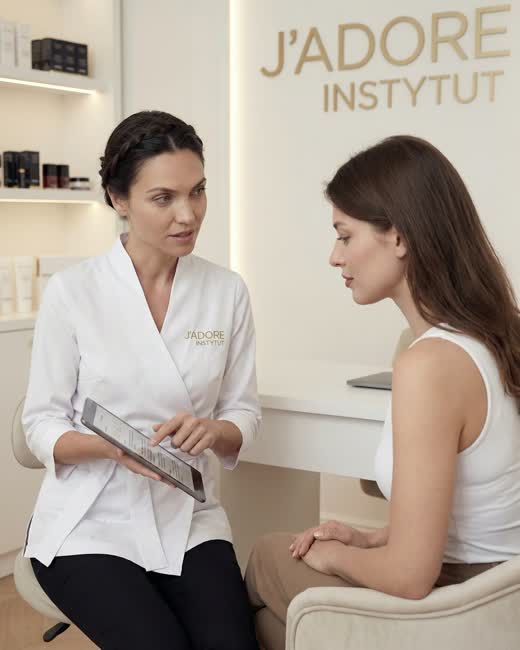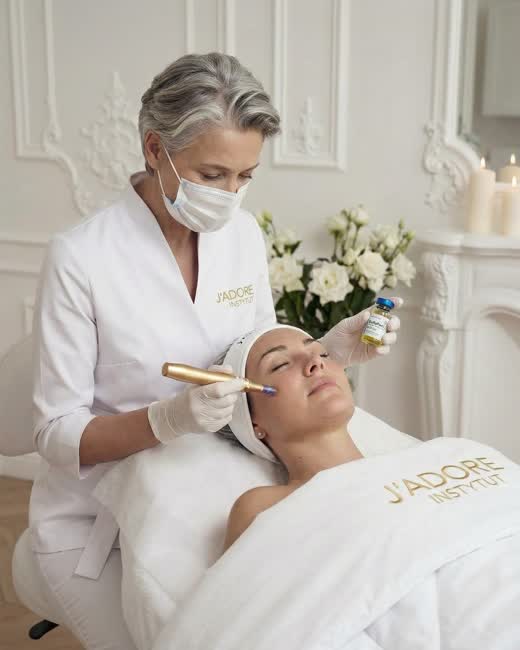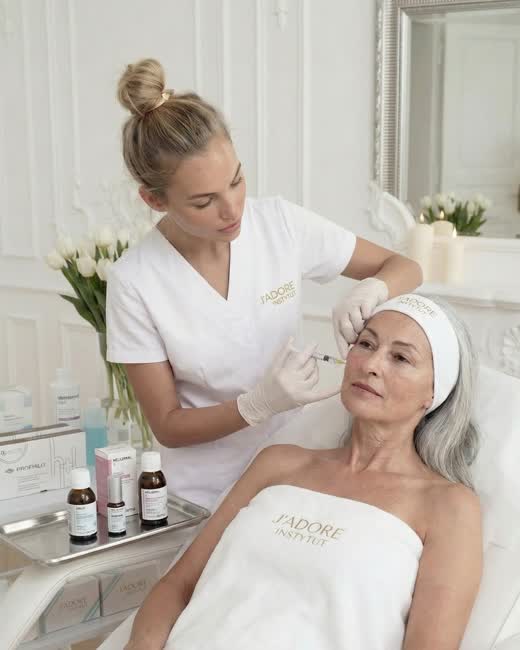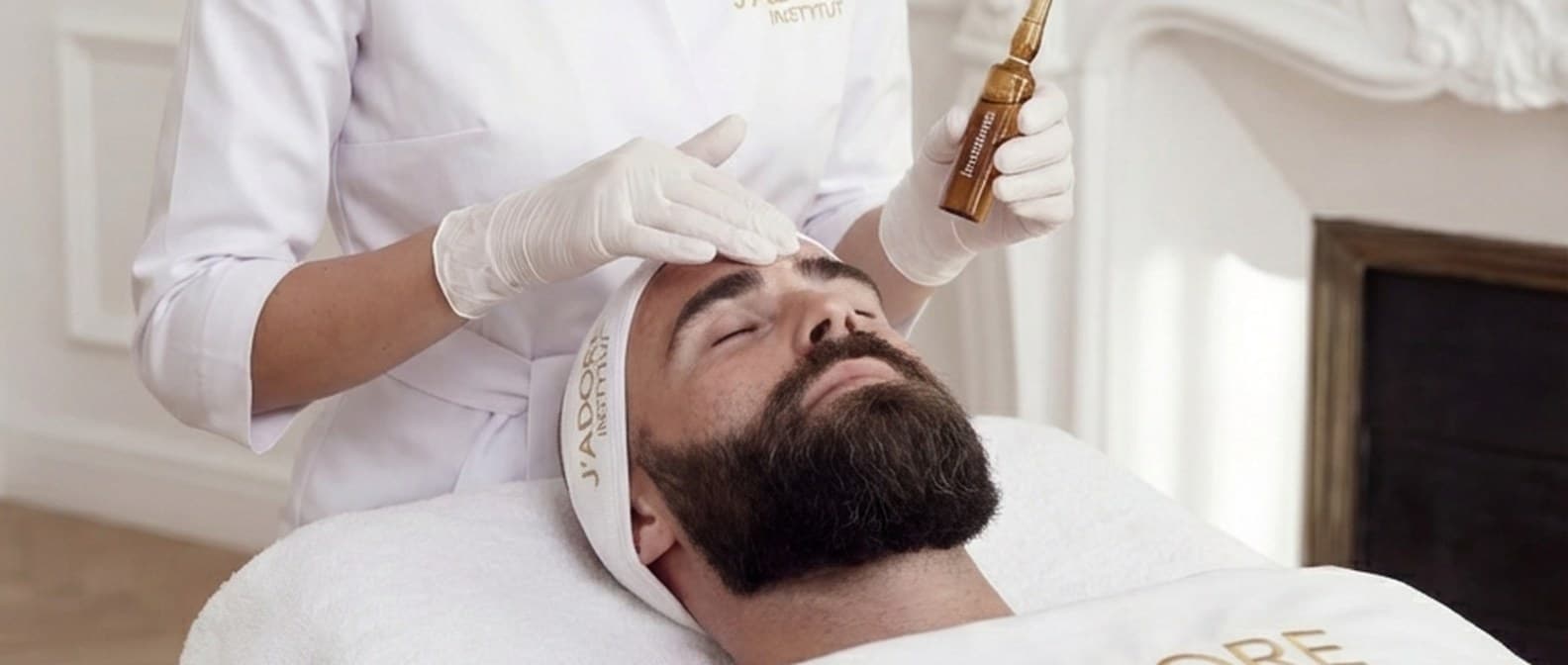
 A treatment room at J'adore
MEDICAL PEELS
Skin that becomes shiny by midday, clogged pores, recurring blemishes and the marks they leave behind — flat hyperpigmentation and small indented scars. This is a typical combination in acne-prone and seborrhoeic skin.
A cream alone cannot manage it. The Pyruvic peel is based on pyruvic acid — an alpha-keto acid valued in salon peels for one reason: it works in two ways. On one hand, it exfoliates, unclogs pores, regulates sebum and disinfects the skin. This is the classic role of a peel for acne. On the other, unlike most mild acids, it stimulates fibroblasts to produce collagen. In practice, this means it targets not only active acne but also its consequences: acne scars, hyperpigmentation, uneven texture and enlarged pores. At J'adore Instytut, the treatment is performed by an experienced cosmetologist. Below, you will find everything worth knowing before your first visit: whether it really works, whether it stings, whether and for how long your skin will peel, when results appear, how many treatments are needed, what to do after the treatment and why SPF is a requirement rather than a suggestion.
a series of 4–6 treatments every 1–2 weeks (often more for severe acne), followed by maintenance
How it works
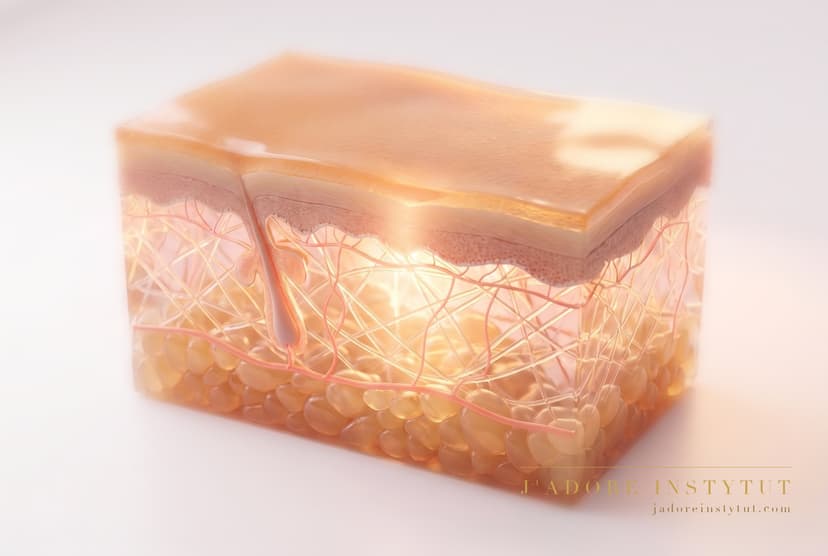
Pyruvic is a peel based on pyruvic acid — an alpha-keto acid. It belongs to a slightly different family than classic fruit acids (AHA) or salicylic acid (BHA). Its strength lies in its dual mechanism: it is lipophilic enough to penetrate sebum and unclog pores. What also sets it apart is that it stimulates fibroblasts to produce collagen.
In acne-prone skin, pyruvic acid works in several ways: it exfoliates and speeds up epidermal renewal, dissolves sebum plugs and unclogs pores, regulates sebum production, has an antibacterial and anti-inflammatory effect, and also brightens post-inflammatory hyperpigmentation. Its second mechanism — biostimulation — gradually improves skin quality, firmness and the appearance of shallow acne scars and texture.
This peel usually works from superficial to medium-superficial depth — in a controlled but noticeable way. The aim is not for the skin to “come off in sheets”. It is to cleanse, even out, brighten and gradually become denser. This combination — work for now (acne, pores, sebum) and work for later (collagen, scars, texture) — makes it one of the more interesting choices for acne-prone skin that leaves marks behind.
Ideal for
Pyruvic acid is not always a “first-contact” peel. It can be slightly more demanding than the mildest mandelic acid. For very sensitive skin, the cosmetologist may first prepare the skin or begin with a gentler acid. Selection and order are determined during consultation.
Women’s and men’s zones
The most common reason women choose a pyruvic peel for women is acne that leaves marks — active breakouts alongside post-inflammatory hyperpigmentation and small scars that persist for months. Another is enlarged pores and “shiny” skin. For mature skin, it is the wish to combine cleansing with improved skin quality and firmness. A pyruvic peel is ideal here because it works on acne while also stimulating the skin to regenerate.
What we work with
In the men's zone, pyruvic peeling for men most often targets oily skin, with larger sebaceous glands, wider pores and blackheads, as well as acne scars — flat and indented marks left after years of acne. Men rarely have a habit of SPF, so sun-induced and post-inflammatory hyperpigmentation are added to this. Pyruvic acid regulates sebum, unblocks pores, disinfects, and thanks to biostimulation it also works on scars and texture — in other words, it acts precisely on what men are left with "as a souvenir" after acne.
What we work with
Did you know: pyruvic acid is a natural compound formed in the body during sugar metabolism, in glycolysis — the same “pyruvate” you learn about in biology. In cosmetology, it is valued for a rare feature: it exfoliates like a peel while also telling the skin to regenerate by stimulating fibroblasts. This is why it works on two fronts at once — it removes the problem and addresses its marks.
Safety
With peels, results and safety depend on several factors worth asking about at every salon:
Pyruvic Peel is performed by an experienced cosmetologist — following skin analysis, a consultation and skin phototype assessment. The cosmetologist selects the strength, exposure time and number of treatments, monitoring your skin’s response throughout. A peel performed without prior assessment of your skin and skin phototype is asking for irritation or — paradoxically — new hyperpigmentation.
We use only original preparations (pyruvic acid Mediderma and related professional lines) from legal distribution. A peel of unknown origin means unpredictable pH and concentration — that is, risk instead of results.
There is no “one peel for everyone”. The cosmetologist determines the number of treatments, intervals and intensity individually. A peel sold as a one-off “miracle without a plan” rarely delivers lasting results for acne, hyperpigmentation and scars.
Without sun protection after a peel, post-inflammatory hyperpigmentation can develop easily — especially with darker skin tones and when treating post-acne marks. A good salon finishes the treatment with SPF and provides clear written guidance.
Red flags — when it is better to walk away ·
Contraindications
Some contraindications are permanent, while others are temporary. In these cases, we simply postpone the treatment until the situation has resolved. We will go through the full list during consultation.
From the cosmetologist’s salon
The issue most often overlooked: herpes. “I only have a small blister on my lip, and the peel is for my cheeks” — that is enough to postpone it. An active virus combined with controlled exfoliation carries a risk of spreading the lesion. It is better to wait a few days. For recurrent episodes, simply plan antiviral protection before the treatment or course.
This is not a complete list — we will discuss your medicines, skin conditions, skin phototype and previous treatments individually during consultation.

Why such a “reasonable” price
A superficial peel may cost less than intensive professional treatments. That is not a reason for concern — provided it includes an original product, consultation and a treatment plan. A low price becomes a warning sign only when it comes with no assessment of the skin and skin phototype, an unlabelled product, or a course sold “blind”.
In other words: with a pyruvic peel, you are not paying for “strong exfoliation”. You are paying for accurate selection and safe management of the series — including its valuable dual action: on acne now, and on scars and skin quality later. This is why a single treatment is accessible, while meaningful change comes through consistency rather than a one-off “burst”.
The visit
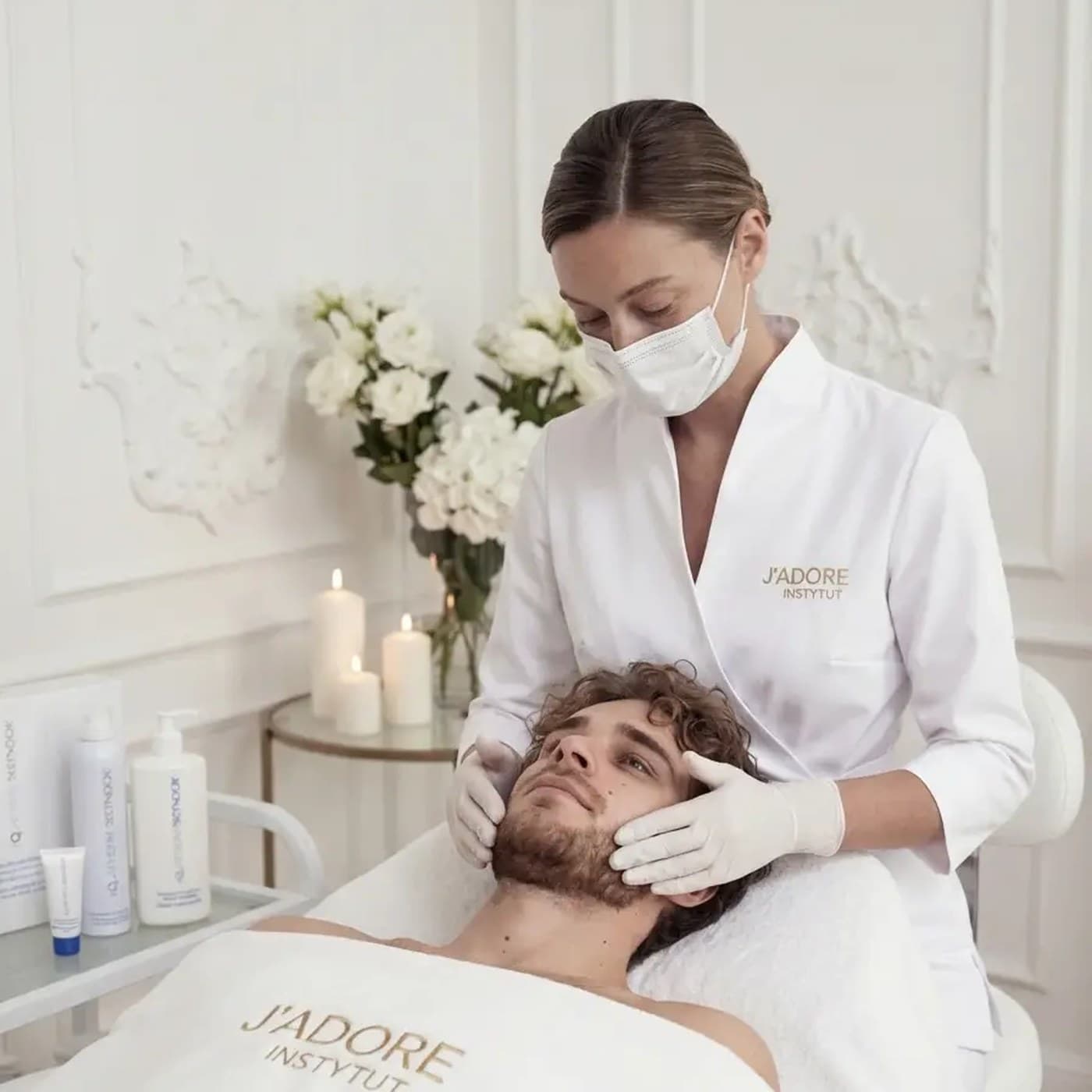
Consultation and skin analysis
the cosmetologist assesses your skin type, the severity of acne and post-acne marks, skin phototype and reactivity. They rule out contraindications and select the peel strength.
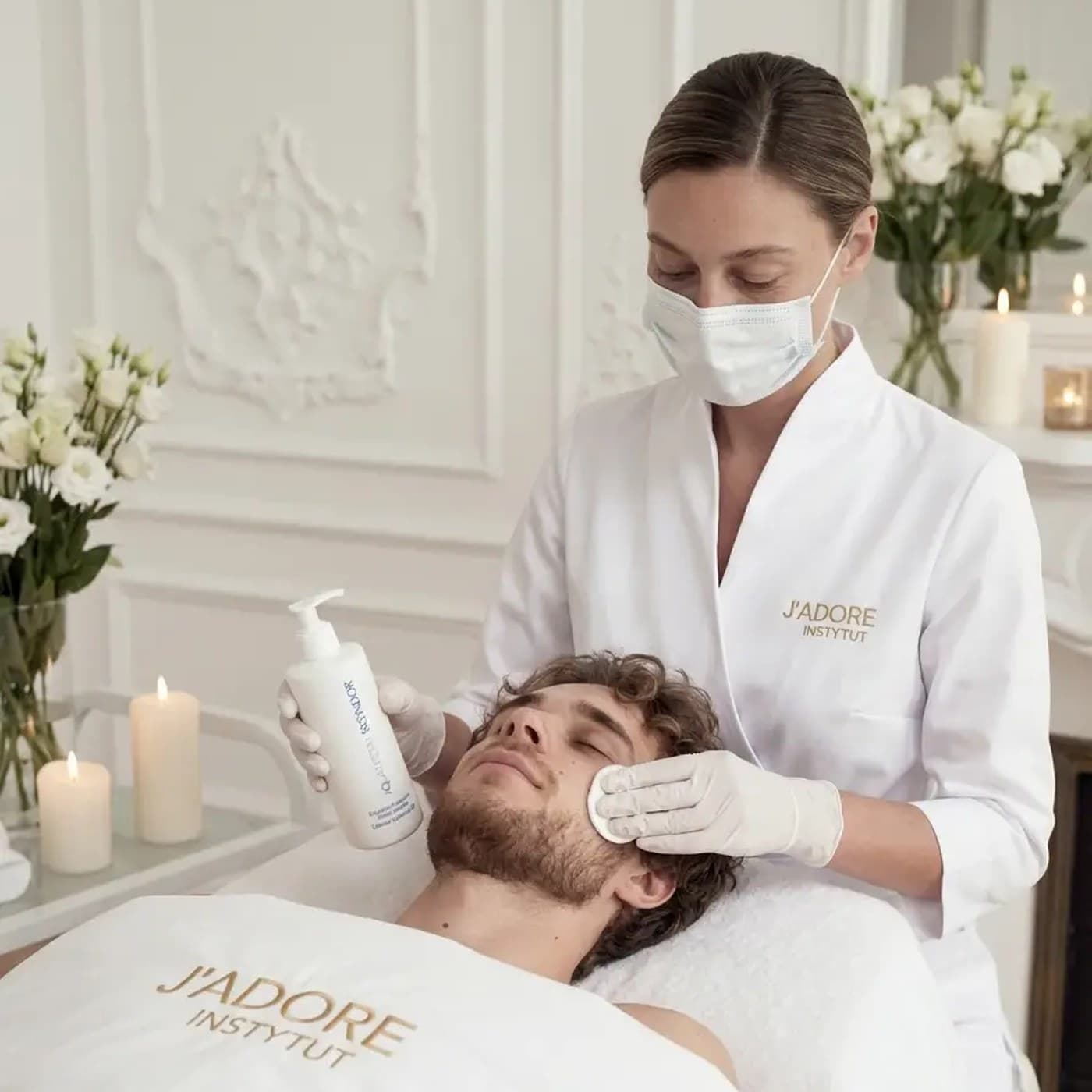
Skin degreasing
thorough make-up removal and Skin preparation with a pH-balancing product, so the acid works evenly. For oily skin, this is essential — sebum blocks acids.
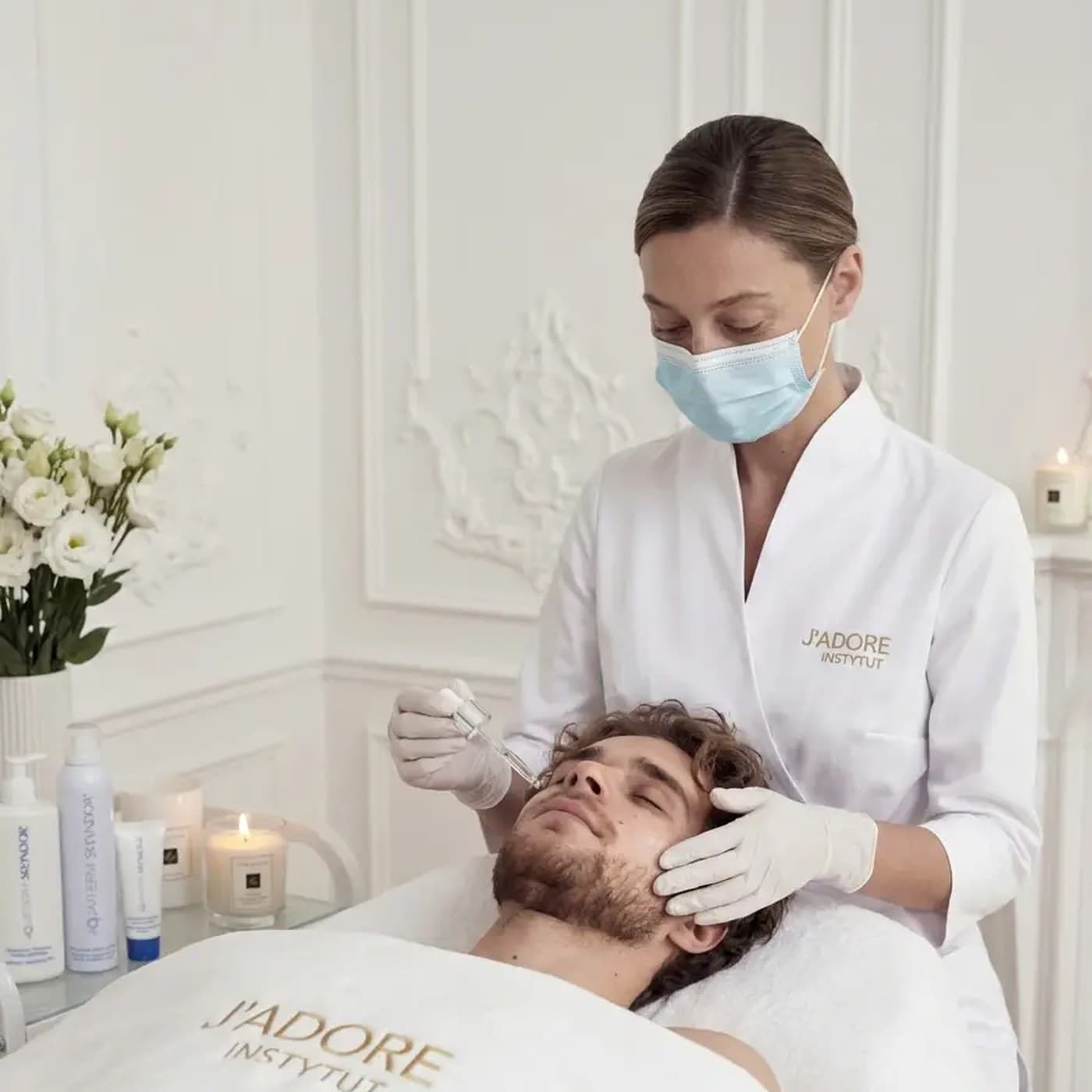
Peel application
the product is applied in layers with a brush. The cosmetologist monitors your skin’s response and controls the exposure time. Strong redness is a signal for earlier neutralisation.
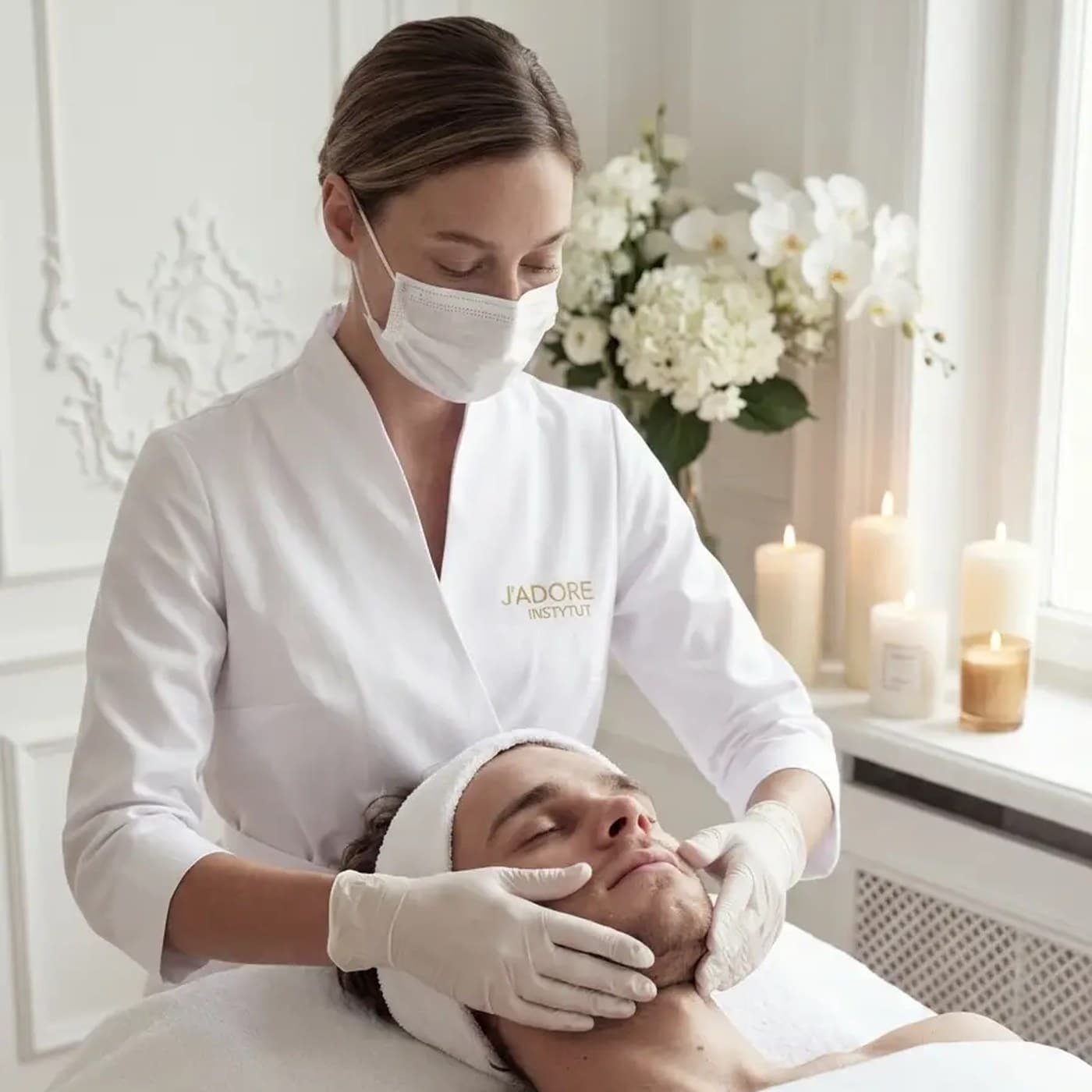
Neutralisation / removal
the acid is stopped and neutralised according to the product protocol. This step is not skipped.
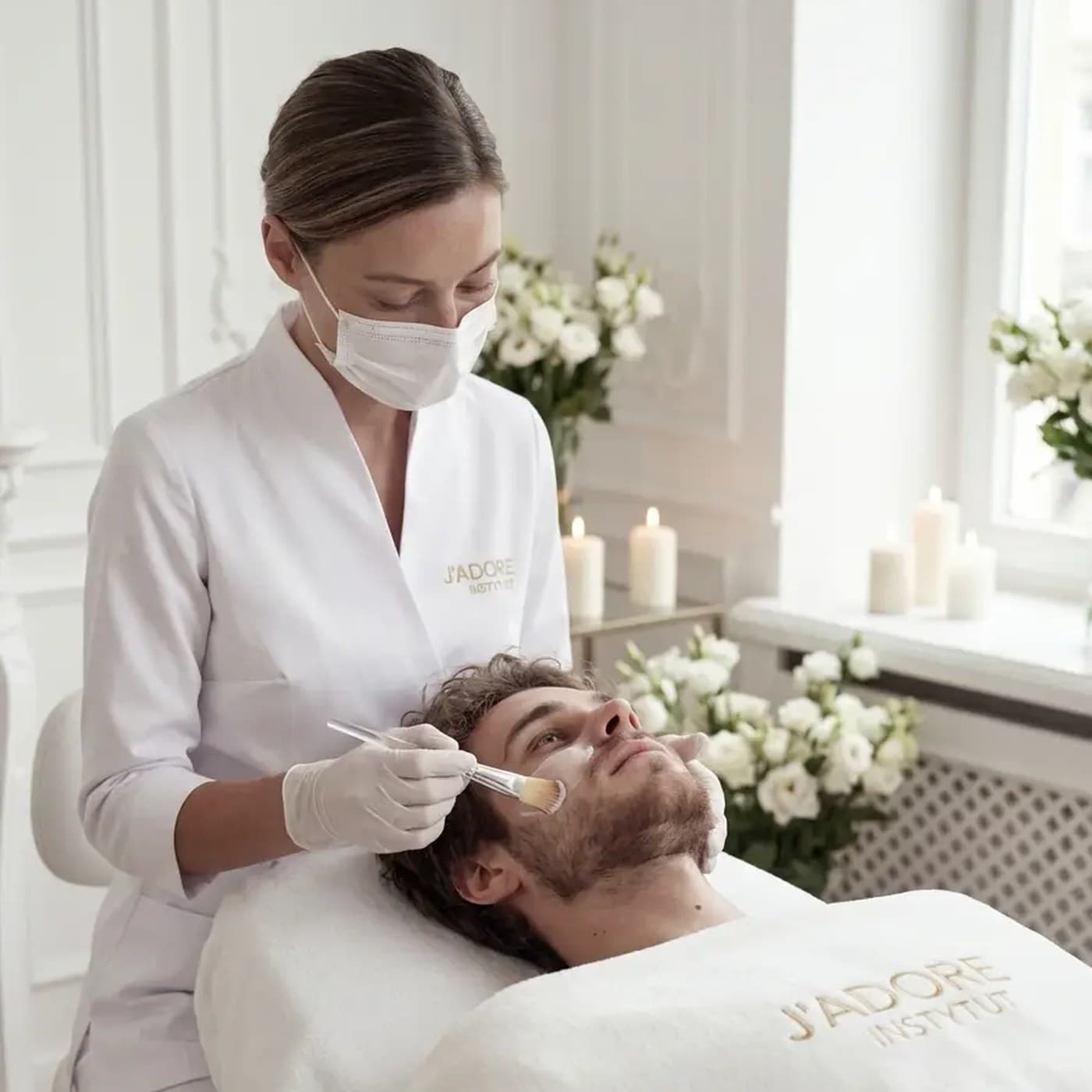
Soothing mask and SPF
a calming, regenerating serum, for example with panthenol or niacinamide, followed by hydration and SPF 50+. You receive written aftercare advice.
I tailor pyruvic acid to your skin, not to the price list. For a first treatment, especially with sensitive skin or a darker skin phototype, I proceed more cautiously — with a shorter exposure time and fewer layers — to see how your skin responds. I can work more intensively in later sessions. This peel rewards consistency and patience, not a single “big hit”.
Portfolio
A record of the work in our salons — the place where we publish treatment frames and, after photo sessions, results.
A record of results — in preparation. We publish photographs of our clients only with their consent.
What to expect
Most importantly: this is still a superficial peel with no real downtime, but it can be more noticeable than the mildest acids. After the treatment, you will usually experience temporary redness and tightness. In the following days, there may be exfoliation — from barely visible fine flakes to more noticeable peeling, depending on the strength and your skin. This is normal and temporary. After completing the series, skin looks clearer, smoother and more even.
Does it sting? Yes, mild to moderate stinging or tingling during application is typical — pyruvic acid can feel slightly stronger than the mildest mandelic acid. The sensation is brief and controlled. The cosmetologist adjusts the exposure time and treats strong redness as a signal for earlier neutralisation. A cooling fan can further improve comfort.
The result does not appear “the next day”. A fresher, brighter complexion may be visible after the first session. However, real improvement in acne, pores, hyperpigmentation and scars develops through a series (usually 4–6 treatments, more for severe acne). It is maintained with home skincare and consistent SPF use. Results for scars and skin quality (collagen) naturally develop most slowly — over weeks, not days.
From the cosmetologist’s salon
The most common misunderstanding is: “I am peeling, so it means it is working”, or the opposite: “I am barely peeling, so it probably did not work”. Neither is a measure of the result. With pyruvic acid, we assess results after the series: your skin is less shiny, there are fewer breakouts, pores are smaller, and marks and small scars become lighter and smoother — not by how much skin has “come off”.
Peels and your lifestyle
With peels, most questions concern what happens afterwards: sun, make-up, sauna, at-home acids, exercise and holidays. There is one rule — during the first days, your skin regenerates and is more sensitive to UV. Therefore, sun protection is not a suggestion, but a condition for results — especially when we are treating hyperpigmentation and post-acne scars.
This is the most important rule with every peel. With pyruvic acid, where we treat post-acne marks, it matters even more. After the treatment, avoid direct sun exposure and sunbeds. Use SPF 50+ every day for at least several weeks. Without it, you risk post-inflammatory hyperpigmentation — the opposite of the intended result.
On the day of treatment, let your skin rest. You can usually apply make-up from the following day — unless your skin is peeling more noticeably. In that case, the cosmetologist may advise a short break. Do not pull off peeling flakes under your make-up.
High temperatures, chlorine and sweat irritate freshly exfoliated skin and increase redness. Avoid saunas, swimming pools and hot baths for several days after the treatment.
Stop using strong AHA/BHA acids and retinol in your home skincare routine, usually for around a week or until approved by the cosmetologist. Applying them immediately after a peel is a simple route to irritation and an impaired skin barrier.
Intense exercise and heavy sweating immediately after the treatment can sting, irritate and increase redness. With acne-prone skin, they can also contribute to breakouts. Give your skin 1–2 days to rest, then return without restrictions.
Sunbeds are not an option. Travelling to intense sunshine during the series carries a risk of hyperpigmentation — especially with a darker skin phototype and when treating post-acne marks. Tell us about your plans during consultation. We will arrange the schedule so your skin is not exposed at a critical time.
Pyruvic — pyruvic acid
“A peel for acne and scars” is not one tool. Pyruvic acid, a milder superficial peel and fractional mesotherapy (Dermapen) / laser do different things. They are selected for the concern and skin phototype — and often complement each other:
exfoliates, disinfects and biostimulates
will not remove deep, “pitted” scars or advanced melasma on its own — this is a peel, not resurfacing
gentle exfoliation and brightening
works less on scars and skin quality — biostimulation is weaker than with pyruvic acid
remodels the skin at a deeper level
this is not a refreshing peel — longer downtime, different indications and different skin preparation
Combine with
Pyruvic acid works best as part of a plan, not on its own. The cosmetologist decides on the order and intervals during consultation, but the general logic remains the same — first we cleanse and balance the skin, then we refine the result for skin tone, quality and scars:
If active acne is leaving marks — pyruvic acid is an excellent choice. It works on acne and its consequences at the same time. If your skin is very sensitive or has never had acids before, I sometimes start with a gentler mandelic peel. If we are talking about deep, “pitted” scars, a peel alone will not remove them. We then discuss fractional mesotherapy or laser treatment. The choice is not about “which is strongest”. It is about “which suits your skin, concern and skin phototype”.
Products and variants
The “pyruvic peel” at J'adore is based on a specific pyruvic acid product from the Mediderma range. However, you will find pyruvic acid in several professional ranges, and it may be combined with other ingredients for broader action. You do not choose a product “from the shelf” — the cosmetologist selects it according to your concern, skin reactivity, skin phototype and treatment area. The treatment area and course format also vary:
A classic pyruvic peel: keratolytic, sebum-regulating, antibacterial and biostimulating. It stimulates fibroblasts to produce collagen. It combines action “for acne” with improved skin quality and shallow scars.
Dla kogoAcne, seborrhoea, enlarged pores, hyperpigmentation and acne scars, improved skin quality.
Pyruvic acid may be combined with other ingredients — for example, lactic acid for hydration and gentler exfoliation, or tranexamic acid for depigmentation. This shifts the focus towards brightening and comfort.
Dla kogoWhen hyperpigmentation is an important goal alongside acne, and your skin needs a gentler, more hydrating formula.
The same mechanism, different treatment areas — from the face alone to the neck, décolletage and back. These areas can be difficult to care for at home, and are also prone to acne and its marks.
Dla kogoWhen the concern does not end at the face — the neck, décolletage and back may also become shiny, develop blackheads and show marks.
From the cosmetologist’s salon
I often hear: “I want the strongest peel so everything comes off at once”. That is not how it works. With acne-prone skin, overly aggressive exfoliation can spread inflammation and leave new hyperpigmentation. I choose pyruvic acid because it combines effectiveness with biostimulation. It allows us to work systematically on acne and its marks, safely and step by step.
Fact: Why do strength and sensations differ? They depend on the product formula, concentration and pH, the number of applied layers, exposure time and how your skin responds — not simply on the name on the packaging. Two “pyruvic peels” may work differently because the cosmetologist doses them differently for a particular skin type and skin phototype. What matters is appropriate selection and safe management of the course, not “stronger = better”.
Price list
Checking free hours…
From the magazine
Editorial pieces on how this treatment works in practice — what happens during the session, how to prepare, where the limits are and what the first days after look like.
See also
The result lastscumulative result — builds gradually and is maintained with a series and home careJ’adore Instytut
Informational text. The description above is for educational purposes and does not replace a consultation. The Pyruvic (pyruvic acid) peel is a beauty treatment (the word “medical” in the category name refers to the class of product and does not mean that it is performed by a doctor). The peel selected, its strength, the number of treatments in the series and contraindications are determined by a cosmetologist/specialist during an individual consultation, following skin analysis and assessment of the skin phototype.
Home care
Cosmetics matched to what your skin needs after a treatment — so the clinic effect lasts longer.
 acne and blemishesDermoMedicaAnti-Blemish Nanoneedling Patches 9 pcs.View in the shop(opens in a new tab)
 oily skinSkeyndorExpert Cleanse Pro – Mattifying Foam GelView in the shop(opens in a new tab)
 sun protectionCell Fusion CAquatica Sunscreen 100 SPF 50+/PA++++View in the shop(opens in a new tab)
 acne and blemishesMesoesteticGrascontrol Detox PowderView in the shop(opens in a new tab)
 oily skinMedik8Natural Clay Mask™View in the shop(opens in a new tab)
 sun protectionDermaQuestSunArmor SPF50 30 mlView in the shop(opens in a new tab)
 acne and blemishesPeel MissionUPWASHING ACNE SKIN ACID GEL 250mlView in the shop(opens in a new tab)
 acne and blemishesDiego Dalla PalmaSmart Pure Exfoliating Mask stick 30 gView in the shop(opens in a new tab)