The scalp — not like facial skin, not like body skin
The first thing worth understanding: the scalp is its own category. The same rules that apply to facial or body skin don't quite apply here — its physiology is distinctly different. Before we look at what to do, it's worth understanding how this tissue actually works.
- Follicle and gland density. The scalp has one of the highest densities of hair follicles anywhere on the body — along with the sebaceous glands that go with them. That means it produces more sebum than almost any other area of skin. Sebum is necessary — it hydrates, protects and helps create the follicles' microclimate — but too much of it, or an imbalance caused by harsh shampoos or excessive stimulation, quickly turns that environment unfavourable.
- Its own microbiome. Hundreds of strains of bacteria and fungi live on the scalp, forming a complex community that helps regulate pH, keeps pathogens in check, and supports the skin barrier. This microbiome is delicate — disrupted by harsh detergents, frequent washing, hot water, and even stress. Once the balance breaks down, early signs appear: dandruff, itching, excess oiliness, or, paradoxically, excessive dryness.
- The hair growth cycle. Every follicle works to its own rhythm, moving through growth (anagen), transition (catagen) and rest (telogen) phases. How fast a hair grows, how thick it is, and how long it stays on the scalp all depend largely on the environment the follicle lives in — oxygenation, blood flow, the condition of the surrounding skin. A healthy scalp means a longer growth phase and noticeably less hair loss.
- Thickness and tension. The scalp is noticeably thicker than facial skin, but it's also pulled tight — it sits directly on the fascia and skull, without a substantial fat cushion underneath. That makes it prone to reduced oxygenation when tension builds up, for example under chronic stress. This is exactly why scalp massage isn't just an indulgence — it's a mechanically sound tool.
What the scalp can't tolerate — and what quietly damages it
It's easier to understand what to do right once we look at what does harm. Many habits that seem neutral, or even caring, can gradually disrupt the scalp's balance — and do so in ways that aren't immediately visible. The consequences often show up weeks later: hair loss, dandruff, loss of volume, and, in people with a predisposition, worsening thinning.
What overloads and disrupts it
common habits that cause harm
- Water that's too hot when washing — enlarges pores, increases sebum production, disrupts the microbiome
- Washing too often with a harsh shampoo — strips the scalp of oil, which then "responds" by producing even more
- Washing too rarely with an oily scalp — sebum builds up and blocks the follicle openings
- Applying conditioner to the scalp — clogs follicles, worsens dandruff, slows growth
- Tight hairstyles and hair ties — chronic tension in the fascia means poorer blood flow and traction alopecia
- Drying without a cool-down setting — hot air throughout the whole process draws moisture out of the tissue
What supports and restores it
this makes sense and can work
- Lukewarm or cool water, or at least a cool rinse at the end
- Washing adapted to your scalp's rhythm, not a fixed schedule
- Shampoo for the scalp, conditioner from mid-length down
- A gentle massage while washing, or as a separate ritual
- A scalp serum or ampoule — a separate product, with a different formula from the ones used on strands
- Sun protection on hot days (a hat, or a mist with SPF)
Scalp massage — a simple ritual with a real physical basis
Scalp massage sounds like a relaxation indulgence, but it has real grounding in physiology. Done regularly — a few minutes a day, or every other day — it can help improve blood flow to the scalp, ease excess tension in the cranial fascia, and create better conditions for the hair follicles.
- 01
Dry massage — before washing
Using your fingertips, not your nails, make small circular movements across the whole scalp. Start at the temples and nape, then gradually work up towards the crown. Use light pressure, not rubbing. This helps release tension, stimulates circulation, and makes it easier for shampoo to be absorbed afterwards.
- 02
Massage while washing
Apply shampoo to the scalp and massage for at least a minute — calmly, without scratching. This isn't just more effective cleansing — it's also mechanical stimulation of the follicles. Many trichologists believe how you wash matters just as much as what's in the shampoo.
- 03
Serum or oil — massaging it in
If you use a scalp product — a serum with active ingredients, jojoba oil or castor oil — apply it to dry or slightly damp skin and gently massage it in with your fingertips. The mechanical massage here isn't incidental — it supports absorption and increases local blood flow.
- 04
Gua sha or a massage tool — optional
Tools like a silicone brush or a scalp gua sha let you apply firmer, more consistent pressure without tiring your hands. This is a tool, not a necessity — but for people with tension in the neck and shoulders, it can bring noticeable relief and improve circulation across the whole area.
How to match your home routine to your scalp condition
There's no single routine that suits everyone — the scalp can be oily, dry, sensitive, prone to dry or oily dandruff, affected by androgenic or telogen hair loss, with or without seborrheic dermatitis. Before choosing a shampoo, serum or supplement, it's worth knowing exactly what condition you're dealing with. Below is a simplified decision map — it doesn't replace a consultation, but it helps you get your bearings.
Going beyond these four categories — that is, diagnosing a specific scalp condition with follicle mapping, sebum assessment and strand analysis — is the domain of a trichology assessment. If your home routine isn't showing results after a few weeks, it's worth booking one instead of switching shampoos yet again.
What a salon treatment does — and why it isn't enough on its own
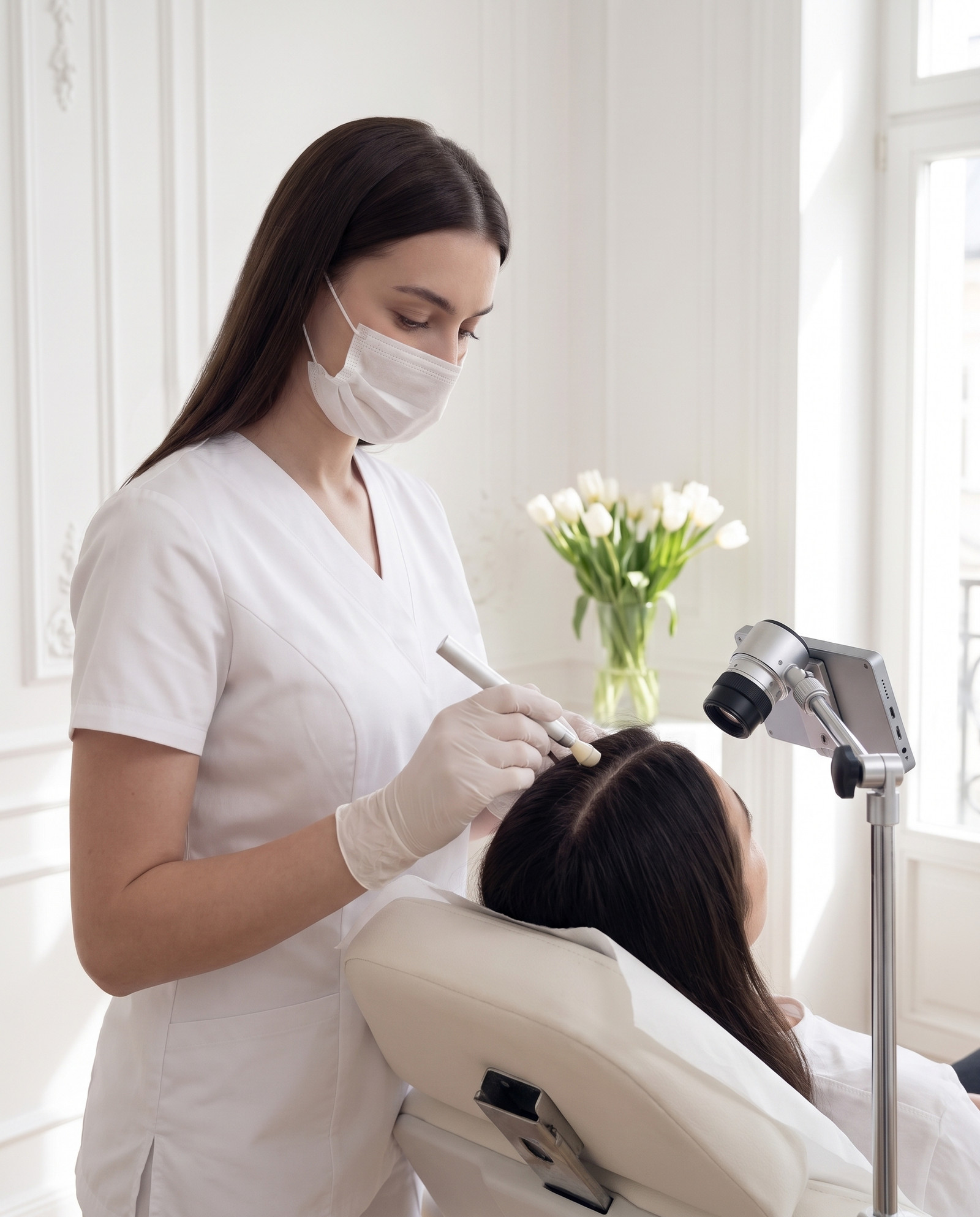
Scalp treatments — whether cleansing peels, follicle stimulation, or treatments that improve microcirculation — all share one thing in common: they create the conditions for the scalp to start working better. They clear follicle openings, normalise sebum, boost circulation, or deliver active ingredients deeper than any home shampoo can reach.
But the scalp doesn't only live during a salon visit. Weeks pass between treatments — and it's during that time that habits build up, either preserving the salon's results or gradually undoing them. Harsh shampoo every day, plus hot water, no massage and no scalp product, adds up to being right back where you started before your next visit.
Scalp cleansing
A treatment that removes dried sebum, product residue and dead skin cells from the follicle openings. Once cleansed, the scalp absorbs active ingredients from home products far more effectively — a natural gateway to a more effective routine at home.
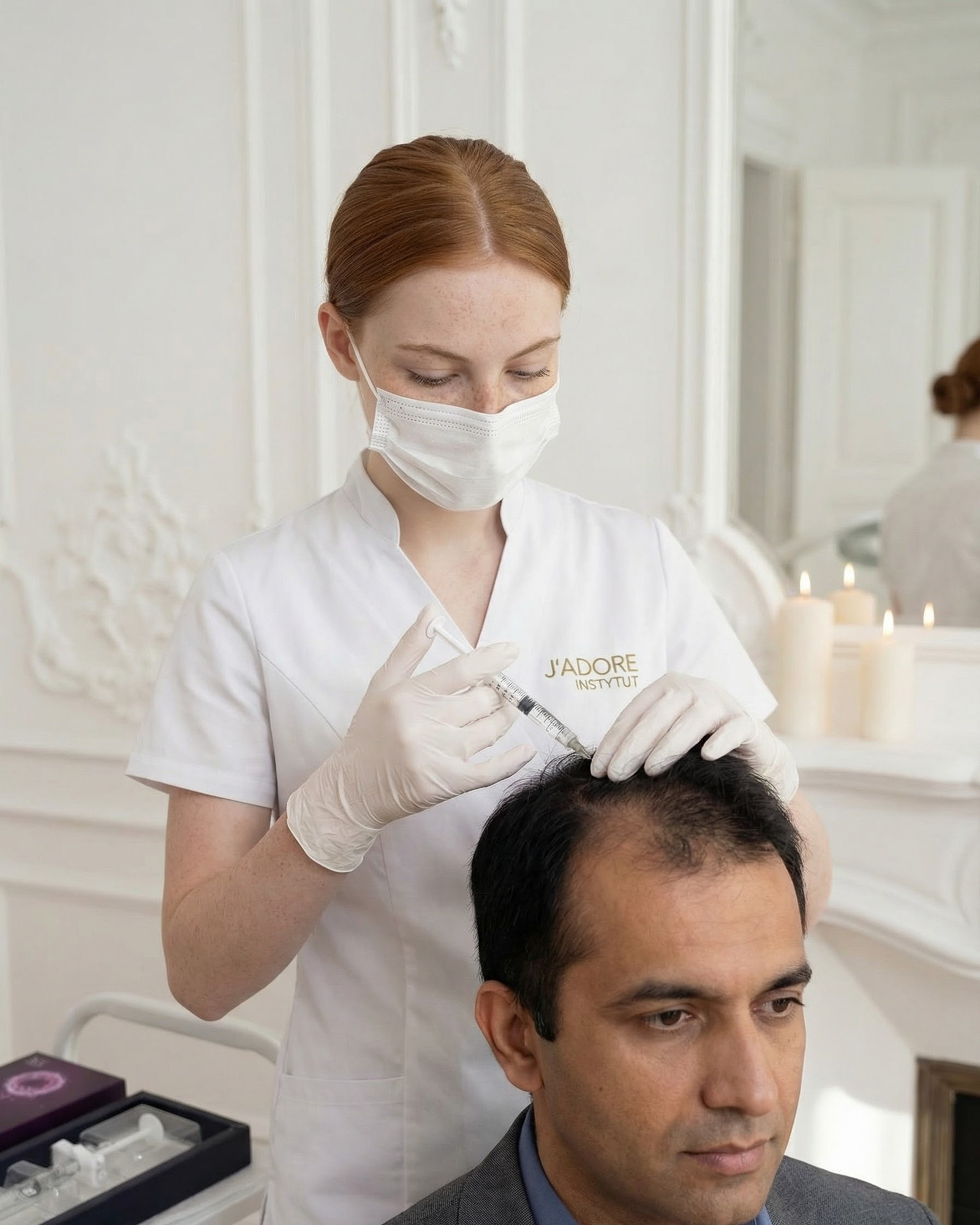
Scalp mesotherapy
Delivers active ingredients directly into the scalp, bypassing the skin barrier. The results last longer when you keep your scalp in good condition between visits — rather than "fixing" a state you made worse yourself every month.
Growth stimulation and platelet-rich plasma
These prompt the follicles to work harder. Home scalp massage between treatments works in synergy — it keeps blood flow and fascial tension at a level that doesn't undo the stimulation effect.
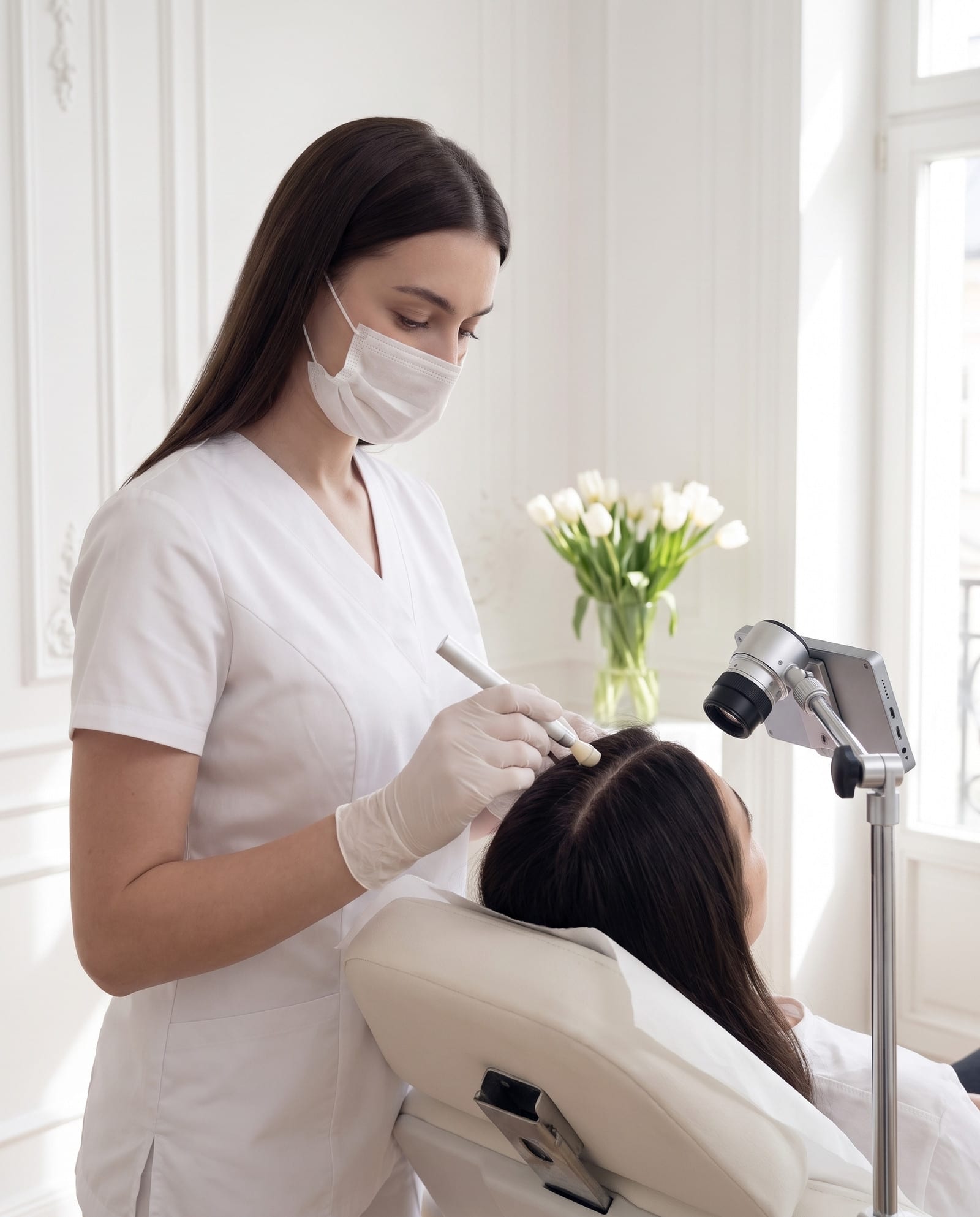
Diet, stress and sleep — three things no shampoo can replace
The scalp, like all skin, is metabolic tissue — it responds to what's happening throughout the body. This is the answer to why hair sometimes suddenly gets worse with no obvious change in routine: because stress changed, sleep changed, or the supply of nutrients changed.
- Iron and ferritin. In women, iron deficiency and low ferritin are among the most common — and most often overlooked — causes of increased hair loss. Your blood count can still look normal while ferritin is already at a level that limits follicle function. It's worth checking before investing in "hair growth" supplements.
- Vitamin D. Vitamin D receptors are active in hair follicles, and deficiency is often found in people with thinning that has no other clear cause. Polish sunlight isn't enough for most of the year — it's worth having your levels checked.
- Protein. Hair is mostly keratin — a protein. Low-calorie diets and fasting often show up in hair with a delay of several weeks, matching the length of the telogen cycle. That's why the effects of a restrictive diet from three months ago are only becoming visible now.
- Cortisol-driven stress. Chronically elevated cortisol can shorten the follicles' growth phase and push them into the resting phase sooner. This is the mechanism behind telogen effluvium — sudden, temporary hair loss following a stressful event or a long period of overload. Some of the hair loss cases seen by trichologists after the pandemic, or after intense periods at work, fall into exactly this category.
A minimal home routine — what actually makes sense
You don't need a 12-step protocol to improve scalp condition between treatments. It's better to choose a handful of habits with solid grounding — and stick with them consistently, rather than constantly reaching for new products without any continuity.