Adult acne — why you're breaking out like a teenager at 35
Acne after 30 has specific causes — and specific solutions.
7 min readwritten for women
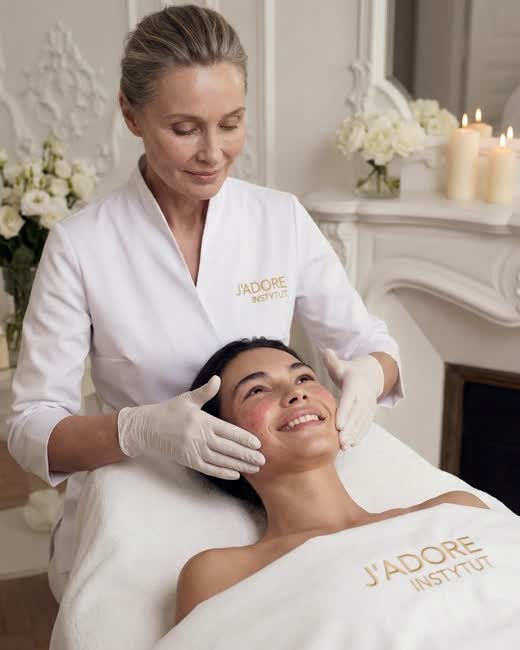
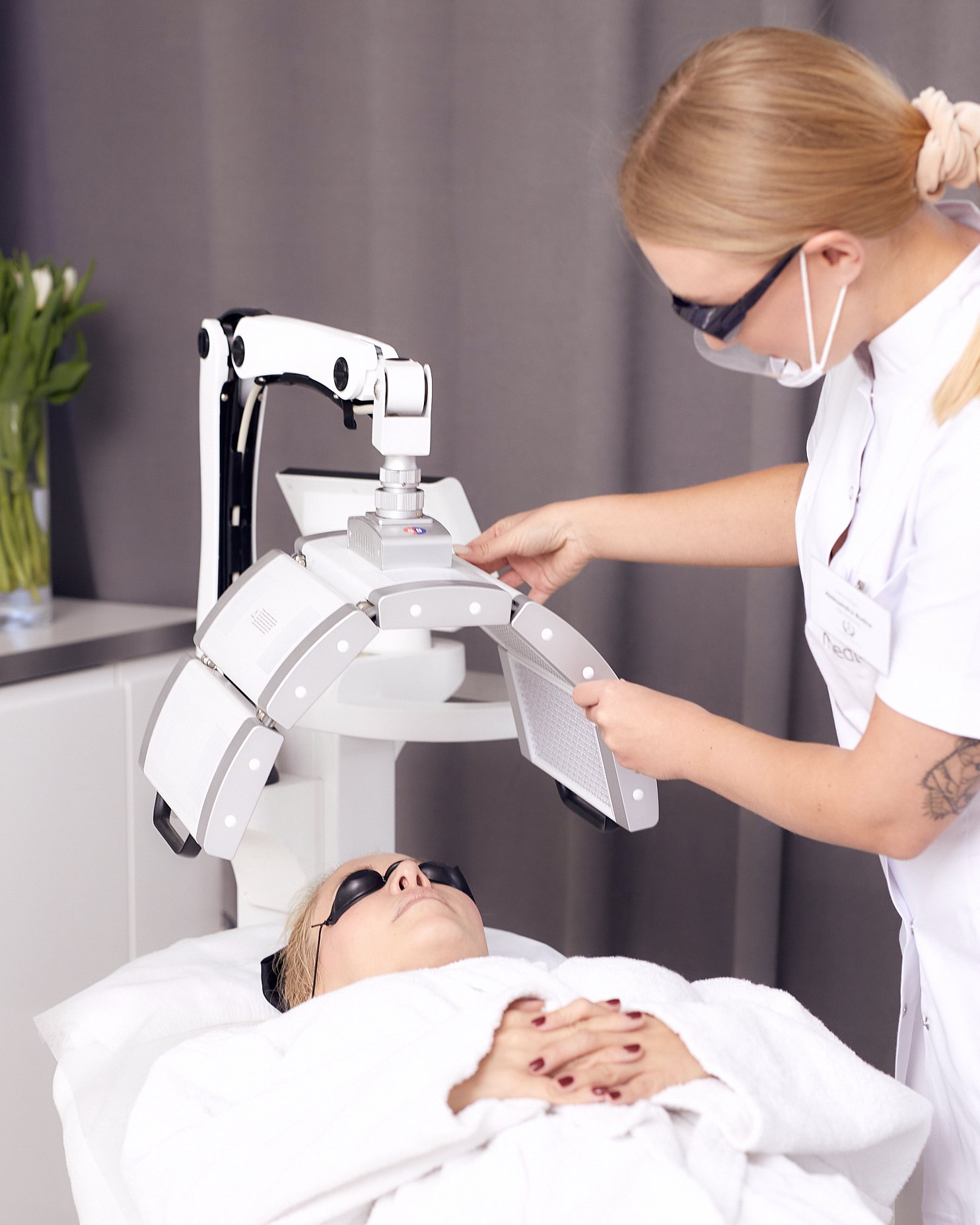
Illustrative photo. It shows an example of how the treatment is performed.
7 min read8 September 2026
You're 35. You pay a mortgage, run a team, cook dinner and meditate (sometimes). You thought you'd left spots behind in secondary school, along with Bieber and blue eyeshadow. Yet you look in the mirror and there it is: another spot on your chin. Painful, deep under the skin, refusing to come to a head for a week. And you ask yourself: why? The answer is more complicated — and more encouraging — than you think.
01
Adult acne in numbers — this isn't just your problem
Let's start with the data, because the reassurance is in the statistics. Adult acne affects 12–22% of women aged 25–45 — depending on the study and population. Research published in the Journal of the American Academy of Dermatology shows that up to 50% of women aged 20–29 and 25% of those aged 40–49 experience some form of acne.
This isn't rare. It isn't "poor hygiene". It isn't "too much chocolate" (though we'll come to diet). It's a complex dermatological condition with multiple causes — and multiple solutions.
02
The hormonal map of acne — why the chin, not the forehead
If your breakouts cluster around the lower part of your face — jawline, chin, neck, sometimes décolletage — you almost certainly have a hormonal component. This zone is known as the U-zone, and it's rich in androgen receptors.
Compare this with teenage acne, which targets the T-zone (forehead, nose, centre of the cheeks) — where sebaceous glands are densest and most reactive to the general hormone surge of puberty. In adult women, the mechanism is different.
03
Pill-lulitis — acne after stopping contraception
This phenomenon is common enough to have its own informal name. You stop taking the contraceptive pill after years of use, and suddenly — an acne flare-up. Why?
Most combined pills (containing oestrogen and progestogen) suppress androgen production and raise levels of SHBG — a protein that binds sex hormones. The result: less free testosterone = less sebum = clearer skin. When you stop taking the pill, your body has to rebalance its hormones on its own. This process takes 3–6 months, and in some women up to 12. During this time, androgens can temporarily spike above normal before the body finds a new equilibrium.
04
Maskne — mechanical acne from face masks
Face masks aren't compulsory everywhere anymore, but many people still wear them on public transport, at the doctor's, or on flights. "Maskne" (mask + acne) is mechanical acne caused by occlusion — a closed, humid environment under the mask — friction, and a shift in the skin's microbiome. Warmth and moisture encourage bacteria to multiply.
Wear a light, non-comedogenic moisturiser with niacinamide under your mask
Change your mask every few hours
Reusable cotton masks washed daily work better than disposable surgical ones
05
Your home skincare kit — what actually works
Let's get specific. Here are the active ingredients with proven efficacy against adult acne:
06
In the salon — what a cosmetologist can do
Home skincare is the foundation, but salon treatments often speed up results — and achieve what creams alone can't.
07
When to see a dermatologist — don't try to be a hero
A cosmetologist can achieve a great deal, but some cases need a doctor. Don't treat a dermatologist as a "last resort" — the sooner you start the right treatment, the lower the risk of scarring.
Cystic acne (large, painful nodules deep under the skin) — risk of scarring
No improvement after 3 months of topical treatment — time for antibiotics or other systemic medication
Suspected PCOS — you need hormone testing, not a cream
Considering isotretinoin (Accutane/Aknenormin) — a last-resort medication, but extremely effective for severe acne; it requires a prescription and monitoring
08
Diet — what the science says (not Instagram)
This is a controversial topic, so let's stick to the data.
09
The plan of attack — a realistic timeline
There's no such thing as a "quick fix" for acne. But there is a plan that can bring visible results within 3–6 months:
Patience is hard to come by when you've got a spot on your chin on the day of an important presentation. But adult acne usually responds to consistent, multi-layered treatment — not to the desperate purchase of yet another miracle serum from TikTok.