

FACIAL COSMETOLOGY
A shiny nose by midday, pores so large you can see them in the mirror, blackheads that keep coming back despite daily scrubbing — this is often what life with oily and combination skin looks like. Oily skin is not a flaw or "dirt" to wash away — it's a skin type with overactive sebaceous glands, usually shaped by genetics, hormones and lifestyle.
There's a paradox almost nobody knows: the harder you strip it, the oilier it gets (a rebound effect). A treatment for oily skin isn't a single session — it's a planned series of sessions combining deep cleansing, sebum regulation and barrier repair, so skin stops defending itself with excess oil production. At J'adore Instytut, this series is led by an experienced cosmetologist. Below you'll find everything worth knowing before you start.
series of 4–6 sessions every 1–2 weeks + maintenance
How it works
Oily skin secretes too much sebum — the oil that normally protects and hydrates. When there's too much of it, it mixes with dead skin cells and blocks pores: hence the shine, blackheads and tendency to breakouts. The treatment doesn't "switch off" the sebaceous glands — it teaches skin to produce sebum at a normal rate and restores its barrier.
This works in three stages, spaced over time: first deep cleansing and pore clearing, then chemical regulation (acids that normalise keratinisation and have a sebum-controlling effect), and finally repair and hydration, so skin doesn't respond with compensatory oil production. That's why a single session gives only a temporary effect — it takes a full series to achieve a lasting change. The treatment is a series of sessions, not one procedure.
Ideal for
If painful bumps, inflamed pustules or cystic lesions dominate, that's already inflammatory acne — in that case, the cosmetologist will suggest an acne protocol or refer you to a dermatologist. Here, we're talking about oily skin and its milder consequences.
Women's and men's needs
For women, oiliness is very often linked to hormones — worsening before periods, in PCOS, sometimes "shifting" along the jawline and chin. Cosmetic acne from heavy makeup bases is also common. The goal of the oily skin treatment for women is to achieve a matte finish and tighter pores without over-drying, so makeup lasts longer and skin doesn't shine within an hour.
What we work with
Men's skin naturally produces more sebum (androgens), has a thicker epidermis and larger pores — hence more intense shine and more blackheads. Add shaving to this, which, with the wrong products, throws the barrier off balance. The oily skin treatment for men aims to keep skin matte all day and simplify care down to a few steps, without a fussy routine.
What we work with
Interesting fact: sebum itself isn't the enemy — it's natural skin protection and hydration. The problem only arises with an excess of it. That's why a good treatment doesn't fight oil "down to zero" — it brings it back to normal, and skin stops overcompensating with extra production.
The most common mistake
This is probably the most important point on this page. Oily skin tempts you to strip it hard — strong alcohols, harsh gels, "shine-control" toners, scrubbing. The effect is the opposite of what you intend.
From the cosmetologist's chair
The most common thing I hear: "I wash my face five times a day and it's still shiny". That's exactly the problem — it's not too little washing, it's too much. The first step in the treatment is often simply cutting back on half of what a client was doing at home.
What the treatment consists of
The treatment is a plan spread over several weeks, not a single visit. The exact combination is chosen by your cosmetologist after diagnosis, but the underlying logic stays the same — from cleansing, through regulation, to repair:
Brands and lines (such as Skeyndor TEEN for younger skin, Sesderma Mandelac, Geneo Balance capsules) are chosen for the type of oiliness and the age of the skin — this isn't a fixed "off-the-shelf package" but a protocol built around your skin.
Safety
With an oily skin treatment, results and safety depend on a few things worth asking about at any salon:
At J'adore, the treatment is led by an experienced cosmetologist, who first assesses your skin and only then chooses the acids and their concentrations. This isn't "an off-the-shelf peel for everyone".
We use only certified professional products sourced legally (HydraFacial, Geneo, Sesderma, Skeyndor, EstGen). An acid of unknown origin or excessive concentration risks burns and barrier damage.
A good treatment starts with an assessment of your skin type and a series tailored around it. If a salon offers a "strong peel" straight away, without asking about your skin or your routine — that's a warning sign.
Red flag: a suspiciously cheap "peel for oily skin" · A bargain price and promises to "eliminate oiliness for good" are typical warning signs. Oily skin is a skin type that can't be "cured" with one treatment — it can be regulated and maintained, but not permanently "switched off". You have every right to ask which acid is used, at what concentration, and who's performing the treatment. A strong acid in inexperienced hands, or a non-genuine product, can damage the barrier and — paradoxically — increase oiliness. A good salon will answer without hesitation and start with a diagnosis.
Home care
An in-salon treatment without good home care is only half the work. The guiding principle: cleanse gently, regulate with active ingredients, hydrate lightly and protect from the sun — without over-drying.
From the cosmetologist's chair
If I had to name one ingredient for oily skin to use at home, it would be niacinamide — it regulates sebum, tightens pores and calms skin, while being well tolerated. And one thing you shouldn't skip: a light moisturiser. "Oily = don't moisturise" is a myth that fuels more oiliness.
Contraindications
Some contraindications are permanent, others temporary — in that case, we simply postpone the treatment until the situation passes. This is a non-invasive treatment (no needles), so the list mainly concerns skin condition and sensitivity to ingredients:
From the cosmetologist's chair
The most commonly overlooked thing: cold sores and fresh sun exposure. "I only have a small cold sore on my lip" or "I've been in the sun for a week" — these are real reasons to postpone a peel by a few days. Better to wait than risk spreading an infection or causing hyperpigmentation.
This isn't the full list — we'll go through your medications, skin conditions and previous treatments individually at your consultation.

The visit
A single session usually takes around an hour. Most treatments don't take you out of your day — you can go straight back to your usual activities, remembering to protect your skin from the sun.
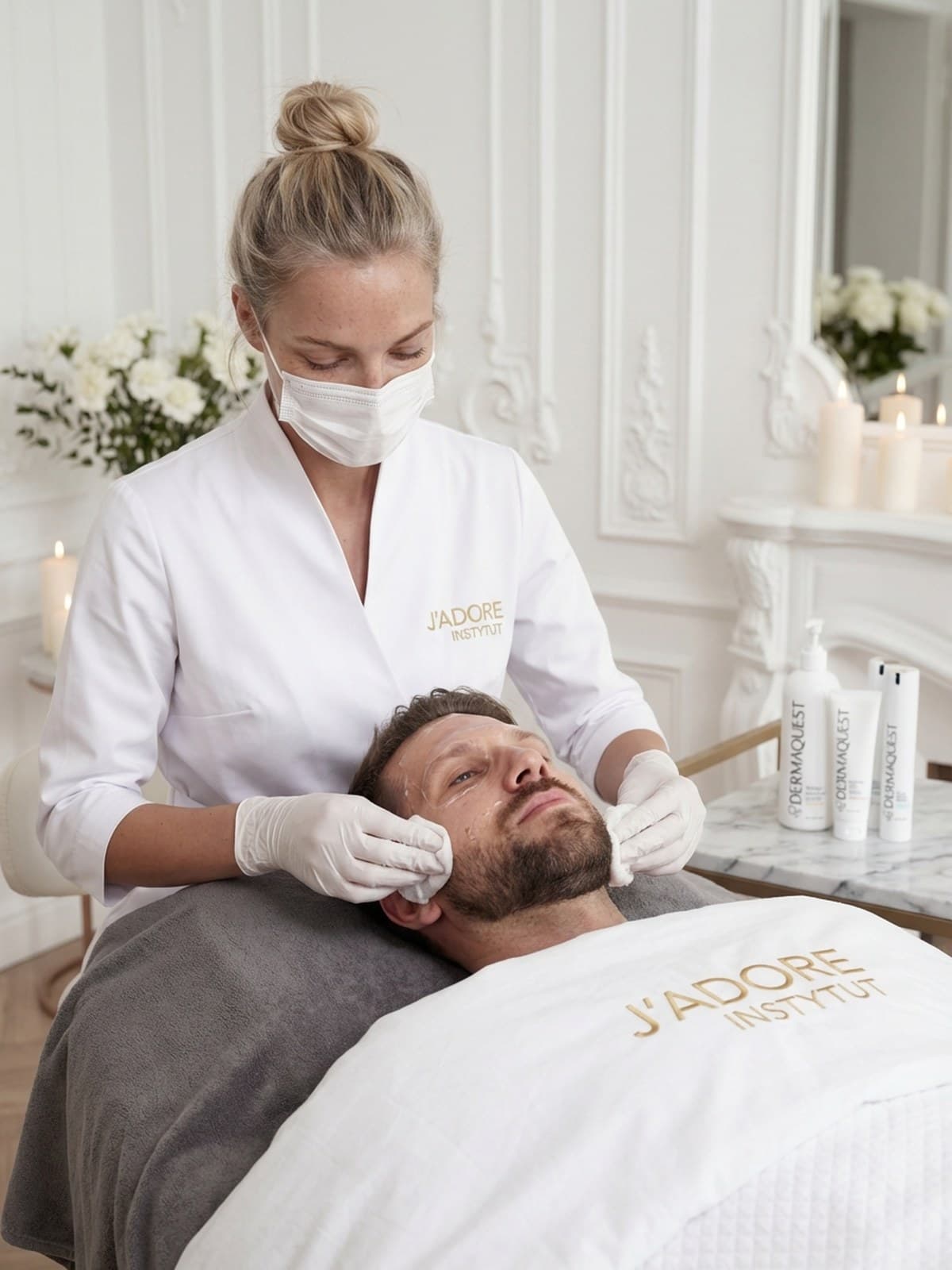
Consultation & diagnosis
the cosmetologist assesses the type of oiliness (all-over vs T-zone), the state of your pores, the presence of blackheads or acne, and the condition of your skin barrier. They also check whether your skin is dehydrated at the same time.
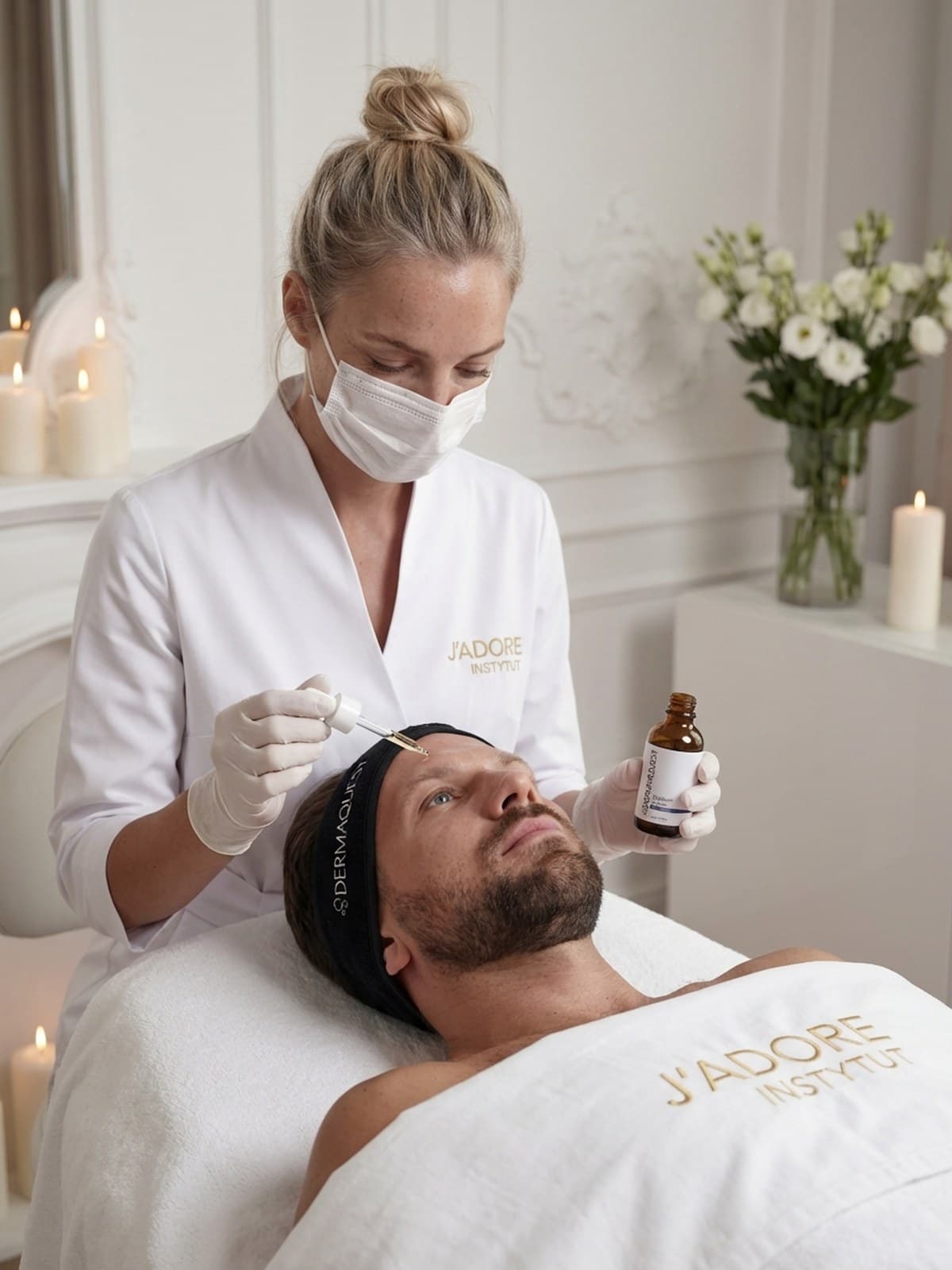
Cleansing & preparation
makeup removal, initial cleansing, sometimes softening the skin's surface to make pore clearing easier.
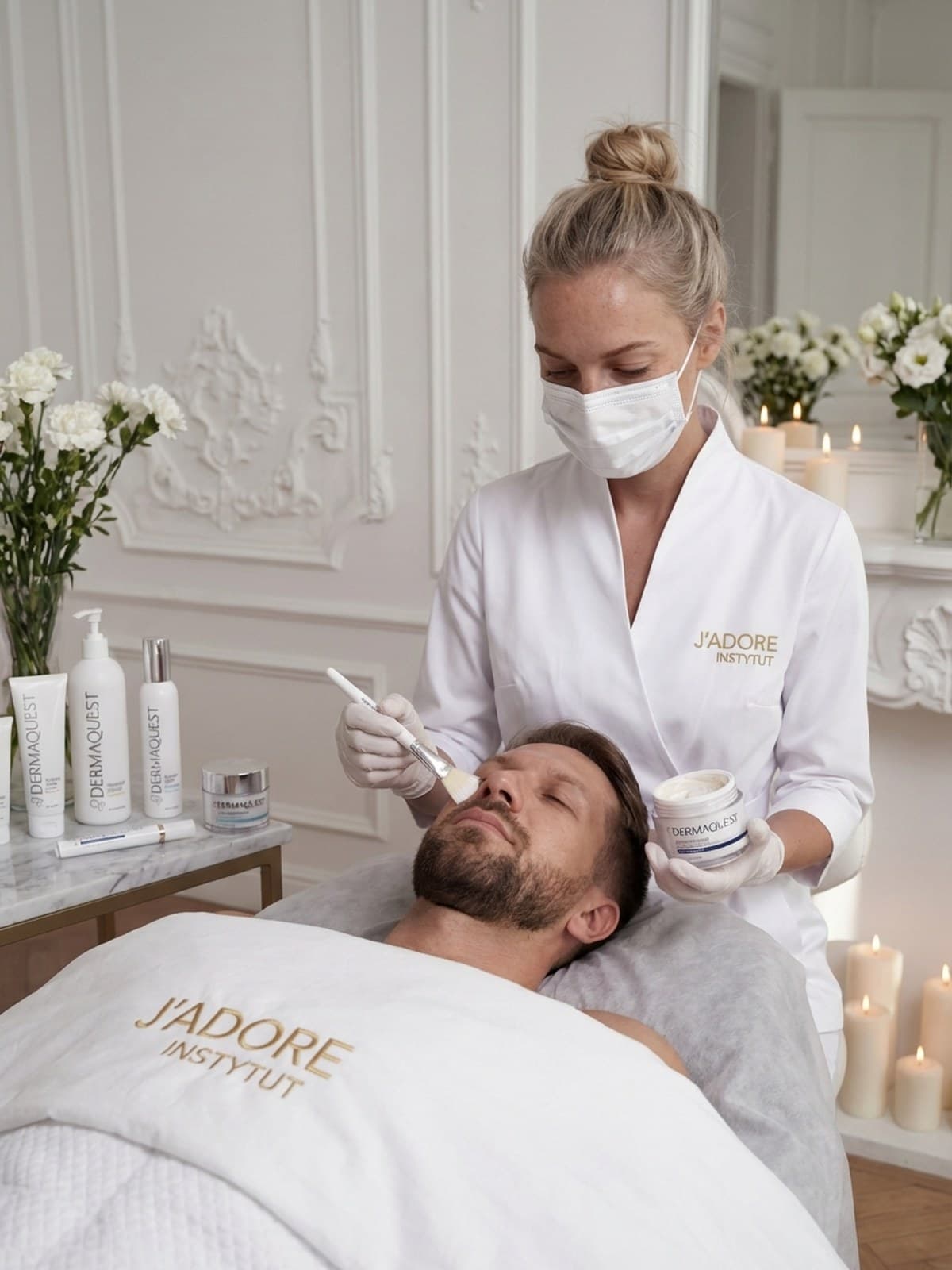
Main part
depending on the stage of the series: hydrodermabrasion / acid peel / Geneo capsule / repair; no needles, no injections.
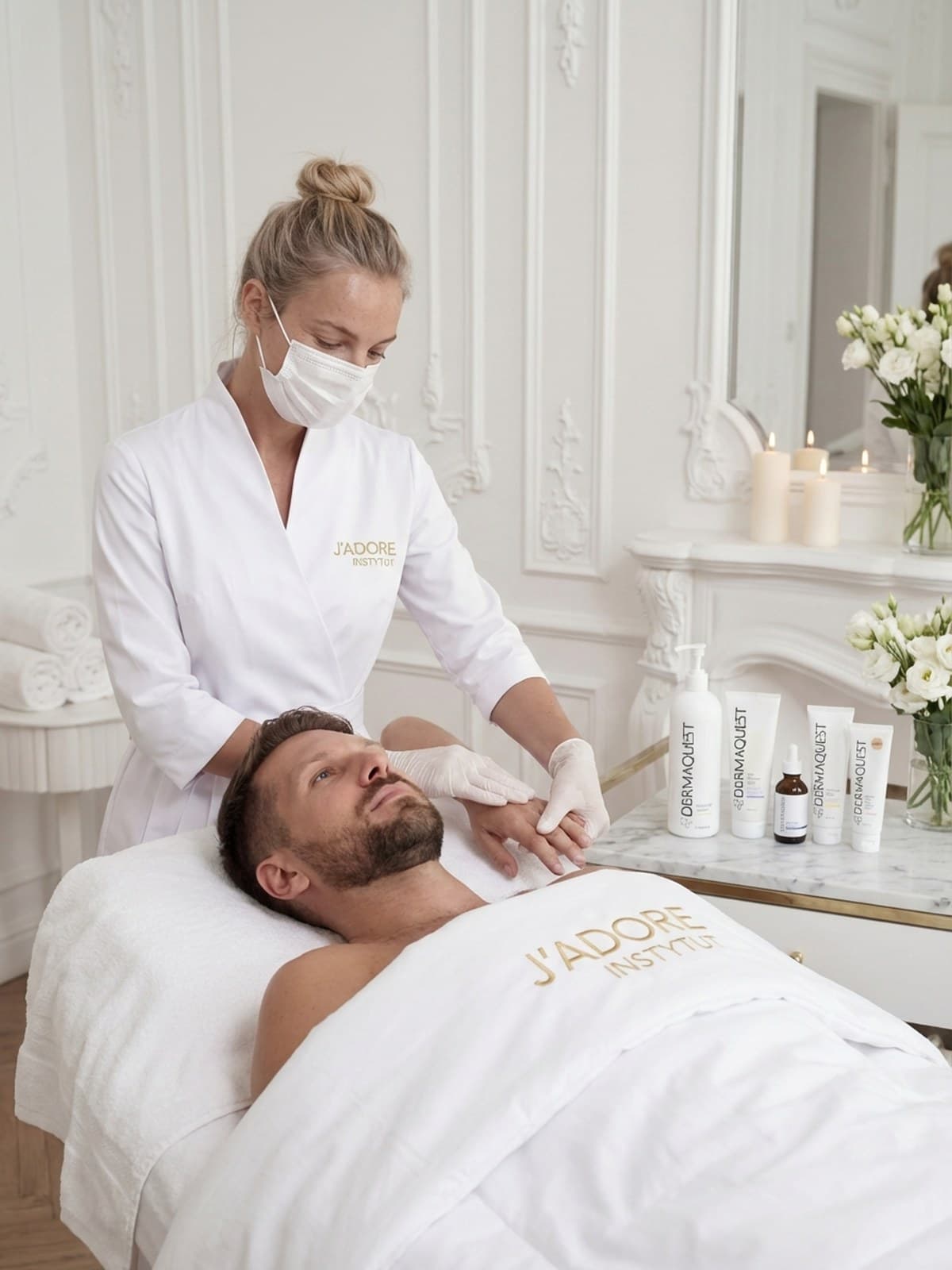
Calming & protection
a serum matched to your skin, sometimes LED, and always finishing with SPF, because acids increase sun sensitivity.
Home care guidance
this is half the success of the treatment; you'll get a simple, tailored routine.
What to expect
Most importantly: this is a marathon, not a sprint. After the first session, you'll often see an immediate "fresh, matte skin" effect, but lasting sebum regulation builds over weeks — that's why the treatment is a series, not a single procedure.
Some people say after one visit, "skin looks great, that's enough for me". It's a pleasant effect, but temporary — sebaceous glands won't change a habit in a week. It takes a series of 4–6 sessions to shift skin onto a new track. Others get in touch after two weeks with slight "purging" — that's transitional and part of the process.
Portfolio
A record of the work in our salons — the place where we publish treatment frames and, after photo sessions, results.
A record of results — in preparation. We publish photographs of our clients only with their consent.
The treatment and your lifestyle
Most questions aren't about the treatment itself, but about what comes afterwards: makeup, sun, sauna, swimming pools, home peels and retinol. There's one rule — after acids, skin is more sensitive to sun and irritation for a few days, so we avoid piling on extra stimuli.
Straight after the treatment, let your skin breathe — it's best to wait until the next day before applying makeup. Choose lightweight, non-comedogenic formulas that won't clog pores.
After acids, skin is sensitive to UV — skip tanning and sunbeds for a few days, and apply SPF 50+ every day. Without this, the risk of hyperpigmentation increases.
High temperature dilates blood vessels and increases redness right after the treatment. Sauna, hammam, hot baths — best after 1–2 days.
Chlorinated water irritates freshly exfoliated skin. Wait 1–2 days before swimming after an acid peel.
At home, don't "add" strong peels or facial brushes — acids are already doing their job at the salon, and doubling up on exfoliation damages the barrier and increases oiliness.
Retinol supports oily skin well in the long term, but combining it with peels needs planning. Start or pause it only after checking with your cosmetologist — not on your own during the series.
Programme for oily skin / combination skin
With oily skin, it's easy to confuse methods, since they all "cleanse". But they work differently and suit different purposes — in the treatment, they often complement each other:
removes blackheads and excess sebum
doesn't regulate sebum production long-term on its own — it's a starting point, not the whole treatment
mechanical smoothing of the skin's surface
doesn't reach as deep into pores as BHA and has no sebum-controlling effect — can be too irritating with active acne
cleanses and regulates sebum
a single session gives a temporary effect — full regulation needs a series and home care
Combine with
The oily skin treatment pairs well with other treatments when cleansing, tone or regeneration are also a priority. Order and spacing are decided by your cosmetologist at consultation, but the general logic stays the same:
A simple way to tell them apart: microdermabrasion smooths skin on the surface, HydraFacial and BHA peels work deep into pores and regulate sebum. For oily, congestion-prone skin, we favour the latter — microdermabrasion tends to come in later, for smoothness, once skin is already calm.
Variants and products
Under the umbrella of "oily skin treatment" sit several methods and cosmetic lines with different effects and intensities. You don't pick a variant "off a menu" — your cosmetologist chooses it based on the type of oiliness, the age of your skin, and whether acne is present:
Basic hydrodermabrasion with acids and vacuum pore cleansing.
Dla kogoStart of the series, cleansing and clearing clogged pores.
Classic + a matched serum booster (e.g. pore-minimising / Britenol for hyperpigmentation).
Dla kogoOily skin with enlarged pores or uneven tone.
The most complete variant, with LED therapy included.
Dla kogoOily, acne-prone skin — cleansing plus bacteria reduction.
Oxygenating exfoliation with a sebum-regulating capsule (zinc, anti-acne ingredients) and an oxygenation effect.
Dla kogoOily, combination and acne-prone skin — mattifying and regulation.
A lipophilic acid that penetrates pores — cleanses "from within", with antibacterial and sebum-controlling effects.
Dla kogoClogged pores, blackheads, an oily T-zone.
A mandelic-acid peel — gentler exfoliation with antibacterial action.
Dla kogoOilier, more sensitive or reactive skin, when salicylic acid is too strong.
Stabilises the skin's environment and repairs the barrier with the help of growth factors.
Dla kogoThe maintenance stage — reinforcement without added oiliness.
Cosmetics for younger, oily and acne-prone skin.
Dla kogoTeenagers and young adults with oily skin.
Light that limits bacteria and calms inflammation.
Dla kogoSupport for the series when there's a tendency towards breakouts.
Fact: What causes the differences? It comes down to what each variant actually does: some methods cleanse and clear pores (HydraFacial, extraction), others regulate sebum chemically (BHA/mandelic peels, Geneo Balance), and others repair the barrier (EstGen). What matters isn't the name on the label, but matching the stage to your skin's condition, guided by your cosmetologist — that's why diagnosis comes before any plan.
Price list
Checking free hours…
See also
The result lastsresults become lasting with a series and home careJ’adore Instytut
Information. This text is for informational purposes and does not replace a consultation. This is a beauty treatment (a care-based, non-invasive procedure), not a medical one. The specific protocol, number of sessions in the series and contraindications are determined by a cosmetologist or specialist during an individual consultation. If oily skin is accompanied by pronounced inflammatory acne or cystic lesions, the cosmetologist may refer you to a dermatologist.
Home care
Cosmetics matched to what your skin needs after a treatment — so the clinic effect lasts longer.
 oily skinSkeyndorExpert Cleanse Pro – Mattifying Foam GelView in the shop(opens in a new tab)
 acne and blemishesDermoMedicaAnti-Blemish Nanoneedling Patches 9 pcs.View in the shop(opens in a new tab)
 sun protectionCell Fusion CAquatica Sunscreen 100 SPF 50+/PA++++View in the shop(opens in a new tab)
 oily skinMesoesteticGrascontrol Lipactive SolutionView in the shop(opens in a new tab)
 acne and blemishesPeel MissionUPWASHING ACNE SKIN ACID GEL 250mlView in the shop(opens in a new tab)
 sun protectionDermaQuestSunArmor SPF50 30 mlView in the shop(opens in a new tab)
 oily skinMedik8Natural Clay Mask™View in the shop(opens in a new tab)
 oily skinDiego Dalla PalmaSmart Pure Cleansing Gel Oxy-Active 150 mlView in the shop(opens in a new tab)


