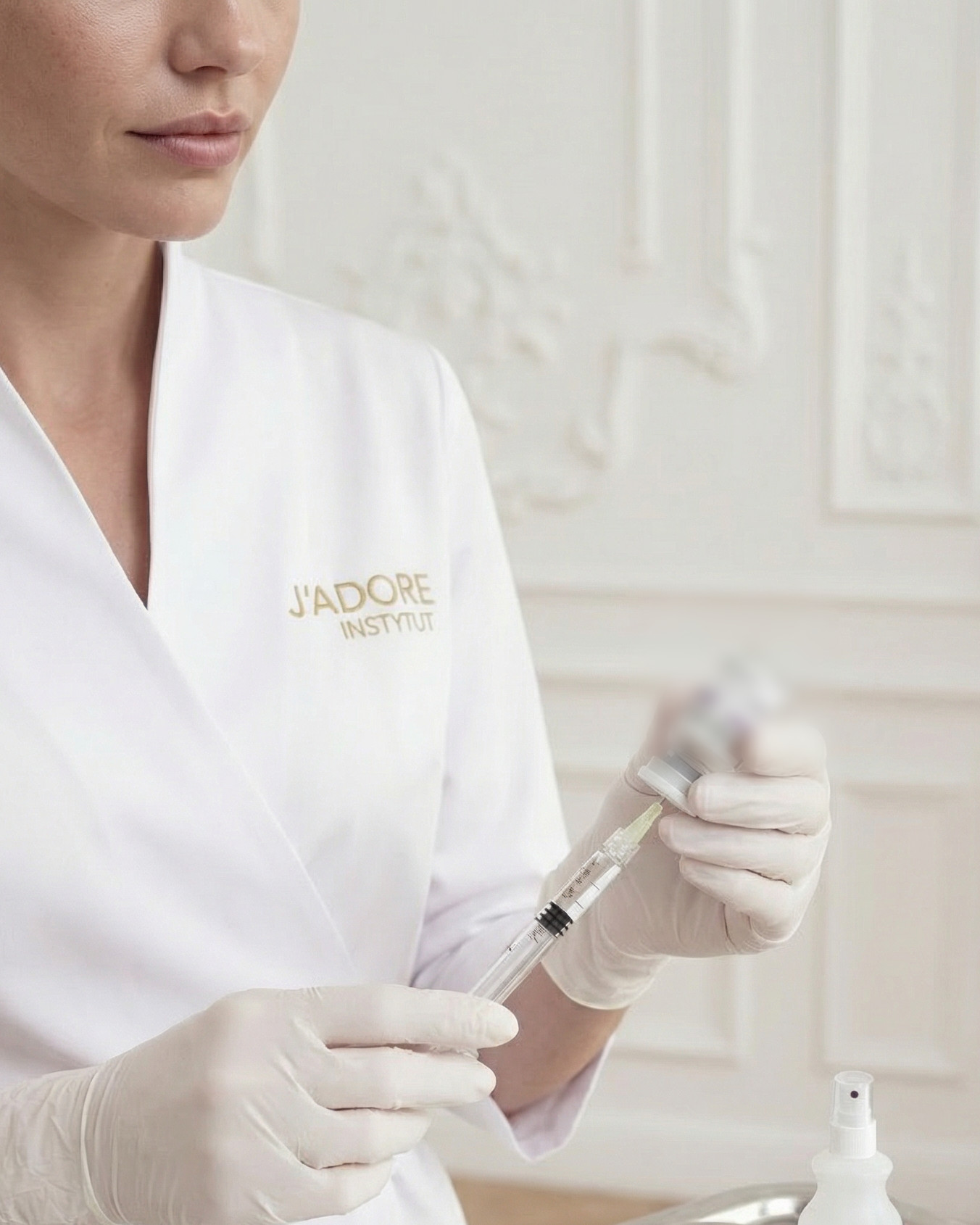

Two different mechanisms, one goal
Both laser and remover aim to clear pigment from the epidermis and dermis. But the path each one takes is completely different — which is why each method suits different circumstances.
Laser (Q-switched / picosecond)
breaks down pigment particles with light energy
- light pulses absorbed by the pigment — breaking it into tiny particles
- the lymphatic system gradually clears the fragmented pigment
- precise — can target a specific colour or outline
- works well on dark pigments (black, graphite, brown)
- good results for many people with classic cosmetic tattoos
Remover (chemical extraction)
binds to pigment and draws it towards the skin's surface
- a solution introduced into the skin using the PMU method (needle)
- forms a complex with pigment particles and "pulls" them towards the epidermis
- effective regardless of colour — including light, grey and oxidised pigments
- often the first choice after unsuccessful or colour-challenging PMU
- can reduce pigment intensity in a single session
When to choose laser, when to choose remover — points to raise during consultation
There's no single rule that always applies. The decision depends on several factors an experienced specialist assesses during consultation. Knowing these factors helps you understand the recommendation and take an informed part in the choice.
- Pigment colour — dark, graphite, clearly black → laser often works well. Light, beige, grey, reddish → remover or a combination.
- Depth of the pigment — very deep or "spread" pigment can be difficult for both methods, though laser can reach deeper; with shallow pigment, remover works faster.
- History of touch-ups — if the skin already has several layers of pigment from previous PMU, remover often gives more control over the process.
- Planned touch-up (not complete removal) — depends on scope: sometimes spot treatment with remover is enough; other times laser lets you "quieten" the area for new work.
- Skin type and scarring — skin prone to keloids or with existing scars needs special attention with laser.
Stages of removal — what to expect
Removing permanent makeup is a process spread over time, not a single treatment. Whatever the method, your skin needs time to regenerate and gradually clear the pigment. Below is a typical schedule — though yours may look different:
- 01
Consultation
Assessment of colour, depth and skin condition. Discussion of realistic expectations. Choice of method — laser, remover, or a sequence of both.
- 02
First session
The treatment takes place in the salon. Immediately afterwards, the area may be red, swollen or covered with a scab — a natural part of healing.
- 03
Healing (4–8 weeks)
The skin regenerates, and the scab falls off on its own. During this time, pigment noticeably fades for many people. Don't try to rush this stage.
- 04
Assessing results and deciding on the next session
Once the skin has fully healed, your specialist assesses progress. If needed, the next session is planned — using the same method or a different one.
- 05
Final result
Complete removal, or enough lightening for a new touch-up. This often takes several sessions — for many people, 2 to 6, rarely more.
Can both methods be combined?
Yes — and in practice this combination is often the most effective strategy. Specialists frequently use a sequence: remover first, to draw as much pigment as possible towards the skin's surface, then laser to precisely clear what remains. Or the other way round — laser first for dark pigment, remover to work on what's left.
Remover → Laser
Remover as preparation: draws out pigment, lightens the area. Laser finishes the work with precision.
Laser → Remover
Laser breaks down dark particles, remover works on what survives — particularly useful with mixed colours.
Skin regeneration after removal
Once the removal course is complete, it's worth supporting skin repair — for example, revitalisation with biostimulators or mesotherapy in the eye and brow area.
What to look for when choosing a salon
- Consultation before the treatment — mandatory, not optional.
- Assessment of pigment colour and depth — without this, there's no rational way to choose a method.
- Realistic expectations — your specialist tells you plainly how many sessions are needed and what results are possible.
- Pigment test or trial on a small area — for uneven colour or reactive skin.
- Skin regeneration plan — what to do between sessions, how to care for the area after treatment.