Two conditions that look similar — and are therefore confused
Before we get to the myths, one clarifying point: common dandruff (pityriasis capitis) is excessive shedding of the scalp's epidermis without significant inflammation. The skin produces too many new cells, and old ones shed faster than they should, landing on your shoulders. It's often linked to the fungus Malassezia globosa, which feeds on sebum. Seborrhoeic dermatitis is already an inflammatory condition — redness, greasy yellowish flakes, itching, possible hair loss and involvement of other areas (brows, around the nose, ears, chest). The same fungus is often involved, but the body's reaction is stronger and more complex.
Here's the key practical difference: dandruff can often be controlled with the right cosmetic shampoos. Seborrhoeic dermatitis is a condition that needs a dermatologist, and possibly longer treatment — including prescription-only preparations. Using shampoo alone for seborrhoeic dermatitis is like putting a plaster on appendicitis.
Six myths that hold back treatment
Myth 1: "Dandruff only happens to people with dry skin, and greasy skin means it's not dandruff." It's actually the opposite. Classic common dandruff most often comes with excess sebum production — the Malassezia fungus feeds on fat, so an oily scalp is an ideal environment for it. White, loose flakes on your shoulders are more often a sign of oily skin than dry skin. Dry scalp flakes too, but those flakes look different: they're finer, more firmly attached, and the skin feels tight and lacks radiance. Confusing these two types is a sure way to buy a shampoo that does exactly the opposite of what you need.
Myth 2: "Dandruff is a hygiene problem — just wash your hair more often." This is probably the most persistent and most damaging myth of all. Dandruff and seborrhoeic dermatitis don't come from neglect. Washing more often may temporarily reduce visible flakes, but it often makes greasiness worse by stripping natural oils and prompting the sebaceous glands to work harder. With seborrhoeic dermatitis, excessive washing can further irritate skin that's already inflamed. Hygiene matters, but washing frequency is an individual matter — not a solution to the problem itself.
Myth 3: "Pharmacy anti-dandruff shampoo always works — just buy a pricier one." Shampoos with selenium sulphide, zinc pyrithione, ketoconazole or coal tar do work — but only when used correctly (generally left on for a few minutes, not rinsed off immediately) and only for the right condition. With seborrhoeic dermatitis, shampoo can be part of the treatment, but it's often not enough — topical corticosteroids, oral antifungals or other prescription preparations may be needed. A pricier shampoo without an accurate diagnosis is money spent, not treatment.
Myth 4: "Dandruff will go away on its own once the season changes — it's just spring/autumn." Seasonal patterns in dandruff and seborrhoeic dermatitis are real — many people notice symptoms worsen in autumn and winter (dry air, indoor heating, less sunlight) and improve somewhat in summer (UV has an antifungal effect). But seasonal worsening doesn't mean seasonal disappearance. If symptoms return every autumn and don't clear up without treatment, that's a chronic problem needing a plan, not more waiting. Untreated seborrhoeic dermatitis can lead to telogen effluvium — hair enters the resting phase faster than it should in response to scalp inflammation.
Myth 5: "Dandruff and seborrhoeic dermatitis are only a scalp problem." Seborrhoeic dermatitis is a disease of seborrhoeic skin — the areas where sebaceous glands are most active. The scalp is the most common site, but seborrhoeic dermatitis regularly also affects: the brows and eyelash area, nasolabial folds, external ear canals, the chest area, and in men, facial skin along the beard line. If flaking and redness appear in several of these areas at once, that's a strong sign you're dealing with seborrhoeic dermatitis, not isolated dandruff.
Myth 6: "Dandruff and seborrhoeic dermatitis are an embarrassing problem the skin has to sort out on its own." This is the myth that delays proper diagnosis the longest. There's no reason scalp inflammation should be any more "embarrassing" than an allergy or atopic dermatitis. Seborrhoeic dermatitis is a chronic condition with a genetic predisposition, and it isn't the result of anything you did or didn't do. Dermatologists see these problems every day and have the tools to control them effectively. Treatment exists — embarrassment just makes it harder to access.
How to tell dandruff apart from seborrhoeic dermatitis — a practical guide
Common dandruff
Excessive shedding without inflammation
- White, loose flakes (fall onto shoulders)
- Scalp usually without noticeable redness
- Mild itching or none at all
- Mainly affects the scalp
- Often responds to cosmetic shampoo
Seborrhoeic dermatitis
Inflammation of seborrhoeic skin
- Greasy, yellowish or greyish flakes stuck to the skin
- Redness, irritation, inflammation
- Marked itching, burning
- Can affect brows, nose, ears, chest
- Possible increased hair loss
When to see a dermatologist — the specific signs
Here's the simplest test: if you've used a pharmacy anti-dandruff shampoo for at least four weeks as directed and symptoms haven't improved, it's time for a consultation. But a few signs should send you to a dermatologist sooner, without waiting to see if the shampoo works.
- 01
Redness and inflammation
The scalp is clearly pink or red, and the flakes are greasy and stuck down rather than loose. This is the classic picture of seborrhoeic dermatitis — cosmetic shampoo alone won't be enough.
- 02
Symptoms in several places at once
Flaking and redness in the brows, nasolabial folds or along the beard line don't happen with dandruff. Symptoms in multiple locations point to seborrhoeic dermatitis.
- 03
Hair loss
Increased shedding alongside scalp flaking can indicate telogen effluvium triggered by inflammation. The longer it goes untreated, the harder it is to reverse.
- 04
Symptoms return every time you stop using the shampoo
Symptoms come back strongly within a few days of stopping a medicated shampoo — a sign you need a long-term plan, not a short-term fix.
- 05
Inflamed or oozing lesions
A scalp with bumps, pustules or oozing lesions needs other skin conditions ruled out (psoriasis, contact dermatitis, fungal infection). Don't try to diagnose this yourself.
Three more facts worth knowing
Stress has a real effect on your scalp. Cortisol (the stress hormone) increases sebum production and can worsen inflammation. That's why seborrhoeic dermatitis symptoms often "flare up" during stressful periods at work or in your personal life — and it isn't a coincidence or a suggestion. Managing stress is part of a holistic approach to seborrhoeic skin.
Diet matters less than commonly believed. There are theories circulating about sugar, yeast and dairy as causes of dandruff — the scientific evidence here is mixed. There's no single "anti-dandruff diet" that works for everyone. That said, a generally healthy diet rich in omega-3 fatty acids and antioxidants can support skin health — though it won't replace topical treatment for active seborrhoeic dermatitis.
UV has an antifungal effect — but it won't replace treatment. Summer sun often brings seasonal relief — UVB radiation inhibits the growth of Malassezia and has a mild anti-inflammatory effect. Hence the impression that it "just went away over summer." That's true, but it reflects seasonal modulation, not treatment of the underlying cause. Come autumn, everything comes back — unless a long-term control plan is put in place in the meantime.
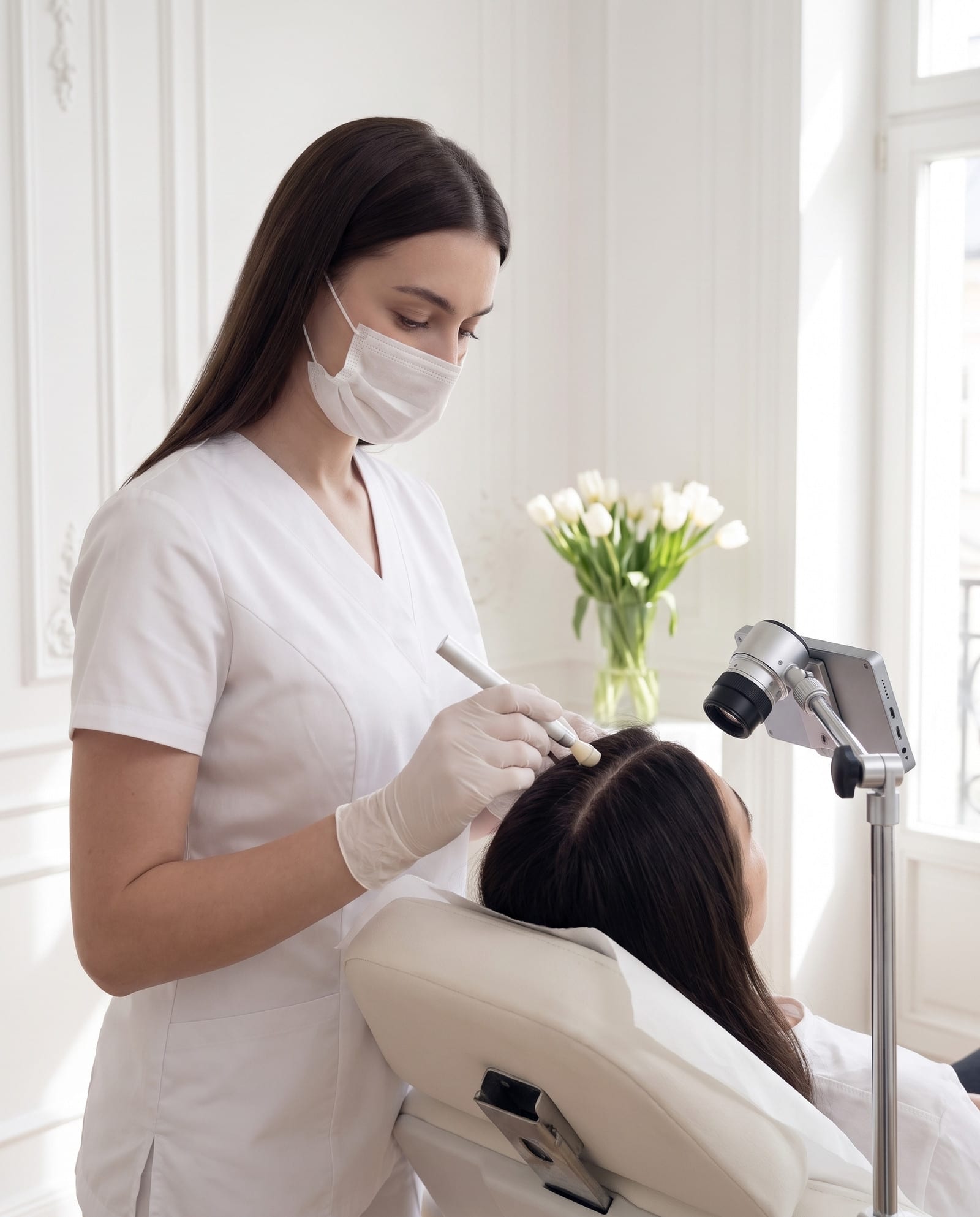
Salon care for dandruff and seborrhoeic dermatitis
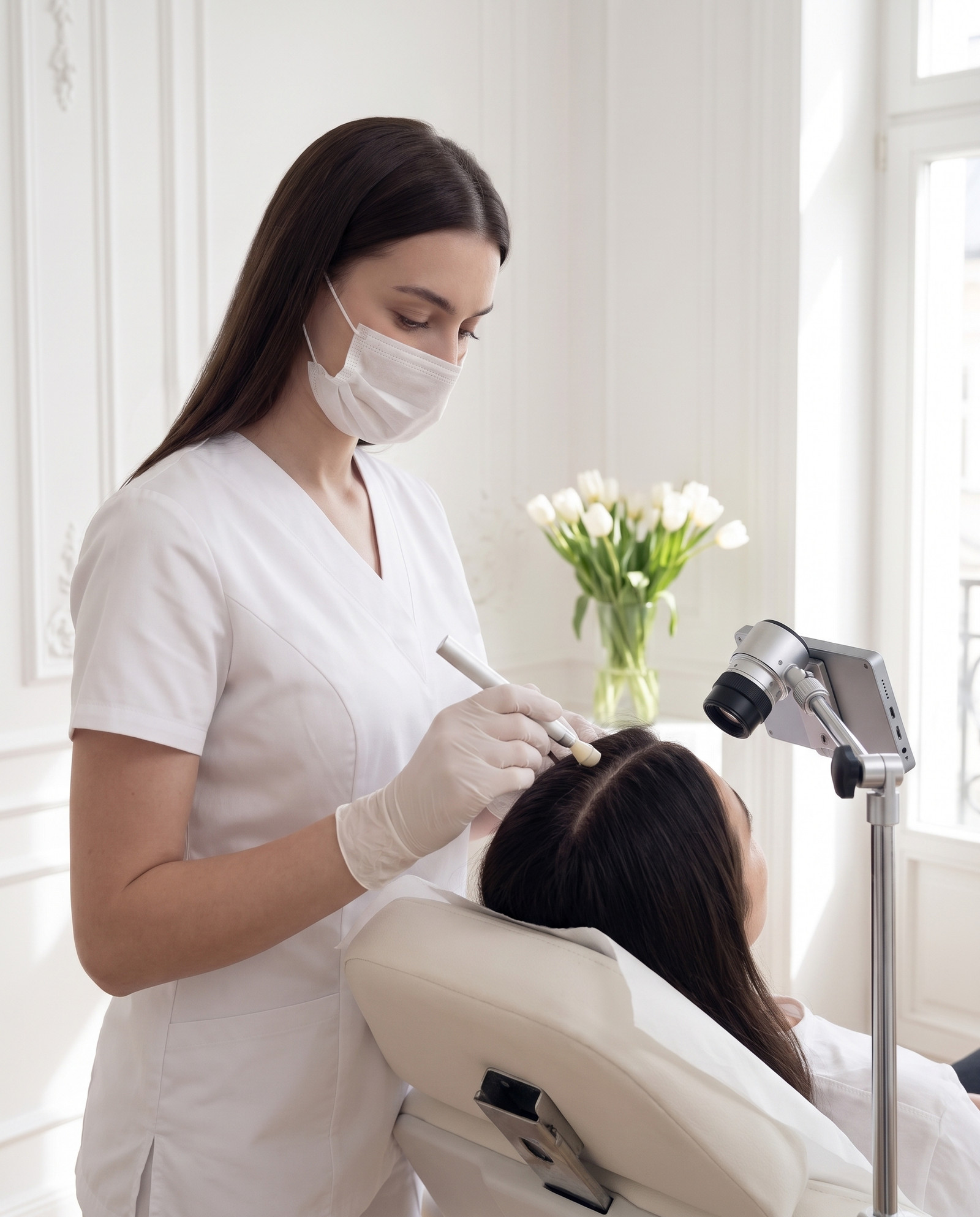
Professional scalp care can be a valuable addition to dermatological treatment — but it's worth understanding its place. Trichology treatments, scalp peels or hydrating treatments can reduce flaking, regulate sebum and support microcirculation — but with active inflammation, we always coordinate treatment choices with a dermatologist or trichologist, so as not to make symptoms worse.
Enzymatic scalp peel
Gently removes dead epidermal cells and excess sebum, reducing the environment the fungus needs to thrive. A complement to dermatological treatment — not a substitute.
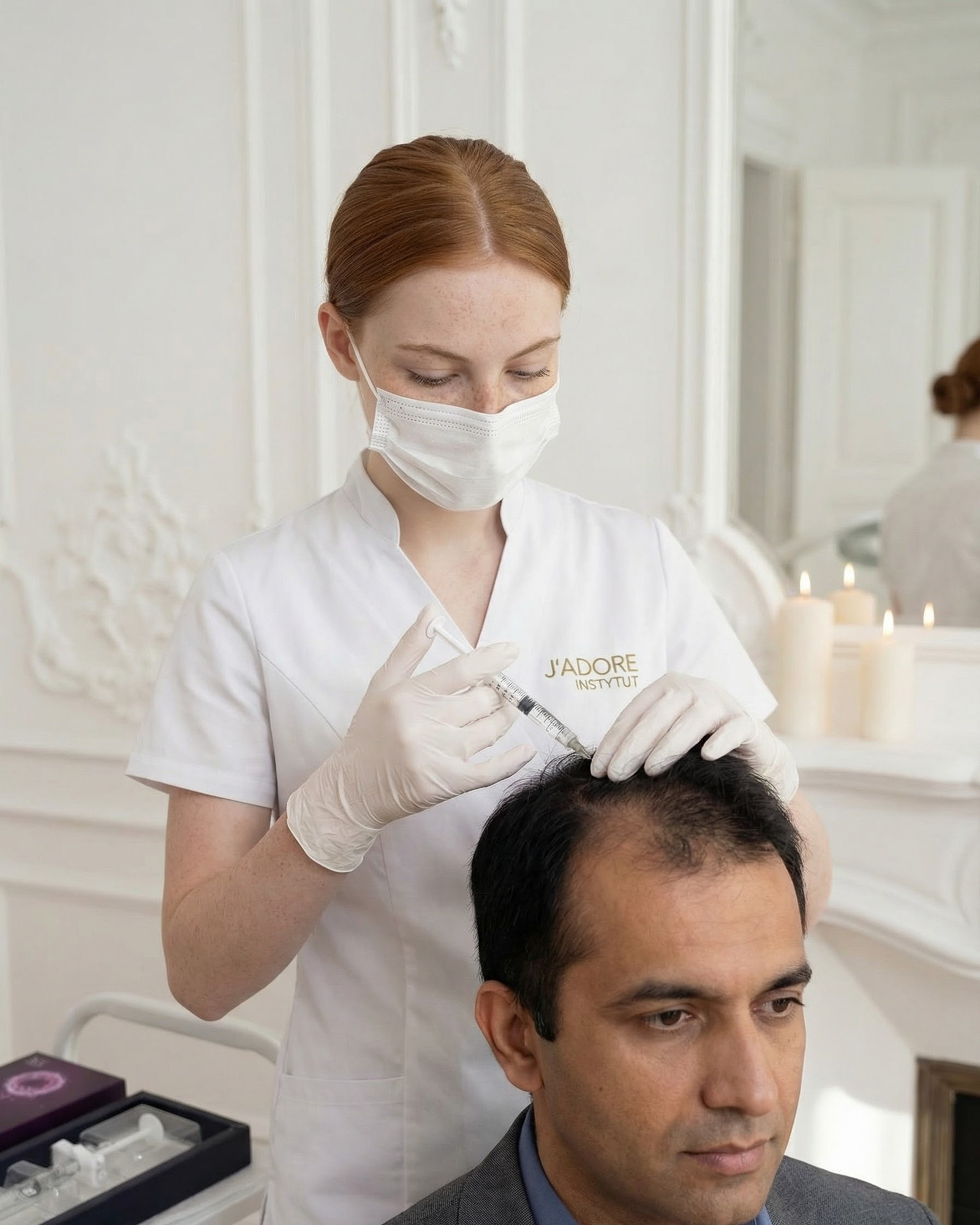
Scalp mesotherapy
Can support scalp blood flow and hair follicle condition in telogen effluvium linked to seborrhoeic dermatitis. Recommended once the inflammation has settled.
Keratin / hair-repair treatment
With seborrhoeic dermatitis, hair is often weakened and lacks shine. Rebuilding hair structure once the scalp is stabilised improves both appearance and strength.
One takeaway worth remembering
If there's just one takeaway from this article, it's this: not every case of scalp flaking is dandruff, and not every case of dandruff is cured by a pharmacy shampoo. Seborrhoeic dermatitis is a chronic inflammatory condition with its own specific biology and its own specific treatment. Confusing it with common dandruff costs months of ineffective care, often worsens hair loss, and causes needless frustration.
A dermatologist can tell these two conditions apart in a single visit — sometimes with no additional tests, just by examining the skin. If your scalp itches, flakes, and yet another shampoo makes no difference — that visit is worth booking a week ahead.