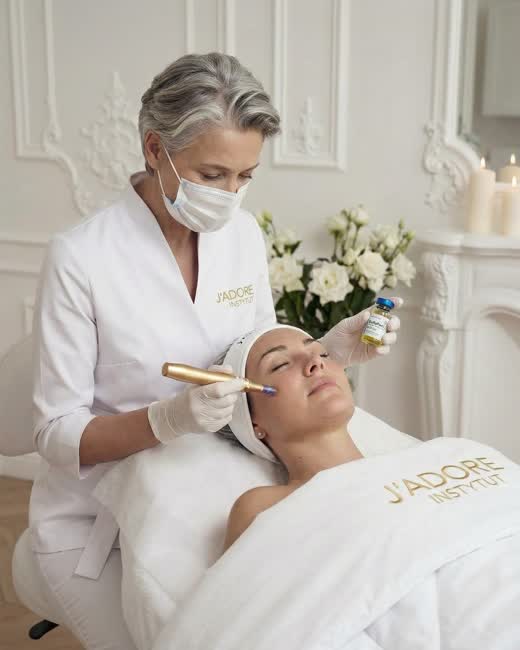
Peeling and biorevitalisation — two processes that rarely go together
To understand PQ Age, it is worth first separating two concepts deliberately combined in this treatment. Peeling and biorevitalisation follow different principles — and most treatments deliver only one of them.
Classic acid peel
works from the outside
- Exfoliates dead epidermal cells
- Accelerates natural surface renewal
- Evens skin tone, refines pores and smooths texture
- The result depends mainly on the depth at which the acid works
Biorevitalisation
works from within
- Delivers signalling substances to the dermis
- Activates fibroblasts — cells that produce collagen and elastin
- Improves hydration at depth, not only on the surface
- Results develop over time, in the weeks following treatment
PQ Age combines both processes in one treatment. Surface-active ingredients trigger controlled epidermal renewal, while biorevitalising ingredients penetrate deeper and activate the dermis. Exfoliation and rebuilding — at the same time, in one application. This differs from combining two separate treatments in sequence, as both processes overlap and support each other.
What is really in PQ Age — and why these ingredients
The PQ Age formula is based on several layers of ingredients, each with a different role. It is worth understanding them separately, as together they explain the final result.
- 01
Exfoliating acids — controlled exfoliation
The foundation of every peeling action. PQ Age uses a combination of acids that work at different levels of the epidermis — so exfoliation is precise rather than aggressive. The aim is to remove the layer of dead cells, even the surface and prepare the skin for what follows.
- 02
Polynucleotides (PDRN) — a signal for fibroblasts
This is where biorevitalisation begins. Polynucleotides are fragments of nucleic acids that the skin recognises as a repair signal. They activate fibroblasts — cells in the dermis responsible for collagen and elastin production. The result is not immediate. Fibroblasts need time to produce new fibres, but this can make a real difference to skin density and firmness.
- 03
Low-molecular-weight hyaluronic acid — hydration at depth
Low-molecular-weight hyaluronic acid is small enough to penetrate deeper than the molecules used in creams. In the skin, it binds water, improves hydration in layers below the epidermis and supports an environment in which fibroblasts work more effectively.
- 04
Amino acids and peptides — building blocks and signals
Fibroblasts need building blocks to produce collagen — the amino acids from which collagen is made. Peptides have a dual role: they are both material and signals that inform cells of the need for rebuilding. This layer ‘supports’ the biorevitalising response.
- 05
Antioxidants — protection during the process
Exfoliation and intensive skin stimulation generate oxidative stress. Antioxidants in the formula neutralise free radicals created during the treatment. This reduces the risk of inflammatory reactions and supports a calmer healing process.
Exfoliation without damage — how a peel can firm
A natural question arises with peels that have a genuine effect on deeper layers: can this level of skin stimulation be too much? The boundary between stimulation and damage is crucial with peels — and this is where the difference lies between a well- and poorly-selected peel.
Classic, strong TCA or phenol peels work through deep coagulation. They cause controlled damage, after which the skin regenerates and produces new collagen in response to stress. Results can be dramatic — but at the cost of a long recovery period, a risk of hyperpigmentation and restrictions related to the time of year or skin tone.
PQ Age works differently. It does not cause damage, only stimulation. The acids exfoliate the surface precisely, without reaching the dermo-epidermal junction. The inflammatory response is minimal or absent. Biorevitalisation activates fibroblasts not through an ‘alarm signal’ (repair the damage), but through proliferative signals — information that it is worth producing new collagen because the environment is suitable. It is a gentler yet genuine pathway to improved skin density.
Who benefits most from PQ Age
There is no treatment that is right for everyone — and PQ Age is no exception. However, there is a group of skin concerns for which its mechanism is particularly well suited.
- Skin with early signs of density loss — when your skin is still in good condition, but begins to look thinner and less ‘full’ than it did a few years ago. Biorevitalisation may produce better results when introduced early than with advanced changes.
- Dull skin without radiance and with uneven skin tone — exfoliation restores surface uniformity and enhances light reflection. For many people, skin tone becomes noticeably more even after a series of treatments.
- Skin with shallow expression lines and textural wrinkles — the peel smooths the surface, while biorevitalisation may support firmness from within. The combination can be more noticeable than either action alone.
- Reactive skin that does not tolerate aggressive peels — Sensitive versions are adapted for sensitive skin. The absence of an aggressive exfoliant and the advanced soothing ingredients mean the treatment is often well tolerated by people who have had negative experiences with classic peels.
- Men with thick, oily skin and enlarged pores — denser male skin may require different concentrations, but the treatment logic remains the same. PQ Age Forte is sometimes selected for oily, thicker skin that requires stronger exfoliation.
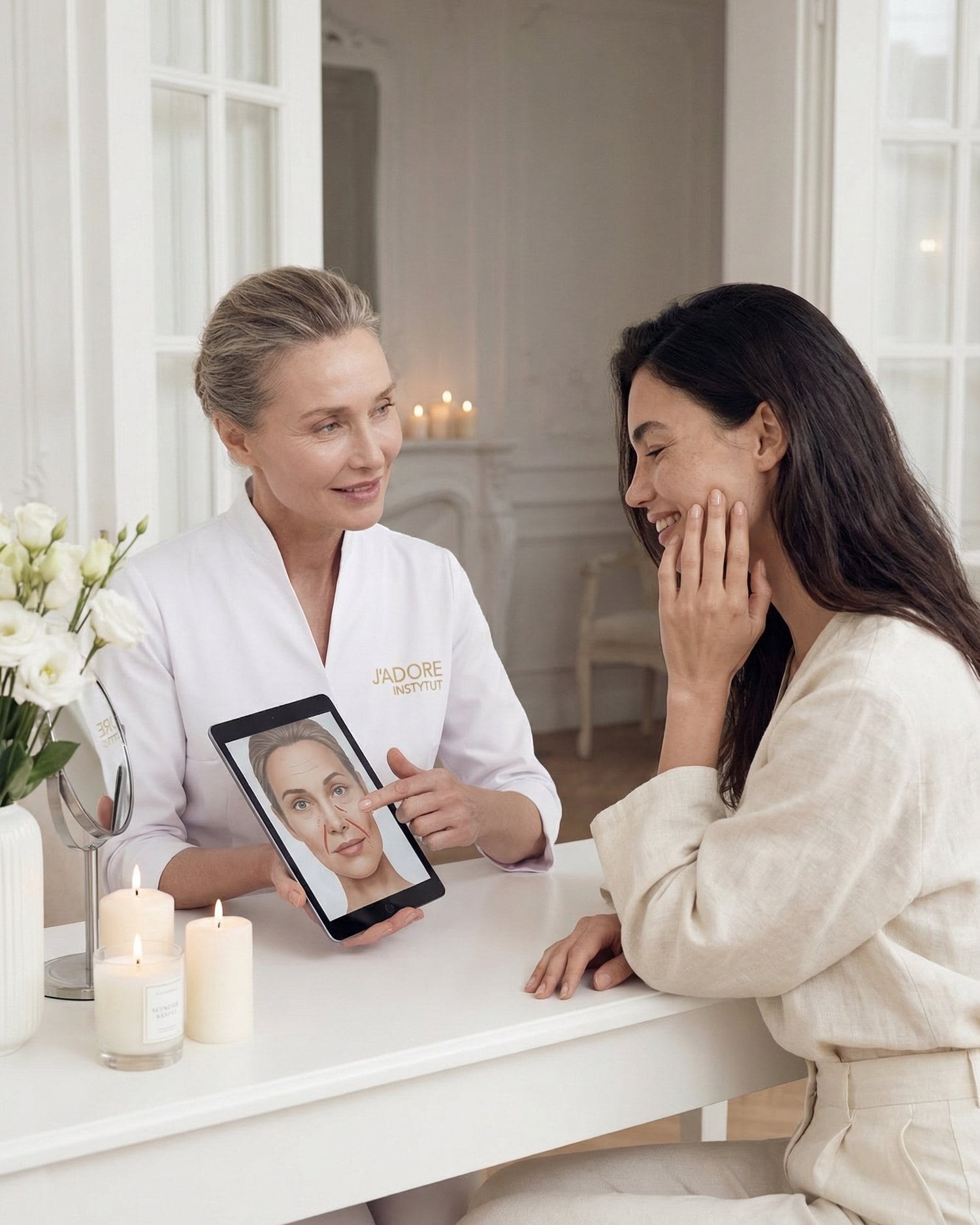
What a series looks like and what to expect over time
PQ Age is a treatment that works as a series. A single session produces noticeable results, but a genuine change in skin density and quality develops over several weeks, sometimes becoming visible only after the full series. This follows directly from the mechanism: fibroblasts activated by polynucleotides need time to produce new collagen fibres. Exfoliation works faster — improvements in texture and skin tone are often visible after the first session — but true ‘firming’ is a cumulative result.
It is important not to expect the effects of invasive methods from PQ Age. Biorevitalisation in peel form works at a cellular level — it is real and mechanistically confirmed, but the effects are proportionate to the depth of intervention. PQ Age does not replace injectable biostimulators or lifting threads — but it can be a very good choice if you are looking for regular salon care that goes beyond a peel alone.
PQ Age and other peels — where the difference lies
Cosmetology now offers a very wide range of peels — from gentle enzyme peels to deep TCA peels. PQ Age has a specific place within this range. It is worth understanding this before making your choice.
Enzyme peel / superficial AHA peel
subtle exfoliation
- More even complexion, smoother surface
- No recovery time, can be repeated frequently
- Good for maintaining results
PQ Age
exfoliation + biorevitalisation
- Precise exfoliation, improved texture and complexion
- Fibroblast activation — potential effect on skin density
- Deep hydration through low-molecular-weight HA
- Minimal recovery time
PQ Age is worth considering when you are looking for a peel treatment that does more than exfoliate — but do not want, or cannot undergo, deeper and more invasive methods. For many people, it is a natural step between “home skincare” and advanced aesthetic medicine.
Needle mesotherapy
Used as an exfoliating step before mesotherapy, PQ Age increases the absorption of mesotherapy cocktails. Both treatments work to improve skin quality, but at different levels. Combined, they provide a synergistic biorevitalisation effect.
Biostimulators (Sculptra, Radiesse)
PQ Age complements treatments that rebuild facial support from within. It improves skin quality at the surface, while biostimulators work on deeper structures. Different levels, one strategy.
Microneedling
PQ Age is sometimes used directly before microneedling to prepare the skin surface. Combining chemical exfoliation with mechanical stimulation through microchannels may intensify the biorevitalisation effect — the decision always rests with the specialist.
SPF protection + vitamin C skincare
This is not a salon treatment, but PQ Age achieves the best results when supported at home. Daily sunscreen and vitamin C in the morning extend and strengthen the treatment’s effect on complexion and photoprotection.