What exactly is HIFU — without the technical jargon
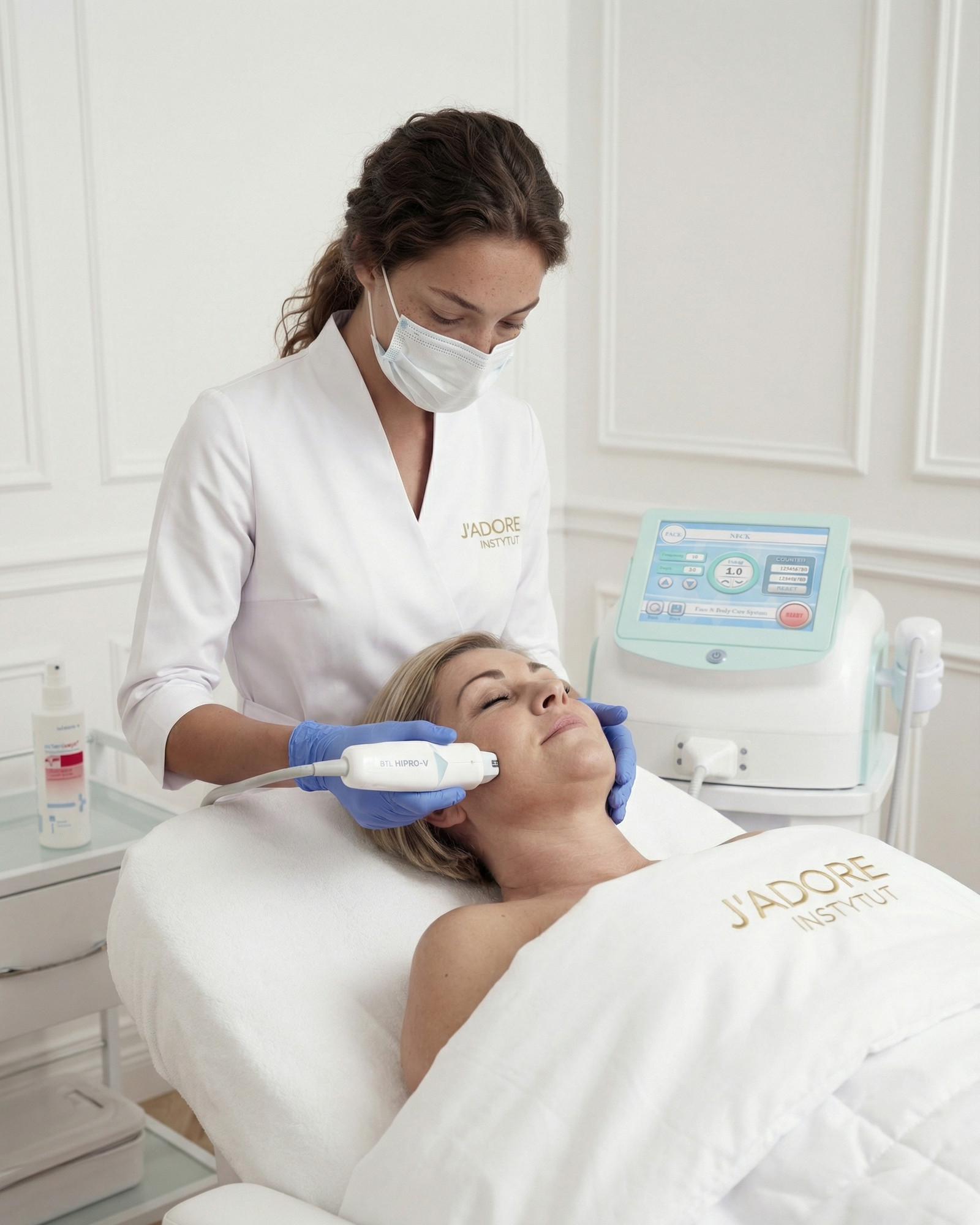
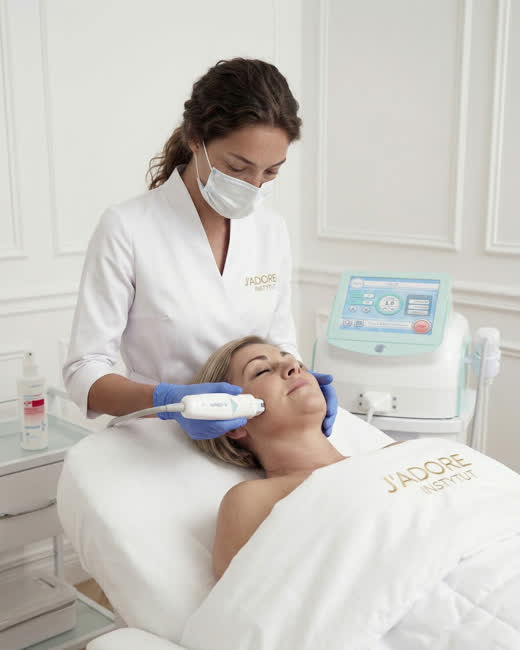
HIFU stands for High-Intensity Focused Ultrasound. In practice, this means energy is focused at a precise point below the skin’s surface, generating heat there. This heat damages a specific area — deliberately and in a controlled way. It triggers the body’s natural response: new collagen production and tissue remodelling. Results may develop gradually over several weeks or months. The skin regenerates from within.
The key word is “precisely”. An HIFU applicator creates energy points at a specific depth. That depth determines whether the treatment reaches the layer that can genuinely change the condition of the skin and tissues, or merely passes over more superficial structures. It is not magic — it is physics. This is why technical details and operator skill matter here for functional, not marketing, reasons.
Myth one: “HIFU is HIFU — it is the same everywhere”
This is the most common and potentially most costly shortcut in thinking. An HIFU treatment is not a product on a shop shelf, where one brand differs from another only in packaging. The differences between devices — and between the salons that use them — are fundamental.
High-quality HIFU devices work with several types of applicators that reach different depths. Each tissue layer requires different settings. Matching applicators to a specific person and body area requires anatomical knowledge — not just the ability to operate a device. A salon with one set of applicators that uses the same protocol for everyone, regardless of their skin and tissue structure, is not performing “the same treatment more cheaply”. It is performing a different treatment.
Myth two: “The number of lines is just a number — the more, the better”
HIFU marketing often presents the number of lines as the main selling point: several hundred, several thousand, “the latest model with a record number”. This creates the mistaken belief that more lines automatically mean a better result — and that a cheaper offer with the same number of lines is simply a bargain.
The reality is more complex. What matters is not simply the number of energy points, but their precision, consistency and actual depth. A lower-grade device may claim an impressive number of lines. However, if energy is not delivered with adequate stability and accuracy, the result is unpredictable. For many people, it is simply weaker. In rare cases, it may lead to uneven results.
Moreover, the number of lines declared by the manufacturer refers to the device’s technical capabilities — not to how many lines will actually be performed during your treatment. The treatment protocol, working time and treatment area are decisions made by the operator. A suspiciously low price often means a shortened protocol: fewer lines, fewer applicators and less working time.
HIFU with a full protocol
Full coverage of the area, appropriate applicators
- Applicators selected for your anatomy
- The full number of lines according to the treatment plan
- Consultation and discussion of expectations before the treatment
- Work with several applicators at different depths
- A realistic discussion of results and when they may appear
HIFU “on promotion”
Shortened protocol, one applicator, low entry cost
- One type of applicator for everyone
- Shorter treatment time = fewer lines
- No consultation or only a very general one
- Work exclusively on superficial layers
- Promises without discussing your individual case
Myth three: “Cheap HIFU = the same quality, just a better price”
The price of an HIFU treatment depends on several genuine factors — and none of them is “margin that can be cut”. The first is device quality and certification. HIFU devices used in professional salons are certified and regularly serviced. Their operation has a real cost. Lower-grade devices, often imported without appropriate certification, can deliver energy inconsistently. This directly affects treatment safety.
The second factor is the cost of applicators. HIFU applicators wear out. They have a limited number of shots, after which their precision decreases. In a salon that values quality, applicators are replaced according to the manufacturer’s schedule. In a salon focused solely on cost optimisation, a worn applicator is used for longer than it should be because replacement is expensive. This is difficult to verify from the outside. It is easy to notice in the results — or the lack of them.
The third, often underestimated, part of the price is the time and knowledge of the person performing the treatment. HIFU requires the ability to assess tissue condition, plan working depths and identify areas requiring particular caution, such as blood vessels, nerves and bony structures. Reducing treatment time to a minimum lowers costs — but it also reduces the quality of the work.
Myth four: “Results after cheaper HIFU will be the same — just slightly weaker”
This myth leads many people to see cheaper HIFU as a sensible compromise. Yet the issue is not only a weaker result. Poorly performed HIFU may also produce effects opposite to those intended or lead to complications.
An unstable device, or an operator unfamiliar with the anatomy of the area being treated, may direct energy too close to nerves or blood vessels. This may result in temporary swelling, bruising or — in the case of the face — temporary asymmetry. These complications are rare with correctly performed HIFU. However, their risk rises in direct proportion to how much the protocol has been shortened and how little time has been devoted to individual assessment.
What distinguishes good HIFU from poor HIFU — a practical list
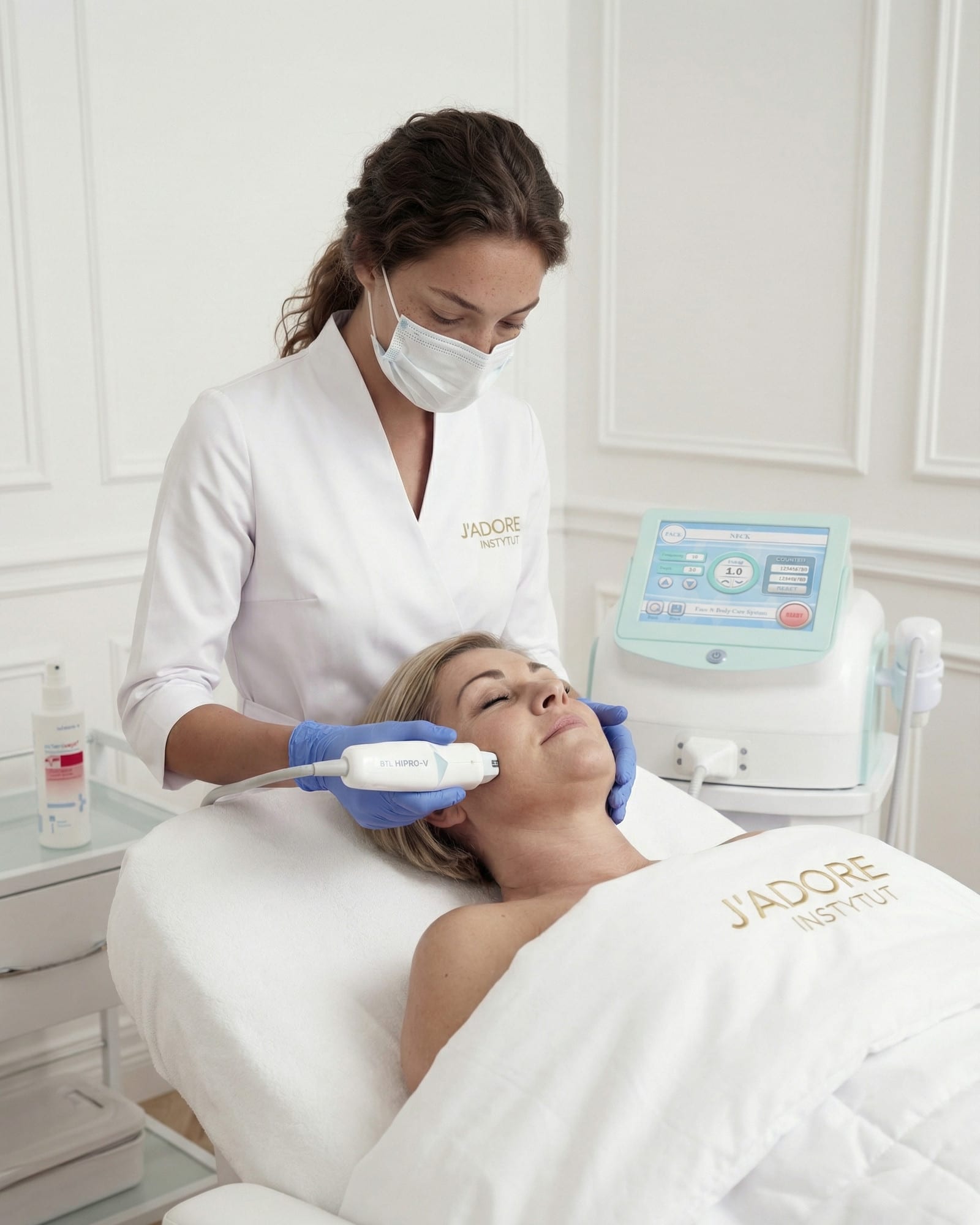
Before deciding on treatment, it is worth knowing what to look for. A few specific points tell you more than any online review.
- Consultation before the treatment — not a general conversation “about expectations”, but an assessment of tissue condition, skin thickness and elasticity, and the subcutaneous structure in the planned treatment area.
- Information about the device and applicators — a professional salon will tell you which device it uses, how many types of applicators will be used and why. If the answer is “standard HIFU”, that is not enough.
- A realistic discussion of results — the treatment can provide good results for many people, but outcomes depend on age, skin and tissue condition, and the number of treatments. Any promise of “certainly” should make you cautious.
- Treatment time appropriate for the area — an overly quick treatment is a sign of a shortened protocol. Ask how long treatment of the planned area should take.
- Answers to questions without irritation — a salon that cares about your safety will answer questions about equipment, certifications and operator experience. Without evasion or offence.
HIFU for the face and HIFU for the body — they are not the same treatment
There is one more difference that is rarely discussed openly: HIFU for the face and HIFU for the body involve technically different work — different depths, different anatomical areas and a different required level of precision. The face is densely innervated, with thin tissues and closely positioned structures. Here, the margin for error is at its smallest.
On the abdomen, thighs or inner arms, the work is less delicate anatomically. However, it requires an appropriate protocol to lift and firm the subcutaneous tissue. A device and applicators that are optimal for the face do not necessarily provide the best results on large body areas — and vice versa. A salon that treats both as “one HIFU treatment” is likely to use one setting where several are needed.
Lymphatic drainage
Supports the removal of tissue remodelling by-products after HIFU — for many people, it shortens the time before results appear and reduces temporary swelling.
Tissue biostimulators
When the goal is to improve skin quality and firmness, biostimulators and HIFU work through complementary mechanisms. For some people, this enhances the lifting effect.
Deep mesotherapy
For the face: mesotherapy focused on restoring hydration and skin quality may be a good preparation for, or complement to, HIFU on superficial layers.
Before you decide — what is really worth knowing
HIFU is one of the few treatments that can work on deeper tissue layers without needles or a scalpel. It is a valuable tool. That is why it should be approached with respect for its complexity, rather than with the mindset of “I am looking for the best price”.
A sensible path before treatment is simple: a consultation at a salon with a certified device and trained operator, questions about the protocol and applicators, and a realistic discussion of what you can expect. A good salon does not sell illusions or hide information about its equipment. If you receive specific answers to your specific questions, you are in the right place.